
How To Spot Fake Peptides Oman: The Growing Challenge
When learning how to spot fake peptides oman, researchers must verify batch-specific Certificates of Analysis (COAs), confirm both HPLC purity and LC-MS identity, avoid crypto-only checkout scams, and ensure the supplier uses strict cold-chain logistics to prevent thermal degradation during transit.
Academic and institutional research in the Sultanate of Oman is advancing rapidly. With flagship institutions like Sultan Qaboos University publishing groundbreaking work on novel antimicrobial peptides derived from regional sources, the local demand for high-quality, verifiable synthetic peptides has never been higher. However, procuring reliable research compounds in the GCC comes with significant supply chain hazards. Unregulated grey-market vendors, counterfeit products, and degraded compounds pose serious risks to laboratory budgets and the integrity of research data.
Because the GCC market relies heavily on imported biological compounds, buyers must be vigilant. A lack of proper documentation can result in shipments being permanently delayed in customs, while poor handling practices can destroy the molecular structure of sensitive compounds before they ever reach the laboratory bench. This comprehensive guide outlines the exact procurement signals researchers and informed buyers should verify before placing an order.
Buyer Checklist: Avoiding Vendor Scams
Identifying an unreliable vendor often requires looking past marketing claims and focusing strictly on operational transparency. Keep this checklist handy when evaluating a new peptide supplier for your Omani laboratory:
- Missing or Generic COAs: The supplier cannot produce a batch-specific Certificate of Analysis. If the COA lacks a date, a verifiable third-party lab name, or a matching lot number, it is likely fraudulent.
- No Mass Spectrometry (LC-MS): The vendor claims “99% purity” but does not provide LC-MS data to prove the actual molecular identity of the compound.
- Suspicious Payment Methods: The checkout process only accepts cryptocurrency, peer-to-peer cash apps, or unverified wire transfers with no buyer protection or local merchant processing.
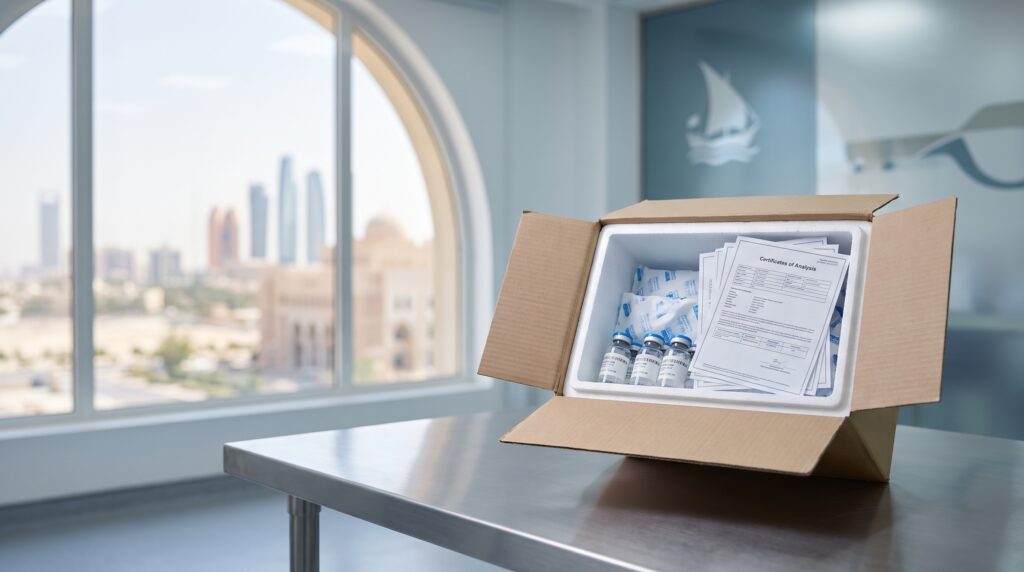
- Lack of Cold-Chain Logistics: The vendor does not offer insulated shipping or temperature-controlled packaging, which is an immediate disqualifier for GCC deliveries.
- Vague Customs Documentation: The supplier refuses to provide a Safety Data Sheet (SDS) or accurate commercial invoices, leaving the buyer responsible for navigating customs friction alone.
The COA Authenticity Gap: Decoding Test Reports
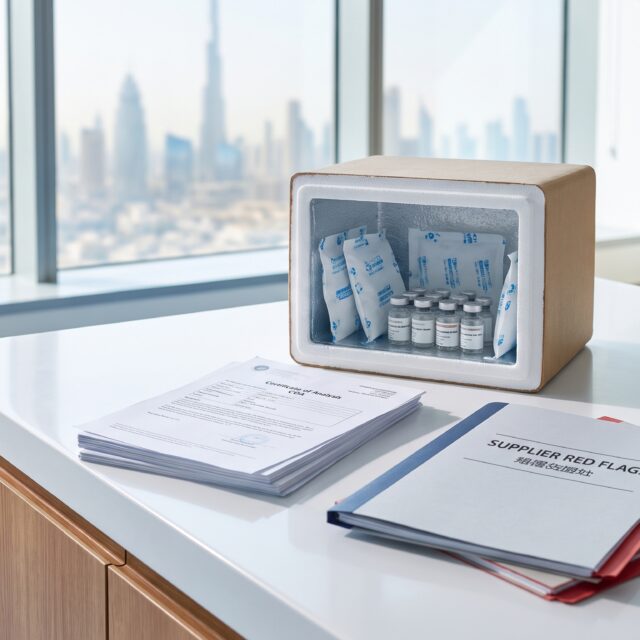
The single most critical document in peptide procurement is the Certificate of Analysis (COA). Unfortunately, scammers frequently use generic, stolen, or even AI-generated testing reports to feign legitimacy. For an Omani researcher, utilizing a how to spot fake peptides guide oman dictates a deep dive into the underlying COA data.
A legitimate, verifiable COA must include two primary types of analytical testing. The first is High-Performance Liquid Chromatography (HPLC). HPLC measures the purity of the sample by separating its components. High-quality research peptides should demonstrate an HPLC purity of over 99 percent, indicating that manufacturing byproducts and impurities have been successfully stripped away.
The second crucial test is Liquid Chromatography-Mass Spectrometry (LC-MS). While HPLC proves purity, it does not confirm identity. LC-MS verifies the exact molecular weight of the compound, ensuring that the vial contains the specific peptide sequence you ordered, rather than a cheaper substitute. If a supplier provides an HPLC graph but no mass spectrometry data, the risk of purchasing a counterfeit compound rises exponentially.
Furthermore, researchers should look for matching batch numbers on the COA and the physical vial. If you cannot contact the third-party testing facility listed on the document to verify the report’s authenticity, the COA should be considered invalid.
Underfilling Scams and Net Peptide Content
One of the most insidious forms of peptide fraud does not involve fake compounds, but rather drastically underdosed vials. Many illicit vendors sell vials labeled as containing 5mg or 10mg of active peptide, when in reality, the vial contains only a fraction of that amount.
This scam relies on the fact that standard lyophilized (freeze-dried) peptides contain both the active compound and a stabilizing excipient, typically mannitol. To the naked eye, a vial with 1mg of peptide and 4mg of filler looks identical to a vial with a full 5mg of active peptide. Without access to quantitative laboratory equipment, the buyer cannot easily verify the Net Peptide Content.
To combat this, informed buyers must source from suppliers who conduct quantitative testing alongside standard purity checks. Transparent vendors will freely disclose their manufacturing tolerances and ensure that the stated weight refers specifically to the active compound, not the total lyophilized mass.
Why Cold-Chain Logistics Matter in Oman’s Summer Heat
Even the highest purity peptide is useless if its molecular bonds are destroyed during transit. Oman’s summer temperatures regularly exceed 45 degrees Celsius. When sensitive amino acid chains are subjected to this extreme heat, they undergo rapid chemical degradation, oxidation, and structural loss.
Many overseas vendors ship peptides in standard envelopes, ignoring the reality of Middle Eastern logistics. If a package sits in a non-air-conditioned sorting facility or delivery van in Muscat for even a few hours, the research integrity of the compound is compromised.
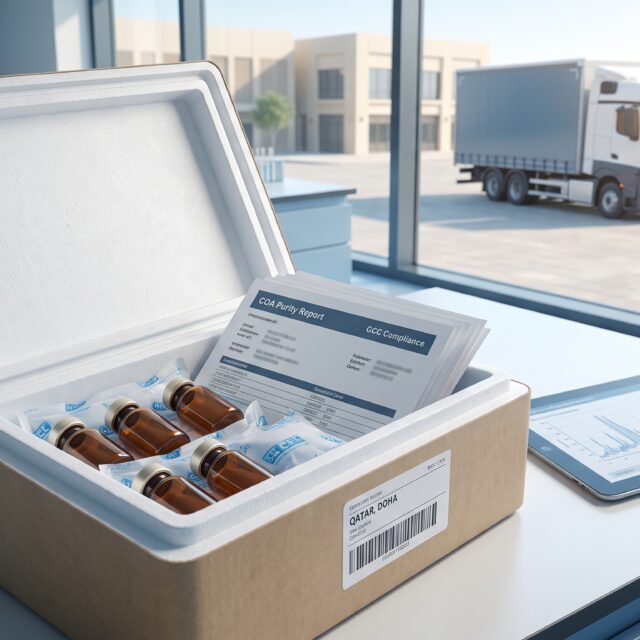
This is why evaluating a supplier’s logistics infrastructure is just as important as verifying their COAs. For researchers relying on peptides UAE next day delivery routes to supply GCC labs securely, strict cold-chain handling is mandatory. Legitimate regional suppliers utilize specialized insulated packaging, thermal materials, and expedited logistics networks to ensure compounds remain stable from the warehouse to the laboratory freezer.
Navigating Oman’s Bayan Customs and Post-Purchase Scams
Importing biotechnology compounds into the Sultanate of Oman requires adherence to strict local regulatory frameworks. Omani customs clearance is managed through the Bayan portal. Institutional buyers and procurement staff must provide detailed commercial invoices, correct Harmonized System (HS) codes, and comprehensive Safety Data Sheets (SDS) for their shipments.
Inexperienced or fraudulent vendors frequently fail to provide this documentation, leading to seized shipments and lost research funds. Worse still, the complexity of international shipping has birthed a prevalent post-purchase scam in the region.
In this scenario, a fraudulent vendor offers incredibly cheap products and provides the buyer with a fake tracking number. A few days later, the buyer receives an email—purportedly from a shipping courier or customs authority—claiming the package is stuck at the border. The scammers demand an extra “customs release fee” or “insurance deposit” payable only via untraceable methods. Buyers should remember that legitimate customs duties are processed through official government portals like Bayan or established couriers, never via anonymous payment links sent by the vendor.
Choosing a Verified Supplier for Your Research
When evaluating how to spot fake peptides in oman, the ultimate defense is partnering with a supplier built on transparency, robust documentation, and regional logistical expertise.
NOVA Labs addresses these structural challenges directly for GCC researchers. By providing verifiable, batch-specific third-party testing data, offering responsive local support via WhatsApp, and maintaining strict cold-chain shipping protocols, we ensure that your laboratory receives stable, high-purity compounds without the friction of overseas customs delays.
Whether you are procuring baseline compounds for cell-culture assays or sourcing specialized sequences for advanced analytical studies, eliminating supply chain risk is the first step toward reliable data. You can explore verified compounds in the NOVA Labs shop to ensure your next study is backed by uncompromised quality.
Conclusion
Sourcing peptides in Oman does not have to be a gamble. By demanding batch-specific COAs with both HPLC and LC-MS data, insisting on temperature-controlled shipping to combat the regional heat, and understanding the documentation requirements of the Bayan customs system, researchers can effectively shield themselves from counterfeiters and scammers. Always prioritize suppliers who offer operational transparency, verifiable testing, and local accountability over those offering unrealistic prices without proof.
Disclaimer: The products mentioned in this article are for laboratory and research purposes only and are not intended for human consumption or therapeutic use.
References
- Sultan Qaboos University (2023). Novel camel antimicrobial peptides show promise against drug-resistant bacteria. News and Updates.
- NorthPeptide. Peptide Vendor Scams: 8 Red Flags + COA Checklist.
- Al Barrak Group. Cold Chain Logistics for GCC’s Food and Pharma Supply Chains.
- Oman Customs (Bayan Portal). Import procedures and prohibited goods.
- Peptide Vendor Scams: 8 Red Flags + COA Checklist (2026) – NorthPeptide
- Cold Chain Logistics for GCC’s Food and Pharma Supply Chains – Al Barrak Group
- Novel camel antimicrobial peptides show promise against drug-resistant bacteria | News
- Wholesale Peptides Oman: Bulk Buying, COA & B2B Delivery – NOVA Labs
- Import unapproved medicine into Oman | Everyone.org
- Peptide Quality Checklist How to Avoid Getting Scammed : r/NTNPerformance – Reddit
Frequently asked questions
What is the most common peptide scam in the GCC?
The most prevalent fraud is the post-purchase shipping scam, where vendors provide a fake tracking number and subsequently demand untraceable 'customs release fees' to deliver the package.
Why do peptides require cold-chain shipping in Oman?
Oman's summer temperatures regularly exceed 45 degrees Celsius, which can cause rapid chemical degradation, oxidation, and structural loss of sensitive research compounds if they are not insulated properly during transit.
How can I verify a peptide Certificate of Analysis (COA)?
A legitimate COA should feature a verifiable batch number, third-party laboratory contact details, High-Performance Liquid Chromatography (HPLC) results showing above 99 percent purity, and mass spectrometry (LC-MS) confirming the exact molecular weight of the compound.
What documents are required to import research peptides into Oman?
Institutional buyers clearing shipments through Oman's Bayan customs portal typically require precise commercial invoices, accurate HS codes, and comprehensive Safety Data Sheets (SDS) from the supplier.
Nova Labs buyer tools
Ready to verify stock, testing and delivery?
Use the product page and lab report section to check availability, documentation, delivery timing and support before placing an order.
- COA / test-report checks
- Oman delivery context
- Cold-chain handling
- COD and card payment options
- WhatsApp support