

How to Spot Fake Peptides Bahrain: The High Stakes of GCC Sourcing
To spot fake peptides in Bahrain, always verify the vendor’s batch-specific Certificate of Analysis (COA) directly through an independent testing lab’s portal. Confirm that HPLC purity exceeds 98% and Mass Spectrometry proves molecular identity. Avoid suppliers lacking temperature-controlled GCC logistics, as extreme regional heat rapidly degrades sensitive research compounds.
For scientific buyers and informed researchers evaluating compounds in the GCC, supply chain integrity is the absolute foundation of a successful study. The global gray market for research chemicals is heavily fragmented, leaving buyers vulnerable to underdosed, degraded, or entirely counterfeit products. Because these compounds are classified exclusively for laboratory research, they do not undergo the same centralized regulatory serialization as retail pharmaceuticals. This places the burden of quality control squarely on the buyer.
To successfully navigate this landscape, researchers must understand how to read third-party laboratory reports, recognize the red flags of fraudulent vendors, and account for the severe logistical challenges of shipping sensitive molecules across the GCC, particularly between major transit hubs like the UAE and Bahrain.
Quick Answer: The Buyer’s Verification Checklist
Before authorizing a purchase for your laboratory, ensure your vendor meets these baseline requirements:
- Independent Lab Testing: The vendor provides a COA from a recognized third party (like Janoshik or MZ Biolabs) featuring a verifiable link or QR code.
- HPLC & MS Data: The report must include both High-Performance Liquid Chromatography (for purity) and Mass Spectrometry (for molecular identity).
- Exact Batch Matching: The lot number on your physical vial matches the lot number on the published COA.
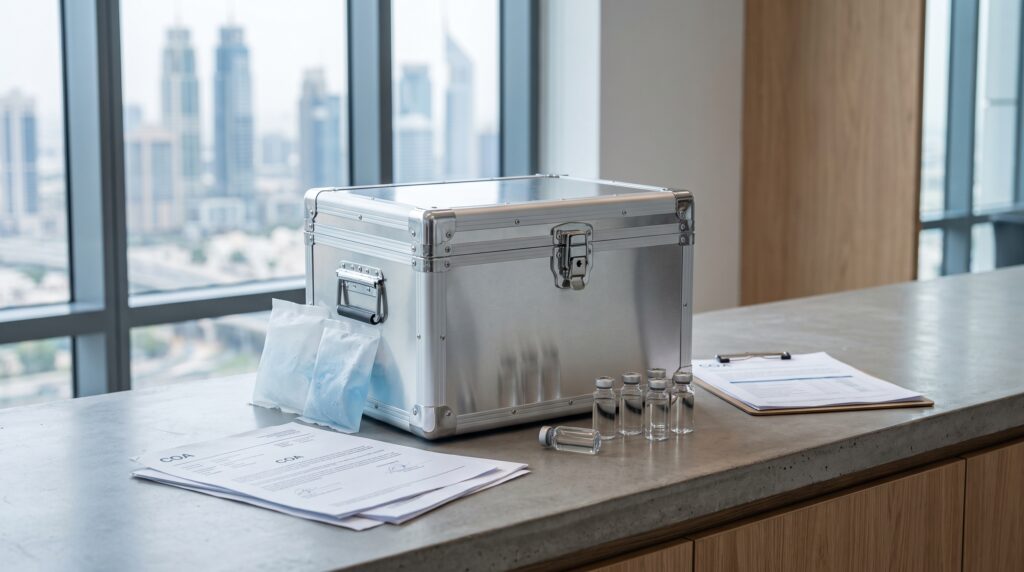
- Regional Cold-Chain Logistics: The supplier operates within the GCC or utilizes temperature-controlled packaging to prevent degradation in customs.
Navigating Bahrain and UAE Regulatory Landscapes
To understand why fake or degraded peptides proliferate in the local market, buyers must first understand the broader GCC regulatory environment. In Bahrain, the National Health Regulatory Authority (NHRA) maintains rigorous standards for pharmaceutical traceability. Through the NHRA-MVC Hub, registered medical products are tracked using strict GS1 serialization standards. This ensures traditional pharmaceuticals maintain a secure, end-to-end chain of custody.
However, research peptides operate strictly outside this framework. As unregistered research chemicals intended for in vitro laboratory use, they bypass the NHRA-MVC Hub’s serialization requirements. Unscrupulous vendors exploit this regulatory gray area by importing unverified, white-labeled vials manufactured in low-tier overseas facilities that lack basic Good Manufacturing Practice (GMP) standards.
Furthermore, researchers must consider the realities of regional transit. Many peptide shipments enter the GCC through the United Arab Emirates before moving to Bahrain. International courier shipments frequently face clearance delays. A delayed package sitting in a non-climate-controlled customs warehouse at Bahrain International Airport or a Dubai transit facility is a recipe for chemical degradation. The intense regional heat can quickly turn what might have been a legitimate compound into a compromised vial of inert, denatured amino acids.
The Technical COA Audit: How to Verify Lab Reports
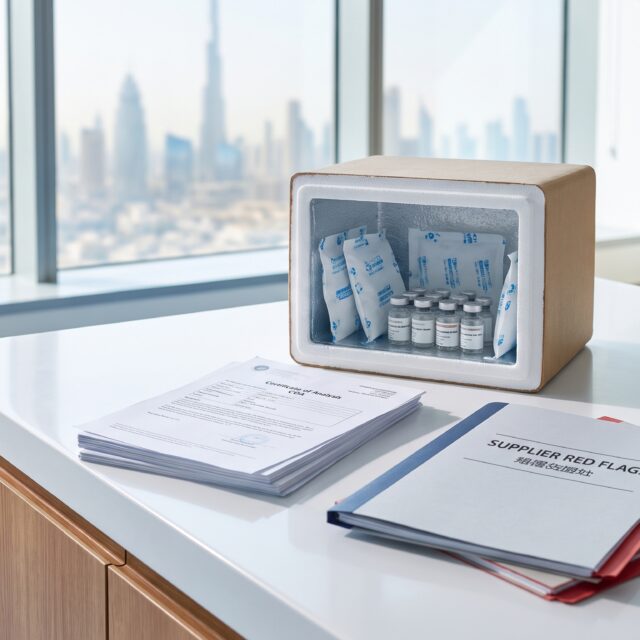
The single most critical document in your “how to spot fake peptides guide bahrain” toolkit is the Certificate of Analysis (COA). Fraudulent vendors frequently alter fake COAs, steal them from legitimate suppliers, or post outdated reports that do not match current inventory. A true COA audit requires checking specific technical data points against independent, verifiable sources.
The Purity Fallacy: HPLC vs. Mass Spectrometry
Many buyers mistakenly believe that a High-Performance Liquid Chromatography (HPLC) report showing 99% purity is enough to guarantee authenticity. In the analytical testing industry, this is known as the purity fallacy.
HPLC only separates and measures the concentration of the compounds inside the vial. If a vendor fills a vial with 99% pure mannitol (a common and inexpensive lyophilization filler) and 1% arbitrary amino acids, an incomplete test might just show a highly “pure” substance without actually identifying what the substance is.
To confidently verify a research peptide, the COA must include Mass Spectrometry (MS). MS measures the exact molecular weight of the compound, confirming its sequence identity matches the target peptide. For example, if your laboratory is researching BPC-157, the MS data must confirm the precise molecular weight of that specific amino acid sequence. If a vendor cannot provide both HPLC for purity (ideally 98%+) and MS for identity, they are not a reliable source.
Source Verification and Batch Matching
A legitimate COA must come from a recognized, independent analytical laboratory. Never trust a COA hosted exclusively as a static image or PDF on the supplier’s website. Modern testing facilities provide verification keys or QR codes on their documents. As a buyer, you must navigate independently to the testing laboratory’s official portal (do not simply click the link provided by the vendor, as it could be a spoofed site), and input the code to ensure the report has not been digitally altered in Photoshop.
Additionally, the batch or lot number printed on your physical peptide vial must exactly match the batch number listed on the verified COA. If a vendor ships you Batch #405, but their website only displays testing for Batch #102 from two years ago, you have absolutely no empirical proof of what is currently in your hands. Legitimate suppliers test every single batch they produce.
Red Flags: Pricing, Payments, and Customer Support
Beyond laboratory testing, the commercial behavior of a supplier often reveals their legitimacy. Pay close attention to the vendor’s business operations before securing a purchase for your institution.
Predatory Pricing Models
Synthesizing high-purity peptides, paying for independent third-party laboratory testing on every batch, and maintaining cold-chain logistics is expensive. If you find a vendor offering products at 50% to 70% below the average GCC market rate, you are likely looking at underdosed vials, heavy filler ratios, or outright counterfeit products. In the realm of scientific research, if a price seems too good to be true for a sensitive biological compound, it usually is.
Restricted Payment Gateways
Legitimate research chemical suppliers operate established, registered businesses with access to standard banking and merchant services. While cryptocurrency is a valid and increasingly common tool in the industry, vendors who only accept unrecoverable payment methods (like Bitcoin, Western Union, or untraceable wire transfers) present a massive red flag. Reliable suppliers offer secure credit card gateways alongside alternative payment options, providing the buyer with fraud protection.
Lack of Regional Support
If a supplier has no local presence, no verifiable contact information, and no dedicated support channels (like an active WhatsApp line or responsive email) for GCC buyers, they will likely abandon you if your shipment is seized by customs or arrives warm. Regional operations understand the nuances of GCC customs thresholds and local courier routes.
Defeating the GCC Heat: Why Local Logistics Matter
Even if you successfully purchase a highly purified, verified peptide from a reputable overseas supplier, it can easily become a degraded, useless product by the time it reaches your laboratory bench in Manama.
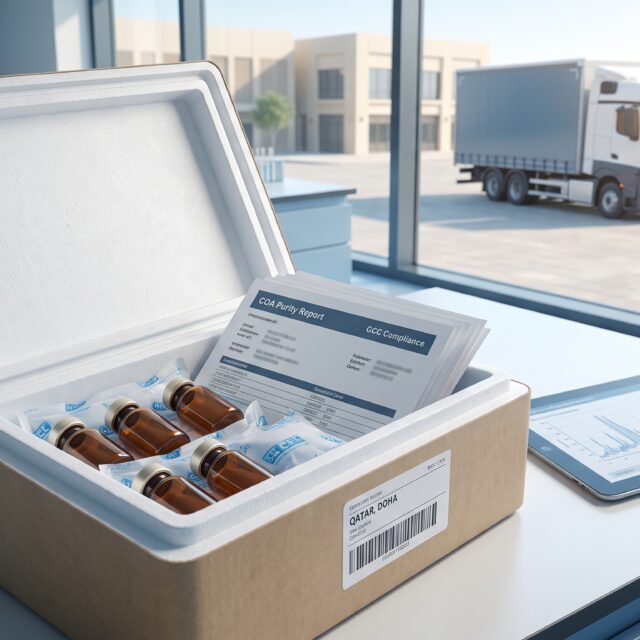
The extreme GCC climate, where summer temperatures regularly exceed 40 degrees Celsius (104 degrees Fahrenheit), poses a severe risk to molecular integrity. While lyophilized (freeze-dried) powder is significantly more stable than reconstituted liquid, prolonged exposure to high heat during transport in uninsulated delivery trucks can break down delicate peptide bonds through a process called thermal degradation.
International shipments without specialized cold-chain logistics often spend days on hot tarmacs or in un-air-conditioned customs facilities. This makes localized, temperature-controlled logistics a non-negotiable requirement for researchers in the region. Sourcing from a supplier that utilizes rapid regional transit—such as leveraging UAE next-day delivery and GCC logistics protocols—drastically minimizes the time your compounds spend in vulnerable transit conditions.
Secure Sourcing with NOVA Labs
At NOVA Labs, we understand the complexities and high stakes of procuring authentic research compounds in the GCC. We eliminate the guesswork by providing fully transparent, verifiable third-party testing for every single batch we produce. Our independent COAs include both HPLC purity and Mass Spectrometry identity verification, ensuring absolute precision for your laboratory protocols.
Furthermore, we solve the region’s environmental and logistical challenges by operating locally. By utilizing specialized insulated packaging and managing our own regional supply chain, we prevent the thermal degradation that plagues overseas imports and delayed customs clearances.
To secure your next protocol with fully documented, batch-tested products, browse our full selection of premium research compounds today.
Conclusion
Spotting fake peptides in Bahrain comes down to empirical verification and logistical awareness. Never rely on a vendor’s marketing claims or static website images. Always demand batch-specific, verifiable third-party COAs featuring both HPLC and Mass Spectrometry. Understand the limitations of importing unregistered chemicals through Bahrain customs, and prioritize regional suppliers who protect their inventory with strict cold-chain protocols. By adhering to these guidelines, you can safeguard your research investments and ensure reliable, repeatable laboratory results.
Disclaimer: The products mentioned in this article are for in vitro research and laboratory purposes only. They are not intended for human consumption, diagnostic use, or clinical treatment.
*
References
- GS1 Standards & NHRA-MVC Hub. (2023). Pharmaceutical Serialization in the GCC: Spotlight on Bahrain. Cosmotrace.
- Bahrain Customs Authority. (2024). Import restrictions and duty thresholds for pharmaceutical and chemical imports. International Trade Administration.
- Janoshik Analytics. (2024). Independent laboratory testing protocols for lyophilized peptide stability under thermal stress.
- PeptiMap. (2023). My Peptides Arrived Warm With No Ice — Are They Ruined?
- OzPeptide. (2023). Understanding Peptide Storage: Stability, Temperature, and Light Exposure.
Disclaimer: The products mentioned in this article are for research purposes only and are not intended for human consumption.
- How to tell if a peptide vendor is legit: the checks I run on every new source
- How to Avoid Peptide Scams: Best Guide 2026 – PSPeptides
- Pharmaceutical Serialization in the GCC: Spotlight on Bahrain – Cosmotrace
- Bahrain – Prohibited and Restricted Imports – International Trade Administration
- My Peptides Arrived Warm With No Ice — Are They Ruined? | PeptiMap
- Understanding Peptide Storage: Stability, Temperature, and Light Exposure – OzPeptide
Frequently asked questions
How do I check if my peptide COA is real?
To verify a Certificate of Analysis (COA), look for a verification code or QR link on the document. Enter this code directly on the independent testing laboratory's official website (such as Janoshik or MZ Biolabs) to ensure the report has not been digitally manipulated.
Why is HPLC testing not enough for peptides?
High-Performance Liquid Chromatography (HPLC) only measures the purity and concentration of the substance in the vial, not its identity. You must also check Mass Spectrometry (MS) data to verify the exact molecular weight and confirm it is the correct peptide sequence.
Do peptides degrade in Bahrain's summer heat?
Yes. While lyophilized (freeze-dried) powder is somewhat resilient, prolonged exposure to temperatures above 40 degrees Celsius during uninsulated transit or customs delays can break down delicate peptide bonds, rendering the research compound degraded.
Why do research peptides bypass Bahrain NHRA serialization?
Because peptides are sold strictly as unregistered research chemicals for laboratory use, rather than approved retail pharmaceuticals, they do not fall under the NHRA-MVC Hub's GS1 serialization mandates. Buyers must rely entirely on independent third-party lab testing.
Is it safe to buy research compounds from vendors who only accept cryptocurrency?
Vendors who only accept unrecoverable payment methods like cryptocurrency, Western Union, or untraceable wire transfers present a major red flag. Legitimate regional suppliers offer secure credit card gateways alongside alternative payment options.
Nova Labs buyer tools
Ready to verify stock, testing and delivery?
Use the product page and lab report section to check availability, documentation, delivery timing and support before placing an order.
- COA / test-report checks
- Bahrain delivery context
- Cold-chain handling
- COD and card payment options
- WhatsApp support