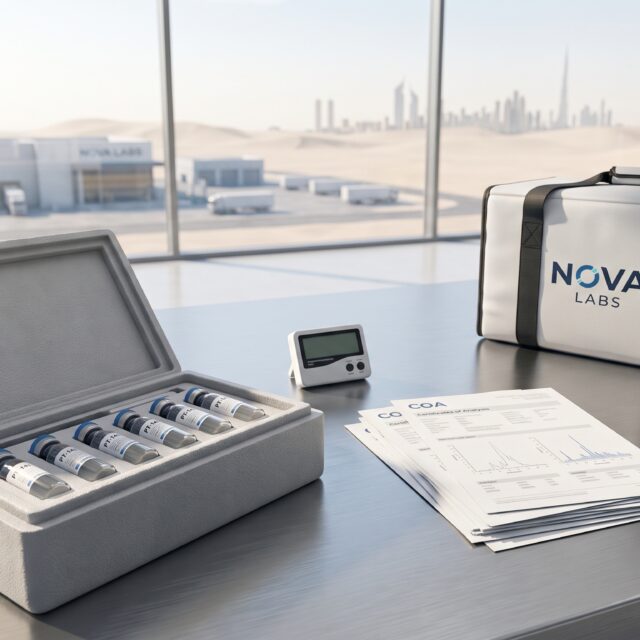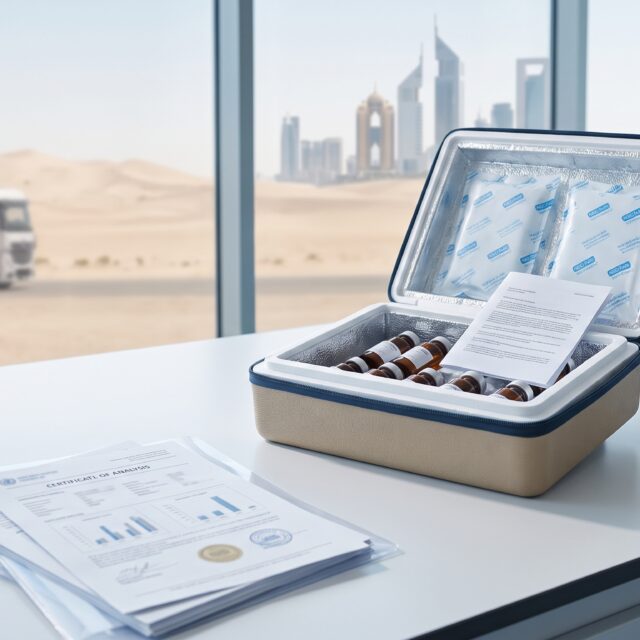


Finding high-quality research compounds in the GCC can be a complex process for procurement staff and independent investigators. The market for GHK-Cu in Bahrain is increasingly polarized. On one side, consumer platforms like Noon and local pharmacies offer pre-mixed cosmetic serums focused on mass-market skin and scalp applications. On the other side, specialized distributors provide high-purity, lyophilized vials strictly designed for laboratory use and structural analysis. For those looking to buy GHK-Cu in Bahrain for serious evaluation, navigating this divide requires an understanding of chemical stability, regional customs protocols, and purity verification.
This guide breaks down exactly how to evaluate suppliers, understand local import regulations, and ensure your materials survive the intense regional climate during transit without degradation.
Quick Answer: How to Buy GHK-Cu in Bahrain
To buy GHK-Cu in Bahrain effectively, research buyers should strictly prioritize lyophilized (freeze-dried) formats over pre-mixed aqueous serums to prevent thermal degradation during transit. Always verify a batch-specific Certificate of Analysis (COA) proving at least 99% HPLC purity, and utilize suppliers operating within reliable regional GCC courier networks to minimize customs friction.
The Challenge of Ambient Heat: Lyophilized Powder vs. Cosmetic Serums
The climate in Bahrain, particularly during the summer months, introduces a significant logistical hurdle for the transport of biological materials and peptides. Ambient temperatures routinely exceed thresholds that destabilize fragile molecular structures.
When evaluating a GHK-Cu supplier in Bahrain, the format of the peptide is the most critical decision a buyer will make. Retail platforms frequently stock pre-mixed aqueous solutions. While these are highly convenient for casual end-consumers, peptides suspended in liquid are notoriously vulnerable to temperature fluctuations. Prolonged exposure to high heat during standard delivery routes can lead to rapid hydrolysis and structural degradation of the peptide bonds, compromising the integrity of the compound before it even reaches the laboratory bench.
Why Freeze-Dried is the Research Standard
For rigorous laboratory work, lyophilized (freeze-dried) GHK-Cu is essential. Lyophilization is a process that removes water from the compound while it is frozen, resulting in a stable powder. This dehydration effectively pauses the molecular degradation process, making the peptide highly resilient to the temperature spikes common in standard courier networks.
Research-grade GHK-Cu is distinctively identifiable by its light blue powder, a natural characteristic of the copper-peptide complex. Only when the researcher is ready to begin their in vitro studies is the powder reconstituted using bacteriostatic water or an appropriate solvent. This ensures the peptide maintains its peak structural integrity right up until the moment of application or analysis.
Understanding Bahrain Customs and NHRA Regulations
Importing biological materials and research compounds into Bahrain requires careful attention to local regulations. The National Health Regulatory Authority (NHRA) heavily regulates the importation of pharmaceuticals, medical devices, and cosmetics. However, materials designated strictly for “Research Use Only” (RUO) follow a different operational pathway, provided the documentation is accurate and transparent.
Documentation and Customs Clearance
When ordering GHK-Cu from international or regional suppliers, the commercial invoice must clearly state the nature of the product. Ambiguous labeling can result in immediate customs holds or confiscation. Reputable suppliers understand this requirement and explicitly label shipments with the correct Harmonized System (HS) codes for laboratory consumables and research chemicals, ensuring smoother passage through Bahrain Customs.
Calculating Import Duties and VAT
Bahrain operates under standard GCC customs frameworks. For smaller research orders shipped via international couriers (such as DHL, FedEx, or Aramex), shipments with a declared value below BHD 300 (approximately USD 795) are typically duty-free, though minor courier handling fees may apply.
However, for procurement teams processing larger institutional orders, it is vital to account for taxes. Shipments exceeding the BHD 300 threshold generally incur a 5% customs duty, along with Bahrain’s standard 10% Value Added Tax (VAT). These percentages are calculated based on the CIF value (Cost, Insurance, and Freight). Partnering with a supplier who provides accurate commercial invoices prevents unexpected delays and accurately projects total procurement costs.
The COA Standard: Verifying Purity Before You Order
Operating in an unregulated online market means buyers must take verification into their own hands. A polished website is not a substitute for raw data. The absolute minimum standard for a credible peptide supplier is the transparent provision of third-party testing documentation, specifically the Certificate of Analysis (COA).
When evaluating a potential GHK-Cu supplier, procurement teams must look for two specific analytical reports:
- High-Performance Liquid Chromatography (HPLC): This test separates the components in a mixture to verify the purity of the peptide. For high-level research applications, the HPLC report must show a purity level of 99% or higher. Lower purities often contain synthesis byproducts or fragmented peptide chains that can skew experimental data.
- Mass Spectrometry (MS): This analysis confirms the exact molecular weight of the compound, ensuring that the substance in the vial is genuinely the copper-glycyl-l-histidyl-l-lysine complex and not a cheaper structural analogue.
Furthermore, these documents must be batch-matched. A generic COA from three years ago provides zero assurance about the quality of the current inventory. Informed buyers should always match the batch number on the physical vial they receive with the analytical documentation provided by the supplier.
Streamlining Procurement: The Advantage of Regional GCC Logistics
Even with lyophilized stability, transit time remains a crucial factor. Sourcing GHK-Cu directly from manufacturers in overseas hubs like North America or East Asia often exposes the shipment to extended transit times, multiple customs hand-offs, and prolonged sitting in un-air-conditioned sorting facilities.
This is where regional suppliers present a distinct operational advantage. By utilizing hubs within the GCC, suppliers can leverage rapid express courier networks to drastically cut down transit times. A package moving from a neighboring GCC hub to Manama can clear customs and arrive at the destination facility in a fraction of the time it takes an intercontinental shipment.
For buyers looking to establish a secure supply chain, utilizing a reliable regional peptide delivery network ensures that your materials spend the absolute minimum time in transit. This localized approach not only protects the structural integrity of the compounds but also allows for more responsive customer support, often localized to regional time zones via WhatsApp or direct email.
Conclusion: Sourcing with Confidence
Procuring high-quality research materials in Bahrain does not have to be a gamble. By understanding the critical differences between unstable consumer serums and resilient lyophilized powders, researchers can ensure they are starting their projects with viable compounds.
Always insist on transparent, batch-matched HPLC and Mass Spectrometry testing to verify the 99%+ purity of your materials. Furthermore, factor in the logistics: prioritize suppliers who understand the realities of GCC heat and NHRA customs requirements, and who utilize express regional shipping to protect your investment.
If you are ready to secure highly verified, batch-tested materials for your laboratory, you can directly order GHK-Cu through NOVA Labs, ensuring strict quality control and rapid, secure logistics across the GCC.
Disclaimer: The products mentioned in this article are for research purposes only and are not intended for human consumption or therapeutic use.
References
- International Trade Administration. (n.d.). Bahrain – Prohibited and Restricted Imports.
- Aramex. (n.d.). Customs Clearance – Bahrain.
- FormBlends. (n.d.). GHK-Cu Legal Status: Complete Guide.
- GHK-Cu Bahrain: Buying, Purity, COA and Delivery Guide – NOVA Labs
- Bahrain – Prohibited and Restricted Imports – International Trade Administration
- Customs Clearance – Bahrain – Aramex App
- Buy GHK-Cu UAE — Copper Peptide Serum for Skin Research in Dubai
- GHK-Cu Legal Status: Complete Guide – FormBlends
Frequently asked questions
Can I import GHK-Cu into Bahrain legally?
Yes, GHK-Cu can be imported into Bahrain when clearly documented and designated for Research Use Only (RUO). Shipments must comply with Bahrain Customs and NHRA documentation requirements for laboratory consumables.
Will I pay customs duty on peptide orders in Bahrain?
International courier shipments to Bahrain with a declared CIF (Cost, Insurance, Freight) value under BHD 300 (approx. USD 795) are generally exempt from standard customs duties. Shipments exceeding this threshold typically incur a 5% duty and a 10% VAT.
Why is lyophilized GHK-Cu better for the GCC climate?
Lyophilized (freeze-dried) GHK-Cu has the water removed, which drastically slows molecular degradation. This makes the compound highly stable and capable of withstanding the high ambient temperatures common during GCC transit, unlike pre-mixed aqueous serums.
What documentation should a GHK-Cu supplier provide?
A credible supplier must provide a batch-specific Certificate of Analysis (COA). This should include a High-Performance Liquid Chromatography (HPLC) report showing at least 99% purity and a Mass Spectrometry (MS) report confirming the exact molecular weight.
How long does delivery to Bahrain usually take from regional suppliers?
When sourcing from regional GCC hubs like the UAE, express couriers (such as DHL or FedEx) can typically deliver to Bahrain within a few business days, significantly reducing the transit times and thermal exposure associated with overseas shipping.
Nova Labs buyer tools
Ready to verify stock, testing and delivery?
Use the product page and lab report section to check availability, documentation, delivery timing and support before placing an order.
- COA / test-report checks
- Bahrain delivery context
- Cold-chain handling
- COD and card payment options
- WhatsApp support