
Where to Buy TB-500 in Bahrain: Sourcing Challenges
If you are looking to buy TB-500 in Bahrain, the primary hurdle is separating legitimate, research-focused suppliers from international e-commerce aggregators. The safest approach is to choose a regional GCC supplier providing third-party HPLC testing, ensuring a verifiable compound without the heat degradation common with overseas shipping.
Under Bahrain’s National Health Regulatory Authority (NHRA) frameworks and broader GCC guidelines, legitimate peptide companies sell TB-500 exclusively as a ‘Research-Use Only’ chemical. They strictly omit human therapeutic, athletic, or dosage guidelines to avoid compliance violations. However, the market is saturated with overseas platforms making unsanctioned human-use claims, leaving buyers with compliance risks and compromised research integrity. This guide breaks down exactly how to evaluate your sourcing options, verify product purity, and ensure safe regional delivery.
Quick Buyer Checklist: What Matters Most
Before you place an order for TB-500, evaluating the supplier against a strict set of criteria is essential. A reliable peptide supplier in the GCC should transparently provide the following:
- Third-Party COA Visibility: The supplier must provide up-to-date Certificates of Analysis (COA) featuring High-Performance Liquid Chromatography (HPLC) and Mass Spectrometry (MS) data.
- Strictly ‘Research Only’ Compliance: Legitimate suppliers will not advertise TB-500 with dosage instructions, injection protocols, or promises of physical healing.
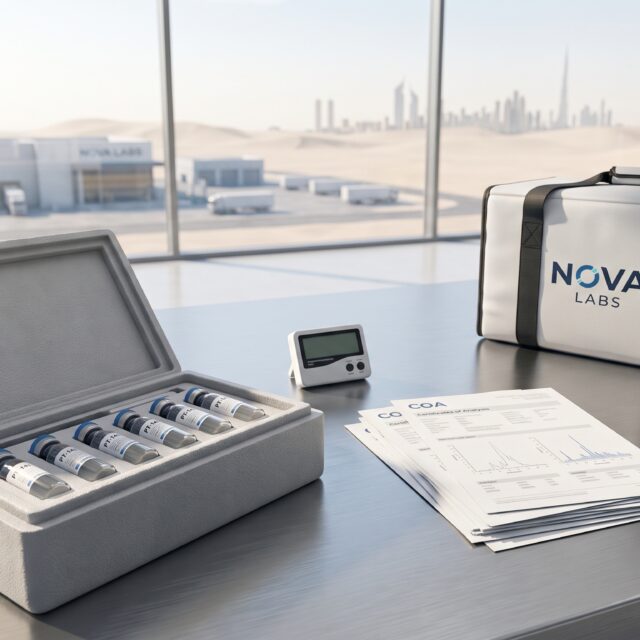
- Climate-Controlled Logistics: In the extreme heat of the GCC, standard international mail guarantees peptide degradation. The supplier must explicitly outline their temperature-controlled shipping methods.
- Localized Support: Look for clear communication channels, such as an active WhatsApp support line and regional payment gateways, rather than untraceable overseas wire transfers.
Regional GCC Suppliers vs. Global Aggregators
The most significant mistake researchers make when trying to order TB-500 in Bahrain is utilizing international e-commerce aggregators. While these platforms list an enormous variety of chemicals, they function as middlemen importing from disparate global distributors.
This aggregator model introduces severe risks to peptide viability. First, transit times routinely stretch between 5 to 20 days. Second, these generic parcels navigate standard customs checkpoints without the proper research documentation that specialized peptide suppliers provide, increasing the risk of friction or seizure at the border.
Conversely, regional players establish localized supply chains with fast GCC transit times. By stocking inventory regionally and utilizing specialized courier networks, local suppliers dramatically reduce the time a compound spends in transit. This specialized approach bypasses the bottleneck of standard international mail and ensures that the lyophilized peptide powder remains stable until it reaches your laboratory.
Defeating the GCC Heat: Why Cold-Chain Logistics Matter
Peptide stability is a critical factor in producing reliable research data. TB-500 is typically sold as a lyophilized (freeze-dried) sterile powder. While lyophilization makes the peptide significantly more stable than a liquid solution, it is not immune to degradation—especially in the GCC, where summer temperatures frequently exceed 40 degrees Celsius.
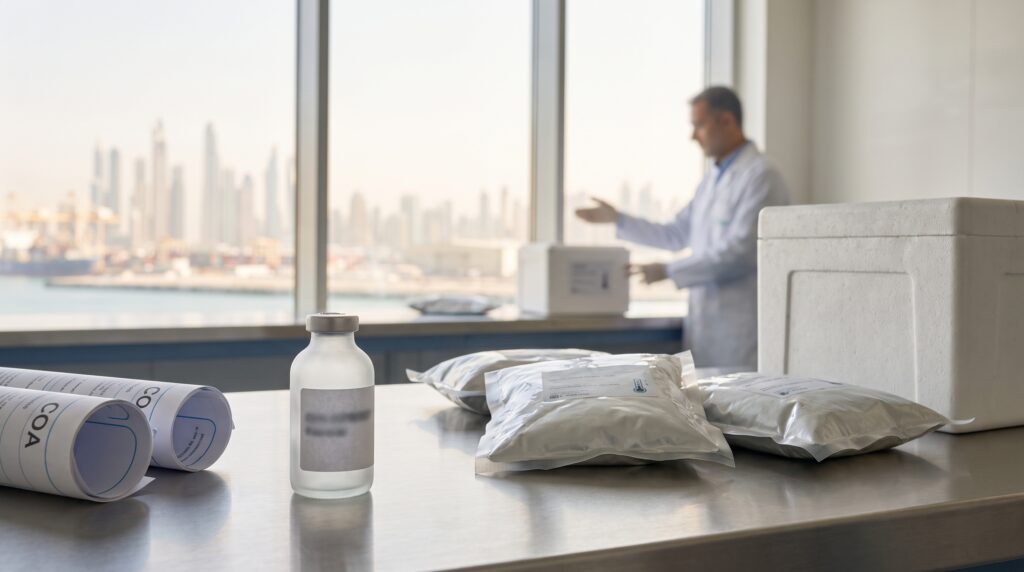
When standard international shipping methods are utilized by overseas aggregators, packages often sit in un-airconditioned cargo holds, tarmac loading zones, and delivery vans. Prolonged exposure to high ambient temperatures degrades fragile peptide bonds, leading to a loss of chemical integrity and compromised in vitro testing results.
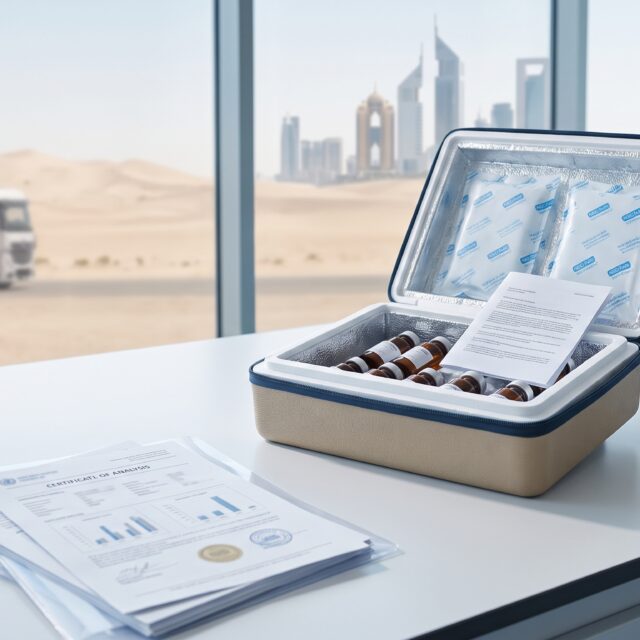
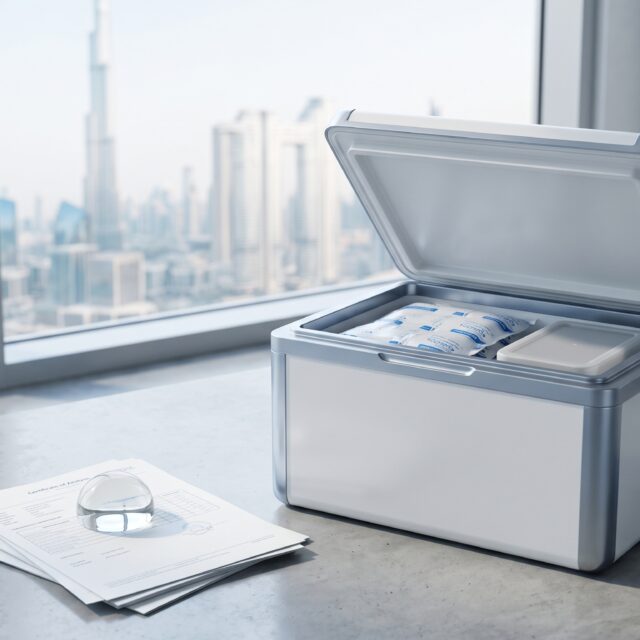
This is why regional cold-chain fulfillment is paramount. A reputable supplier ensures that orders are dispatched quickly and transported in temperature-mitigated packaging. Once the vial arrives at your facility and is reconstituted with bacteriostatic water, it must be continuously stored at 2 to 8 degrees Celsius. Relying on specialized regional shipping, such as the logistics highlighted in our guide to fast regional delivery methods, is the only way to guarantee your research compounds arrive intact and ready for study.
Verifying Quality: HPLC and Mass Spectrometry
When evaluating a TB-500 supplier in Bahrain, the Certificate of Analysis is your primary defense against substandard materials. A legitimate COA is not just a digital badge; it is a complex scientific document that proves the exact chemical composition of the vial.
Researchers must demand two specific analytical tests on the COA:
High-Performance Liquid Chromatography (HPLC)
HPLC determines the purity of the peptide. It separates the components in a mixture, allowing researchers to see the exact percentage of the target compound versus impurities or synthetic byproducts. For robust laboratory studies, TB-500 should demonstrate a purity of 99 percent or higher on an HPLC readout.
Mass Spectrometry (MS)
While HPLC confirms purity, Mass Spectrometry confirms identity. MS measures the mass-to-charge ratio of ions, verifying that the molecular weight of the powder in the vial exactly matches the known molecular sequence of Thymosin Beta-4 derivatives. Without MS testing, an HPLC test could theoretically show 99 percent purity of an entirely different chemical.
Wholesale buyers and institutional labs should never accept internal, unverified factory testing from white-label suppliers without secondary, independent verification.
Popular Formulations: The TB-500 and BPC-157 Synergy
In tissue repair and cellular migration studies, TB-500 is rarely researched in isolation. It is frequently co-formulated with BPC-157 (often in 5mg/5mg or 10mg/10mg configurations) for broader in vitro studies focusing on cellular regeneration.
The scientific rationale behind blending these two compounds lies in their complementary cellular mechanisms. TB-500 acts as an actin-binding protein, playing a critical role in cellular migration, angiogenesis, and the up-regulation of actin structures essential for tissue regeneration. BPC-157 operates through a separate pathway, primarily studied for its influence on growth hormone receptor up-regulation and the promotion of nitric oxide synthesis.
By utilizing both compounds simultaneously in a single sterile vial, researchers can observe parallel regenerative effects on cellular models that would be impossible to replicate with a single isolated sequence.
How NOVA Labs Serves the Bahrain Research Market
Procuring specialized research chemicals requires a supplier that understands the operational realities of the GCC market. NOVA Labs bridges the gap between premium global manufacturing standards and localized delivery constraints, ensuring that laboratories in Bahrain have consistent access to top-tier compounds.
When you choose to order TB-500 through a dedicated regional supplier, you unlock several critical advantages:
- Guaranteed COA Access: Every batch is backed by up-to-date HPLC and Mass Spectrometry documentation, ensuring you receive exactly what is printed on the label, at 99 percent or higher purity.
- Climate-Controlled Regional Logistics: We bypass the 20-day transit times of international aggregators, utilizing rapid, temperature-mitigated dispatch to protect the integrity of the lyophilized powder.
- Seamless Procurement Channels: We provide localized payment pathways and dedicated support, giving procurement staff and researchers direct access to status updates and stock checks.
Final Thoughts on Peptide Procurement in the GCC
Whether you are conducting independent in vitro studies or managing procurement for a larger laboratory, the source of your research compounds dictates the validity of your results. Bypassing unverified global aggregators in favor of transparent, regionally focused suppliers ensures your lab receives stable, properly tested materials.
Take the time to evaluate the COA, confirm the shipping logistics, and ensure the supplier respects the strict ‘Research Only’ boundaries mandated by regional health authorities. By doing so, you protect both your financial investment and the integrity of your scientific inquiry.
Disclaimer: The products mentioned in this article are for in vitro laboratory research purposes only and are strictly not intended for human consumption or clinical use.
References
- National Health Regulatory Authority (NHRA), Kingdom of Bahrain. “Guidelines on the Importation of Chemicals and Pharmaceuticals for Laboratory Use.”
- Frokjaer, S., & Otzen, D. E. (2005). “Protein drug stability: a formulation challenge.” Nature Reviews Drug Discovery.
- United States Pharmacopeia (USP) <1047> Biotechnology-Derived Articles—Tests for HPLC and Mass Spectrometry validation methods.
- Peptides Lab GCC – High-Purity Research Peptides | GCC Supply for Laboratories
- Navigating the Landscape of Peptides Bahrain – pccab.com
- TB-500 – Emirates Peptides
- Rejevity TB-500 25mg (Thymosin Beta-4) in Bahrain | Whizz Proteins – Whizzcart.com
- TB-500 5MG Highly Purified, TFA Removed, Pharma Bahrain | Ubuy
Frequently asked questions
Is it legal to buy TB-500 in Bahrain?
Yes, it is legal to purchase TB-500 in Bahrain provided it is strictly procured for in vitro laboratory research purposes. It is classified as a research chemical and must not be marketed or utilized for human consumption.
How long does TB-500 delivery take to Bahrain?
Delivery times vary significantly depending on the supplier's location. Global e-commerce aggregators can take between 5 to 20 days, whereas dedicated regional GCC suppliers utilize specialized courier networks to deliver much faster.
What should I look for on a TB-500 Certificate of Analysis?
A legitimate COA should include High-Performance Liquid Chromatography (HPLC) testing demonstrating at least 99% purity, alongside Mass Spectrometry (MS) results that confirm the correct molecular weight of the peptide.
Can TB-500 be shipped safely in the extreme GCC heat?
Yes, but only if the supplier avoids standard international mail services. Reputable regional suppliers use rapid, temperature-mitigated cold-chain logistics to protect the fragile lyophilized powder from degrading in transit.
Why is TB-500 often combined with BPC-157 in research?
In in vitro cellular studies, TB-500 and BPC-157 are frequently blended because their distinct cellular mechanisms—actin binding and growth hormone receptor upregulation—offer parallel, synergistic effects when studying tissue repair models.
Nova Labs buyer tools
Ready to verify stock, testing and delivery?
Use the product page and lab report section to check availability, documentation, delivery timing and support before placing an order.
- COA / test-report checks
- Bahrain delivery context
- Cold-chain handling
- COD and card payment options
- WhatsApp support