

How to Verify a Janoshik Test Report: The Analytical Standard
Sourcing high-purity peptides for laboratory use requires strict adherence to quality control, especially in regions with demanding climates like the UAE. Learning how to verify a Janoshik test report is the first and most critical step for researchers conducting due diligence on a new supplier. Janoshik Analytical, an independent analytical chemistry laboratory based in the Czech Republic, is widely recognized as the global benchmark for third-party validation in the research peptide industry.
Quick answer: To verify a Janoshik test report, locate the Task Number and Unique Key printed at the top of the Certificate of Analysis (COA). Next, navigate to verify.janoshik.com, enter both codes into the authentication portal, and confirm the downloaded database file matches your supplier’s document precisely.
While possessing a test report is a positive signal, a static PDF is only as valuable as its authenticity. In the gray market of biological compounds, documents are frequently altered, reused, or forged outright. This guide breaks down exactly how to authenticate a Janoshik COA, ensuring the testing data you see matches the exact physical vials delivered to your laboratory bench.
Why UAE Researchers Demand Independent COAs
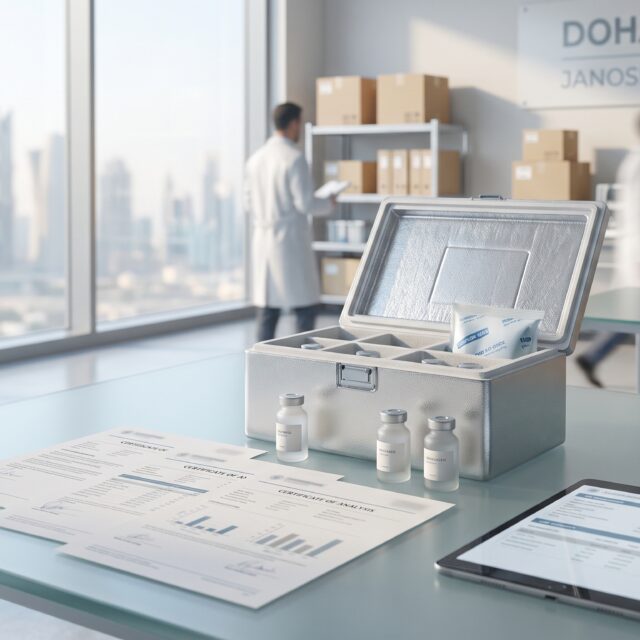
Procuring research materials in Dubai, Abu Dhabi, and the wider GCC presents unique logistical challenges. A defining variable in this region is temperature volatility. Peptides are fragile sequences of amino acids that can rapidly degrade when exposed to elevated temperatures or prolonged transit times without proper cold-chain management.
A supplier might have initially sourced high-purity materials, but if those compounds sat in a non-climate-controlled customs warehouse for two weeks during the height of summer, their structural integrity is compromised. This is why a generic Janoshik labs COA from two years ago provides zero operational value to a modern researcher.
To ensure research continuity and reproducible results, buyers in the UAE require fresh, batch-specific testing. Batch testing ensures that the exact lot of vials currently sitting in a supplier’s regional warehouse has been independently assessed. When a supplier utilizes a transparent Janoshik verify process, they provide researchers with objective data that their internal storage, handling, and shipping protocols have successfully protected the compound’s integrity.
The Janoshik Verify Process (Step-by-Step)
Authentication requires crossing-referencing the vendor’s supplied PDF or image against Janoshik’s secure internal servers. Here is the exact workflow a procurement officer or researcher should follow before clearing an order.
Step 1: Locate the Task Number
Every legitimate test run at Janoshik Analytical is assigned a specific Task Number. This functions as the primary tracking ID for that specific laboratory analysis. You will typically find this number at the top right or top left of the document format. It represents the chronological logging of the sample into their testing queue.
Step 2: Identify the Unique Key
Below or adjacent to the Task Number is the most critical piece of data on the page: the Unique Key. The Janoshik verify unique key is an alphanumeric string generated exclusively for the client who commissioned the test. Because this key acts as the password to access the original file, it is the ultimate proof of ownership. If a vendor shares a COA, they must provide this key unredacted.
Step 3: Access the Janoshik Verification Page
Open a secure web browser and navigate directly to the official Janoshik verification page at `verify.janoshik.com`. Do not use links embedded inside the PDF itself, as malicious PDFs can route you to spoofed websites designed to look like the authentic portal. Always type the URL manually.
Step 4: Input the Data and Cross-Reference
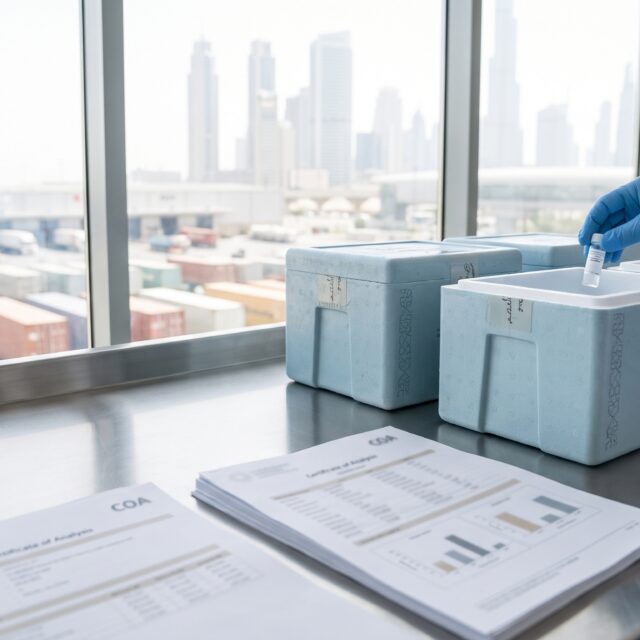
Once on the portal, input the Task Number and Unique Key into their respective fields. When you submit the request, the portal will fetch the original, unalterable laboratory report directly from the Czech Republic servers. Place your vendor’s document side-by-side with the database result and perform a line-by-line comparison. Check the test date, the sample name, the batch number, and the quantitative purity results. If a single decimal point differs, the document you were provided is fraudulent.
Reading the Results: HPLC Purity vs. LC-MS Identity
A genuine report provides two distinct pieces of scientific data, both of which are required to confirm the quality of a research peptide.
High-Performance Liquid Chromatography (HPLC) is utilized to determine the purity percentage of the compound. The HPLC graph displays peaks that represent different molecules detected in the vial. The primary peak is the target peptide, and smaller secondary peaks represent manufacturing byproducts, synthesis errors, or degraded fragments. A purity score of 99% means that 99% of the detectable material in that vial is the target compound.
However, purity alone is insufficient. If a vial contains 99% pure sodium chloride, it is highly pure, but completely useless for peptide research. This is where Liquid Chromatography-Mass Spectrometry (LC-MS) becomes necessary. The LC-MS test confirms molecular identity by analyzing the exact molecular mass of the substance and cross-referencing it against the known mass of the target peptide sequence. A legitimate Janoshik test will always display both HPLC purity and MS identity to prove the vial is exactly what the label claims it to be.
4 Red Flags of Forged or Reused Peptide Reports
Even when you know how to verify a Janoshik test report, you must remain vigilant for deceptive vendor practices. Suppliers who lack the operational capital to test every batch frequently resort to misleading documentation strategies. Always look out for these four critical red flags.
1. The Redacted Unique Key
The most common indicator of a stolen report is a redacted, blurred, or blacked-out Unique Key. A vendor who redacts this code cannot allow you to view the database file, usually because the original file reveals a different company’s name or a different test date. If you cannot execute a Janoshik verify command, you must assume the document is fabricated.
2. Mismatched Batch Numbers
The COA must explicitly state a batch or lot number that matches the physical sticker on the vial you receive. If a supplier sends you Batch #005, but the COA on their website refers to Batch #001 from three years prior, you have absolutely no analytical proof regarding the current purity of the compound.
3. Missing Sample Mass Data
While HPLC confirms purity and MS confirms identity, neither confirms dosage. High-tier Janoshik reports will also test for sample mass (e.g., verifying that a vial sold as 10mg actually contains 10.2mg of material). Gray-market suppliers often under-dose vials to increase profit margins. A comprehensive COA will confirm not just the compound’s identity, but its exact quantitative yield.
4. Outdated Test Dates
Research compounds degrade over time, particularly in hot climates. A test report generated 18 to 24 months ago represents historical data, not current stock viability. Premier suppliers implement continuous testing protocols, rotating their inventory and updating their public databases to reflect recent, valid analytical runs.
Cross-Referencing Your Vials with NOVA Labs
In the UAE, transparency is the foundation of trustworthy procurement. At NOVA Labs, we understand that sophisticated researchers require empirical proof before introducing a compound into a controlled protocol. We do not just claim high purity; we finance independent verification for our inventory and publish the exact data required for you to run the authentication yourself.
We encourage all prospective buyers to navigate to the NOVA Labs transparent database of lab results prior to placing an order. On this page, you will find our most recent Janoshik Analytical certificates, complete with unredacted Task Numbers and Unique Keys. We want you to manually verify our documentation against the official Janoshik servers.
By ensuring batch-specific transparency, maintaining strict cold-chain logistics from our UAE fulfillment center, and offering secure local delivery, we eliminate the guesswork from research material acquisition. Once you have validated the analytical data to your satisfaction, you can confidently procure fully validated research peptides directly from our active inventory.
Conclusion & Best Practices
Knowing how to verify a Janoshik test report is an essential skill for modern researchers. The process takes less than a minute but prevents weeks of wasted laboratory time and compromised data. Always locate the Task Number and Unique Key, utilize the official verify.janoshik.com portal, and demand that the batch number on the report matches the physical vial you receive. Reject any supplier that relies on redacted documents, outdated tests, or generic purity claims without LC-MS identity confirmation.
By holding your suppliers to rigorous analytical standards, you safeguard your research integrity and ensure the compounds you utilize are precisely what they claim to be.
Disclaimer: The products mentioned in this article are for research purposes only and are not intended for human consumption or therapeutic use.
References
- Janoshik Analytical Laboratory Official Verification Protocols
- “Peptide Purity Analysis via HPLC,” Journal of Liquid Chromatography
- Cold-Chain Logistics and Peptide Stability – Regional Supply Chain Data
- NOVA Labs Quality Control: Understanding Third-Party Testing in the GCC
- How to Read a Janoshik COA: HPLC Purity, LC-MS Identity & Endotoxin Results (2026)
- Janoshik Testing Explained: How Verification Works – World Wide Peptides
- How to Read a Peptide COA + Verify a Janoshik Report – CertaPeptides
- What Janoshik Testing Actually Tells You (And What It Doesn’t) – NorthPeptide
- Janoshik & ILS Lab Reports (COAs) – Panda Peptides
- Peptide Storage Guide | UAE Core Peptides
- Janoshik Tested Peptides Qatar: COA and Purity Verification – NOVA Labs
Frequently asked questions
How do I use the Janoshik verification page?
Navigate to verify.janoshik.com and enter the Task Number and Unique Key found at the top of your test report. The system will retrieve the original laboratory file for you to compare against your document.
Why is the unique key redacted on my Janoshik test report?
A redacted unique key is a major red flag indicating the vendor likely does not own the test or is attempting to hide mismatched information. Reputable suppliers will always display the full unique key for independent verification.
What is the difference between HPLC and LC-MS testing?
High-Performance Liquid Chromatography (HPLC) measures the purity percentage of a compound, while Liquid Chromatography-Mass Spectrometry (LC-MS) confirms its exact molecular identity.
Why do peptide test reports need to be batch-specific?
A generic COA does not account for manufacturing variations or transit degradation. Batch-specific testing ensures that the exact lot you received has been independently verified for purity and identity.
Does Janoshik test for total peptide mass?
While HPLC determines purity and LC-MS confirms identity, comprehensive Janoshik reports will also evaluate total sample mass. This helps researchers ensure the vial is accurately dosed according to the label claim.
Nova Labs buyer tools
Ready to verify stock, testing and delivery?
Use the product page and lab report section to check availability, documentation, delivery timing and support before placing an order.
- COA / test-report checks
- UAE delivery context
- Cold-chain handling
- COD and card payment options
- WhatsApp support