



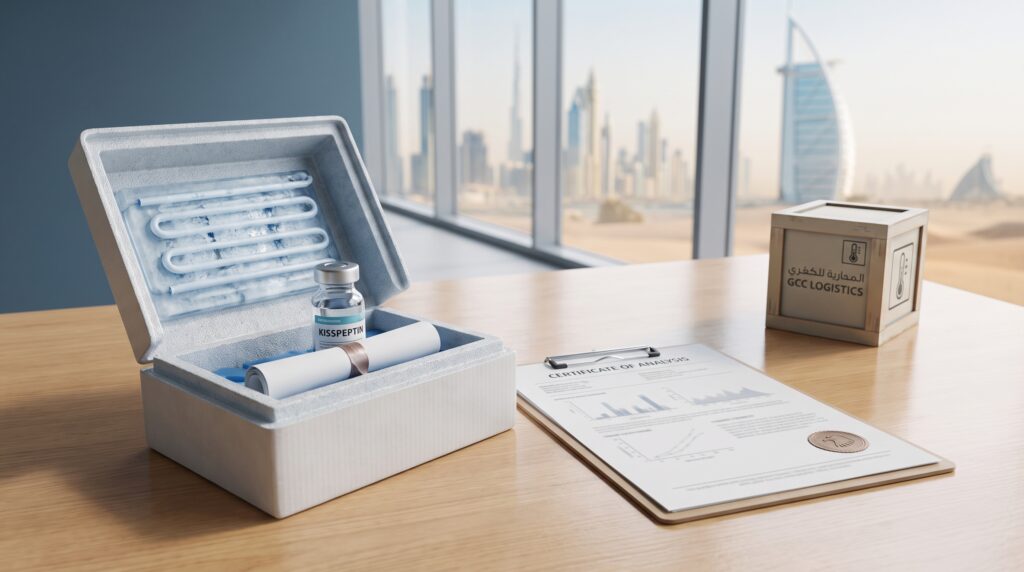
Procuring high-quality research materials in the Gulf region requires navigating a unique set of logistical and regulatory challenges. For procurement officers and laboratory professionals looking to buy kisspeptin dubai, the focus must immediately shift away from generic marketing claims and toward verifiable data. Extreme local temperatures, rigorous customs protocols, and the critical need for independent purity testing make choosing the right Kisspeptin supplier in Dubai a crucial decision for your laboratory.
For buyers looking to source Kisspeptin locally, verifying product purity and securing temperature-controlled delivery are the most critical steps. High-tier suppliers provide independent HPLC/MS Certificates of Analysis (COAs) and utilize specialized cold-chain logistics to protect delicate lyophilized peptides from the extreme GCC heat.
Whether you are restocking an established research facility or evaluating a new regional distributor, understanding how to read testing documentation, confirm compliance with the Emirates Drug Establishment, and secure reliable regional shipping will safeguard your research investments.
Quick Answer: How to Buy Kisspeptin in Dubai
To safely buy Kisspeptin in Dubai, buyers must verify independent HPLC/MS Certificates of Analysis (COAs) ensuring ≥99% purity. It is critical to select regional suppliers utilizing insulated cold-chain logistics to prevent heat degradation during UAE transit, while strictly adhering to Emirates Drug Establishment guidelines for Research Use Only (RUO) materials.
Before placing an order for Kisspeptin peptide in the UAE, ensure your chosen supplier meets these baseline operational standards:
- Publicly Available COAs: The vendor must display batch-specific Certificates of Analysis (COA) from recognized, independent third-party laboratories (such as Janoshik or Uzorak).
- Purity Thresholds: Accept nothing less than ≥99% purity verified by High-Performance Liquid Chromatography (HPLC) and Mass Spectrometry (MS).
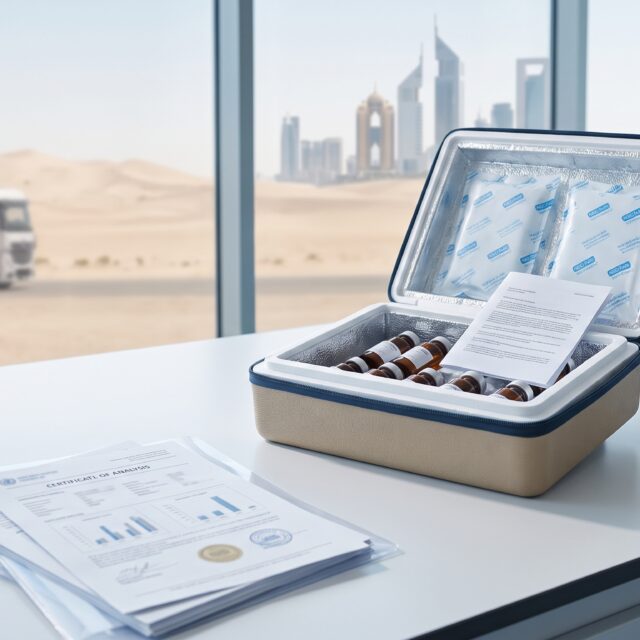
- Climate-Specific Logistics: The supplier must offer temperature-controlled or insulated cold-chain packaging for major UAE metro zones to prevent peptide degradation.
- RUO Compliance: Products must be strictly labelled for ‘Research Use Only’ to comply with local regulatory guidelines.
- Flexible Payment & Support: Look for accessible procurement channels, including WhatsApp support, Cash on Delivery (COD), and secure split-payment options like Tamara.
The Importance of Third-Party Testing and COAs
In the realm of research peptides, purity is the single most critical differentiator between a premium supplier and a subpar vendor. When you set out to order Kisspeptin Dubai, the presence of a legitimate Certificate of Analysis is your primary safeguard against degraded or contaminated batches.
Understanding HPLC and Mass Spectrometry
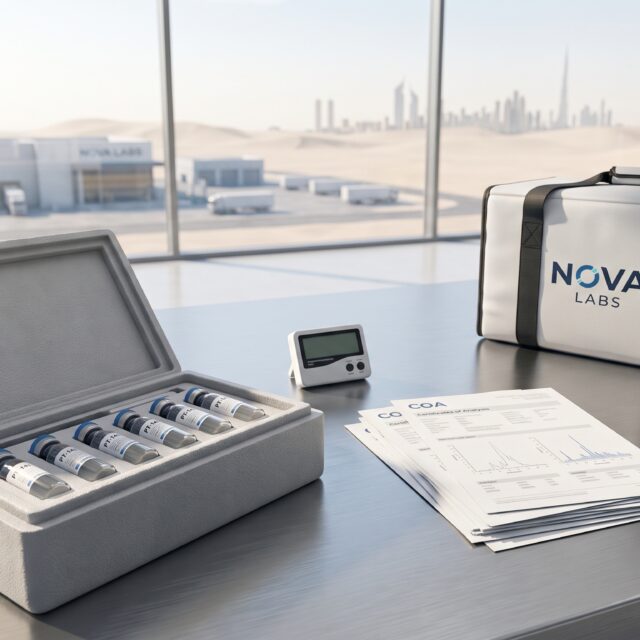
Top-tier regional suppliers do not rely solely on in-house manufacturing claims. Instead, they submit their lyophilized batches to renowned independent analytical laboratories—most notably Janoshik and Uzorak—for objective verification. These labs utilize High-Performance Liquid Chromatography (HPLC) to separate the components of the compound, identifying the exact percentage of the target peptide versus any leftover synthesis impurities.
Mass Spectrometry (MS) is then employed to confirm the exact molecular weight of the peptide, ensuring that the compound inside the vial is indeed Kisspeptin and not a mislabelled alternative. For rigorous research applications, an acceptable COA should demonstrate a purity level of 99% or higher.
How to Audit a Supplier’s Documentation
When reviewing a vendor’s website, look for the testing reports linked directly on the product page. A trustworthy COA will include the laboratory’s contact information, a unique verification or report number (which can often be checked against the testing lab’s own database), and the specific batch number matching the inventory being sold. If a supplier obscures this information, relies on outdated tests from years ago, or refuses to provide documentation upon request via WhatsApp or email, it is a strong signal to source your materials elsewhere.
Navigating UAE Delivery: Protecting Peptides from GCC Heat
The most significant hazard to peptide stability in the Middle East is the extreme climate. Kisspeptin is typically supplied in a lyophilized (freeze-dried) powder format. While lyophilization significantly enhances shelf life and stability compared to reconstituted liquid formats, prolonged exposure to the intense heat of a UAE summer inside an un-air-conditioned delivery van can still compromise the molecular integrity of the product.
Cold-Chain and Temperature-Controlled Shipping
To counteract the Gulf climate, leading local suppliers utilize cooled, insulated packaging protocols for deliveries within major UAE metropolitan zones. When you order from specialized distributors like NOVA Labs, transit times and environmental controls are optimized for research viability.
For metropolitan researchers, opting for specialized courier services is highly recommended. You can explore temperature-controlled same-day and next-day options to ensure your compounds arrive in pristine condition.
Standard Shipping Rates and GCC Logistics
Transparency in shipping policies is a strong indicator of an experienced supplier. For context, typical premium local logistics operate on tiered models:
- Dubai and Sharjah: Specialized delivery often costs around AED 30, with reputable suppliers offering free shipping on eligible orders over AED 400. Delivery in these metro areas is typically completed within 24 hours.
- Other Emirates (Abu Dhabi, Ajman, Fujairah, RAK, UAQ): Standard rates average AED 60, often free for orders exceeding AED 800.
- Broader GCC (Saudi Arabia, Bahrain, Oman, Qatar, Jordan): Cross-border standard shipping generally carries a flat fee of approximately AED 80 and takes about 5 business days. It is important to note that broader GCC shipping relies on standard logistics networks, meaning recipients must manage local customs clearance, and cold-chain guarantees are usually restricted to domestic UAE shipments.
Evaluating Your Kisspeptin Supplier in Dubai
Not all vendors operating in the UAE are equipped to handle the strict requirements of laboratory supply. When comparing options, informed buyers look beyond pricing and evaluate the supplier’s structural reliability.
RUO Compliance and the Emirates Drug Establishment
Under UAE regulatory guidelines overseen by the Emirates Drug Establishment (EDE), clinical-grade peptides intended for human consumption require a formal medical prescription and must be dispensed through licensed clinical pharmacies or supervised wellness clinics (such as specialized longevity centers in Dubai).
Conversely, online peptide distributors operate under a strict ‘Research Use Only’ (RUO) classification. A reputable Kisspeptin supplier Dubai will explicitly label all products as not for human consumption, avoiding medical claims, dosage instructions, or therapeutic promises on their product pages. This clear delineation protects both the buyer and the supplier by ensuring full compliance with regional online commerce regulations.
Lyophilized Vials vs. Pre-Mixed Formats
While browsing, you may notice Kisspeptin available in various formats, including 5mg and 10mg lyophilized vials, pre-mixed pens, or even nasal sprays (sometimes stacked with compounds like PT-141). For stringent laboratory research, lyophilized vials remain the gold standard. They offer maximum stability during transit and allow the researcher complete control over the reconstitution process using bacteriostatic water, ensuring precise concentration and sterility for in vitro studies.
Payment, Support, and Discrete Packaging
Frictionless procurement is highly valued by regional buyers. The best peptide suppliers in the GCC have adapted their payment and support systems to align with local preferences.
Flexible Payment Gateways and Tamara
Modern research suppliers in the UAE offer diverse, secure checkout options. Beyond standard credit and debit card processing (Visa, Mastercard) and digital wallets (Apple Pay, Google Pay), the integration of Buy Now Pay Later (BNPL) services has revolutionized procurement. Platforms like Tamara allow laboratories and independent researchers to split the cost of larger bulk orders into interest-free instalments, smoothing out procurement budgets.
Furthermore, the availability of Cash on Delivery (COD) remains a massive trust-builder in the UAE. Suppliers that offer COD, often coordinated seamlessly via dedicated WhatsApp support channels, demonstrate local operational strength and build immediate confidence with first-time buyers.
Discrete and Secure Packaging
Privacy and security during transit are standard expectations. Professional suppliers utilize completely unbranded, plain packaging. There should be no external indicators of the package’s specific biochemical contents, ensuring discrete delivery directly to your facility or laboratory receiving department.
Sourcing Your Research Materials
When evaluating where to buy Kisspeptin in Dubai, prioritizing verifiable independent testing, reliable cold-chain logistics, and transparent local support will invariably lead to better research outcomes. Avoiding generic suppliers in favour of specialized regional distributors ensures that your laboratory materials are protected against the region’s environmental challenges while fully complying with EDE guidelines for RUO products.
If you are ready to secure high-purity, third-party tested compounds supported by reliable UAE logistics, browse our complete research catalogue to review our latest batch COAs and secure your required materials today.
Disclaimer: The products mentioned in this article are for research purposes only and are not intended for human consumption.
*
References
- Emirates Drug Establishment (EDE). UAE regulatory guidelines on the classification and distribution of medical versus research-use-only biochemicals.
- Janoshik Analytical. Reference standards and methodologies for High-Performance Liquid Chromatography (HPLC) in peptide purity verification.
- NOVA Labs Shipping & Logistics Policy. Standard transit times, cold-chain handling, and GCC cross-border shipping protocols.
- Shipping Policy – NOVA Labs
- NOVA Labs UAE Review 2026: COA Audit, Prices and Delivery – PeptideStat
- Buy Kisspeptin UAE from PharmaLabGlobal
- Buy Kisspeptin United Arab Emirates from PharmaGrade.Store
- Buy Kisspeptin PT-141 Nasal Stack Dubai – Direct Peptides
- Best Peptide Therapy in Dubai – EDEN AESTHETICS Clinic
Frequently asked questions
Is Kisspeptin available for next-day delivery in Dubai?
Yes, specialized research suppliers in the UAE offer same-day or next-day temperature-controlled delivery for Kisspeptin to major metropolitan areas like Dubai and Sharjah.
How do I verify the purity of Kisspeptin peptides in the UAE?
You should check the supplier's product page for a batch-specific Certificate of Analysis (COA) from an independent testing laboratory like Janoshik or Uzorak, confirming a purity level of 99% or higher via HPLC.
Can I pay for research peptides using Cash on Delivery (COD) in Dubai?
Yes, many premium regional suppliers accommodate local buying preferences by offering Cash on Delivery (COD) as well as split-payment options like Tamara for research procurement.
Will my peptide order be affected by the GCC heat during shipping?
Leading UAE suppliers utilize insulated, cold-chain packaging for domestic metro deliveries to protect lyophilized peptides from heat degradation. However, broader GCC cross-border shipping generally relies on standard, non-cooled logistics networks.
Nova Labs buyer tools
Ready to verify stock, testing and delivery?
Use the product page and lab report section to check availability, documentation, delivery timing and support before placing an order.
- COA / test-report checks
- Dubai delivery context
- Cold-chain handling
- COD and card payment options
- WhatsApp support