





Where to Buy Kisspeptin in the GCC: A Local Logistics Guide
To safely buy Kisspeptin in the GCC, researchers must source from regional UAE-based suppliers offering guaranteed cold-chain logistics and verifiable third-party testing. Bypassing international customs delays ensures your Kisspeptin-10 (KP-10) arrives intact, avoiding rapid thermal degradation in the Middle East’s extreme climate.
Sourcing high-grade biological materials in the Middle East involves logistical hurdles that buyers in North America or Europe rarely face. The extreme temperatures, rigorous border controls, and fragmented supplier landscape make procurement highly complex. For laboratories aiming to secure reliable Kisspeptin in the GCC, the primary focus must remain on molecular stability and verifiable documentation. When high-value research compounds are left in non-climate-controlled customs warehouses for days or weeks, their efficacy drops dramatically. Consequently, the standard model of importing from overseas is rapidly being replaced by domestic regional sourcing.
Understanding Kisspeptin-10 (KP-10) in Research Contexts
Before evaluating a Kisspeptin supplier in the GCC, it is essential to understand the molecular characteristics of the compound. Kisspeptin-10 (KP-10) is a potent neuropeptide that plays a critical role in the hypothalamic-pituitary-gonadal (HPG) axis. In rigorous in-vitro and animal model research, it acts as an upstream trigger for the release of gonadotropin-releasing hormone (GnRH), which cascades into the production of luteinising hormone (LH) and follicle-stimulating hormone (FSH).
Because KP-10 interacts with delicate receptor pathways, even minor degradation of the peptide sequence can heavily skew research data. Like many lyophilised (freeze-dried) peptides, its structural integrity is highly sensitive to environmental factors. Direct exposure to UV light, excessive agitation, and high temperatures can rapidly denature the peptide bonds. This vulnerability makes the evaluation of a supplier’s handling procedures just as critical as checking the price point.
The Cold-Chain Blueprint: Sourcing Under Extreme GCC Heat
The climate across the UAE, Saudi Arabia, Qatar, and the wider GCC region poses a severe risk to sensitive biochemicals. Summer temperatures routinely exceed 40°C, and surface temperatures on tarmac or inside standard delivery vehicles soar much higher. If you plan to order Kisspeptin in the GCC, standard postal delivery is simply not a viable option.
The most reputable regional vendors mitigate this risk by implementing strict cold-chain logistics. This involves:
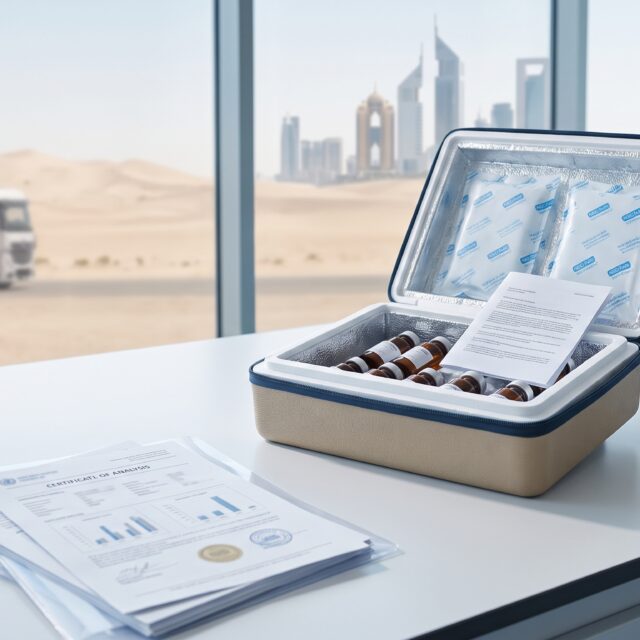
- Insulated Packaging: The use of specialised thermal boxing that resists external temperature spikes.
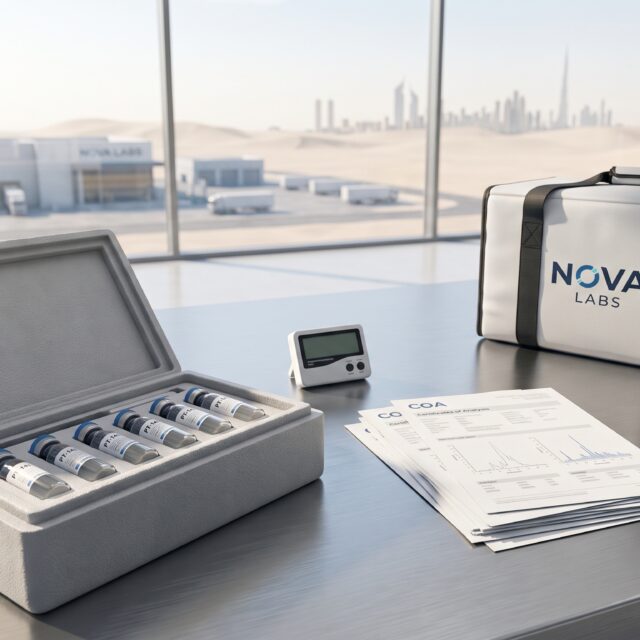
- Cooling Agents: Enclosing lyophilised vials with industrial ice packs to maintain a stable, cool internal environment throughout the journey.
- Priority Courier Routing: Utilising expedited, last-mile delivery networks that limit the time a package spends in transit.
When evaluating a supplier, inquire about their fulfilment infrastructure. A vendor shipping sensitive biochemicals via standard economy mail is demonstrating a fundamental lack of understanding of the region’s environmental constraints. To bypass these risks, researchers are increasingly turning to local providers capable of executing fast, temperature-controlled transit across the UAE.
Navigating UAE and GCC Customs Holds
A major factor driving the shift towards domestic GCC sourcing is the increasing friction at international borders. Direct international peptide shipments frequently face customs holds or complete seizures when entering GCC borders. Authorities enforce stringent screening protocols for imported biological substances.
When a package is held for inspection, it is often removed from its expedited transit routing and placed in standard holding facilities, which are rarely temperature-controlled. A customs delay of just 48 to 72 hours in the Middle Eastern climate can result in complete thermal degradation of a Kisspeptin order, rendering the material useless by the time it clears inspection.
By sourcing from a supplier that already holds cleared, properly stored stock within the GCC, buyers eliminate the risk of border delays. Regional fulfilment ensures that the timeline from the supplier’s climate-controlled storage to the researcher’s laboratory is measured in hours rather than weeks.
Verifying Research Integrity: The Buyer Checklist
How do informed buyers verify that the Kisspeptin they are purchasing is genuinely research-grade? Transparency in documentation is the only reliable metric. Marketing claims regarding ‘premium quality’ are meaningless without laboratory data.
When reviewing a vendor’s credentials, buyers should follow this checklist:
1. High-Performance Liquid Chromatography (HPLC)
HPLC testing separates the components of a sample to identify impurities. A reliable supplier will publicly display a Certificate of Analysis (COA) featuring a clear HPLC graph. For Kisspeptin-10, the industry standard for research applications is a purity level of 98% to 99% or higher.
2. Mass Spectrometry (LC-MS)
While HPLC confirms purity, Mass Spectrometry confirms the exact molecular weight and identity of the compound. The LC-MS report must match the known molecular mass of Kisspeptin-10 (approx. 1302.5 g/mol), proving that the vial contains the correct sequence.
3. Batch Matching
A generic, years-old COA downloaded from a manufacturer is a red flag. Legitimate suppliers test their inventory on a rolling basis. The batch or lot number printed on the Kisspeptin vial you receive should perfectly correspond with the batch number on the provided testing documents.
Evaluating the Market: Payment, Support, and Availability
Historically, purchasing research peptides in Dubai, Riyadh, or Doha meant dealing with unpredictable overseas shipping and minimal customer support. Today, fulfilment expectations have matured.
Top-tier research suppliers now operate with full commercial transparency. Rather than relying on high-risk standard Cash on Delivery (COD) services—which often lack temperature-controlled infrastructure—premium suppliers utilise secure online payment gateways and structured billing options.
Furthermore, responsive customer support is a strong indicator of operational stability. Suppliers that offer direct communication channels demonstrate a commitment to local logistics and client satisfaction.
NOVA Labs: Setting the Standard for Kisspeptin in the Region
At NOVA Labs, we understand the exact pain points researchers face when procuring sensitive compounds in the Middle East. By maintaining local stock within the region, we entirely eliminate the uncertainty of international customs clearance and the risk of long-term heat exposure.
When you select NOVA Labs as your supplier, you are guaranteed full transparency. Every batch is subjected to rigorous third-party testing, and the corresponding HPLC and LC-MS reports are made readily available to researchers. We implement comprehensive cold-chain protocols, ensuring that from our climate-controlled facilities to your laboratory door, the molecular integrity of your compounds is never compromised.
For researchers evaluating options and ready to secure verified, highly pure stock, you can review specifications and order Kisspeptin directly through our secure portal.
Summary
Purchasing Kisspeptin in the GCC does not have to involve gambling on international transit times or dealing with non-responsive vendors. By demanding third-party COAs, insisting on cold-chain delivery protocols, and prioritising regional stock, researchers can secure the high-purity materials their work requires without unnecessary friction.
Disclaimer: The products mentioned in this article are strictly for laboratory research and in-vitro use only. They are not intended for human consumption, diagnostic, or therapeutic purposes.
References
- Navarro, V. M., et al. (2004). Developmental and hormonally regulated messenger ribonucleic acid expression of KiSS-1 and its putative receptor, GPR54, in rat hypothalamus. Endocrinology, 145(10), 4565-4574.
- Seminar, S. B., et al. (2003). The GPR54 gene as a regulator of puberty. New England Journal of Medicine, 349(17), 1614-1627.
- UAE Federal Customs Authority (2023). Prohibited and Restricted Goods: Regulations for the clearance of biological and chemical compounds.
Disclaimer: The products mentioned in this article are for research purposes only and are not intended for human consumption.
- Buy Kisspeptin Qatar: Supplier Guide, Purity & GCC Delivery – NOVA Labs
- Buy Kisspeptin Abu Dhabi: Vendor Evaluation & Delivery Guide – NOVA Labs
- Kisspeptin-10 10mg Pen UAE – GulfPeps
- Elysium Peptides: Premium Peptides In UAE For Research Use
- Incoterms for Research Peptide Imports into the UAE – Peak Labs
- Shipping Policy – Fast Delivery Across UAE – nanopep
- Kisspeptin 10mg (Testosterone Boost) – PEP UAE
- Peptides Compounding Pharmacy Dubai – CureCell
Frequently asked questions
Can international peptide shipments clear GCC customs quickly?
Direct international peptide shipments frequently face customs delays or seizures at GCC borders. These delays place the shipments in holding facilities that are not temperature-controlled, drastically increasing the risk of thermal degradation.
What purity level should research-grade Kisspeptin-10 have?
Research-grade Kisspeptin-10 should have a minimum purity level of 98% to 99%. Buyers must verify this standard through batch-matched, third-party HPLC and LC-MS testing.
Why is cold-chain delivery necessary for peptides in the Middle East?
The extreme heat of the GCC region rapidly degrades lyophilised peptides. Temperature-controlled, cold-chain fulfilment is strictly necessary to prevent denaturing and maintain the peptide's molecular integrity during transit.
How can I verify a Kisspeptin supplier in the UAE?
Ensure the supplier provides transparent third-party Certificates of Analysis (COAs) matching the vial's batch number, ships domestically to bypass customs delays, and guarantees insulated cold-chain packaging.
Nova Labs buyer tools
Ready to verify stock, testing and delivery?
Use the product page and lab report section to check availability, documentation, delivery timing and support before placing an order.
- COA / test-report checks
- GCC delivery context
- Cold-chain handling
- COD and card payment options
- WhatsApp support