




Researchers and informed procurement teams looking to acquire specialized peptides in the GCC face a unique set of regional challenges. While global interest in mitochondrial-derived peptides has grown rapidly, successfully sourcing these temperature-sensitive compounds requires evaluating much more than just a digital storefront. From surviving extreme summer temperatures during transit to navigating stringent regional customs regulations, the process demands a supplier that understands the operational realities of the Middle East.
Whether you are procuring compounds for a university laboratory or acting as an independent researcher evaluating suppliers, purchasing research peptides requires strict attention to documentation, logistics, and compliance. This guide outlines how to verify batch integrity, what to expect from regional delivery windows, and how to source effectively.
Quick Answer: Buying MOTS-c in Bahrain
When looking to buy MOTS-c in Bahrain, buyers must prioritize suppliers who provide batch-specific HPLC/MS testing verifying ≥99% purity. Ensure the vendor uses cold-chain shipping with insulated packaging to protect the lyophilized powder from GCC heat, and verify they navigate regional customs with proper Research Use Only documentation.
Understanding the MOTS-c Peptide in Research
Before initiating a procurement order, it is crucial to understand the biochemical nature of the compound. MOTS-c (Mitochondrial Open Reading Frame of the 12S rRNA-c) is a 16-amino acid peptide that originates from the mitochondrial genome rather than the cell’s nucleus. In research settings, it has been heavily studied for its role in cellular stress regulation and metabolic homeostasis.
In laboratory literature, MOTS-c is frequently evaluated for its potential to stimulate the AMPK (AMP-activated protein kinase) pathway, a critical mechanism involved in cellular energy balance. Because of its specific interaction with metabolic pathways, the World Anti-Doping Agency (WADA) explicitly bans MOTS-c in competitive sports, classifying it as a prohibited metabolic modulator.
It is vital for buyers to recognize that MOTS-c is an experimental compound. It is strictly designated for in-vitro and laboratory research applications. Reputable vendors will market this compound exclusively as a Research Use Only (RUO) product, avoiding any claims related to human therapy, dosage, weight loss, or metabolic treatment.
The Role of COA: Verifying the MOTS-c Supplier in Bahrain
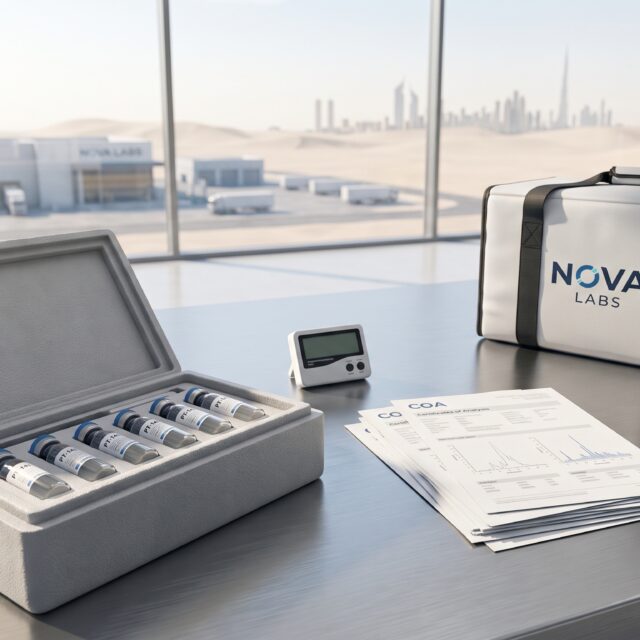
The single most critical factor when evaluating a peptide supplier in Bahrain is their commitment to independent, transparent testing. Because lyophilized powders are visually identical, the only way to confirm you are receiving pure MOTS-c is through a Certificate of Analysis (COA).
When assessing a supplier’s documentation, look for the following analytical standards:
- High-Performance Liquid Chromatography (HPLC): This test separates the components in a mixture to determine the exact purity level of the peptide. For high-level research, purity should consistently read at ≥99%. Anything less risks introducing synthesis byproducts into your experiments.
- Mass Spectrometry (MS): This analysis confirms the molecular weight of the compound, ensuring that the substance in the vial is unequivocally MOTS-c and not a substitute or degraded fragment.
- Batch-Specific Documentation: A generic COA from two years ago is a red flag. Reliable suppliers will provide testing documentation that matches the specific batch currently held in stock.
- Independent Verification: The most trustworthy test results come from recognized third-party laboratories (such as Janoshik or comparable specialized analytical facilities), rather than in-house lab reports that lack external oversight.
At NOVA Labs, we prioritize scientific transparency. Buyers can easily access current, batch-verified testing documentation before they choose to order MOTS-c for their research needs.
Logistics: Beating the Heat with Cold-Chain Shipping
The GCC climate presents a severe logistical hurdle for chemical compounds. MOTS-c is shipped as a lyophilized (freeze-dried) powder. While the lyophilization process stabilizes the peptide and extends its shelf life compared to liquid solutions, it is still highly susceptible to degradation when exposed to extreme ambient heat.
If a supplier ships peptides across the globe via standard postal services, the package may sit in unairconditioned sorting facilities or on hot airport tarmacs for weeks. By the time it clears Bahrain customs, the peptide’s structural integrity could be compromised, rendering it useless for precise laboratory applications.
To mitigate this, regional sourcing is highly recommended. Suppliers operating out of Middle Eastern hubs are better equipped to manage the transit window efficiently. At NOVA Labs, our operational infrastructure is built on rapid regional fulfillment. The same specialized logistics network that powers our fast UAE next day delivery allows us to execute secure, temperature-controlled shipping to neighboring GCC countries like Bahrain.
Reliable cold-chain logistics for peptides should include:
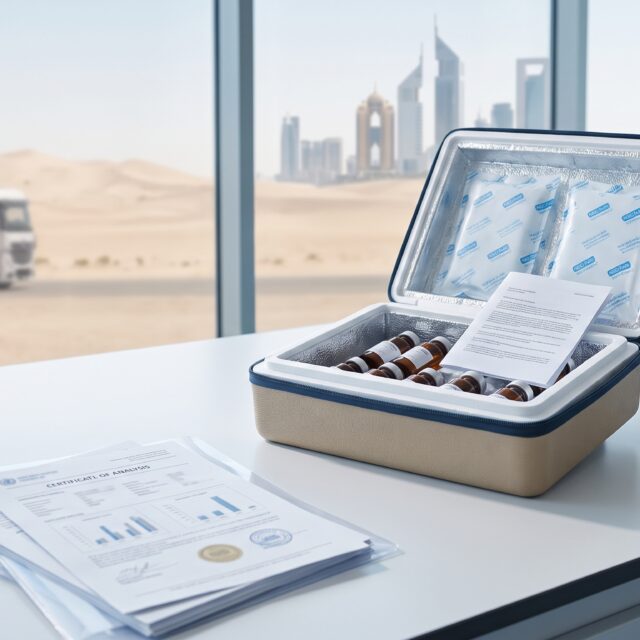
- Insulated Packaging: Thermal bubble wrap or specialized insulated mailers that deflect external heat.
- Temperature Regulators: Gel ice packs included within the package to maintain a stable environment during transit.
- Expedited Transit Windows: Delivery to Bahrain should typically occur within 2 to 5 business days to minimize environmental exposure.
Note on Storage: Once the peptide arrives, it must be stored correctly. Lyophilized MOTS-c should be kept in a freezer at -20°C to -80°C for long-term preservation.
Navigating Bahrain Customs and Import Regulations
Cross-border shipping into Bahrain requires strict adherence to local regulations. Bahrain Customs meticulously inspects incoming chemical, pharmaceutical, and biological products. Without the proper documentation, shipments can be delayed, heavily taxed, or seized.
To ensure a smooth clearance process, buyers should understand the following regulatory realities:
1. Research Use Only (RUO) Declarations
Because MOTS-c is not an approved pharmaceutical or medical device, it must be declared strictly as a laboratory research chemical. Packages that lack clear RUO labeling, or those from suppliers who irresponsibly market peptides as supplements or human therapeutics, are highly likely to face rejection at the border.
2. Duty Thresholds for Personal and Commercial Orders
Bahrain applies a duty threshold on imported goods. Courier shipments with a declared value exceeding BD 100 may be subject to local customs duties and VAT. When planning a procurement order, researchers should factor these potential duties into their budget or communicate with the supplier regarding how bulk orders are declared and invoiced.
3. Discreet and Professional Packaging
Top-tier suppliers understand that while the contents are legally compliant research chemicals, packaging should remain discreet and professional. Overtly branded boxes that look like consumer health products often trigger unnecessary secondary inspections by customs authorities.
Payment Security and Responsive Support
The final layer of evaluating a supplier involves the purchasing experience itself. The research chemical industry has historically struggled with unreliable payment gateways and poor customer communication.
When choosing a supplier for the Bahrain market, look for:
- Secure Payment Pathways: Providers should offer encrypted, globally recognized payment processing or trusted regional methods that provide buyer protection.
- Live Stock Visibility: The website should accurately reflect current inventory. Backorders are common with complex peptides; a supplier should be transparent if a specific batch is currently undergoing HPLC verification.
- Responsive Communication: Because logistics in the GCC can be dynamic, having access to real-time support is invaluable. If a shipment is delayed at customs or if you need a copy of the latest COA, a responsive vendor ensures your research timeline is not compromised.
Securing Reliable MOTS-c Deliveries in Bahrain
Procuring specialized compounds in the GCC does not have to be a guessing game. When sourcing MOTS-c for your Bahrain laboratory, your primary focus should be on verifying analytical purity, ensuring robust cold-chain logistics, and confirming the supplier adheres to strict RUO compliance to prevent customs delays.
By prioritizing vendors who invest in independent HPLC/MS testing and regional fulfillment networks, you protect the integrity of your research and streamline the procurement process. Always request the COA, verify the shipping protocols, and plan your storage strategy before the package arrives.
Ready to secure verified, high-purity compounds for your next project? You can review batch testing data and check current availability to buy MOTS-c directly from NOVA Labs.
Disclaimer: The products mentioned in this article are for research purposes only and are not intended for human consumption, diagnostic, or therapeutic use.
References
- USADA. (2020). What is the MOTS-c peptide? U.S. Anti-Doping Agency.
- International Trade Administration. Bahrain – Prohibited and Restricted Imports.
- World Anti-Doping Agency (WADA). Prohibited List – Metabolic Modulators.
- What is the MOTS-c peptide? | USADA
- Peptides Lab GCC – High-Purity Research Peptides | GCC Supply for Laboratories
- Bahrain – Prohibited and Restricted Imports – International Trade Administration
- Peptide Import Laws: Customs & Personal Use | PeptideJournal
- Global Peptide Shipping Guide for Research Orders
Frequently asked questions
Is it legal to buy MOTS-c in Bahrain?
Yes, MOTS-c can be imported into Bahrain strictly as a Research Use Only (RUO) compound. It is not approved for human consumption or medical use, and must be declared properly as a laboratory chemical to clear Bahrain Customs.
How long does peptide delivery to Bahrain take?
When ordering from a reliable regional hub in the GCC, delivery to Bahrain typically takes between 2 to 5 business days. This expedited transit window is crucial to minimize heat exposure and maintain the peptide's structural integrity.
How should MOTS-c be stored once delivered in Bahrain?
Upon arrival, lyophilized MOTS-c should be stored in a freezer at -20°C to -80°C for long-term stability. While in transit, reputable suppliers use insulated packaging and gel packs to protect the powder from high ambient temperatures.
Will I have to pay customs duty on MOTS-c in Bahrain?
Bahrain Customs generally applies duties and VAT to courier shipments that exceed a value of BD 100. Buyers should anticipate potential import taxes if their research order exceeds this threshold.
How can I verify the purity of MOTS-c before buying?
Always request a batch-specific Certificate of Analysis (COA) from the supplier. The documentation should show independent High-Performance Liquid Chromatography (HPLC) and Mass Spectrometry (MS) results verifying at least 99% purity.
Nova Labs buyer tools
Ready to verify stock, testing and delivery?
Use the product page and lab report section to check availability, documentation, delivery timing and support before placing an order.
- COA / test-report checks
- Bahrain delivery context
- Cold-chain handling
- COD and card payment options
- WhatsApp support