



Nova Biolabs vs Peptide Tech UAE: Evaluating UAE Hubs for Saudi Arabian Buyers
For procurement officers, academic researchers, and informed buyers in Saudi Arabia, sourcing reliable reference materials requires navigating a complex logistical and regulatory landscape. Finding a supplier that balances verifiable purity with reliable GCC shipping is critical. In this guide, we evaluate the primary keyword for many regional shoppers: nova biolabs vs peptide tech uae.
Quick answer for GCC buyers: When comparing nova biolabs vs peptide tech uae for Saudi procurement, their models differ. Nova Biolabs exclusively supplies analytical, third-party tested Research-Use Only (RUO) lyophilized compounds with public COAs. Peptide Tech UAE offers a dual telehealth and research model. For KSA buyers, prioritizing stable lyophilized powders ensures safe customs transit.
Comparison Methodology (As of Late 2026)
To provide an objective baseline for this buying guide, our evaluation of the UAE-to-KSA supply route relies on four critical procurement criteria established for the late 2026 regional market:
- Analytical Transparency: The availability, recency, and independence of third-party HPLC and Mass Spectrometry testing.
- Logistics Integration: The supplier’s ability to efficiently move biochemicals across the UAE-Saudi border through ZATCA checkpoints.
- Thermal Stability: How the vendor packages and formulates compounds to survive the harsh Arabian climate during transit.
- Operational Model: Assessing whether the supplier is strictly an RUO provider or if they operate a hybrid clinical/research model.
The 2026 KSA Regulatory Climate: Why Sourcing from the UAE Matters
Importing biochemicals directly into the Kingdom of Saudi Arabia from Western or Chinese vendors often triggers significant delays. The Saudi Food and Drug Authority (SFDA) and the Zakat, Tax and Customs Authority (ZATCA) actively enforce rigorous import protocols through platforms like SABER and FASAH.
Following heightened scrutiny on cross-border shipments in recent years, procurement staff and private researchers face massive friction when importing unverified liquids or poorly documented powders from overseas. Consignments lacking proper documentation are routinely seized or subjected to extended holding periods, leading to product degradation. This regulatory bottleneck is exactly why UAE-based suppliers have become the preferred route for Saudi buyers.
Sourcing from a regional hub in Dubai or Abu Dhabi dramatically lowers clearance friction and shipping times. Both Nova Biolabs and Peptide Tech UAE leverage established regional logistics networks to move products efficiently across the GCC border. By utilizing local GCC trade agreements and familiar overland and airfreight routes, these suppliers ensure research budgets are not wasted on seized or delayed international shipments.
Nova Biolabs: Analytical Sourcing and COA Verification
For buyers requiring strict laboratory-grade materials, Nova Biolabs operates entirely within the Research-Use Only (RUO) sector. Their operational focus is built around transparency, batch verification, and compound stability, making them a streamlined choice for analytical procurement.
Public Batch Documentation
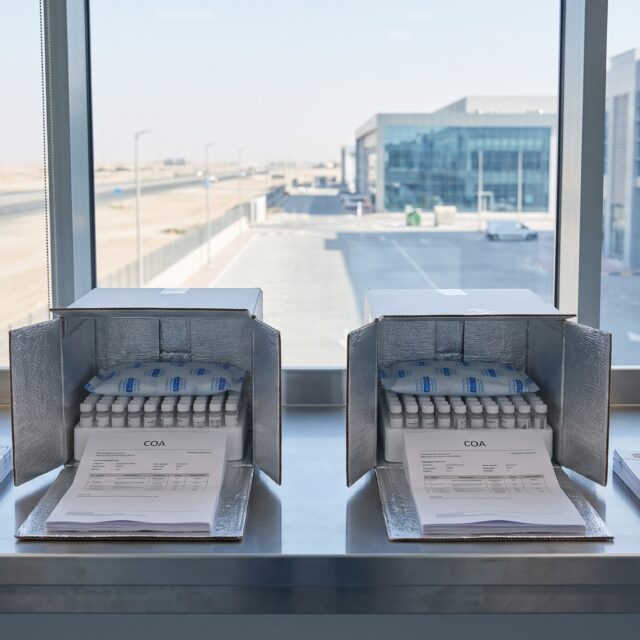
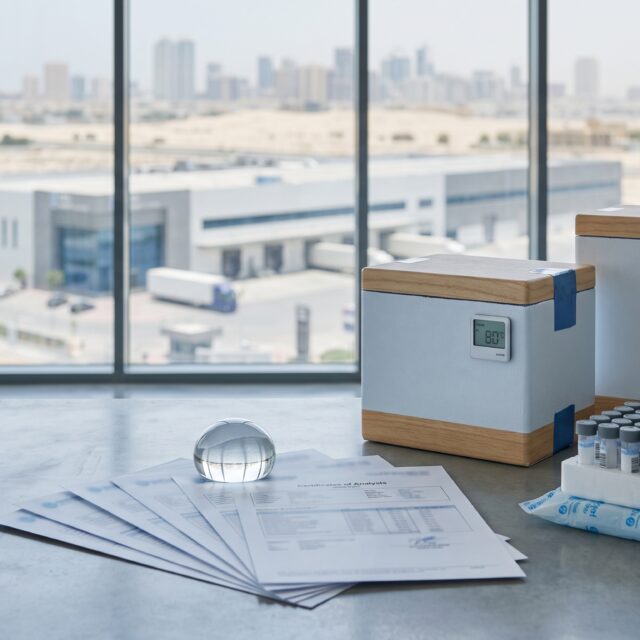
The cornerstone of analytical research is the Certificate of Analysis (COA). Nova Biolabs mandates that every product batch undergoes independent third-party testing via High-Performance Liquid Chromatography (HPLC) and Mass Spectrometry (MS). Buyers evaluating suppliers should always verify that the purity exceeds 99% and that the testing dates align with current inventory.
Nova Biolabs maintains a public COA browser, allowing Saudi researchers to audit the molecular integrity of a batch before placing an order. This pre-purchase verification step is critical for academic and private laboratories that require exact molecular weights and baseline purity levels for their assays.
The Reality of GCC Cold-Chain and Transit
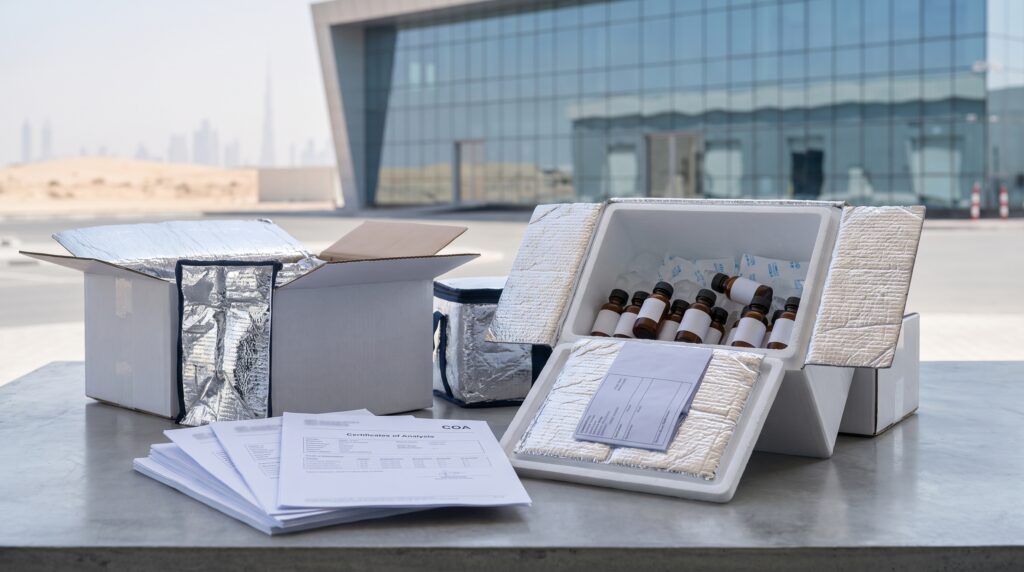
One of the most transparent operational realities Nova Biolabs shares with its Saudi clientele is the limitation of cross-border cold-chain logistics. While buyers in Dubai and Abu Dhabi benefit from Nova Biolabs’ optimized domestic transit utilizing temperature-controlled environments, the reality for cross-border shipping is different.
True cold-chain shipping is practically unavailable for standard GCC cross-border deliveries, including routes to Riyadh, Jeddah, and Dammam. Ice packs inevitably melt during ZATCA customs holding periods. To counter this, Nova Biolabs strictly supplies its products in a lyophilized (freeze-dried) powder format. This state removes moisture, locking the molecular structure and rendering the compound highly resistant to thermal degradation, even during hot transit days across the border.
Peptide Tech UAE: The Dual Telehealth and Research Model
Peptide Tech UAE approaches the market with a broader, split-model framework that caters to two entirely different buyer intents: human telehealth and analytical research. Understanding this distinction is vital for procurement.
Clinical Telehealth Pathway
Unlike strictly RUO suppliers, Peptide Tech UAE partners with MOHAP-certified facilities to offer physician-designed protocols. This pathway includes medical consultations and custom-compounded formulations designed for human therapeutic use under medical supervision within the UAE. For a buyer whose procurement needs fall under regulated medical frameworks rather than laboratory reference materials, this clinical pathway operates under different local regulations and is typically restricted from standard international export as an RUO compound.
Independent Research Supply
Alongside their clinical operations, Peptide Tech UAE also maintains a distinct catalogue for research professionals. Similar to Nova Biolabs, these RUO compounds are processed under strict guidelines and backed by COA verification. For Saudi buyers comparing the two brands purely on a research basis, the decision often comes down to specific catalogue availability, bulk pricing tiers, and the preferred format of the batch documentation provided.
Thermal Integrity: Surviving the GCC Heat
When shipping delicate biochemicals across the Arabian Peninsula, where daytime temperatures regularly exceed 45°C (113°F) for most of the year, thermal integrity is a non-negotiable procurement factor.
Buyers in Saudi Arabia must strictly avoid purchasing pre-mixed, liquid, or reconstituted compounds from any international or regional supplier. Once reconstituted with bacteriostatic water or other solvents, these compounds become highly susceptible to rapid thermal degradation. A package sitting in a ZATCA holding facility in Riyadh for 48 to 72 hours in the summer heat will likely ruin a liquid formulation, rendering it useless for analytical testing.
Both Nova Biolabs and the research arm of Peptide Tech UAE mitigate this by dealing in lyophilized powders. Freeze-drying extracts the solvent under low temperature and pressure, leaving behind a stable crystalline structure. When maintained in a lyophilized state out of direct UV light, these reference materials can endure standard GCC transit temperatures without compromising the >99% purity guaranteed on their HPLC reports. Buyers simply store the vials in a laboratory freezer (-20°C is ideal) upon arrival until they are ready for reconstitution immediately prior to in-vitro testing.
Localized Financial Infrastructure and Buyer Support
Beyond product quality, the operational reliability of a supplier heavily influences procurement decisions. Trust is built through accessible communication and localized financial infrastructure that understands GCC banking nuances.
Top-tier UAE suppliers serving Saudi Arabia understand the necessity of seamless regional transactions. International credit card gateways often flag cross-border biochemical purchases, leading to payment declines. Suppliers that integrate regional payment solutions and offer clear B2B invoicing ensure that procurement officers do not face administrative hurdles at checkout.
Furthermore, responsive customer support is a critical marker of supplier quality. Given the potential for unexpected customs queries or ZATCA documentation requests, suppliers that offer direct, localized support provide a significant advantage for Saudi buyers.
Bottom Line: Choosing the Right Supplier for KSA
When assessing the landscape for your Saudi Arabian laboratory, your choice depends entirely on your specific requirement and legal framework.
If your goal is to procure highly purified, third-party tested Research-Use Only (RUO) compounds for laboratory analysis, Nova Biolabs offers a streamlined, highly transparent operation. By prioritizing publicly verifiable HPLC/MS COAs and shipping exclusively stable, lyophilized powders, they provide a reliable bulwark against the logistical and thermal challenges of importing into Saudi Arabia.
Ready to secure reliable, temperature-stable research compounds for your Saudi laboratory? Shop Nova Biolabs’ verified RUO catalogue today.
Disclaimer: All Nova Biolabs products mentioned in this article are strictly for research and laboratory use only. They are not intended for human or animal consumption, diagnostic, or therapeutic purposes.
*
References
- Saudi Food and Drug Authority (SFDA) – Import regulations and clearance requirements for laboratory chemicals and reagents.
- Zakat, Tax and Customs Authority (ZATCA) – KSA Customs holding procedures and FASAH platform documentation guidelines.
- UAE Ministry of Health and Prevention (MOHAP) – Pharmacy compounding and telehealth regulatory frameworks.
Disclaimer: The products mentioned in this article are for research purposes only and are not intended for human consumption.
- MoH Warns Against Using Unregistered Drugs and Seizes Violators
- Wholesale Peptides Saudi Arabia: B2B Supplier & Procurement – NOVA Labs
- Peptide Tech | UAE Telehealth
- Peptide Compounding Pharmacy Dubai – CureCell
Frequently asked questions
Can I get cold-chain peptide shipping to Saudi Arabia?
True cross-border cold-chain shipping is generally unavailable from the UAE to Saudi Arabia, as ice packs melt during customs clearance. Quality suppliers manage this by shipping highly stable, lyophilized (freeze-dried) powder that withstands transit heat.
What is the difference between Nova Biolabs and Peptide Tech UAE?
Nova Biolabs specializes strictly in third-party tested, Research-Use Only (RUO) lyophilized reference compounds. Peptide Tech UAE offers a dual model, featuring both analytical RUO compounds and a telehealth platform for medical therapies.
How do I verify the purity of research compounds before buying?
Always request a publicly accessible Certificate of Analysis (COA). Look for recent, independent third-party HPLC (High-Performance Liquid Chromatography) and Mass Spectrometry (MS) reports showing a purity level of 99% or higher.
Is it legal to import reference compounds to Saudi Arabia?
Importing compounds to Saudi Arabia is heavily regulated by the SFDA and ZATCA. Research-Use Only (RUO) materials must be correctly declared and used strictly for in-vitro laboratory analysis, not human consumption, in full compliance with local regulatory guidelines.
Nova Labs buyer tools
Ready to verify stock, testing and delivery?
Use the product page and lab report section to check availability, documentation, delivery timing and support before placing an order.
- COA / test-report checks
- Saudi Arabia delivery context
- Cold-chain handling
- COD and card payment options
- WhatsApp support