




Finding a reliable source for research compounds in the UAE has become an increasingly complex task for procurement staff, principal investigators, and dedicated independent researchers. With an influx of overseas vendors, rampant dropshipping operations, and tightening local regulatory frameworks, executing a thorough peptide supplier checklist abu dhabi is no longer just a recommendation—it is a mandatory step for ensuring laboratory integrity and strict legal compliance.
Following recent shifts in UAE regulatory oversight, dozens of generic online vendors have been exposed for providing under-dosed, degraded, or mislabeled compounds. Whether you are running complex in-vitro cellular assays or investigating long-term peptide stability in extreme Gulf climates, the vendor you choose directly dictates the validity of your analytical data. This comprehensive peptide supplier checklist guide abu dhabi will help you critically evaluate third-party testing, cold-chain logistics, local inventory verification, and secure payment structures.
The Core Peptide Supplier Checklist Abu Dhabi
When evaluating any vendor operating within or shipping to the United Arab Emirates, buyers need a definitive, non-negotiable baseline for assessment before releasing procurement funds.
Quick answer: A reliable peptide supplier checklist in Abu Dhabi requires verifying strict Research Use Only (RUO) compliance, checking batch-specific third-party HPLC and MS test reports, ensuring cold-chain logistics to survive extreme Gulf temperatures, and confirming secure, localized payment methods like Cash on Delivery.
If a supplier fails on any of these four foundational pillars, researchers risk receiving denatured, useless products or facing severe customs friction at the UAE border. Let’s break down exactly what you should demand from a legitimate partner.
Navigating the Post-2026 Regulatory Landscape
The environment for sourcing research compounds in the UAE changed significantly in mid-2026. Regulatory bodies, including the Emirates Drug Establishment (EDE), the Department of Health Abu Dhabi (DoH), and MOHAP, launched comprehensive crackdowns on the unauthorized promotion of research compounds.
This regulatory action targeted dozens of unapproved sources and social media influencers who were inappropriately marketing unlicensed peptides. For legitimate buyers, this underscores a vital point on your checklist: the supplier must strictly adhere to “Research Use Only” (RUO) boundaries.
Legitimate suppliers operate exclusively within the scientific and B2B sectors. They will never offer dosage protocols, medical advice, or therapeutic guarantees. Products are strictly imported and sold under commercial HS codes (such as 3504.00.10 for lyophilized research-grade proteins and powders) rather than registered pharmaceuticals. If you encounter a vendor actively promising therapeutic outcomes, marketing medical solutions, or providing injection protocols for human use, they are operating entirely outside of UAE compliance and represent a severe procurement risk.
Purity Over Promise: Verifying the COA
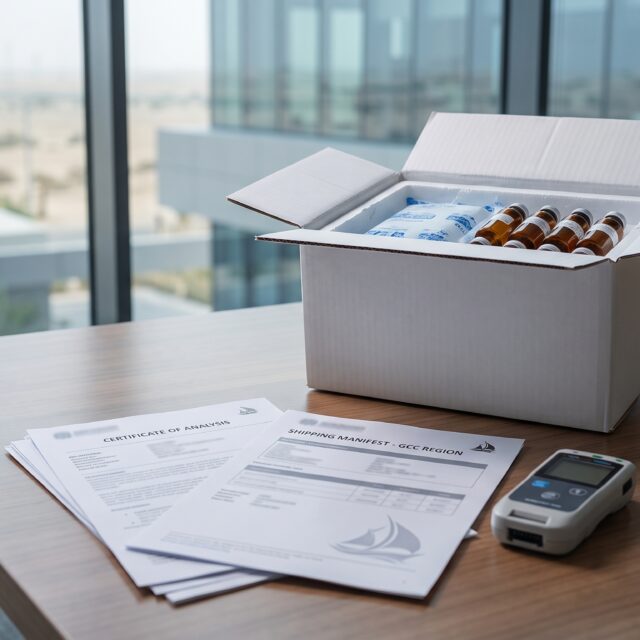
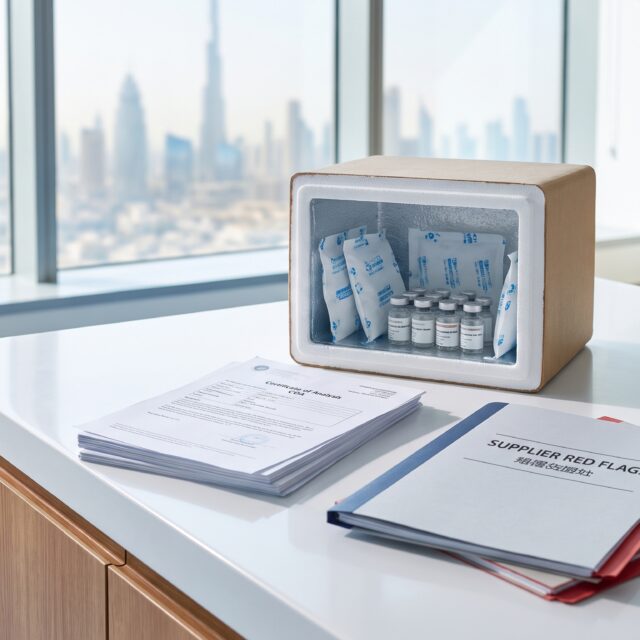
The absolute backbone of any effective peptide supplier checklist in abu dhabi is the Certificate of Analysis (COA). Unfortunately, the industry is plagued by vendors providing generic, outdated, or digitally altered COAs that do not accurately reflect the specific batch they are currently selling.
A verifiable COA must be issued by an independent, accredited third-party laboratory and must include two critical analytical components:
1. High-Performance Liquid Chromatography (HPLC)
HPLC testing verifies the exact purity of the compound by separating its individual components based on their chemical interactions. For rigorous research applications, you must look for a purity level of 98% or higher. The HPLC report should display a clear chromatogram with a singular, distinct peak with high baseline resolution. This proves that the sample is free from significant manufacturing byproducts, cleaved amino acid sequences, or heavy metal contaminants.
2. Mass Spectrometry (MS)
While HPLC confirms how pure a substance is, it does not confirm molecular identity. Mass Spectrometry determines the precise molecular weight of the compound by ionizing the sample and measuring the mass-to-charge (m/z) ratios. The MS trace provided by the supplier must match the exact theoretical molecular weight of the target peptide you are purchasing. If a supplier provides an HPLC report but no MS data, you have absolutely no proof that the 99% pure powder in the vial is actually the specific compound you ordered.
Always ensure the COA features a visible batch number that corresponds directly to the physical vial you receive. Legitimate vendors ensure complete transparency by making these testing documents easily accessible to researchers prior to purchase.
Beating the Gulf Heat: Cold-Chain Logistics
The climate in Abu Dhabi poses one of the greatest existential threats to peptide integrity. During the extended summer months, ambient temperatures routinely exceed 40°C (104°F). Standard international postal shipping often leaves packages sitting on hot airport tarmacs or inside non-air-conditioned delivery vans for days while awaiting customs clearance.
Research peptides are highly sensitive to thermal stress. While lyophilized (freeze-dried) powders are significantly more stable than reconstituted solutions, prolonged exposure to extreme heat can still cause the delicate peptide bonds to degrade, rendering the material useless for precise scientific evaluation.
When reviewing a peptide supplier checklist guide abu dhabi, logistics must be prioritized alongside analytical purity. You should verify:
- Domestic Dispatch: Does the supplier actually hold inventory locally within the UAE, or are they dropshipping from overseas facilities?
- Temperature Control: Are packages dispatched using climate-controlled local couriers?
- Speed: Can the supplier guarantee rapid, overnight delivery to minimize any environmental exposure?
Choosing a supplier with local infrastructure eliminates the thermal risks and customs delays associated with international freight. For researchers needing immediate, secure access to compounds, selecting a vendor that offers next-day UAE peptide delivery ensures that materials arrive in optimal laboratory condition without being held up at the border.
Payment Methods and Support Channels
Procurement staff and individual researchers are often confused when legitimate research peptide suppliers do not accept standard credit card payments through traditional retail processors like Stripe or PayPal. This is not a red flag; it is a fundamental reality of the industry’s financial architecture.
Major global card payment processors utilize automated BRAM (Brand Protection Program) scanning. Because research peptides are classified as unregulated research chemicals rather than standard consumer retail goods, these payment networks universally block transactions to mitigate their own operational risk, regardless of the supplier’s strict RUO compliance.
Therefore, a reliable UAE supplier will offer localized, secure, and compliant payment alternatives:
- Cash on Delivery (COD): The gold standard for domestic UAE trust. COD allows researchers to inspect the physical delivery, verify the seals, and confirm batch numbers before handing over procurement funds.
- Direct Bank Transfers: Standard for B2B procurement, university purchase orders, and larger commercial laboratory orders.
- Cryptocurrency: Frequently utilized by international researchers for seamless, borderless, and immediate transactions.
Additionally, responsive support is crucial. A trustworthy vendor in Abu Dhabi should provide direct, localized communication channels. A dedicated WhatsApp support number is standard for the region, allowing buyers to quickly address questions regarding batch numbers, COA verification, or precise delivery timing.
Proper Laboratory Storage Guidelines
Once a supplier has passed your rigorous checklist and the compounds have arrived safely at your Abu Dhabi facility, maintaining product stability shifts entirely to the researcher. Proper handling protocols are critical to preserving the integrity of the material.
- Lyophilized Storage: Unreconstituted peptide powders should be kept in a dedicated laboratory freezer between -20°C and -80°C. Under these conditions, they can remain stable for 12 to 24 months. Avoid repeated freeze-thaw cycles, which can introduce condensation and degrade the powder.
- Reconstituted Storage: Once mixed with bacteriostatic water or a suitable solvent for your assay, the solution must be stored in a refrigerator at 2-8°C. Depending on the specific sequence, reconstituted peptides should typically be utilized within 14 to 30 days.
- Handling Care: Never vigorously shake a reconstituted peptide vial. The physical agitation can shear the delicate molecular chains. Instead, gently swirl the vial to dissolve the lyophilized puck into the solvent. Ensure you use sterile, amber vials if the compound is light-sensitive.
Finalizing Your Vendor Evaluation
Evaluating research compound sources in the UAE demands extreme diligence. By strictly applying this peptide supplier checklist abu dhabi, you can easily bypass non-compliant vendors, avoid denatured overseas shipments, and secure high-purity, accurately tested materials for your analytical studies.
Prioritize transparent third-party HPLC/MS testing, demand climate-aware local logistics to combat Gulf heat, and ensure your vendor operates strictly within compliant Research Use Only parameters. Do not compromise on batch-specific documentation or local inventory verification.
Streamline your procurement process with NOVA Labs. If you are ready to source rigorously tested, locally stocked compounds for your next laboratory project, evaluate our available research compounds to review our batch-specific COAs, transparent testing data, and reliable local UAE delivery options.
Disclaimer: The products mentioned in this article are provided strictly for in-vitro research purposes only. They are not intended for human consumption, diagnostic procedures, or therapeutic use.
References
- Gulf News (2026). “UAE Cracks Down on Unapproved Peptide Weight-Loss Drugs: 71 Sources and 14 Influencers Face Action.”
- Wellness Labs Research Division (2026). Buying Research Peptides UAE — the 2026 buyer-evaluation guide.
- BT BioLabs (2026). Peptide Supplier UAE | B2B Research Peptide Supply, COA & OEM Logistics.
- Pure Peptides (2026). Storage & Stability Guidelines for Lyophilized Compounds.
- UAE Cracks Down on Unapproved Peptide Weight-Loss Drugs: 71 Sources and 14 Influencers Face Action – Gulf News
- Buying Research Peptides UAE — the 2026 buyer-evaluation guide – Wellness Labs
- Peptide Supplier UAE | B2B Research Peptide Supply, COA & OEM – BT BioLabs
- Storage & Stability | Pure Peptides
Frequently asked questions
What is the most important item on a peptide supplier checklist in Abu Dhabi?
When purchasing in Abu Dhabi, the most critical item is verifying a batch-specific Certificate of Analysis (COA) from a third party. This must include both HPLC for purity (aiming for ≥98%) and Mass Spectrometry (MS) to confirm the exact molecular identity of the compound.
Why do Abu Dhabi peptide vendors use Cash on Delivery instead of credit cards?
Global credit card processors restrict transactions for research compounds under strict BRAM regulations, categorizing them as high-risk. Legitimate UAE-based suppliers use Cash on Delivery (COD) or direct bank transfers to provide secure, localized, and compliant payment alternatives.
How does the UAE summer heat affect peptide shipments?
Temperatures exceeding 40°C in the UAE can rapidly degrade delicate peptide bonds during transit. It is vital to use local suppliers who hold domestic inventory and utilize climate-controlled, cold-chain dispatch rather than relying on slow international postal services.
What does 'Research Use Only' (RUO) mean for UAE buyers?
RUO indicates that the peptides are sold strictly as laboratory chemicals for in-vitro or non-human analytical research. Under UAE regulations, suppliers cannot market these compounds for human consumption, therapeutic use, or medical treatments.
How should researchers in Abu Dhabi store lyophilized peptides upon delivery?
Upon receiving delivery, researchers should immediately store unreconstituted lyophilized peptide vials in a laboratory freezer between -20°C and -80°C. This prevents thermal degradation and ensures stability for up to 24 months, provided freeze-thaw cycles are avoided.
Nova Labs buyer tools
Ready to verify stock, testing and delivery?
Use the product page and lab report section to check availability, documentation, delivery timing and support before placing an order.
- COA / test-report checks
- Abu Dhabi delivery context
- Cold-chain handling
- COD and card payment options
- WhatsApp support