




Procuring investigational compounds for metabolic studies requires strict adherence to quality control, documentation, and proper handling. For laboratory professionals and procurement teams aiming to secure reliable materials, navigating the local market has become increasingly complex. Following recent regulatory shifts in the UAE, ensuring that your supplier provides verified, research-compliant, and properly handled peptides is more critical than ever.
Retatrutide (also known in research settings as LY3437943) is an investigational triple receptor agonist targeting GLP-1, GIP, and glucagon receptors. Because of its complex mechanism of action, it has garnered significant interest in laboratory environments studying metabolic pathways. However, acquiring this peptide securely in the Middle East requires separating reputable commercial suppliers from unreliable retail sources.
Where to Buy Retatrutide in Dubai: The Quick Answer
To safely buy retatrutide dubai, buyers must verify third-party HPLC/MS testing, demand a recent Certificate of Analysis (COA) showing 98% or higher purity, and select suppliers utilizing localized Dubai warehouses. Domestic fulfillment guarantees cold-chain integrity in GCC heat and entirely bypasses the high risk of international customs seizures.
The Impact of UAE Regulations on Retatrutide Procurement
The landscape for acquiring research peptides in the UAE transformed significantly in mid-2024. The Emirates Drug Establishment (EDE) and local health authorities executed comprehensive regulatory enforcement, cracking down on unauthorized sources and social media influencers who were improperly promoting unapproved peptides for cosmetic or consumer weight management.
This enforcement established a clear dividing line in the market. Today, reputable commercial suppliers operate strictly under a ‘Research Use Only’ (RUO) framework. This means that a legitimate Retatrutide supplier in Dubai will clearly position their products for laboratory, in-vitro, or analytical research, completely devoid of clinical, therapeutic, or human-consumption claims. For institutional buyers and informed researchers, this regulatory clarity is a positive development. It pushes out substandard vendors and elevates suppliers who prioritize transparent documentation, ethical marketing, and product integrity over hype.
Navigating Local Supply vs. International Customs Friction
Historically, many UAE-based researchers attempted to source peptides directly from overseas laboratories, often in Asia or North America. While this may seem cost-effective initially, it introduces severe logistical bottlenecks.
The Risk of International Sourcing
Due to stringent UAE customs protocols, importing investigational compounds without specialized commercial clearing often results in lengthy inspections or outright confiscation. Peptides stalled at customs facilities are frequently subjected to uncontrolled ambient temperatures, which rapidly degrades complex compounds like Retatrutide before they ever reach the lab bench.
The Dubai Warehouse Advantage
Sourcing from a domestic supplier minimizes this procurement risk. When you order Retatrutide in Dubai from a provider that holds physical stock within the emirate, you bypass cross-border customs friction entirely. At NOVA Labs, we understand that research timelines are critical. By maintaining local inventory, we execute rapid fulfillment protocols, ensuring your laboratory receives vital compounds without administrative delays.
For researchers who require urgent restocks to maintain ongoing protocols, utilizing localized logistics is indispensable. You can learn more about how domestic inventory accelerates research timelines through our Dubai same-day delivery service.
How to Verify a Retatrutide COA in Dubai
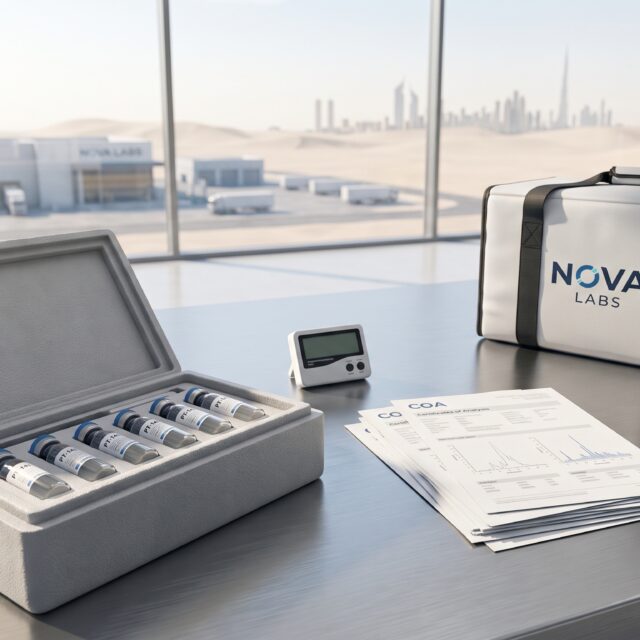
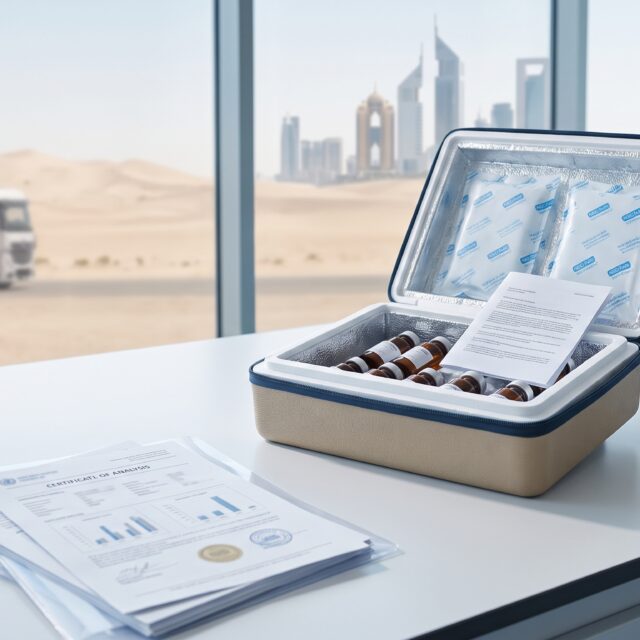
When evaluating a local peptide supplier, visual inspection of the vial is insufficient. The cornerstone of peptide procurement is the Certificate of Analysis (COA), backed by High-Performance Liquid Chromatography (HPLC) and Mass Spectrometry (MS) testing.
If a supplier cannot immediately produce a batch-specific COA, they should not be considered a viable source. Here is a buyer checklist for evaluating Retatrutide documentation:
- Purity Threshold: A high-quality investigational peptide must demonstrate a purity level of 98% or greater. This ensures that synthesizing byproducts and impurities will not skew your experimental data.
- Third-Party Verification: Internal lab reports hold less weight than testing conducted by independent, accredited analytical laboratories.
- Mass Spectrometry (MS) Alignment: The MS report should confirm that the molecular weight of the synthesized compound matches the exact theoretical molecular mass of the Retatrutide sequence.
- Batch Tracking: Ensure the COA corresponds directly to the batch number listed on the physical vial you receive.
While some local competitors primarily supply pre-filled liquid injector pens, stringent RUO standards strictly favor pure, lyophilized (freeze-dried) powder vials. Lyophilized peptides offer vastly superior long-term stability prior to reconstitution, ensuring that you control the solvent parameters required for your specific in-vitro application.
The Critical Role of Cold-Chain Logistics in the GCC
The highest-purity peptide is compromised if it is improperly handled during transit. The extreme summer temperatures in Dubai and the wider GCC present a unique challenge for peptide stability.
Investigational triple agonists require strict thermal management. Reputable suppliers invest heavily in localized cold-chain logistics to protect the peptide chain from degradation. When evaluating logistics, look for:
- Insulated Packaging: Deliveries must be dispatched in EPS foam or specialized thermal shielding.
- Temperature Maintenance: The inclusion of phase-change materials (ice packs) calibrated to maintain an internal environment of 2 to 8 °C for up to 72 hours.
- Optimized Transit Times: Domestic shipping within Dubai typically resolves via same-day or next-day delivery. For wider GCC distribution (including KSA, Oman, Bahrain, Qatar, and Kuwait), top-tier vendors utilize specialized tracked couriers, ensuring delivery within a strict 3 to 5 business day window.
Secure Payment and Responsive Local Support
Procurement friction extends beyond logistics; payment security and supplier communication are equally vital. International gateways can be restrictive, and poor communication can leave researchers stranded when urgent questions arise regarding a batch.
Leading local suppliers minimize this friction by offering secure, encrypted checkout processes, discreet billing nomenclature, and robust support channels. For UAE buyers, the availability of Cash on Delivery (COD) or localized bank transfers provides immense peace of mind. Furthermore, dedicated WhatsApp or live-chat support ensures that buyers can rapidly request updated COAs, verify real-time stock levels, or coordinate specific delivery windows directly with the logistics team.
For those ready to explore RUO-compliant supplies, our complete inventory of verifiable compounds is available in our metabolic and research shop.
Conclusion: Making an Informed Procurement Decision
Securing high-purity investigational compounds in the UAE requires a strategic approach. To successfully source Retatrutide without falling victim to substandard quality or customs delays, buyers must prioritize suppliers who operate within strict RUO guidelines.
Always verify the third-party HPLC/MS COA for a minimum of 98% purity, ensure the supplier utilizes localized stock to avoid import seizures, and demand rigorous cold-chain packaging (2 to 8 °C) capable of withstanding the UAE climate. By adhering to these standards, researchers can safeguard the integrity of their data and maintain seamless laboratory operations.
Disclaimer: The products mentioned in this article are for research purposes only and are not intended for human consumption or therapeutic use.
*
References
- UAE Ministry of Health and Prevention (MoHAP) / Emirates Drug Establishment (2024). Enforcement actions against unauthorized peptide promotions.
- Journal of Chromatographic Science. Analytical Standards in Peptide Synthesis and Purity Verification.
- International Journal of Pharmaceutics. Stability and Storage of Lyophilized Peptides in High-Temperature Environments.
- UAE Cracks Down on Unapproved Peptide Weight-Loss Drugs: 71 Sources and 14 Influencers Face Action – Gulf News
- Research Use Policy – UAEPeptide.ai
- Research Peptide FAQ | UAE Core Peptides
- Retatrutide (LY3437943) Injector Pen | Triple Agonist Research Peptide | UAE
- Retatrutide 40mg | Triple-Action Peptide Therapy | Pure Health Dubai UAE
Frequently asked questions
Is Retatrutide available for research in Dubai?
Yes, Retatrutide (LY3437943) is available in Dubai strictly for laboratory and analytical research purposes. It must be procured from compliant suppliers who provide verifiable Certificate of Analysis (COA) documentation.
Why is local Dubai stock better than ordering peptides internationally?
Sourcing peptides from a local Dubai warehouse bypasses international customs inspections, which frequently result in delays or seizures. Local fulfillment also ensures the peptide remains in strict cold-chain conditions rather than sitting in uncontrolled heat at border checkpoints.
What purity level should a Retatrutide COA show?
A high-quality investigational peptide should have a third-party HPLC/MS Certificate of Analysis demonstrating a purity level of 98% or higher to ensure reliable research outcomes.
How long does delivery take for Retatrutide in the UAE?
Domestic suppliers utilizing local warehouses typically offer same-day or next-day delivery within Dubai, while wider UAE and GCC shipping generally takes 3 to 5 business days using tracked, temperature-controlled couriers.
Nova Labs buyer tools
Ready to verify stock, testing and delivery?
Use the product page and lab report section to check availability, documentation, delivery timing and support before placing an order.
- COA / test-report checks
- Dubai delivery context
- Cold-chain handling
- COD and card payment options
- WhatsApp support