



Neuro-focused peptide research continues to expand rapidly across laboratories in Dubai, Abu Dhabi, and the wider GCC region. As principal investigators and procurement teams design new protocols, they frequently face a critical compound evaluation: semax vs selank. While both of these synthetic peptides share an identical stabilizing structural modification, they originate from entirely different biological blueprints and act on distinct cellular pathways in vitro and in animal models.
For UAE researchers evaluating these compounds, understanding the structural nuances, documented investigational pathways, and the local logistics required to preserve their molecular integrity is vital. This guide provides a comprehensive, research-centric comparison of Semax and Selank, outlining exactly what each peptide is, how they diverge in published literature, and the strict analytical documentation required for procurement.
Semax vs Selank: Quick Answer to Core Differences
When evaluating semax vs selank, researchers note their distinct origins and cellular targets. Semax is an ACTH-derived heptapeptide investigated for BDNF upregulation and dopaminergic signaling. Conversely, Selank is a Tuftsin-derived peptide studied for GABAergic modulation and immunomodulatory gene expression. Both utilize a protective Pro-Gly-Pro sequence for stability.
Structural Blueprints: Synthesizing the Peptides
To understand the difference between semax and selank, investigators must first look at their amino acid sequences and foundational templates. Both are classed as regulatory peptides, but they are synthesized from entirely different precursor proteins.
The Origins of Semax
Semax (Met-Glu-His-Phe-Pro-Gly-Pro) is a synthetic heptapeptide derived from a fragment of adrenocorticotropic hormone (ACTH 4-10). In biological models, ACTH plays a role in the stress response and cellular signaling. Semax isolated this specific fragment, which is devoid of hormonal activity, to study its distinct neuro-centric properties without triggering an adrenal cortisol response.
The Origins of Selank
Selank (Thr-Lys-Pro-Arg-Pro-Gly-Pro), on the other hand, is derived from the immunomodulatory tetrapeptide Tuftsin (Thr-Lys-Pro-Arg). Tuftsin naturally occurs in the body as a fragment of the heavy chain of immunoglobulin G (IgG) and is heavily involved in macrophage activation. Researchers synthesized Selank by taking this Tuftsin base and extending it to observe its effects on neural and immune pathways.
The Shared Glyproline Motif
A defining characteristic in the semax vs selank research comparison is their shared C-terminal tail. Both molecules incorporate a Pro-Gly-Pro (proline-glycine-proline) sequence. This addition turns them into glyprolines. In biological assays, native peptides like ACTH and Tuftsin degrade within minutes under enzymatic attack. The Pro-Gly-Pro tail significantly enhances their resistance to rapid enzymatic degradation, prolonging their half-lives and allowing for sustained observation in laboratory settings.
Investigational Pathways: Dopaminergic vs. GABAergic Focus
When deciding whether to procure semax or selank for a specific study, researchers look heavily at the divergent mechanisms of action documented in published literature. They target entirely different synaptic and genetic pathways.
Semax: BDNF and Dopaminergic Pathways
Research involving Semax primarily investigates neuroprotection, memory consolidation, and cellular survival following ischemic events (such as stroke models). Key investigational areas include:
- BDNF Upregulation: Studies indicate Semax may influence the expression of Brain-Derived Neurotrophic Factor (BDNF) and Nerve Growth Factor (NGF) in the hippocampus and basal forebrain.
- Neurotransmitter Modulation: In animal models, Semax has been researched for its capacity to modulate dopaminergic and serotonergic signaling without acting as a direct, classical stimulant.
- Ischemic Models: It has been extensively studied in hypoxic environments to observe its potential role in minimizing neuron mortality.
Selank: GABAergic Modulation and Gene Expression
Conversely, Selank research is heavily anchored in anxiolytic action, stress adaptation, and resting-state functional connectivity. Its pathways of interest include:
- GABA Receptor Modulation: Unlike classic benzodiazepines that bind directly, Selank is hypothesized to act via allosteric modulation of GABA receptors, influencing GABAergic neurotransmission without the typical sedative side effects observed in classical compounds.
- Enkephalin Degradation: Selank has been studied for its ability to inhibit enkephalin-degrading enzymes, potentially prolonging the activity of these endogenous regulatory peptides.
- Gene Expression: Research demonstrates that Selank administration affects the expression of specific genes involved in neurotransmission and the immune response (reflecting its Tuftsin origins) within the brain.
The E-Commerce ‘Stacking’ Myth in the GCC
As procurement teams browse the broader internet, they frequently encounter overseas e-commerce vendors marketing blended “Semax and Selank” solutions or selling them as a combined “stack.”
It is critical to note that within peer-reviewed scientific literature, the combined pharmacokinetics, potential synergy, or biological safety of introducing both peptides simultaneously remains largely uncharted. UAE researchers adhering to strict, isolated variable protocols typically avoid pre-mixed blends from unverified vendors. True analytical research demands single-compound evaluation to isolate gene expression changes and receptor modulation accurately.
UAE Climate and Logistics: Handling Lyophilized Peptides
The environmental realities of the GCC make procurement logistics just as critical as the choice of peptide. Both Semax and Selank are supplied as lyophilized (freeze-dried) powders. While the lyophilization process stabilizes the molecular structure, these compounds remain highly susceptible to degradation when exposed to extreme heat or UV light.
The Cold-Chain Imperative
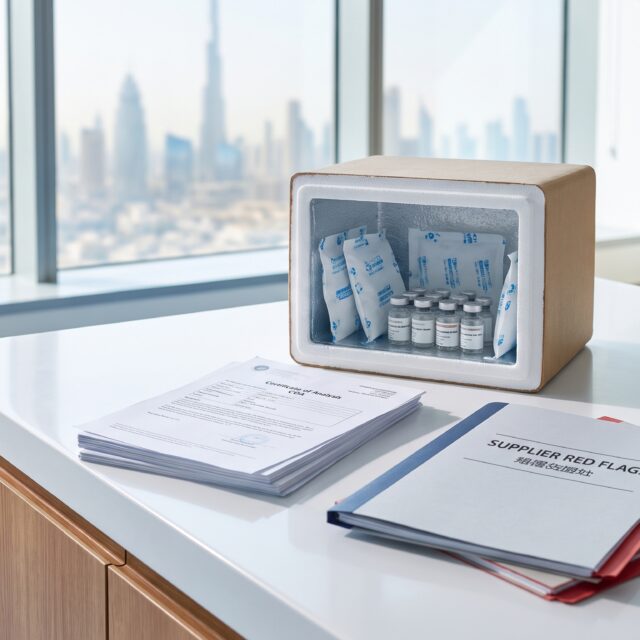
International shipping to Dubai or Abu Dhabi can take weeks. If a parcel sits in a 45°C customs warehouse, the structural integrity of the peptide bonds—specifically the delicate amino acid sequences preceding the Pro-Gly-Pro tail—can denature. This renders the compound useless for precise analytical study.
Procurement staff must prioritize suppliers offering:
- Local UAE Dispatch: Bypassing long international transit times and unpredictable customs holds.
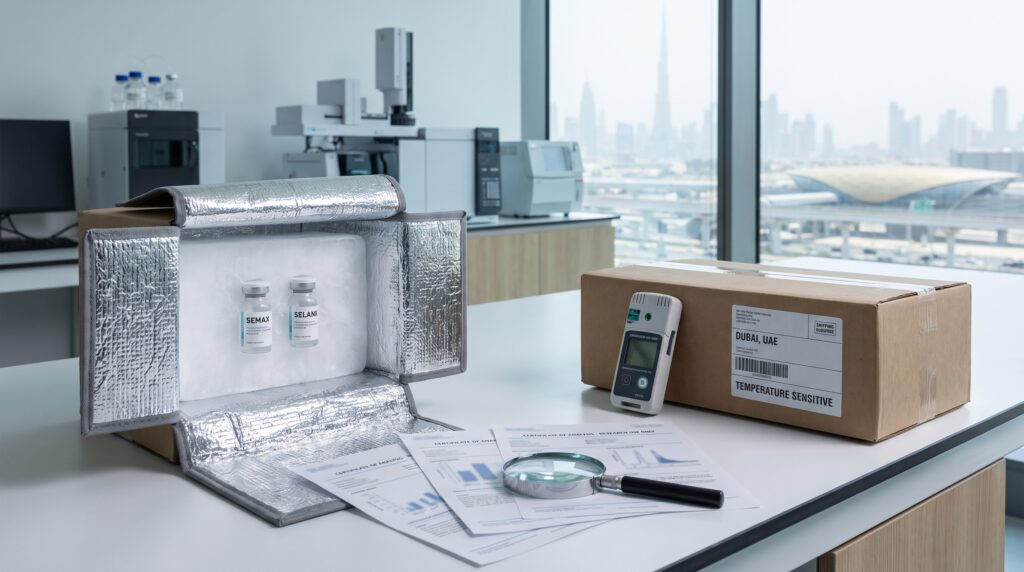
- Temperature-Controlled Logistics: Ensuring the compound remains within a stable temperature band from the facility to the laboratory.
- Reliable Support: Access to instant communication channels for real-time delivery tracking and stock checks.
Verifying Quality: HPLC, LC-MS, and Batch Documentation
Whether a facility’s research protocol calls for Semax or Selank, molecular purity is non-negotiable. Contaminants, residual solvents, or cleaved amino acid chains from sloppy synthesis will ruin an in vitro assay or animal model study.
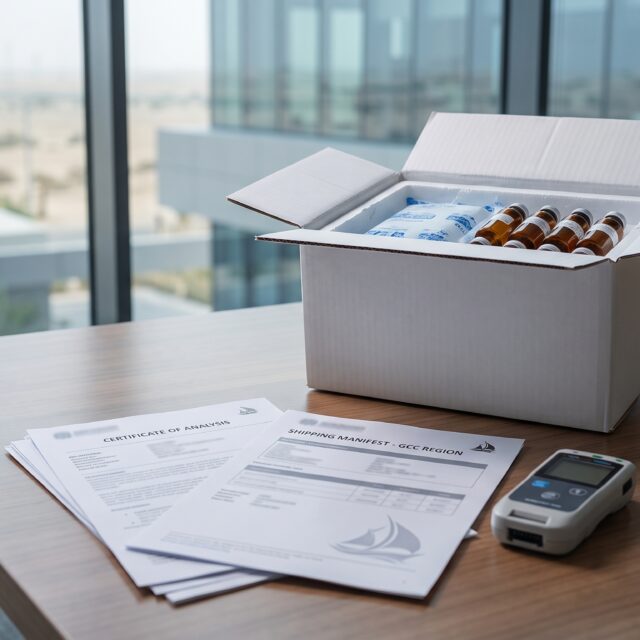
Evaluating a supplier requires reviewing independent, batch-linked Certificate of Analysis (COA) documentation. A valid COA must include:
- HPLC (High-Performance Liquid Chromatography): To confirm the compound’s purity exceeds a 99% threshold.
- LC-MS (Liquid Chromatography-Mass Spectrometry): To verify the exact molecular weight of the peptide matches its theoretical mass, ensuring you are testing the correct molecule.
At NOVA Labs, we know that credibility in the biochemical space requires absolute analytical transparency. UAE researchers can verify the legitimacy of every batch by reviewing our independent lab results prior to placing an order.
Conclusion: Sourcing for Your GCC Laboratory
Choosing between semax vs selank ultimately comes down to the specific mechanisms your laboratory intends to study. Semax remains the premier candidate for protocols investigating BDNF expression, dopaminergic modulation, and neuroprotection. Selank stands out for assays focused on GABAergic transmission, stress adaptation, and immune-neural cross-talk.
For procurement managers and primary investigators in the UAE, navigating the local climate and finding verified purity are the real challenges. By demanding strict cold-chain logistics, same-day or next-day local delivery, and uncompromising HPLC/LC-MS batch documentation, your facility can ensure reliable, reproducible data.
Ready to equip your next protocol? Explore our complete catalog of rigorously tested compounds and source high-purity peptides directly through our research shop.
Disclaimer: The products mentioned in this article are for research purposes only and are not intended for human consumption or therapeutic use.
References
- Volynets, C. et al. (2020). Functional Connectomic Approach to Studying Selank and Semax Effects. PubMed.
- Kolomin, T. et al. (2016). Selank Administration Affects the Expression of Some Genes Involved in GABAergic Neurotransmission. PMC.
- Functional Connectomic Approach to Studying Selank and Semax Effects – PubMed
- Selank Administration Affects the Expression of Some Genes Involved in GABAergic Neurotransmission – PMC
- Semax vs Selank: Benefits, Mechanisms & Safety Compared
Frequently asked questions
What is the structural difference between Semax and Selank?
Semax is a heptapeptide derived from ACTH (4-10), whereas Selank is synthesized from the immunomodulatory peptide Tuftsin. Both share a C-terminal Pro-Gly-Pro tail that protects them from rapid enzymatic degradation in research models.
Which research pathways do Semax and Selank target?
Semax is primarily investigated for its effects on BDNF upregulation, neuroprotection, and dopaminergic signaling. Selank is studied for its influence on GABAergic neurotransmission, stress adaptation, and specific gene expression.
Can Semax and Selank be researched together?
While some unverified overseas vendors market mixed 'stacks', rigorous in vitro and animal models evaluate these peptides individually to isolate specific variables, cellular pathways, and gene expression changes accurately without cross-contamination.
Why is cold-chain shipping important for peptides in the UAE?
Lyophilized peptides like Semax and Selank are sensitive to high temperatures. In the extreme heat of the UAE, temperature-controlled cold-chain shipping prevents the delicate molecular bonds from denaturing before reaching the laboratory.
How can researchers verify the purity of Semax or Selank?
Researchers should demand a batch-specific Certificate of Analysis (COA) from the supplier. This documentation must include HPLC testing to verify at least 99% purity and LC-MS testing to confirm the exact molecular weight.
Nova Labs buyer tools
Ready to verify stock, testing and delivery?
Use the product page and lab report section to check availability, documentation, delivery timing and support before placing an order.
- COA / test-report checks
- UAE delivery context
- Cold-chain handling
- COD and card payment options
- WhatsApp support