



When looking to buy tesamorelin saudi arabia, research procurement staff and informed buyers face a unique set of logistical and regulatory challenges. Tesamorelin is a highly studied growth hormone-releasing hormone (GHRH) analogue, frequently investigated in metabolic and cellular research settings. However, securing high-purity, structurally intact batches in the GCC region requires more than simply clicking ‘order’ on a global supplier’s website.
From the strict border controls enforced by the Saudi Food and Drug Authority (SFDA) and ZATCA, to the intense summer temperatures that can rapidly degrade sensitive compounds, buyers must be highly discerning. This guide details exactly what to look for when evaluating suppliers, covering everything from analytical testing validation to cold-chain physics, ensuring your laboratory receives viable, high-quality materials.
How to Safely Buy Tesamorelin in Saudi Arabia
When planning to buy Tesamorelin in Saudi Arabia, researchers must verify that suppliers provide independent third-party HPLC purity testing, utilise insulated 2°C to 8°C cold-chain packaging, and understand local ZATCA customs regulations. This ensures legitimate research shipments remain chemically stable and successfully bypass the harsh GCC summer temperatures.
The global peptide market is heavily saturated with international providers that offer worldwide delivery from distant shipping origins like Florida or the UK. While these entities may offer bulk purchasing incentives, their reliance on standard international postal systems exposes orders to significant transit delays. For buyers in Saudi Arabia, extended transit times dramatically increase both the risk of customs seizures and the likelihood of thermal degradation. Localised sourcing, or utilising regional hubs that understand GCC-specific challenges, provides a critical advantage for preserving compound integrity.
Navigating ZATCA and SFDA Customs Requirements
Understanding the legal and logistical framework of importing research compounds into the Kingdom of Saudi Arabia (KSA) is the first step in successful procurement. The Saudi Food and Drug Authority (SFDA) and the Zakat, Tax and Customs Authority (ZATCA) maintain stringent oversight on all chemical and biological imports.
Under current frameworks, individuals cannot simply import unregistered hormones, GHRH analogues, or similar biological compounds without prior authorisation. While a legal pathway exists for personal prescription medications via the SFDA’s Electronic Controlled Drugs System (CDS), this is strictly for authorised clinical use by patients travelling to or residing in the Kingdom.
For procurement professionals and independent researchers, compounds like Tesamorelin are classified strictly as research chemicals. This distinction is vital:
- Clear Documentation: Shipments must be explicitly labelled for laboratory and in-vitro research purposes only.
- Commercial Invoicing: Ambiguous or misleading commercial invoices are the primary trigger for ZATCA inspection and subsequent seizure.
- Supplier Expertise: Ordering from suppliers who blindly ship global packages without adapting their documentation to GCC customs profiles often results in lost capital and missing inventory.
Evaluating a Tesamorelin supplier in Saudi Arabia relies on their transparency regarding shipment manifesting. A credible supplier understands these friction points and provides clear, compliant documentation that designates the product strictly for analytical research.
The Saudi Heat Defence: Cold-Chain Packaging Physics
Perhaps the most pressing challenge when ordering Tesamorelin in Saudi Arabia is the climate. Saudi Arabia’s harsh summer climate frequently sees ambient temperatures exceeding 45°C. Lyophilised (freeze-dried) peptides are highly sensitive to prolonged heat exposure, which can cleave the fragile amino acid bonds and render the research material completely degraded before it even arrives at the laboratory bench.
Standard international shipping offers zero protection against these thermal extremes. To survive the transit journey from a distribution centre to Riyadh, Jeddah, or Dammam, specialized logistics are non-negotiable.
Validating Insulation and Temperature Control
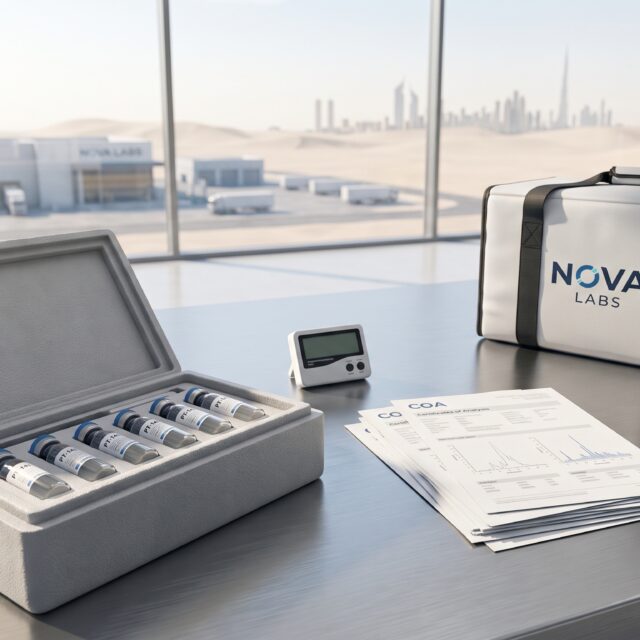
When you order Tesamorelin in Saudi Arabia, you must confirm the supplier’s packaging methodology. Reliable cold-chain logistics in the GCC rely on:
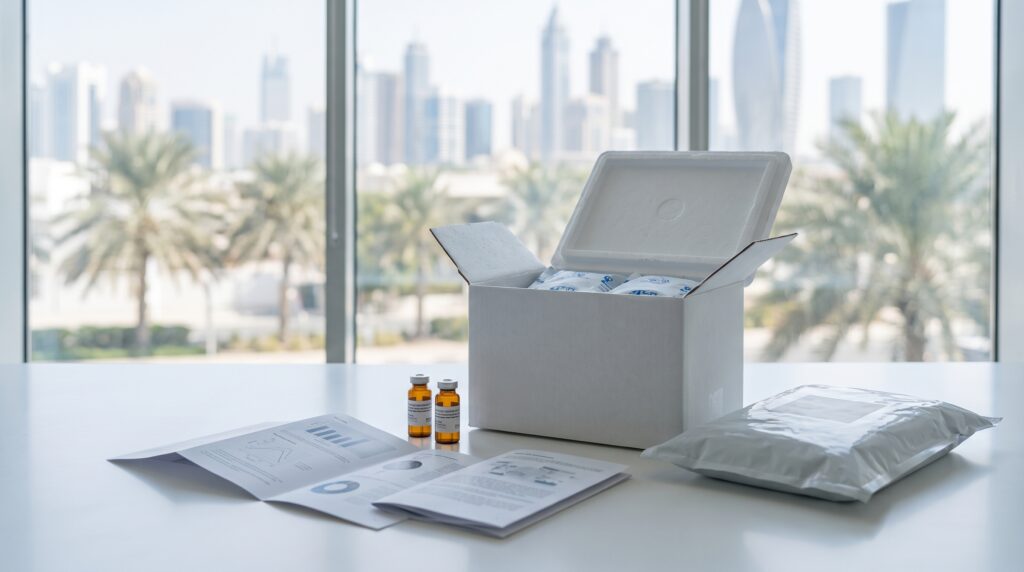
- Passive Isothermal Boxes: The use of XPS (extruded polystyrene) or EPS (expanded polystyrene) insulated containers, which block external thermal transfer.
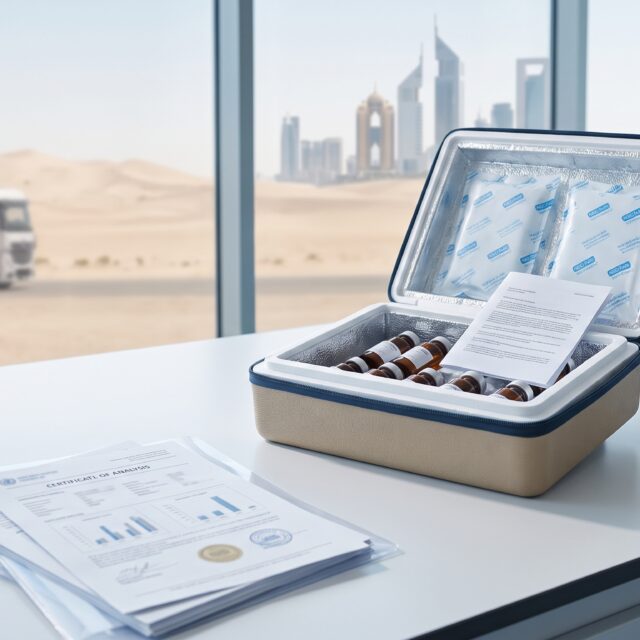
- Phase Change Materials (PCMs): Commercial-grade cooling packs engineered to maintain internal temperatures between 2°C and 8°C throughout the transit window.
- Expedited Couriers: Partnerships with regional couriers that operate air-conditioned transit hubs and vehicles, preventing packages from sitting on sun-baked airport tarmacs.
Without these protocols, the structural integrity of the Tesamorelin peptide is severely compromised. A reputable supplier will proudly detail their cold-chain capabilities rather than hiding behind vague ‘fast shipping’ claims.
Decoding the HPLC Certificate of Analysis (COA)
A premium shipping box is useless if the compound inside is impure. The only objective measure of a peptide’s quality is a verified Certificate of Analysis (COA) from an independent, third-party laboratory.
Because Tesamorelin is a complex 44-amino-acid chain, precise synthesis is difficult. Incomplete synthesis or improper purification leaves behind truncated sequences and heavy metal contaminants. When evaluating a supplier, look for the following on their testing documents:
- High-Performance Liquid Chromatography (HPLC): This analytical technique separates the components in a mixture. The resulting graph (chromatogram) should show one distinct, massive peak representing the target compound, with minimal ‘noise’ (impurities) at the baseline. Purity should be guaranteed at >99%.
- Mass Spectrometry (MS): This verifies the molecular weight of the compound. The measured mass on the report must precisely match the theoretical molecular mass of Tesamorelin.
- Batch Specificity: Never accept a generic, undated COA. Testing reports must be batch-specific and relatively recent, proving the supplier continuously monitors their inventory.
Choosing a Reliable Supplier for the Saudi Market
Beyond purity and shipping, the operational friction of international commerce can deter many researchers. Western payment gateways often flag Middle Eastern transactions, and email support can be unresponsive due to massive time-zone differences.
Modern buyers expect seamless, localised operations. For researchers ready to order Tesamorelin, evaluating the supplier’s payment and support infrastructure is just as important as checking their lab reports. Look for suppliers that accommodate GCC commerce by offering secure credit card processing and responsive support channels for immediate dispatch updates.
Furthermore, sourcing from a provider situated closer to the GCC drastically reduces transit times. By integrating into secure regional peptide logistics, buyers can bypass the lengthy holding times associated with intercontinental freight, ensuring the cold-chain holds firm from the warehouse to the laboratory.
Bottom Line: Confident Sourcing in the KSA
Successfully procuring Tesamorelin for research in Saudi Arabia demands diligence. The extreme climate and strict ZATCA customs regulations mean that standard, overseas consumer shipping methods are insufficient. To protect your research investment, mandate that your supplier provides batch-specific HPLC and MS testing, utilises verified XPS/EPS cold-chain packaging (maintaining 2°C to 8°C), and operates with a clear understanding of regional customs manifesting.
By prioritizing documentation, thermal protection, and regional logistics expertise, laboratories and procurement staff can confidently source high-purity compounds ready for immediate analytical evaluation.
*
References
- Saudi Food and Drug Authority (SFDA). (2024). Electronic Controlled Drugs System (CDS) and Import Regulations for Unregistered Compounds.
- Al Barrak Group. (2023). Cold Chain Logistics for GCC’s Pharma Supply Chains: Overcoming 45°C Thermal Challenges.
- Zakat, Tax and Customs Authority (ZATCA). (2024). Customs Clearance Procedures for Laboratory and Research Chemicals in the KSA.
Disclaimer: The products mentioned in this article are for research purposes only and are not intended for human consumption.
- Peptide Laws in Saudi Arabia — Can You Buy, Travel & Import? (2026)
- Direct Peptides: Premium Peptides For Sale Saudia Arabia Online
- Cold Chain Logistics for GCC’s Food and Pharma Supply Chains – Al Barrak Group
- Drug Import Regulations in Saudi Arabia: A Guide for International Suppliers
- SFDA Registration Requirements: 2026 Checklist – Export To Saudi
- Cold Chain – SMSA Express
Frequently asked questions
Is it legal to buy Tesamorelin in Saudi Arabia?
Tesamorelin is classified strictly as a research chemical. Importing it requires accurate customs manifesting for laboratory use, as personal importation of unregistered GHRH analogues without SFDA prescription authorisation is prohibited and subject to seizure by ZATCA.
How do suppliers protect peptides from the Saudi summer heat?
Reputable suppliers utilize cold-chain logistics, packaging vials in passive isothermal boxes (XPS/EPS) with phase change materials to maintain an internal temperature of 2°C to 8°C during transit to prevent thermal degradation.
What is the most important document to check before ordering Tesamorelin?
Buyers must verify a third-party Certificate of Analysis (COA) that includes recent High-Performance Liquid Chromatography (HPLC) and Mass Spectrometry (MS) results to confirm the compound's structure and >99% purity.
Can I use domestic payment methods to order research peptides in the GCC?
Many localized and regional suppliers are adapting to GCC buyer preferences, offering secure payment gateways that support regional credit cards and bank transfers, moving away from restrictive Western-only payment processors.
Nova Labs buyer tools
Ready to verify stock, testing and delivery?
Use the product page and lab report section to check availability, documentation, delivery timing and support before placing an order.
- COA / test-report checks
- Saudi Arabia delivery context
- Cold-chain handling
- COD and card payment options
- WhatsApp support