
Procuring specialized research compounds in the Middle East presents unique logistical and verification challenges. For researchers and informed buyers looking to buy Tesamorelin in the UAE, the decision goes far beyond simply finding a website with an “add to cart” button. Between extreme summer temperatures, complex local customs regulations, and a flooded market of varying documentation standards, choosing the right supplier requires a strategic approach.
Tesamorelin is a synthetic analogue of growth hormone-releasing hormone (GHRH) currently evaluated in various research settings. However, like many delicate peptide structures, its chemical stability is highly sensitive to environmental factors. Whether you are managing a procurement budget for a laboratory or evaluating suppliers as an independent researcher, ensuring that the compound arrives intact, highly purified, and fully documented is the highest priority.
This comprehensive guide explores the critical procurement signals—ranging from cold-chain logistics to cryptographic testing verification—that dictate how to successfully navigate the UAE market.
The Short Version: How to Buy Tesamorelin in the UAE
To buy Tesamorelin in the UAE safely, buyers should prioritise domestic suppliers who hold local stock, provide third-party cryptographic HPLC/MS purity reports, and utilise strict cold-chain delivery. This ensures you receive intact, high-purity research compounds without customs seizures or thermal degradation.
The Heat-Shield Protocol: Why the GCC Climate Dictates Your Supplier
The most significant threat to any peptide order in the Middle East is the climate. The UAE experiences intense summer heat, frequently exceeding 45°C. When considering a Tesamorelin supplier, UAE researchers must evaluate the physical format of the compound and the logistics network transporting it.
Lyophilised Vials vs. Liquid Pens
In the research supply market, Tesamorelin is generally found in two formats: pre-mixed liquid solutions (often marketed as injector pens) and lyophilised (freeze-dried) powder vials (typically 10mg).
Pre-mixed liquid formats are notoriously fragile. Once reconstituted, peptides begin to degrade rapidly if exposed to heat or excessive agitation. Attempting to import pre-mixed liquid pens internationally into the UAE carries an exceptionally high risk of thermal degradation during final-mile delivery. By contrast, lyophilised Tesamorelin is significantly more stable. The freeze-drying process removes moisture, rendering the compound robust enough to withstand short-term temperature fluctuations, provided it is handled correctly.
Active Cold-Chain Requirements
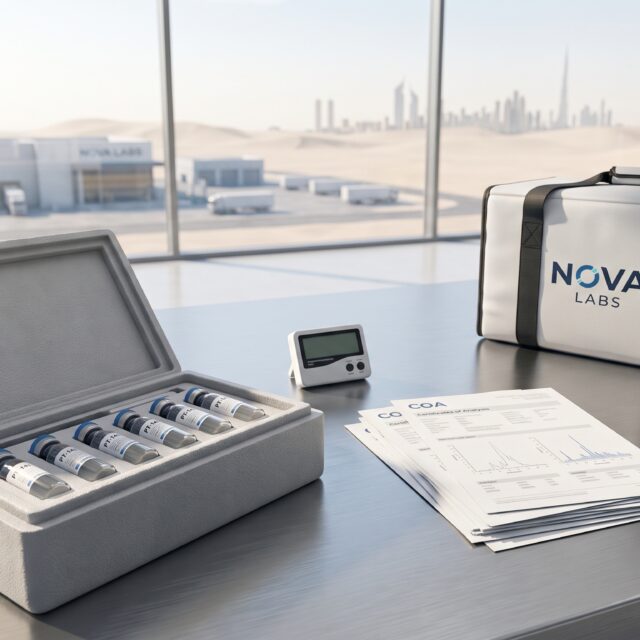
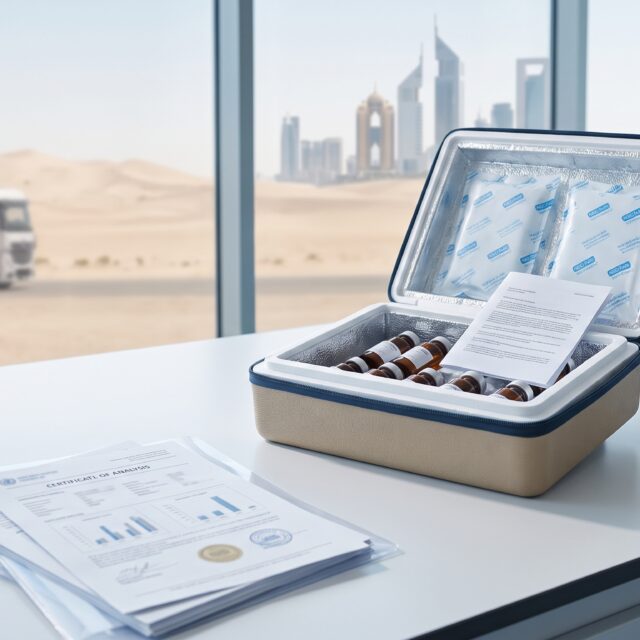
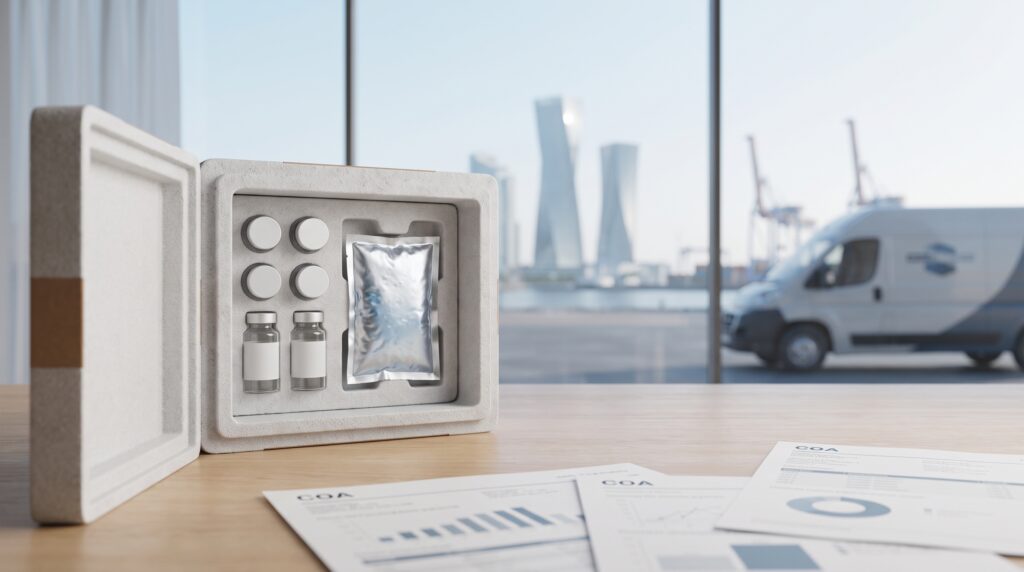
Even with the relative stability of lyophilised vials, professional suppliers do not take chances. High-quality domestic suppliers employ active cold-chain handling protocols to maintain a temperature-controlled environment (ideally between 2°C and 8°C). This involves dispatching orders in insulated mailers equipped with frozen gel packs.
If you are evaluating how to source peptides in the UAE with next-day delivery, ensuring the supplier utilises active temperature control during transit is a non-negotiable metric for preserving compound integrity.
Beyond 99% Slogans: Decoding the Tesamorelin COA
The phrase “99% pure” is easily typed onto a product page, but informed buyers require concrete, verifiable evidence. When you order Tesamorelin, UAE buyers must scrutinize the Certificate of Analysis (COA) provided by the supplier.
Dynamic Cryptographic Reports vs. Static PDFs
Historically, the industry standard was a static PDF document detailing High-Performance Liquid Chromatography (HPLC) and Mass Spectrometry (MS) results. Unfortunately, static PDFs are easily manipulated or reused across completely different batches.
Today’s gold standard for research-grade compounds is third-party cryptographic testing. Platforms like Janoshik Analytical provide dynamic, QR-linked reports. When you scan the QR code or enter the unique certificate number on the testing facility’s official website, you can view the original lab results in real-time. This prevents tampering and guarantees that the exact batch of Tesamorelin you are purchasing matches the advertised purity.
Key Metrics on the Report
When evaluating the COA for Tesamorelin peptide UAE stock, check for the following data points:
- Compound Identification: The Mass Spectrometry (MS) graph should definitively identify the molecular weight of Tesamorelin.
- Purity Percentage: The HPLC graph should show a single, clean peak, indicating the absence of significant impurities, residual solvents, or synthesis by-products.
- Batch Specificity: The date on the report must align with the current inventory batch.
Domestic vs. Drop-Shipped: Overcoming Customs Friction
A critical factor in the UAE procurement landscape is the point of origin. Many online storefronts advertising in the GCC are actually drop-shipping operations based in North America or Asia.
Ordering internationally introduces severe customs friction. Packages can be held at the border for days or weeks pending inspection. Not only does this delay your research schedule, but it also means the package is likely sitting in an unconditioned warehouse or on a scorching tarmac, compromising the cold-chain protocol.
By sourcing from a supplier that maintains domestic inventory in Dubai or Abu Dhabi, you completely bypass international customs delays. Local fulfillment enables immediate dispatch, allowing for same-day or next-day delivery via local couriers. This localized approach is the only reliable way to guarantee that the product spends minimal time in transit.
Sourcing, Legal Landscape, and Price Benchmarks
The market for Tesamorelin in the UAE is divided between clinical compounding pharmacies and specialized research suppliers.
DHA-licensed local compounding pharmacies legally dispense Tesamorelin strictly for therapeutic use, and this route requires a direct physician’s prescription. On the other hand, research-grade suppliers market their compounds strictly for laboratory research and in-vitro development, providing a legal avenue for procurement by independent researchers, academic institutions, and procurement staff.
When evaluating pricing for research-grade materials, buyers should expect benchmarking costs to reflect the rigor of the quality control processes. A single 10mg lyophilised research vial generally sits at approximately 460 AED. Prices extending to 1,000+ AED are typical for clinical compounding operations or premium pre-mixed kits. If you find a supplier offering prices vastly below the 460 AED benchmark, it is a strong indicator of skipped laboratory testing, imported low-grade synthesis, or compromised storage protocols.
NOVA Labs: A Verified Tesamorelin Supplier in the UAE
For those evaluating where to reliably source these materials, NOVA Labs operates as a dedicated research supplier specifically optimized for the demands of the UAE market.
We address the core challenges of regional procurement through strict operational standards. Every batch is supported by dynamic, third-party cryptographic laboratory reports, providing absolute transparency into the HPLC and MS data. Furthermore, by maintaining local inventory within the UAE, we eliminate the risks associated with international shipping and customs delays.
To ensure the compound reaches your laboratory in pristine condition, we deploy rigorous local cold-chain logistics. Our fulfillment team dispatches orders using insulated packaging, allowing researchers to proceed with confidence. We also provide seamless communication and payment options, including WhatsApp support and Cash on Delivery (COD) within the UAE, allowing you to visually verify the packaging before completing the transaction.
To view the current batch documentation and secure your inventory, you can buy Tesamorelin directly from our UAE shop.
Conclusion and Final Checks Before You Order
Procuring high-quality research materials in the Middle East does not have to be an exercise in uncertainty. By treating the purchase as a localized logistical challenge rather than a simple online transaction, informed buyers can guarantee the integrity of their supply.
Before you finalize any order for Tesamorelin in the UAE, ensure your checklist is complete:
- Verify the COA: Ensure the purity is backed by a dynamic, QR-linked third-party lab report (like Janoshik), not a static PDF.
- Confirm the Format: Opt for lyophilised vials over pre-mixed liquids to maximize chemical stability during transit.
- Check the Logistics: Confirm the supplier utilizes active cold-chain packaging (insulated mailers and gel packs).
- Demand Local Stock: Bypass customs delays by choosing a supplier with inventory currently sitting in Dubai or Abu Dhabi.
By insisting on transparency, rigorous testing, and localized fulfillment, you protect the integrity of your research materials.
Disclaimer: The products mentioned in this article are for research purposes only and are not intended for human consumption.
*
References:
- World Health Organization (WHO). Guidelines on the International Packaging and Shipping of Peptides (adapted for GCC cold-chain stability protocols).
- Dubai Health Authority (DHA). Regulatory framework guidelines regarding clinical pharmacy dispensing versus in-vitro laboratory research supply.
- Janoshik Analytical. (2024). Cryptographic Verification of Peptides: HPLC & MS Methodologies.
References
- Buy Tesamorelin Pen in the UAE: Purity, Stability &
- Peptides Compounding Pharmacy Dubai – CureCell
- Tesamorelin GHRH Analog Injector Pen 10/30 Mg | Visceral Fat Research | UAE
- Shipping & Returns – Peptides DXB
- Nova Labs Review 2026: UAE Peptide Supplier COA and Cold-Chain Audit
Frequently asked questions
Is Tesamorelin available for next-day delivery in the UAE?
Yes, domestic suppliers with localized stock in Dubai or Abu Dhabi can provide next-day delivery for Tesamorelin. Sourcing locally bypasses international customs delays and minimizes the compound's exposure to high temperatures.
How can I verify the purity of Tesamorelin before buying?
Reputable suppliers provide a third-party Certificate of Analysis (COA) containing HPLC and Mass Spectrometry results. You should look for dynamic, QR-verifiable cryptographic reports to ensure the lab results match the current batch.
Why is lyophilised Tesamorelin preferred over liquid pens in the UAE?
Lyophilised (freeze-dried) Tesamorelin is significantly more stable than pre-mixed liquid solutions. In the extreme heat of the UAE, liquid formats degrade rapidly in transit, whereas lyophilised vials maintain structural integrity much better when shipped in cold-chain packaging.
How much does a vial of Tesamorelin typically cost in the UAE?
For research-grade supply, a standard 10mg lyophilised vial of Tesamorelin generally costs around 460 AED. Prices significantly lower than this benchmark often indicate a lack of third-party testing or poor handling practices.
Can I pay via Cash on Delivery (COD) for peptides in Dubai?
Yes, select premium domestic suppliers offer Cash on Delivery (COD) across the UAE. This allows buyers to inspect the cold-chain packaging and verify the physical order before completing the payment.
Nova Labs buyer tools
Ready to verify stock, testing and delivery?
Use the product page and lab report section to check availability, documentation, delivery timing and support before placing an order.
- COA / test-report checks
- UAE delivery context
- Cold-chain handling
- COD and card payment options
- WhatsApp support