
Sourcing Bacteriostatic Water for Peptides in Abu Dhabi
When procuring bacteriostatic water for peptides in Abu Dhabi, researchers must secure a sterile, non-pyrogenic diluent containing 0.9% benzyl alcohol. This specific formulation prevents bacterial growth, enabling multi-dose laboratory workflows and allowing reconstituted compounds to remain viable for up to 28 days under proper refrigeration.
For research coordinators and independent laboratory technicians operating within the UAE’s scientific hubs—from Masdar City to Khalifa University—the precision of a research protocol depends heavily on the integrity of its reagents. While the focus in structural biology typically lands on the active compound, the diluent used to prepare that compound is equally critical.
Lyophilised (freeze-dried) peptides arrive as highly stable powders. However, the moment they are reconstituted, their molecular stability shifts, making them susceptible to thermal degradation and bacterial contamination. Choosing the correct solvent and securing a reliable, locally dispatched supply chain is essential for generating consistent, uncontaminated data.
Sterile Water vs. Bacteriostatic Water: The Scientific Standard
A common error in early-phase laboratory setups is treating all sterile diluents as interchangeable. Understanding the functional differences between standard sterile water for injection and bacteriostatic water is fundamental to proper experimental design.
The Role of 0.9% Benzyl Alcohol
Bacteriostatic water contains a precise concentration of 0.9% (9 mg/mL) benzyl alcohol. This additive serves a critical purpose: arresting the reproduction of bacteria within the vial. Because many research protocols require repeated withdrawals from the same vial over several weeks, introducing a needle—even under strict aseptic conditions—carries a contamination risk. Benzyl alcohol creates a hostile environment for bacterial proliferation, securing the vial’s contents post-puncture.
The Limitations of Single-Use Sterile Water
Standard sterile water contains zero preservatives. It is entirely sterile upon its initial opening, but once the vial seal is punctured, the liquid is defenseless against introduced microbes. Consequently, standard sterile water is strictly limited to immediate, single-use applications. If a researcher reconstitutes a 10mg vial with standard sterile water but only requires a 2mg aliquot for an immediate assay, the remaining 8mg must be discarded.
Navigating the UAE Climate: Logistics and Cold-Chain Handling
The climate in the United Arab Emirates introduces an acute complication to peptide research. Lyophilised compounds and their liquid diluents are highly sensitive to thermal stress. Exposure to temperatures exceeding 25°C can accelerate the degradation of delicate peptide bonds, rendering the compound inert or structurally altered.
The Risk of International Customs Delays
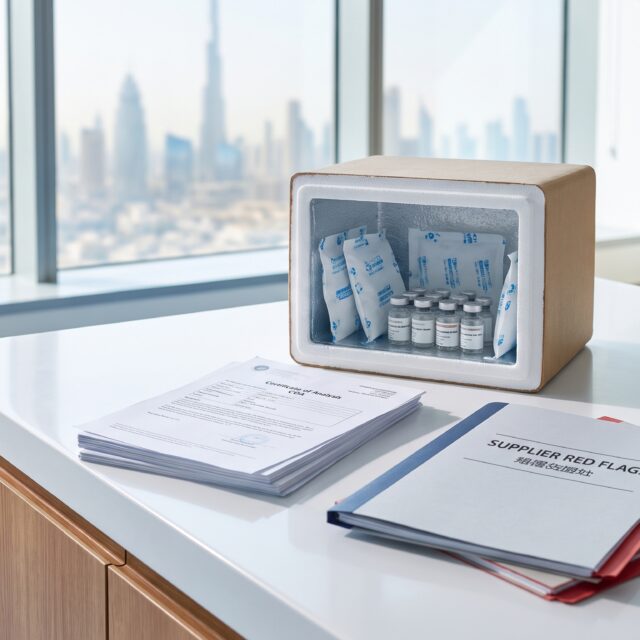
Historically, researchers in Abu Dhabi sourcing supplies internationally faced severe logistical friction. Imported research compounds frequently languish at customs clearing facilities or sit on airport tarmacs during the peak of the UAE summer. A delay of just 48 hours in a non-climate-controlled environment is enough to compromise the efficacy of an entire shipment of research materials.
Local Fulfilment and Bypassing Delays
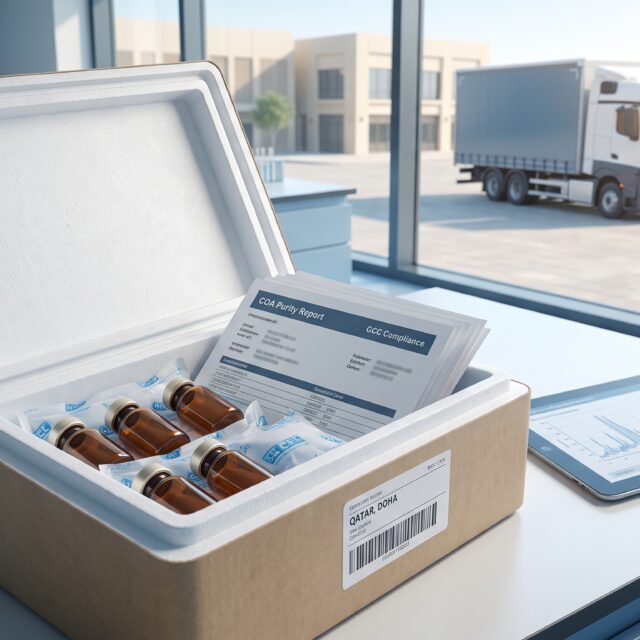
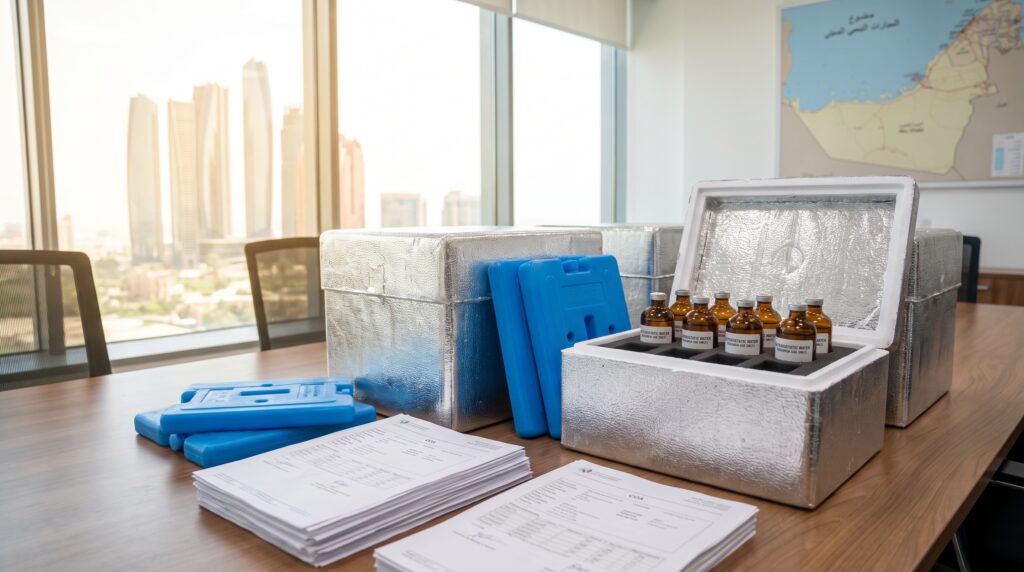
Modern procurement relies on domestic UAE sourcing. Top-tier regional suppliers resolve these thermal risks by maintaining localized, climate-controlled stock. By bypassing international borders, researchers secure supplies with guaranteed cold-chain integrity. Obtaining critical reagents via UAE next day delivery ensures that compounds travel directly to your Abu Dhabi laboratory bench, entirely eliminating tarmac heat exposure.
The Abu Dhabi Lab Procurement Checklist
Procurement officers evaluating suppliers for reconstitution diluents and research compounds must conduct thorough due diligence. All peptide supplies distributed locally should be explicitly classified under ‘Research Use Only’ (RUO) parameters.
When evaluating a supplier, check for the following operational signals:
- Batch-Specific Documentation: Does the supplier provide a Certificate of Analysis (COA) or High-Performance Liquid Chromatography (HPLC) reports? Verifiability is the cornerstone of research integrity.
- TRN-Compliant Invoicing: Institutional buyers require formal, 5% VAT-compliant documentation for accounting and grant-funding transparency.
- Transparent Local Support: Reliable suppliers offer immediate communication channels, such as local WhatsApp support, to handle urgent dispatch requests or provide lot-tracking information.
- Cash on Delivery (COD) Options: In the UAE market, the availability of COD for institutional or independent lab orders indicates a supplier’s domestic presence and operational reliability.
Best Practices for Reconstituting Lyophilised Peptides
Even with the highest quality bacteriostatic water, improper handling during reconstitution can denature the compound. Lyophilised peptide powders consist of fragile amino acid chains easily sheared by physical force.
Follow these fundamental laboratory practices to preserve structural integrity:
- Aseptic Preparation: Swab the rubber stopper of both the peptide vial and the bacteriostatic water vial with an isopropyl alcohol wipe before needle insertion.
- Pressure Equalization: Injecting air into the bacteriostatic water vial equal to the volume of liquid you intend to withdraw helps equalize pressure for a smoother draw.
- The 45-Degree Rule: Never inject bacteriostatic water forcefully or directly onto the lyophilised powder. Angle the needle at 45 degrees and direct the flow slowly down the inner glass wall of the vial.
- Gentle Dissolution: Do not shake the vial under any circumstances. Vigorous agitation creates foaming, indicating damaged protein structures. Gently swirl the vial in a slow, circular motion until clear.
- Immediate Refrigeration: Once reconstituted, transfer the liquid compound to a refrigerator (2°C to 8°C). Avoid keeping the reconstituted vial at room temperature for any extended duration.
Securing Reliable Supplies in the GCC
For laboratories prioritizing precise, verifiable data, sourcing bacteriostatic water, sterile vials, and high-purity research compounds from a locally integrated supplier eliminates the variable of transit degradation.
NOVA Labs specializes in serving the exacting needs of the GCC scientific community. By prioritizing cold-chain logistics, rigorous batch testing, and localized customer support, we ensure your research protocols proceed without unnecessary delays or material failures. To evaluate our current RUO inventory, verified analytical documentation, and local procurement options, explore our complete catalogue at the NOVA Labs shop.
Bottom Line
For scientific professionals securing bacteriostatic water for peptides in Abu Dhabi, success hinges on two factors: the antimicrobial properties of 0.9% benzyl alcohol for 28-day stability, and the reliability of local, temperature-controlled logistics. By rejecting the uncertainties of international shipping and adhering to strict, gentle reconstitution protocols, researchers can maximize the viability of their compounds.
Disclaimer: The products mentioned in this article are for research purposes only and are not intended for human consumption or clinical application.
*
References
- United States Pharmacopeia (USP). <1151> Pharmaceutical Dosage Forms – Guidelines for Bacteriostatic Water for Injection.
- National Center for Biotechnology Information (NCBI). Effects of Benzyl Alcohol on Peptide Stability and Aggregation.
- World Health Organization (WHO). Good Storage and Shipping Practices for Time- and Temperature-Sensitive Pharmaceutical Products.
- Bacteriostatic Water UAE | 3ml & 10ml – VaultLabs
- Solvent Selection for Peptide Reconstitution – Dn Research
- Recon Solution – DXB Peptides
- Research-grade vs pharmaceutical-grade peptides: how to actually tell the difference – DarDoc UAE
- Why peptide therapy belongs with a doctor, not a gym | DarDoc Journal
- Peptide Reconstitution Calculator UAE | Free – VaultLabs
Frequently asked questions
Can I use standard sterile water instead of bacteriostatic water for peptides?
No, not for multi-dose workflows. Standard sterile water lacks antimicrobial preservatives and is strictly for single-use applications. Bacteriostatic water contains 0.9% benzyl alcohol to prevent bacterial growth, making it essential if you plan to store the reconstituted compound for up to 28 days.
How long does bacteriostatic water last after opening?
Once punctured and used to reconstitute a peptide, bacteriostatic water maintains its antimicrobial effectiveness for up to 28 days when handled with proper aseptic techniques and stored correctly.
Why does bacteriostatic water contain benzyl alcohol?
Bacteriostatic water contains 0.9% benzyl alcohol as an antimicrobial preservative. This specific concentration inhibits the reproduction of bacteria, ensuring the vial remains sterile and safe for repeated withdrawals over a four-week period.
Does bacteriostatic water need to be refrigerated in the UAE?
Unopened vials of bacteriostatic water can generally be stored at controlled room temperature away from direct light. However, once mixed with a lyophilised peptide, the resulting solution must be stored in a refrigerator (between 2°C and 8°C) to maintain the compound's stability.
Why is local UAE delivery important for peptide supplies?
Local delivery bypasses international customs delays and extreme tarmac heat. Temperatures above 25°C can rapidly degrade delicate research compounds, making local, cold-chain dispatch essential for maintaining structural integrity in the UAE climate.
Nova Labs buyer tools
Ready to verify stock, testing and delivery?
Use the product page and lab report section to check availability, documentation, delivery timing and support before placing an order.
- COA / test-report checks
- Abu Dhabi delivery context
- Cold-chain handling
- COD and card payment options
- WhatsApp support