
Sourcing reliable, laboratory-grade diluents is a familiar challenge for procurement staff and independent researchers operating in the Gulf. When preparing sensitive compounds for in vitro testing or structural analysis, the quality of the diluent dictates the longevity and stability of the entire project. For buyers in Dubai, Abu Dhabi, and the wider GCC, evaluating suppliers requires looking past marketing claims to examine practical logistics and verifiable documentation.
Extreme summer temperatures, stringent customs controls, and a lack of local brick-and-mortar availability mean that choosing the right online supplier is critical. This guide breaks down exactly what verifiable metrics matter—from Certificates of Analysis (COAs) to cold-chain handling—so you can make informed, secure purchasing decisions for your laboratory.
What is Bacteriostatic Water for Peptides UAE?
Bacteriostatic water for peptides UAE is a specialized laboratory diluent combining sterile, non-pyrogenic water with a 0.9% benzyl alcohol preservative. This formulation inhibits bacterial growth, allowing researchers in the Middle East to safely perform multiple fluid withdrawals from a single reconstituted vial over a 28-day testing window.
In standard laboratory practices, lyophilised (freeze-dried) peptides must be reconstituted before they can be utilized in binding assays, cellular analyses, or broader structural research. Once a lyophilised cake is introduced to a liquid, its molecular structure becomes highly susceptible to rapid degradation and microbial contamination. The inclusion of benzyl alcohol effectively halts microbial proliferation. Without this specific preservative agent, a reconstituted compound would need to be utilized immediately and completely, as any remainder would be compromised within hours.
The UAE Pharmacy Myth: Sterile Water vs. BAC Water
One of the most frequent points of confusion for those new to UAE research procurement is the assumption that bacteriostatic water can be purchased over the counter at local retail pharmacies.
If you visit well-known local chains like Aster Pharmacy, Life Pharmacy, or Al Ain Pharmacy, you will often find products labelled ‘Sterile Water for Injection’. While this product is sterile and safe for single-use clinical dilution, it contains absolutely no preservatives. Once a sterile water ampoule is opened, any unused portion must be immediately discarded. It cannot prevent microbial growth after the initial puncture, making it entirely unsuitable for multi-draw peptide workflows that span several weeks.
True bacteriostatic water is typically not sold in retail UAE pharmacies due to local medical dispensing regulations and its niche application in laboratory and research settings. Consequently, procurement staff must rely on specialized scientific and research suppliers who import or produce bacteriostatic water strictly for analytical use.
Key Checks: Evaluating UAE Suppliers and COAs
When you are forced to move away from physical retail and rely on online vendors, the burden of verification falls on the researcher. A trustworthy supplier should make their documentation transparent and their operational processes clear. Here is a practical buyer checklist to consult before placing an order:
1. Batch-Specific Certificates of Analysis (COAs)
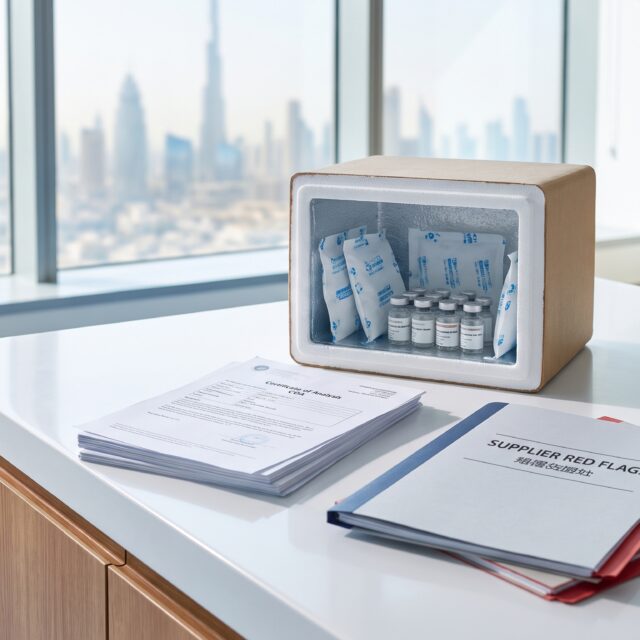
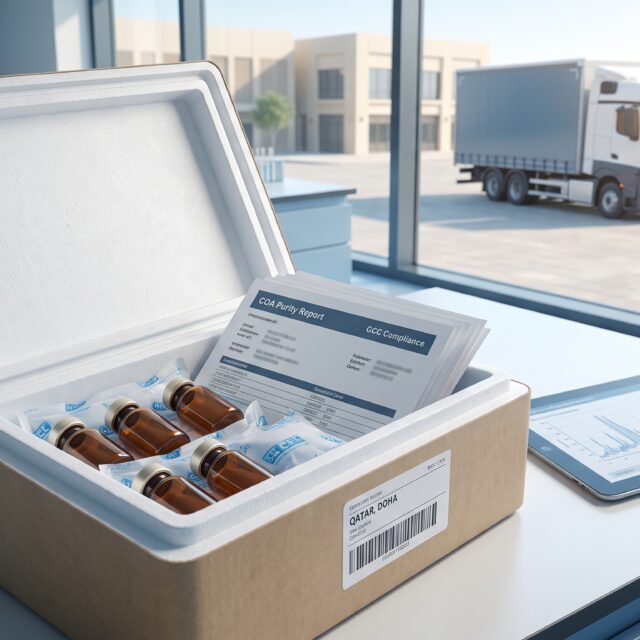
A COA is not just a marketing tool; it is a critical technical document. For bacteriostatic water, a third-party COA should verify that the fluid has undergone sterile filtration (typically using a 0.22-micron filter). It must also confirm the presence of exactly 0.9% (9 mg/mL) benzyl alcohol.
2. Ideal pH Levels
The pH of the diluent is critical for peptide stability. High-quality bacteriostatic water will register a slightly acidic pH, typically falling between 4.5 and 7.0. If a supplier cannot provide data on the pH of their batches, the water could prematurely degrade delicate peptide chains upon reconstitution.
3. Research Use Only (RUO) Compliance
To maintain compliance with UAE federal guidelines on chemical imports and laboratory supplies, reputable suppliers position bacteriostatic water exclusively as a laboratory diluent under ‘Research Use Only’ terms. Vendors that use explicit medical, clinical, or prescriptive language without a pharmacy license should be approached with extreme caution, as they may face regulatory shutdowns or customs seizures.
The 28-Day Benzyl Alcohol Rule Explained
The benchmark for bacteriostatic water viability is the widely cited ’28-day rule’.
Benzyl alcohol is an aromatic alcohol that exerts bacteriostatic (inhibiting bacterial reproduction) rather than bactericidal (actively killing bacteria) effects. When a sterile needle punctures the septum of a vial to draw liquid, there is a microscopic risk of introducing ambient laboratory contaminants. The 0.9% concentration of benzyl alcohol is precisely calibrated to suppress these potential contaminants from proliferating without being so concentrated that it denatures the peptide’s amino acid sequence.
However, benzyl alcohol is volatile. Over time, and with repeated exposure to the ambient environment during multiple withdrawals, its efficacy diminishes. Furthermore, the chemical interaction between the alcohol, the water, and the reconstituted peptide slowly degrades the peptide’s structural integrity. Standard laboratory protocol dictates that any peptide vial reconstituted with bacteriostatic water should be discarded 28 days after the initial puncture, regardless of how much solution remains.
UAE Climate Challenges and Regional Logistics
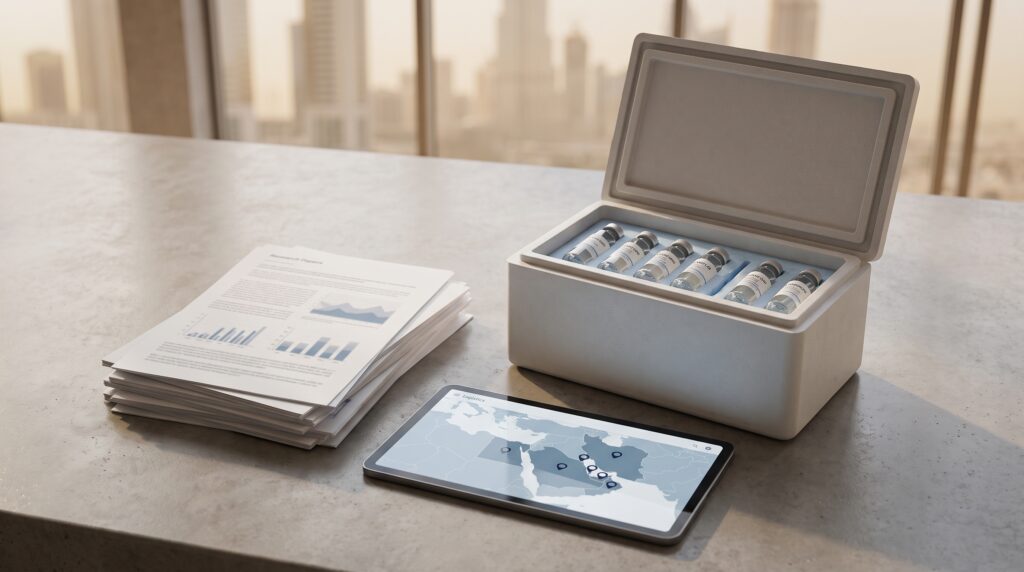
The climate in the GCC introduces a significant variable into the procurement of laboratory supplies. During the UAE summer, temperatures routinely exceed 40°C. If bacteriostatic water is left sitting in an unconditioned delivery van for several days, prolonged extreme heat can accelerate the degradation of the benzyl alcohol or compromise the integrity of the vial’s rubber stopper.
This is where a local operational footprint matters immensely. Purchasing from overseas suppliers often means your package sits in international customs sorting facilities for extended periods. By choosing a supplier with local warehousing, you mitigate these environmental risks. NOVA Labs prioritizes cold-chain awareness and local logistics, offering rapid UAE next-day delivery to ensure that fragile research materials and delicate diluents spend minimal time in transit.
Furthermore, modern UAE buyers expect flexible, secure purchasing options. Evaluating a vendor’s payment and support infrastructure is just as important as checking their COAs. Suppliers that offer Cash on Delivery (COD), local WhatsApp support for immediate technical or order queries, and secure local checkout gateways demonstrate a long-term commitment to the regional market.
Conclusion and Next Steps
Sourcing the correct diluent is a foundational step in any successful research protocol. Navigating the limitations of local retail pharmacies and the logistical hurdles of the UAE climate requires partnering with a vendor that prioritizes transparency, verified third-party testing, and rapid logistics.
Always ensure that your chosen supplier can provide batch-specific documentation proving sterile filtration and appropriate pH levels, and verify that their delivery infrastructure can protect the integrity of your compounds from the intense Gulf heat. If you are preparing to stock your laboratory, we invite you to explore our research catalogue to view our rigorously tested, RUO-compliant compounds and specialized diluents.
Disclaimer: The products and compounds mentioned in this article are provided strictly for in vitro laboratory research purposes only and are not intended for human consumption or therapeutic use.
References
- DailyMed. (n.d.). BACTERIOSTATIC WATER. U.S. National Library of Medicine.
- Palmetto Peptides. (n.d.). BAC Water Storage & Shelf Life: Research Lab Best Practices.
- Peptide Researches. (n.d.). Bac Water: A Clear Guide to Storage, Shelf Life, and Lab Handling.
- BAC Water Storage & Shelf Life: Research Lab Best Practices – Palmetto Peptides
- Bac Water: A Clear Guide to Storage, Shelf Life, and Lab Handling – Peptide Researches
- BACTERIOSTATIC WATER – DailyMed
- NOVA Labs UAE Review 2026: COA Audit, Prices and Delivery – PeptideStat
- Bacteriostatic Water UAE | 3ml & 10ml – VaultLabs
- BACTERIOSTATIC SOLUTION – 10ml – Limitless Wellness Lab – Syncom
Frequently asked questions
Why is bacteriostatic water not sold in UAE pharmacies?
Retail pharmacies in the UAE typically stock sterile, preservative-free water for single-use clinical injections. True bacteriostatic water containing benzyl alcohol is classified for specific laboratory or analytical use, meaning it is primarily available through specialized research chemical suppliers rather than public retail chains.
What is the exact difference between sterile water and bacteriostatic water?
Sterile water is pure, single-use water with no preservatives and must be discarded immediately after opening. Bacteriostatic water contains a 0.9% benzyl alcohol preservative, which inhibits microbial growth and safely allows for multiple fluid withdrawals from the same vial over a 28-day testing period.
How long does bacteriostatic water last after being opened?
Once a vial of bacteriostatic water has been punctured with a sterile needle, standard laboratory protocols dictate that it should be utilized or safely discarded within 28 days to ensure the benzyl alcohol preservative remains effective at inhibiting microbial growth.
Does bacteriostatic water need to be refrigerated in the UAE?
Before opening, intact vials of bacteriostatic water should be stored in a cool, dark environment away from direct sunlight and extreme Gulf heat. Once it is used to reconstitute a peptide, the resulting solution must be strictly refrigerated at 2°C to 8°C to maintain molecular stability.
Nova Labs buyer tools
Ready to verify stock, testing and delivery?
Use the product page and lab report section to check availability, documentation, delivery timing and support before placing an order.
- COA / test-report checks
- UAE delivery context
- Cold-chain handling
- COD and card payment options
- WhatsApp support