
Bacteriostatic Water vs Sterile Water: Choosing the Right Diluent
When comparing bacteriostatic water vs sterile water, the key difference is preservation. Bacteriostatic water contains 0.9% benzyl alcohol, inhibiting bacterial growth for up to 28 days in multi-dose vials. Sterile water has no additives, making it highly vulnerable to contamination and strictly for immediate, single-use laboratory applications.
Quick Answer & UAE Buyer Checklist
- Bacteriostatic Water: Formulated with 0.9% benzyl alcohol. Used to preserve reconstituted multi-dose research compounds for up to 28 days under refrigeration.
- Sterile Water: Contains absolute zero preservatives. Mandates immediate disposal after a single vial entry to prevent microbial contamination.
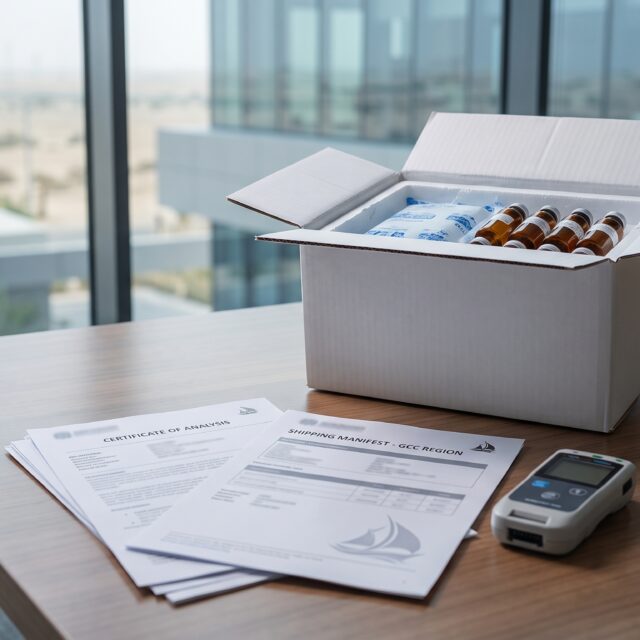
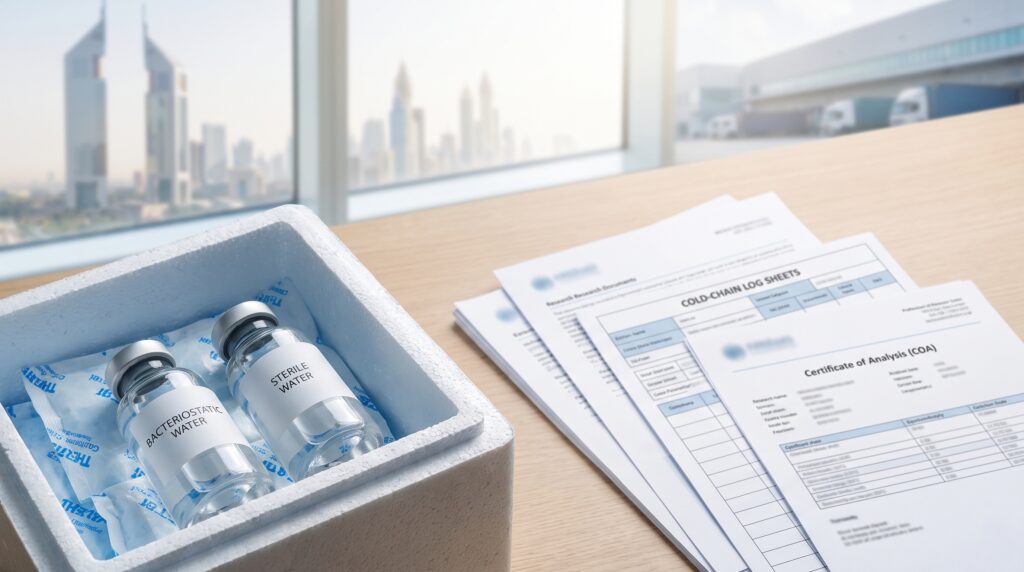
- UAE Sourcing Reality: High ambient summer temperatures degrade benzyl alcohol rapidly. Ensure your supplier provides localized UAE cold-chain delivery rather than relying on standard international post.
- Quality Verification: Always demand pyrogen-free certification and third-party Certificate of Analysis (COA) documents before procuring laboratory diluents.
For researchers and procurement staff managing laboratory protocols in the UAE, preparing lyophilized (freeze-dried) compounds requires absolute precision. The integrity of any peptide research relies not just on the quality of the primary compound, but equally on the chemical profile of the diluent used to reconstitute it. A frequent point of confusion among laboratory personnel and informed buyers is the core distinction between these two standard laboratory liquids.
Choosing the wrong reconstitution fluid can compromise expensive research materials, invite rapid microbial contamination, and invalidate experimental outcomes. In a region where extreme ambient temperatures demand rigorous cold-chain logistics, understanding the precise chemical and operational differences is a fundamental requirement.
The Core Difference: Preservatives and Purity
At a foundational level, both fluids begin as highly purified H2O. However, their final chemical composition dictates their specific use cases in an in-vitro research environment.
Sterile Water: Absolute Purity for Immediate Use
Sterile water is distilled water that has been comprehensively sterilized and packaged to contain absolutely no antimicrobial agents, preservatives, or chemical additives. Because it lacks any protective agents, it is exceptionally vulnerable to microscopic environmental contaminants.
The moment a sterile water vial or ampoule is punctured by a needle, its sterile environment is permanently compromised. Airborne microbes immediately enter the vial. Any unused portion must be discarded immediately, making it suitable only for single-dose laboratory applications, equipment calibration, or sterile irrigation in specific clinical settings.
Bacteriostatic Water: The Multi-Dose Standard
Bacteriostatic water undergoes the exact same initial purification and sterilization process but is subsequently formulated with 0.9% benzyl alcohol. This precise concentration serves a critical role: it acts as a bacteriostatic agent.
In microbiological terms, “bacteriostatic” means the solution prevents bacteria and fungi from reproducing and proliferating (as opposed to “bactericidal,” which means killing microbes on contact). This protective preservative layer makes bacteriostatic water the gold standard for reconstituting multi-dose lyophilized peptides, ensuring the solution remains chemically viable and free from microbial growth over an extended research timeframe.
Why Peptide Researchers Rely on the 28-Day Rule
The primary reason this distinction is essential for peptide handlers comes down to typical usage patterns. In most laboratory settings, a single vial of a lyophilized compound is rarely utilized in one single application.
When researchers reconstitute a peptide vial, they typically draw multiple aliquots over several weeks. If sterile water were used for this multi-entry process, the first needle puncture would introduce microscopic contaminants. Without a preservative to inhibit their growth, these microbes would rapidly multiply in the nutrient-rich environment of the reconstituted peptide, destroying the compound’s structural integrity and posing severe contamination risks to the experiment.
By utilizing bacteriostatic water, the 0.9% benzyl alcohol effectively halts this microbial proliferation. Under standard guidelines (such as those outlined by the USP), a vial of bacteriostatic water—and the peptide reconstituted with it—remains stable and usable for up to 28 days after the initial puncture, provided it is stored correctly under refrigeration. Beyond the 28-day mark, the preservative efficacy of the benzyl alcohol begins to degrade, and the solution should be systematically discarded to maintain stringent research standards.
GCC Sourcing Realities: Navigating the UAE Market
Procuring high-quality laboratory diluents in Dubai, Abu Dhabi, or the wider GCC presents unique logistical challenges. The high ambient heat of the region means that improper transport can rapidly degrade both lyophilized peptides and the benzyl alcohol in bacteriostatic water.
Pharmacy Supplies vs. Research Suppliers
In the UAE, retail pharmacies frequently stock large-format sterile water primarily intended for hospital irrigation, equipment cleaning, or single-use dilution. While these are perfectly suited for their intended medical applications, they are entirely inappropriate for multi-dose peptide reconstitution.
Finding lab-grade, correctly formulated bacteriostatic water requires specialized laboratory suppliers. Informed UAE researchers avoid generic online marketplaces and instead source their diluents alongside their research compounds from established suppliers who understand the critical nature of cold-chain logistics.
Proper Storage and Cold-Chain Delivery in Extreme Climates
Once procured, both bacteriostatic water and reconstituted peptides must be handled with strict temperature protocols. To prevent the degradation of benzyl alcohol and preserve the structural integrity of active peptide compounds, solutions must be stored consistently at 2°C to 8°C (standard refrigeration).
Exposure to Dubai’s ambient summer temperatures—even for just a few hours on a loading dock or in an unconditioned delivery van—can render the preservative ineffective. This is why localized UAE fulfillment is critical. Waiting weeks for international shipping not only invites customs friction but severely increases the risk of thermal degradation. A reliable regional supplier will utilize thermal packaging and rapid local couriers to ensure the diluent arrives intact.
Verifying Quality: Documentation and Pyrogen Testing
How do procurement staff and researchers verify that they are receiving authentic, lab-grade bacteriostatic water rather than mislabeled sterile water? The answer lies in rigorous supplier documentation.
A reliable supplier does not ask buyers to rely on blind trust; they provide proof. High-quality bacteriostatic water must be explicitly pyrogen-free. Pyrogens are the dead cellular byproducts of bacteria (endotoxins) that, even in a sterile environment, can trigger inflammatory responses or interfere with sensitive cell-culture assays.
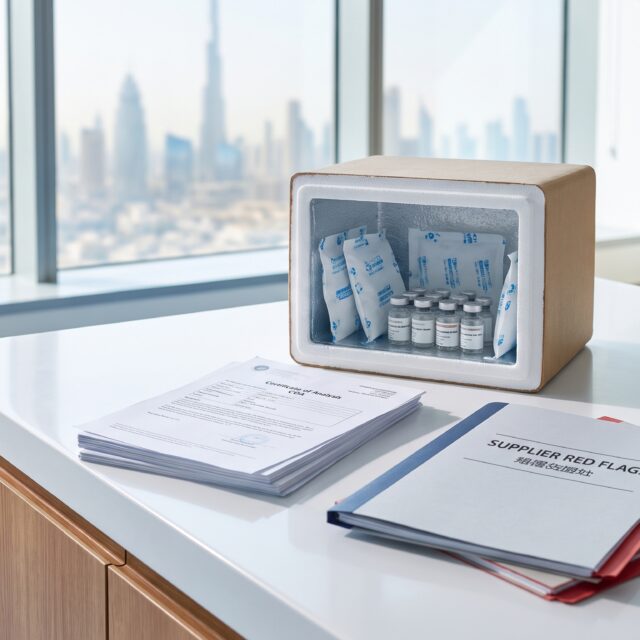
When evaluating a supplier in the UAE, careful buyers should look for lot-tracked Certificates of Analysis (COAs) and High-Performance Liquid Chromatography (HPLC) reports. These documents verify the purity of the product, confirm the exact 0.9% concentration of the preservative, and guarantee the absence of pyrogens.
Before committing to a procurement decision, we strongly encourage researchers to review transparent documentation. You can examine our comprehensive lab results to ensure all reagents meet stringent analytical standards.
Smooth Procurement: Payment and Support
Modern research facilities and independent researchers in the GCC expect frictionless procurement. Navigating overseas wire transfers or dealing with unresponsive international customer service can delay critical research. When sourcing locally, look for suppliers that offer flexible, secure payment options—including encrypted credit card processing, cryptocurrency options for privacy, or cash-on-delivery (COD) for regional buyers.
Furthermore, dedicated customer support (such as active WhatsApp channels or responsive local email support) is invaluable when coordinating complex deliveries or seeking immediate clarification on COA batch numbers.
Summary and Next Steps
The choice between bacteriostatic water vs sterile water is not a matter of preference; it is a fundamental requirement of laboratory science. Sterile water provides an ultra-pure environment for immediate, single-use applications, while bacteriostatic water offers the critical benzyl alcohol preservative necessary for multi-dose, 28-day peptide protocols. By understanding these chemical mechanics, prioritizing cold-chain logistics, and demanding transparent testing documentation, UAE researchers can safeguard their investments and ensure precise experimental outcomes.
If you are evaluating suppliers for your laboratory needs, prioritize localized shipping, transparent analytical testing, and dedicated local support. To view our full range of rigorously tested research compounds and reliable reconstitution supplies, explore our complete inventory in the NOVA Labs shop.
Disclaimer: The products mentioned in this article are for laboratory research purposes only and are not intended for human or animal consumption, diagnosis, or treatment. Always follow standard laboratory safety protocols.
References
- United States Pharmacopeia (USP). General Chapter <1> Injections and Implanted Drug Products (Parenterals).
- U.S. Food and Drug Administration (FDA). Selection of the Appropriate Package Type Terms and Recommendations for Labeling Injectable Medical Products.
- National Center for Biotechnology Information (NCBI). PubChem Compound Summary for CID 2345, Benzyl alcohol.
- Bac Water vs Sterile Water: Not the Same, Here’s Why – Peptides Vietnam
- Bacteriostatic Water vs Sterile Water: What’s the Difference? – Qube Peptides
- Bacteriostatic Water UAE | 3ml & 10ml – VaultLabs
- Kuwait Saudi Sterile Water For Injection 500 Ml – Al Ain Pharmacy
- Bacteriostatic Water – DXB Supps
- Bacteriostatic Water vs. Sterile Water: The Differences That Can Save
Frequently asked questions
Can I substitute sterile water for bacteriostatic water in multi-dose protocols?
No, sterile water should not be used as a substitute for multi-dose vials. Because it lacks preservatives, sterile water must be discarded immediately after a single use. Using it for multi-dose reconstitution risks rapid microbial contamination and degradation of the research compound.
How long does bacteriostatic water last after opening?
Once the vial is initially punctured, bacteriostatic water remains stable and usable for up to 28 days when stored under proper refrigerated conditions (2°C to 8°C). After 28 days, the benzyl alcohol degrades and the vial should be discarded.
Where can I buy research-grade bacteriostatic water in the UAE?
While retail pharmacies often carry sterile water for clinical irrigation, research-grade bacteriostatic water should be sourced online from specialized laboratory suppliers in the UAE that provide lot-tracked Certificates of Analysis (COAs) and local cold-chain delivery to prevent heat degradation.
Why does bacteriostatic water contain 0.9% benzyl alcohol?
It contains 0.9% benzyl alcohol to act as a bacteriostatic preservative. This specific USP-standard concentration safely inhibits the growth and reproduction of bacteria, fungi, and other microorganisms over a 28-day period without aggressively interfering with most peptide structures.
Nova Labs buyer tools
Ready to verify stock, testing and delivery?
Use the product page and lab report section to check availability, documentation, delivery timing and support before placing an order.
- COA / test-report checks
- UAE delivery context
- Cold-chain handling
- COD and card payment options
- WhatsApp support