

Where to Buy BPC-157 Saudi Arabia: The Essential Sourcing Guide
For laboratory professionals and informed procurement specialists, the decision to buy BPC-157 in Saudi Arabia is layered with unique regional challenges. Sourcing high-purity research compounds in the GCC is not as simple as placing an international order. Between the intense summer heat that regularly exceeds 40°C, stringent import regulations, and the prevalence of unverified cross-border listings, securing intact, structurally stable peptides requires careful supplier evaluation.
Recent Saudi Food and Drug Authority (SFDA) enforcement measures on unregistered compounds and distributors lacking proper temperature-controlled storage facilities underscore a critical reality: standard international shipping routes are often unviable for fragile compounds. Ensuring peptide integrity demands regional GCC dispatch, verifiable testing documentation, and unbroken cold-chain logistics.
The Short Version: What Matters Most
To successfully buy BPC-157 in Saudi Arabia, researchers must prioritize regional GCC suppliers who offer verifiable third-party Certificates of Analysis (COAs), utilize temperature-controlled cold-chain logistics to prevent heat degradation, and dispatch from local hubs to minimize customs friction and protect the compound’s structural integrity.
Navigating the SFDA and Customs: Why Regional Fulfillment is Critical
The regulatory landscape for importing research materials into the KSA is highly structured. Peptides like BPC-157 are carefully monitored, meaning broad research chemical exemptions do not seamlessly apply to standard international commercial cargo.
When a researcher attempts to order BPC-157 for Saudi Arabia delivery from a supplier based in the United States or the UK, the package almost invariably routes through international commercial customs. These shipments frequently face administrative delays, requests for extensive pharmaceutical registration paperwork, or complete confiscation. Furthermore, packages held in non-climate-controlled customs warehouses for days or weeks suffer structural degradation before they ever reach the laboratory.
This is why regional fulfillment is a non-negotiable factor. Premium suppliers servicing the KSA utilize localized GCC fulfillment hubs, often based in Dubai. By dispatching from within the region, regulatory friction is significantly reduced, transit times are compressed from weeks to mere days, and the risk of prolonged customs holds is mitigated. If you are assessing a BPC-157 supplier in Saudi Arabia, their ability to bypass international cargo holds through integrated GCC logistics should be your primary screening criterion.
Beating the Heat: The Necessity of Cold-Chain Logistics
The environmental realities of the Arabian Peninsula pose the single greatest threat to peptide viability. BPC-157 (Body Protection Compound-157) is a synthetic 15-amino acid sequence. While it exhibits a degree of thermodynamic stability in its lyophilized (freeze-dried) state, prolonged exposure to the intense Saudi summer heat will rapidly denature the peptide bonds, rendering the compound inert.
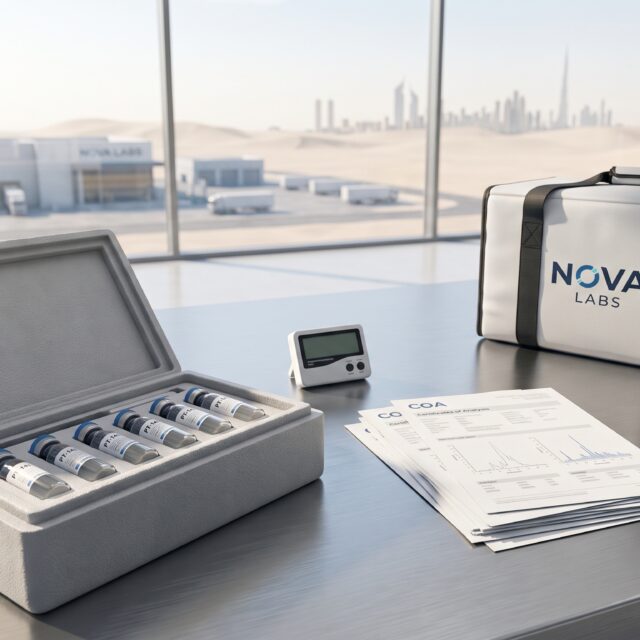
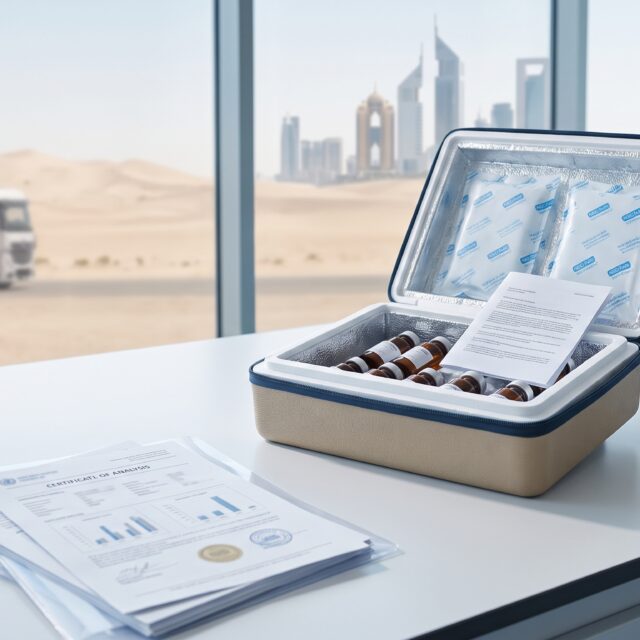
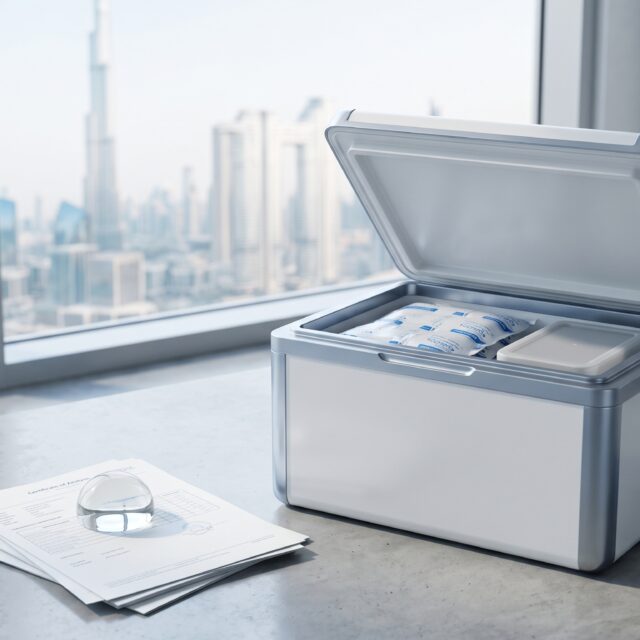
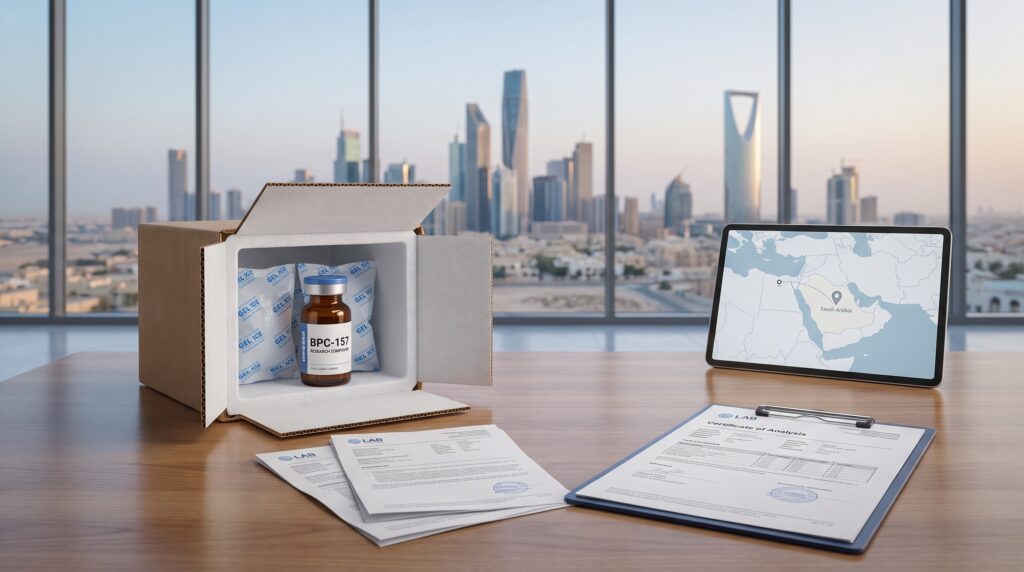
Evaluating a supplier means interrogating their shipping methods. Standard courier boxes provide zero thermal protection. A reliable BPC-157 peptide provider in Saudi Arabia will utilize purpose-built cold-chain transit systems. This involves:
- Insulated EPS (Expanded Polystyrene) or high-density polyurethane shipping containers.
- Calibrated phase-change materials (ice packs or dry ice variants) tailored to the specific transit duration.
- Expedited last-mile delivery networks optimized to keep packages out of direct sunlight.
Understanding regional fulfillment also means understanding transit speed. You can learn more about how NOVA Labs optimizes GCC peptide delivery and regional logistics to ensure temperature stability from our hub directly to your facility.
Decoding the COA: How to Verify True 99%+ Purity
The proliferation of unregulated, mass-market chemical listings makes stringent documentation a necessity for accurate research. Informed procurement directors must demand independent verification before they order BPC-157 in Saudi Arabia. The gold standard for this verification is the Certificate of Analysis (COA) backed by High-Performance Liquid Chromatography (HPLC) and Mass Spectrometry (MS).
When reviewing a COA, buyers should look for specific, unalterable data points:
- Independent Testing: The laboratory conducting the analysis must be an accredited third party, separate from the manufacturing facility.
- Purity Thresholds: For analytical and in-vitro research applications, a purity level exceeding 99% is essential. Anything lower introduces unknown variables (such as synthesis byproducts or cleaved chains) that can disrupt data collection.
- Mass Verification: The MS report confirms the molecular weight of the compound matches the exact expected weight of the BPC-157 sequence.
- Accurate Dosing Metrics: If purchasing 10mg vials, the COA should verify the net content of the vial matches the label claim, ensuring researchers are not receiving under-dosed products padded with excess filler.
If a supplier cannot provide a recent, batch-matched COA upon request, they should be immediately disqualified from your procurement list.
Financial Flexibility: Tamara and Regional Payment Integration
Equipping a research laboratory or scaling up a series of experimental protocols requires capital. As the regional market has matured, so have the financial services supporting it. Leading regional platforms now integrate flexible, localized payment gateways that cater specifically to the GCC consumer.
One of the most significant logistical advancements for KSA buyers is the integration of Sharia-compliant Buy Now Pay Later (BNPL) services like Tamara. Rather than demanding full upfront capital for bulk compound orders, Tamara allows buyers to split their payments into manageable installments.
Access to localized payment infrastructure like Tamara, alongside standard Credit Card and local bank transfer options, signals that a supplier is integrated into the local commercial ecosystem rather than operating as a disconnected offshore entity.
Sourcing Verified Compounds with NOVA Labs
For procurement specialists and informed buyers requiring consistent access to high-purity compounds, NOVA Labs operates as a dedicated regional partner. By leveraging a centralized GCC dispatch hub, we bypass the delays and uncertainties associated with international freight, ensuring rapid transit to the Saudi border.
Our commitment to transparency means every batch is rigorously tested, with HPLC and MS documentation readily available to verify purity levels exceeding 99%. Recognizing the environmental hazards of the KSA climate, every order is processed using strict cold-chain protocols, safeguarding the molecular integrity of the peptide from our facility to your bench.
Researchers preparing their protocols can review the exact specifications, check current regional stock, and order BPC-157 10mg vials directly through our secure platform, supported by local payment options like Tamara.
Conclusion: Procuring with Absolute Confidence
Securing BPC-157 in the Kingdom of Saudi Arabia requires more than just finding a storefront with an active checkout button. It demands a strategic approach to logistics, an uncompromising stance on chemical purity, and a clear understanding of the regional regulatory environment. By insisting on localized GCC fulfillment, cold-chain preservation, verified third-party COAs, and reliable regional payment gateways, laboratories can mitigate the risks of compound degradation and customs seizures.
When outfitting a laboratory or supplying an ongoing protocol, prioritize a logistics partner built for the specific regulatory and environmental demands of the Middle East.
Disclaimer: The products mentioned in this article are for in-vitro laboratory research purposes only and are not intended for human consumption or therapeutic use.
References
- Saudi Food and Drug Authority (SFDA). “Clearance Requirements for Chemicals and Reagents.”
- European Medicines Agency (EMA). “Guideline on the Chemistry of Active Substances for Synthetic Peptides.”
- Tamara Financial Services: Regional Integration and E-Commerce Guidelines for the GCC.
- MoH Warns Against Using Unregistered Drugs and Seizes Violators
- International Peptide Laws – PeptideLaws.com
- Peptide Delivery GCC | Cold-Chain Shipping from Dubai | BodyPharm UAE
- Download the Tamara App | Shop & Split your payments in 24 months
- How to get peptides in Saudi Arabia
- BPC-157 – NOVA Labs
Frequently asked questions
Can I buy BPC-157 legally in Saudi Arabia for research?
Yes, BPC-157 can be purchased in Saudi Arabia strictly for laboratory and in-vitro research purposes. However, buyers must navigate strict SFDA customs regulations, making established regional GCC suppliers the most reliable route for procurement.
Why is cold-chain shipping important for peptides in the KSA?
Saudi Arabia's extreme summer temperatures, which frequently exceed 40°C, can rapidly degrade lyophilized peptides like BPC-157. Cold-chain shipping using insulated packaging and phase-change materials prevents heat exposure and preserves the compound's structural integrity.
How do I verify the purity of a BPC-157 supplier in Saudi Arabia?
Always request a batch-specific, third-party Certificate of Analysis (COA). This document should include High-Performance Liquid Chromatography (HPLC) and Mass Spectrometry (MS) testing to confirm the peptide's purity is analytically verified above 99%.
Do international peptide shipments get seized by Saudi customs?
Yes, standard international shipments from outside the GCC often face lengthy delays, requests for pharmaceutical registration, or total confiscation by Saudi customs. Ordering from a local GCC fulfillment hub significantly reduces these risks.
Can I use Tamara to order research peptides in Saudi Arabia?
Yes, premium regional suppliers that are fully integrated with GCC financial networks often offer Tamara at checkout, allowing buyers to split their research orders into interest-free, Sharia-compliant payments.
Nova Labs buyer tools
Ready to verify stock, testing and delivery?
Use the product page and lab report section to check availability, documentation, delivery timing and support before placing an order.
- COA / test-report checks
- Saudi Arabia delivery context
- Cold-chain handling
- COD and card payment options
- WhatsApp support