
Procuring high-quality peptides in the GCC requires a rigorous approach to supplier evaluation, particularly due to regional climate challenges and strict import regulations. For procurement staff, laboratory researchers, and informed cosmetic raw material buyers, the market for GHK-Cu in Qatar presents a clear operational divide. On one side are low-concentration, pre-formulated high-street serums; on the other, specialized regional suppliers offering high-purity, lyophilized powders for formulation and research.
Navigating this landscape means looking well beyond marketing claims. Buyers must critically assess batch documentation, logistics capabilities, and local compliance. This comprehensive guide outlines exactly what to evaluate before you buy GHK-Cu in Qatar, from independent purity testing to the critical realities of cold-chain fulfillment in the Gulf.
Quick Answer: Sourcing GHK-Cu in Qatar
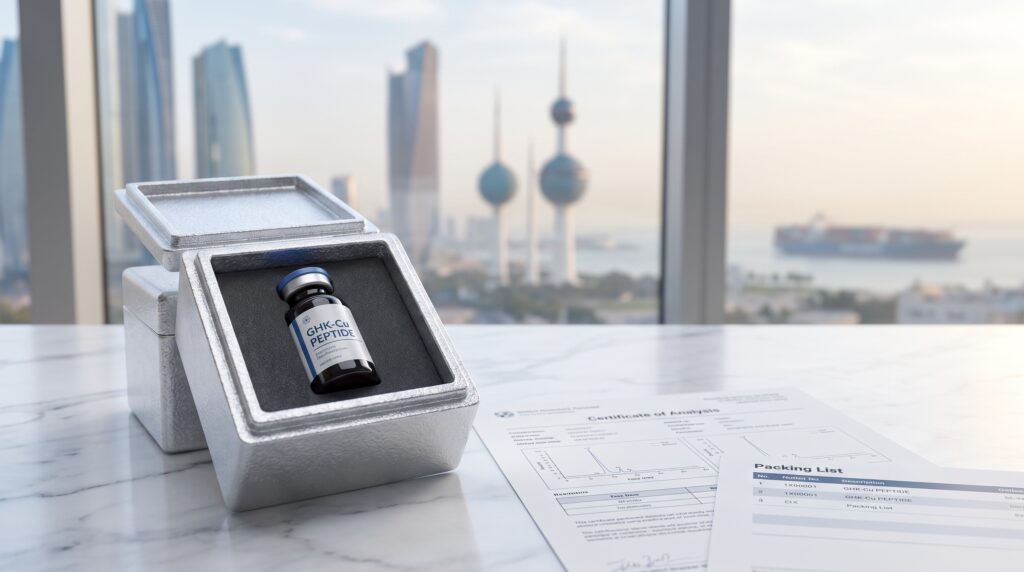
To safely source GHK-Cu in Qatar, buyers must prioritize suppliers offering batch-specific Certificates of Analysis (COAs) with HPLC/MS data proving >99% purity. It is essential to select vendors that utilize insulated cold-chain shipping to prevent heat degradation in the GCC climate and operate strictly within MoPH compliance for research and cosmetic raw materials.
Understanding Qatar’s Regulatory Framework for Peptides
Compliance is a non-negotiable factor when evaluating regional suppliers. In August 2023, Qatar’s Ministry of Public Health (MoPH) issued a circular clarifying the status of synthetic peptide products. This directive strictly restricted the sale, import, and digital promotion of unlicensed therapeutic peptides. The guidelines clearly note that merely labeling a product ‘for research use’ does not bypass these restrictions if unsubstantiated claims regarding biological modifications or therapeutic outcomes are simultaneously made.
For buyers, this regulatory clarity drastically shifts how credible suppliers operate in the region:
- No Human-Use Claims: Compliant vendors market high-purity GHK-Cu strictly as a cosmetic raw material or in-vitro laboratory research reagent. They do not offer dosage instructions, medical advice, or unverified physiological promises.
- Customs Transparency: Legitimate shipments into Qatar require exact HS (Harmonized System) codes for laboratory reagents, formal commercial invoices, and transparent declarations. Suppliers who obscure their shipping manifests risk having shipments seized or destroyed at customs.
- Professional Framing: If a supplier’s website features exaggerated claims about transforming physical conditions or guarantees specific systemic outcomes, it signals a severe lack of regulatory adherence. This lack of compliance usually correlates directly with a lack of quality control in their products.
Technical Profile: Why Lyophilized GHK-Cu Matters
GHK-Cu (glycyl-l-histidyl-l-lysine) is a naturally occurring copper complex that was first isolated from human plasma. In the context of cosmetic formulation and in-vitro research, its primary utility lies in its interaction with structural proteins and cellular pathways.
When sourcing this material, the format is just as important as the compound itself. Liquid formulations degrade rapidly, especially under inconsistent temperature conditions. Lyophilization—the process of freeze-drying the peptide into a stable powder cake—removes moisture, thereby halting degradation and drastically extending the compound’s stability. Upon reconstitution in a controlled laboratory or formulation setting, high-purity GHK-Cu exhibits a distinct, vivid blue hue characteristic of its copper(II) binding.
For professionals, purchasing lyophilized vials allows exact control over concentration, dilution, and integration into custom cosmetic bases or research mediums. However, this stability is only guaranteed if the raw material is impeccably pure from the start.
Verifying GHK-Cu Quality: COAs, HPLC, and MS Reports
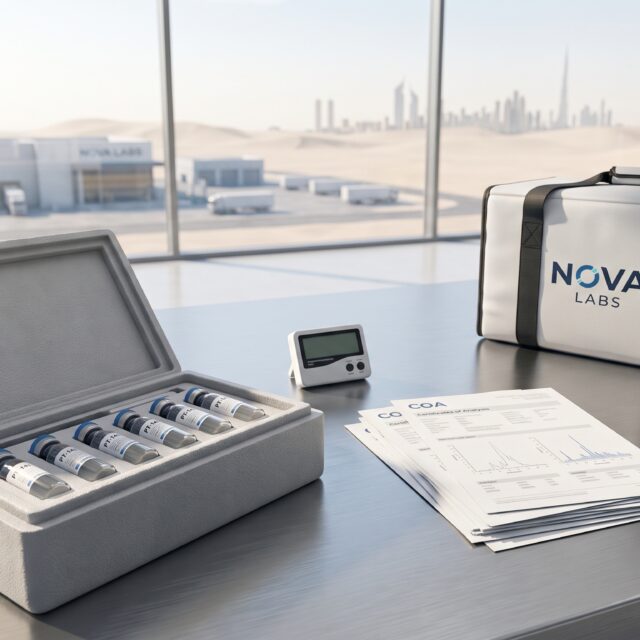
Before finalizing any procurement decision, the buyer’s primary responsibility is verifying the compound’s purity. Visual inspection of a lyophilized puck offers no scientific insight into its quality; the only reliable metric is a third-party Certificate of Analysis (COA).
A robust COA is not a simple internal document generated by the vendor’s marketing team. It must originate from an independent analytical laboratory and include several critical components:
High-Performance Liquid Chromatography (HPLC)
HPLC testing separates the components of a sample to quantify its exact purity. For high-grade GHK-Cu intended for precise cosmetic or lab applications, buyers should expect to see purity levels exceeding 99.0%. The HPLC report will display a chromatogram where a single, sharp, distinct peak indicates a high-purity compound. Multiple smaller peaks indicate the presence of impurities, degraded peptide fragments, or residual manufacturing byproducts.
Mass Spectrometry (MS)
While HPLC confirms how pure a substance is, Mass Spectrometry confirms its chemical identity. MS testing measures the mass-to-charge ratio of the molecules, ensuring that the molecular weight perfectly matches the established sequence of the GHK-Cu peptide (approximate molecular weight of 340.38 g/mol without the copper ion, and heavier when complexed). If the mass is incorrect, the compound is entirely wrong, regardless of its purity.
TFA Removal Validation
During standard solid-phase peptide synthesis, Trifluoroacetic acid (TFA) is frequently used to cleave the peptide from the resin. Residual TFA can cause unexpected localized reactions or alter the pH of a cosmetic formulation. Premium suppliers subject their GHK-Cu to a rigorous TFA removal process, substituting it with safer acetate salts. A high-quality COA will often indicate low residual TFA levels.
When evaluating a GHK-Cu supplier in Qatar, ensure that the COA provided directly matches the specific batch number you are purchasing. If a vendor obscures the lab’s contact details, uses outdated reports from years ago, or refuses to provide this analytical documentation entirely, it is a critical red flag that should halt procurement.
Logistics: The Importance of Cold-Chain Delivery in the GCC
The climate in Doha presents a significant logistical hurdle for raw material procurement. While lyophilization drastically improves stability, GHK-Cu remains susceptible to extreme heat degradation. Prolonged exposure to the intense temperatures common in the GCC during transit can break the peptide bonds and uncouple the copper ion, rendering the material ineffective before it even arrives at your facility.
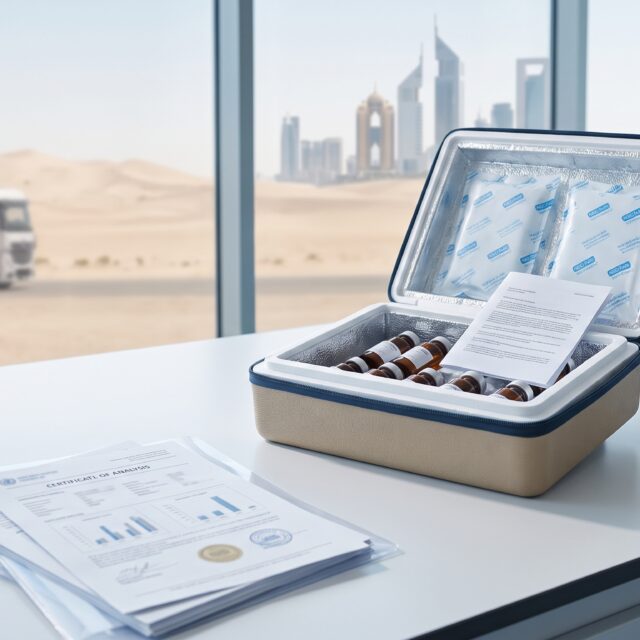
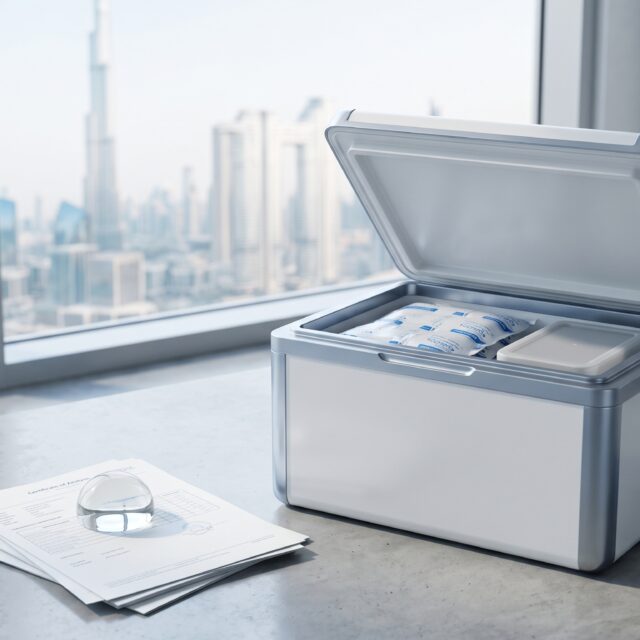
Standard postal shipping is woefully insufficient for the Middle East. Informed buyers prioritize suppliers who utilize dedicated cold-chain fulfillment protocols. This typically involves:
- Insulated Packaging: The use of specialized thermal mailers designed to deflect external ambient heat.
- Temperature Control: Inclusion of activated phase-change materials or ice packs to maintain a stable internal temperature environment during transit.
- Rapid Regional Fulfillment: Minimizing the time the parcel spends in transit or sitting on uncontrolled logistics tarmacs.
While international shipping can leave materials exposed to environmental variables for weeks, regional fulfillment hubs have modernized this process. For example, standards set by localized peptides UAE next day delivery protocols demonstrate how regional logistics can completely bypass prolonged heat exposure. Buyers in Qatar should look for a similar standard of care, ensuring their orders are dispatched swiftly from within the GCC to minimize transit risk.
Evaluating Supplier Trust: Payment Security and Local Support
Beyond technical documentation and shipping logistics, the operational reliability of a supplier dictates the overall procurement experience. When comparing vendors servicing Qatar, consider the following commercial trust signals:
1. Transparent Stock Availability
Frustration often stems from suppliers who take orders for out-of-stock items, leading to indefinite delays and stalled research timelines. Reputable vendors maintain live inventory tracking on their portals and clearly state whether a product is ready to ship immediately from a regional Middle Eastern hub.
2. Localized Payment Infrastructure
Flexible, secure payment gateways are heavily preferred by GCC buyers. Recognizing local purchasing habits, top-tier suppliers offer localized options to build trust and simplify corporate procurement. The availability of secure checkout portals and established regional payment options signals that a vendor has robust local banking partners and a stable commercial presence.
3. Accessible, Real-Time Customer Support
Procurement issues, customs documentation requests, and batch inquiries require fast, reliable communication. Suppliers that offer direct, responsive support channels—such as dedicated business WhatsApp lines—provide a significant operational advantage over those relying solely on slow email ticketing systems or overseas call centers.
Bottom Line and Next Steps
Successfully sourcing GHK-Cu in Qatar requires successfully navigating strict regulatory guidelines, intense climate logistics, and a market unfortunately flooded with low-quality consumer serums. By insisting on up-to-date, third-party HPLC and MS reports, prioritizing insulated regional delivery, and selecting suppliers that align completely with local compliance frameworks, researchers and developers can confidently secure the high-purity raw materials they require.
Ensure your selected supplier provides clear batch tracking, utilizes temperature-controlled packaging, and offers robust regional support before finalizing your purchase.
For researchers and formulation professionals requiring highly purified, structurally verified materials, view the GHK-Cu available at NOVA Labs to ensure your procurement meets rigorous analytical standards.
Disclaimer: The products mentioned in this article are strictly intended for laboratory research and cosmetic formulation purposes only. They are not intended for human consumption, diagnosis, treatment, or therapeutic use.
*
References
- Ministry of Public Health (MoPH) Qatar: Official announcements regarding the August 2023 circular on the prohibition of unlicensed therapeutic claims and handling of synthetic peptides.
- Qatar – Import Requirements and Documentation – International Trade Administration: Overview of commercial invoice, HS coding, and customs clearance requirements for laboratory reagents and chemical raw materials.
- Cold Chain Logistics for Biologicals: Standard operating procedures for the temperature-controlled transit of lyophilized chemical compounds in high-heat climates.
Disclaimer: The products mentioned in this article are for research purposes only and are not intended for human consumption.
- MoPH bans sale and use of unlicensed peptide products – Qatar Living
- The Ministry of Public Health (MoPH) has highlighted the prohibition of the handling, distribution, use and promotion of unlicensed peptides. وزارة الصحة العامة – Facebook
- Qatar – Import Requirements and Documentation – International Trade Administration
- Basix Collagen Peptides 300G – Kulud Pharmacy
- Cold Chain Peptide Fulfillment Services – RapidFulfillment.com
Frequently asked questions
Is GHK-Cu permitted for purchase in Qatar?
Yes, GHK-Cu is permitted for import and sale as a cosmetic raw material or in-vitro lab reagent in Qatar, provided the supplier adheres strictly to MoPH guidelines and makes no unlicensed human-use or therapeutic claims.
Why is cold-chain delivery necessary for peptides in the GCC?
Even in lyophilized form, peptides like GHK-Cu can degrade and lose their structural integrity when exposed to extreme ambient heat. Temperature-controlled shipping with insulated packaging protects the material during transit to Doha.
What documentation verifies GHK-Cu purity?
Buyers should request a third-party Certificate of Analysis (COA) that includes High-Performance Liquid Chromatography (HPLC) and Mass Spectrometry (MS) data matching their specific batch, confirming purity above 99.0%.
Why is lyophilized GHK-Cu preferred over pre-mixed serums?
Lyophilized GHK-Cu is a stable powder that allows researchers and formulators precise control over concentration and compounding, without the rapid degradation risks associated with pre-mixed liquid formulas.
Nova Labs buyer tools
Ready to verify stock, testing and delivery?
Use the product page and lab report section to check availability, documentation, delivery timing and support before placing an order.
- COA / test-report checks
- Qatar delivery context
- Cold-chain handling
- COD and card payment options
- WhatsApp support