




For researchers and laboratory directors operating in the Gulf, sourcing high-quality, stable biochemicals is rarely a straightforward process. Domestic compounding pharmacies handling specialized analytical peptides are virtually non-existent in Kuwait, forcing buyers to rely on third-party international brokers, sprawling e-commerce platforms, or unverified overseas vendors. This fragmentation creates significant risks regarding compound purity, customs seizures, and thermal degradation.
Buyer Checklist: Evaluating an Ipamorelin Supplier in Kuwait
- COA Verification: Ensure the vendor provides a third-party Certificate of Analysis (HPLC & LC-MS) for the exact batch you are ordering.
- Logistics Check: Confirm the use of temperature-controlled packaging and expedited regional transit.
- Customs Readiness: Verify that the supplier provides accurate commercial invoices to comply with Kuwait’s PAI import regulations.
- Payment Security: Look for localized, secure payment gateways (Apple Pay, Credit Card, or GCC BNPL options like Tabby).
How to Buy Ipamorelin in Kuwait
To securely buy Ipamorelin Kuwait, researchers must prioritize GCC-based suppliers offering independent HPLC testing and temperature-controlled logistics. Because Kuwait’s extreme heat rapidly degrades unprotected peptides, verifying cold-chain shipping protocols and matching batch numbers to public COAs ensures your research compounds arrive fully viable.
Importing sensitive biochemicals into Kuwait presents two distinct hurdles: stringent border compliance and extreme ambient temperatures. When evaluating an Ipamorelin supplier, premium buyers must look well beyond basic price comparisons to ensure the chemical integrity of their raw materials.
The Impact of Kuwait’s Import Regulations
Kuwait’s import landscape is heavily regulated and monitored. Recent tightening of import protocols by the Public Authority for Industry (PAI) mandates strict conformity assessments on chemical and technical imports. Under systems like the Kuwait Conformity Assessment Scheme (KUCAS), shipments lacking proper documentation, clear commercial invoices, or accurate chemical declarations often face prolonged customs holds.
For researchers, a customs hold is not just a bureaucratic inconvenience; it is an active threat to the viability of the materials. Peptides trapped in clearance limbo are often stored in non-climate-controlled cargo sheds, leading directly to the primary enemy of peptide stability: thermal degradation.
Thermal Degradation: Why Cold-Chain is Non-Negotiable
Ipamorelin, like most synthetic pentapeptides, is highly sensitive to environmental stressors once manufactured. While lyophilized (freeze-dried) powder is inherently more stable than reconstituted liquid, it is not impervious to the elements.
The Vulnerability of Lyophilized Peptides
The extreme summer heat in Kuwait—which routinely exceeds 45°C (113°F) on airport tarmacs and inside delivery vans—can induce rapid thermal degradation. At elevated temperatures, the delicate amino acid bonds within the Ipamorelin molecule begin to break down, resulting in a loss of structural integrity and rendering the compound useless for precise laboratory analysis.
Standard postal services or international drop-shippers located in the US or China rarely utilize temperature-controlled environments. If a peptide sits in a hot cargo warehouse for three days during a customs clearance delay, its molecular structure can denature completely.
Bypassing Tarmac Delays with GCC Hubs
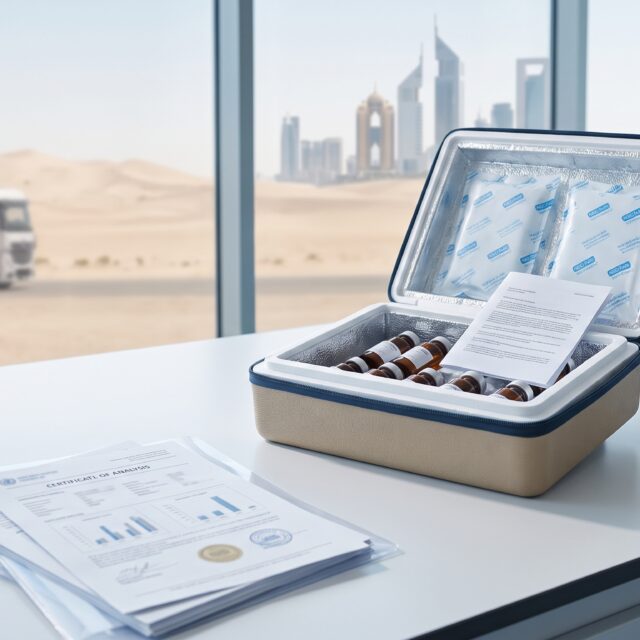
The solution for Kuwaiti researchers lies in localized, regional sourcing. By utilizing a fulfillment hub that employs rapid GCC peptide delivery protocols, buyers can bypass week-long international transit delays. Premium regional suppliers pack materials in insulated, temperature-controlled parcels and utilize expedited overnight or 48-hour courier services (such as specialized DHL or local cold-chain couriers). This ensures the compound minimizes its exposure to ambient GCC temperatures and arrives in a pristine, laboratory-ready state.
Verifying Supplier Integrity: The COA Standard
The lack of domestic regulatory oversight on research peptides means the burden of verification falls entirely on the buyer. Whether you are conducting institutional in-vitro research or independent biochemical analysis, vendor transparency is non-negotiable. The gold standard for this transparency is the Certificate of Analysis (COA).
HPLC vs. LC-MS: What Researchers Must Look For
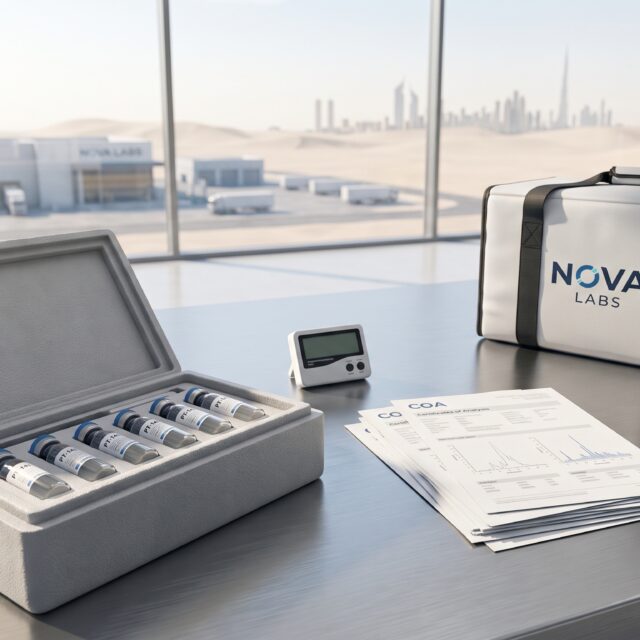
A trustworthy Ipamorelin source will proactively provide a COA from a recognized, independent analytical laboratory, such as Janoshik or MZ Biolabs. When reviewing these documents, procurement officers must verify three specific data points:
- HPLC (High-Performance Liquid Chromatography): This test measures the purity of the compound by separating its components. In the context of research peptides, look for a minimum purity of 98%. However, top-tier clinical suppliers will consistently demonstrate 99% purity or higher, indicating that manufacturing byproducts and synthesis impurities have been thoroughly stripped away.
- LC-MS (Liquid Chromatography-Mass Spectrometry): While HPLC shows purity, LC-MS confirms identity. It proves that the molecular weight of the powder in the vial matches the exact expected molar mass of the Ipamorelin molecule (approx. 711.9 g/mol). Without this, you cannot be certain the vial contains Ipamorelin.
- Batch Matching: A COA is functionally useless if it corresponds to a batch manufactured two years ago. Ensure the batch or lot number printed on the supplier’s website or product packaging exactly matches the testing document.
Suppliers that hide their COAs behind paywalls, refuse to share full testing reports, or use outdated documentation should be categorically avoided by serious researchers.
Product Spotlight: Laboratory-Grade Ipamorelin Vials
For laboratories looking to standardize their procurement protocols, the format and packaging of the raw materials matter significantly. Ipamorelin is typically synthesized and distributed as a lyophilized powder housed in sterile glass vials to maximize shelf life.
When you procure 5mg Ipamorelin vials from a validated regional supplier, you are securing a product that has been manufactured in a highly controlled cleanroom environment. The lyophilization process extracts moisture in a vacuum, preserving the delicate amino acid chain, while the medical-grade stopper prevents oxidation and contamination.
Synergistic Research Applications
In laboratory settings, Ipamorelin is recognized as a highly selective growth hormone secretagogue receptor (GHSR) agonist. It is frequently studied for its ability to stimulate pulsatile secretion mechanisms in cellular models without significantly elevating cortisol or prolactin levels.
Because of its specific binding affinity, researchers frequently analyze Ipamorelin alongside GHRH (Growth Hormone Releasing Hormone) analogues, such as CJC-1295. Pairing these compounds allows scientists to observe synergistic pathways. Starting with verified, uncompromised raw materials is the absolute baseline for generating reproducible, accurate analytical data in these complex receptor studies.
Modern Procurement: Payment Gateways and Operational Support
The final layer of evaluating a peptide supplier for the Kuwaiti market is assessing their operational infrastructure. Cross-border business-to-business purchasing in the GCC has modernized significantly, and your supplier should reflect this evolution.
Secure Localized Transactions
Historically, ordering research compounds meant dealing with obscure international wire transfers, unreliable offshore payment processors, or crypto-only demands. These methods complicate accounting and offer zero buyer protection.
Today, a premium supplier serving Kuwait integrates seamlessly with localized payment expectations. Procurement managers should look for platforms offering secure credit card processing via global standard gateways (like Stripe), mobile wallets such as Apple Pay and Google Pay, and regional Buy Now Pay Later (BNPL) options like Tabby or Tamara. These platforms not only offer flexibility but also add a layer of financial security to the transaction.
Real-Time Logistics Support
Because Kuwaiti customs can occasionally be unpredictable with chemical imports, proactive customer support is vital. Suppliers that offer real-time WhatsApp support provide a distinct operational advantage. If a shipment requires additional commercial invoicing, a detailed chemical declaration, or a rapid response to a courier inquiry, having direct, instant access to the supplier’s logistics team can mean the difference between a cleared package and a confiscated one.
Conclusion: Standardizing Your Lab Supply
Choosing to order Ipamorelin in Kuwait does not have to be a gamble on long international shipping times or questionable product purity. By shifting focus from distant overseas drop-shippers to premium, GCC-based suppliers, researchers can secure high-purity compounds backed by independent analytical data.
To ensure your materials are perfectly suited for rigorous laboratory evaluation, prioritize suppliers offering transparent, batch-specific COAs, modern localized checkout options, and stringent cold-chain logistics to combat regional heat.
To explore rigorously tested research compounds and experience seamless, temperature-controlled GCC logistics, browse the full catalogue at NOVA Labs.
Disclaimer: The products mentioned in this article are intended strictly for in-vitro research and laboratory experimentation purposes only. They are not approved for human or animal consumption, diagnostic, or therapeutic use.
References
- Public Authority for Industry (PAI), Kuwait. (2024). Kuwait Tightens Import Regulations to Enhance Product Safety and Compliance.
- Dropoff Logistics. (2023). Refrigerated Delivery in Kuwait — Cold Chain Courier Standards.
- Ubuy Kuwait. (2024). International Sourcing of Research Peptides and Lead Times.
- Buy IPAMORELIN 5mg Online Kuwait – Ubuy
- Limitless BioChem: Third Party Tested Research Compounds & Peptides
- Kuwait Tightens Import Regulations to Enhance Product Safety and Compliance (October 2024) | Watheeq
Disclaimer: The products mentioned in this article are for research purposes only and are not intended for human consumption.
- CJC-1295 & Ipamorelin (CJC-IPA) Blend Pen — UAE & GCC – NOVA Labs
- Refrigerated Delivery in Kuwait — Cold Chain Courier | dropoff
Frequently asked questions
How do I verify the purity of Ipamorelin in Kuwait?
You can verify purity by requesting a third-party Certificate of Analysis (COA) from the supplier. Look specifically for HPLC and LC-MS testing results that demonstrate at least 99% purity and ensure the batch number matches your product.
Is standard shipping safe for ordering peptides to Kuwait?
No. Due to Kuwait's extreme ambient temperatures, standard postal shipping can lead to rapid thermal degradation of peptides. Always choose a supplier that utilizes regional expedited shipping and temperature-controlled packaging.
Can I pay for research peptides using Apple Pay or Tabby in Kuwait?
Yes, top-tier GCC peptide suppliers offer modern, localized payment gateways. This often includes secure credit card processing, mobile wallets like Apple Pay, and regional BNPL services such as Tabby or Tamara.
Why is Ipamorelin often researched alongside CJC-1295?
In laboratory settings, Ipamorelin (a GHSR agonist) is frequently studied alongside CJC-1295 (a GHRH analogue) because researchers observe their synergistic properties when investigating pulsatile secretion pathways.
Nova Labs buyer tools
Ready to verify stock, testing and delivery?
Use the product page and lab report section to check availability, documentation, delivery timing and support before placing an order.
- COA / test-report checks
- Kuwait delivery context
- Cold-chain handling
- COD and card payment options
- WhatsApp support