
Procuring high-quality research compounds in the GCC presents unique logistical challenges. For laboratories and institutional buyers looking to buy kisspeptin kuwait, success depends on more than just finding a well-stocked supplier. You must navigate stringent local customs regulations, demand rigorous third-party purity documentation, and ensure your vendor utilizes specialized thermal logistics capable of withstanding extreme regional heat.
Kisspeptin, specifically its dominant active fragments like Kisspeptin-10, has become a major focal point in neuroendocrinology, metabolic research, and reproductive biology. Because peptide bonds are highly sensitive to environmental degradation, securing a stable, highly purified batch is critical for maintaining experimental integrity. This guide breaks down exactly how to evaluate vendors, verify documentation, and secure reliable delivery for Kisspeptin peptides in Kuwait.
Quick Answer: How to Safely Buy Kisspeptin in Kuwait
For researchers looking to safely buy kisspeptin in Kuwait, evaluate suppliers by checking three critical factors: third-party HPLC purity above 98%, batch-specific Certificates of Analysis (COAs), and specialized cold-chain shipping. Regional hubs using insulated packaging typically deliver compliant research compounds within 3 to 5 business days.
Why Kisspeptin Quality Matters in Research Assays
Kisspeptin (often researched as Kiss1-derived peptides) operates by binding to the G-protein coupled receptor GPR54. In laboratory environments, even minor structural variations or impurities in the peptide sequence can alter binding affinity, leading to skewed data in cellular assays.
When sourcing peptides for high-stakes research, impurities usually stem from incomplete synthesis or residual cleavage chemicals. The most common contaminant is Trifluoroacetic acid (TFA), a toxic byproduct of solid-phase peptide synthesis. If a supplier does not perform adequate purification steps to remove TFA, the resulting compound can induce cytotoxicity in cell cultures, completely invalidating experimental results. This is why thorough vetting of your supplier is the most important step in laboratory procurement.
Verifying Kisspeptin Purity: The COA Checklist
Not all peptides are synthesized equally. A vendor’s claims regarding the quality of a Kisspeptin peptide mean very little without verifiable, third-party analytical testing. Research protocols depend on exact molecular structures; you cannot afford to introduce unknown variables into your assays.
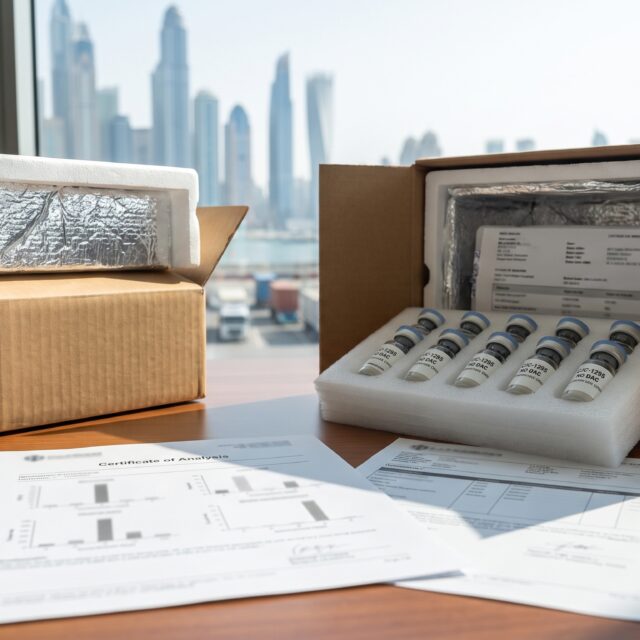
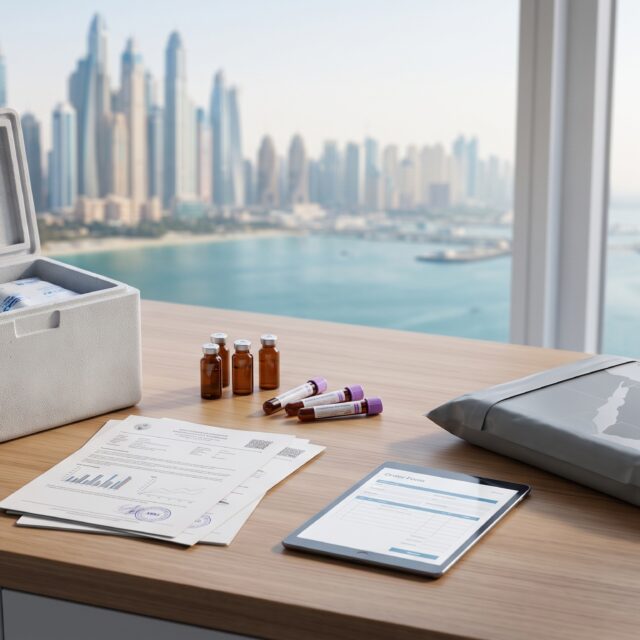
When evaluating a Kisspeptin supplier shipping to Kuwait, you must insist on reviewing a batch-specific Certificate of Analysis (COA) before placing an order. A complete, trustworthy COA should display:
- HPLC (High-Performance Liquid Chromatography): This test confirms the purity percentage of the peptide by separating the components in a mixture. For research-grade Kisspeptin, you should demand a minimum purity of 98%, with premium synthesis batches frequently exceeding 99%.
- MS (Mass Spectrometry): This analytical technique measures the mass-to-charge ratio of ions. It ensures the molar mass matches the exact molecular weight of the target Kisspeptin peptide sequence, confirming its true identity.
- TFA Content Verification: Premium laboratories will provide data showing that residual TFA has been stripped and replaced with a safer salt, such as acetate, ensuring safety for delicate cell cultures.
- Batch and Date Alignment: The COA must match the precise batch number of the vial you are purchasing, and the testing date should be recent enough to guarantee the batch hasn’t degraded in storage.
Navigating Kuwaiti Customs and Import Regulations
Importing research chemicals and synthetic peptides into Kuwait is not a seamless process if a supplier is unaware of local regulatory frameworks. The Kuwaiti government has tightened its import standards significantly in recent years through the Public Authority for Industry (PAI) and customs enforcement at Kuwait International Airport.
What does this mean for sourcing peptides? It means that border friction is exceptionally high for poorly documented packages. When you order Kisspeptin in Kuwait, the supplier must provide unambiguous, compliant customs documentation.
Ethical vendors ensure that all compounds are strictly categorized and labeled for in-vitro research use. They must explicitly remove any direct human-use, diagnostic, or medical claims from the commercial manifest and the product packaging. Mislabeling a product as a “health supplement” or failing to provide a clear commercial invoice often results in shipments being delayed indefinitely or seized at customs facilities where temperature control cannot be guaranteed. Proper Harmonized System (HS) codes for research chemicals must be applied to ensure a smooth transition through border checkpoints.
Protecting Your Research: GCC Cold-Chain Logistics
The most significant threat to peptide integrity in the GCC is ambient temperature. Kisspeptin is typically supplied as a lyophilized (freeze-dried) powder. While the lyophilization process stabilizes the fragile amino acid chains for transport, prolonged exposure to Kuwait’s intense summer heat—which routinely exceeds 45°C—can break down molecular bonds before the shipment even reaches your laboratory bench.
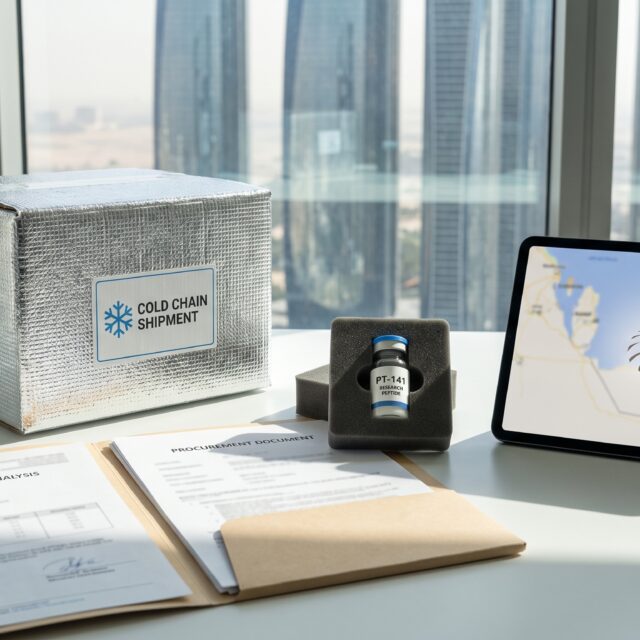
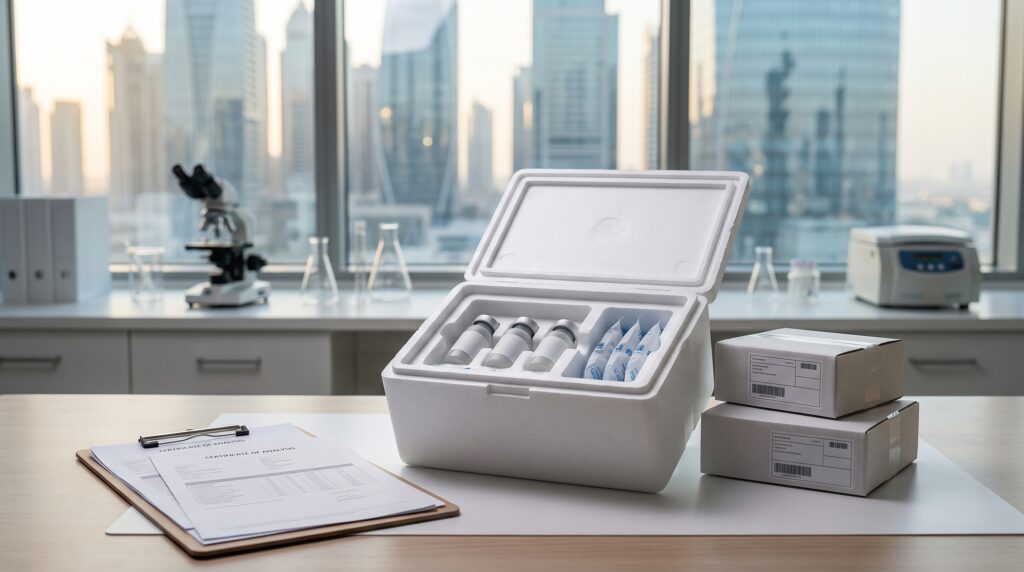
Standard courier envelopes offer zero thermal protection. Reputable regional distributors safeguard their shipments by employing dedicated cold-chain fulfillment services. Key logistical safeguards to look for include:
- Insulated Packaging: High-density EPS (expanded polystyrene) coolers or specialized thermal bubble liners that block external heat transfer.
- Temperature Control: The inclusion of phase-change materials or specialized cold packs that regulate the internal temperature of the parcel during cross-border transit.
- Expedited Routing: Minimizing the time a package spends in transit is vital. While standard international shipping from overseas can take weeks, regional hubs can execute express courier shipping to Kuwait rapidly.
By leveraging specialized regional logistics out of the UAE, researchers can ensure that transit times across the GCC are kept to an absolute minimum, mitigating temperature risks for cross-border deliveries and preserving the peptide’s structural integrity.
Payment Methods and Buyer Support in the GCC
Informed laboratory buyers in Kuwait are increasingly seeking localized, secure purchasing experiences. International R&D suppliers often rely on restrictive payment gateways that do not cater to Middle Eastern financial ecosystems, causing friction during procurement.
Top-tier vendors supplying the Kuwait market integrate regional payment conveniences. These often include:
- Apple Pay and Google Pay: For rapid, secure digital transactions.
- Buy-Now-Pay-Later (BNPL): Services like Tabby and Tamara are increasingly utilized for larger laboratory procurement orders, allowing facilities to manage departmental budgets effectively over time.
- Dedicated Communication: Navigating customs queries or confirming batch numbers requires fast communication. Suppliers offering direct WhatsApp support specifically for documentation checks and logistics updates provide a distinct operational advantage for GCC researchers.
Best Practices for Kisspeptin Storage and Handling
Once your shipment arrives in Kuwait, proper storage and handling become entirely your responsibility. To maintain the 98%+ purity established by the COA, researchers must adhere strictly to established handling protocols.
Storing Lyophilized Vials
When you receive your lyophilized Kisspeptin, immediately transfer it to a temperature-controlled environment. For short-term storage (up to a few months), standard refrigeration at 2°C to 8°C is acceptable. For long-term preservation spanning several months or years, vials should be kept in a laboratory freezer at -20°C or colder. Always store vials away from direct light and moisture to prevent degradation.
Reconstitution Guidelines
Reconstitution must be performed in a sterile environment, such as under a laminar flow hood, using the appropriate solvent. Typically, bacteriostatic water or sterile double-distilled water is used, depending on the specific requirements of your in-vitro assay.
Once reconstituted, the peptide becomes highly fragile. It must be kept refrigerated at all times and should ideally be utilized within 14 to 20 days to prevent bacterial growth and molecular degradation. Avoid shaking the vial vigorously; instead, gently swirl the solution to encourage dissolution. Repeated freeze-thaw cycles of reconstituted peptides will rapidly destroy the molecular structure and should be strictly avoided.
Conclusion: Sourcing with Confidence
To successfully buy kisspeptin in Kuwait, you must look beyond the initial price tag. The lowest cost option often comes at the expense of proper customs documentation, verified COA testing, and critical cold-chain shipping. By partnering with a regional supplier that understands the complexities of the GCC landscape—from PAI compliance to temperature-controlled logistics—you protect the integrity of your research.
Ensure you are reviewing third-party HPLC reports, verifying local payment and support channels, and demanding insulated transit for all lyophilized compounds. If your laboratory requires highly purified, carefully handled peptides, you can confidently order Kisspeptin for research at NOVA Labs to ensure exact analytical standards and rapid GCC delivery.
Disclaimer: The products mentioned in this article are strictly for in-vitro laboratory research purposes only and are not intended for human consumption, diagnostics, or therapeutic use.
*
References
- Watheeq. (2024). Kuwait Tightens Import Regulations to Enhance Product Safety and Compliance.
- RapidFulfillment.com. Cold Chain Peptide Fulfillment Services Explained.
- NOVA Labs. Kisspeptin Product Documentation and Quality Assurances.
- Shipping Policy – Pure Peptides
- Kuwait Tightens Import Regulations to Enhance Product Safety and Compliance (October 2024) | Watheeq
- Kisspeptin – NOVA Labs
- How to Legally Sell Research Peptides Online: UK & EU Compliance Guide (2026 Guide)
- Cold Chain Peptide Fulfillment Services Explained – RapidFulfillment.com
Frequently asked questions
Where can I buy Kisspeptin in Kuwait?
Researchers can buy Kisspeptin in Kuwait through specialized online regional distributors like NOVA Labs. It is critical to select a supplier that provides third-party COA testing and cold-chain shipping to the GCC to protect compound integrity.
How long does peptide delivery to Kuwait take?
When ordering from regional hubs in the Middle East, express courier shipping for research compounds to Kuwait typically takes 3 to 5 business days, provided all customs documentation and in-vitro labeling are compliant.
Does Kisspeptin require cold shipping in the GCC?
Yes. Lyophilized peptides are highly sensitive to extreme heat. Suppliers shipping to Kuwait should use insulated packaging and phase-change cold packs to prevent the compound from degrading in high ambient temperatures.
What purity should Kisspeptin be for research?
For reliable in-vitro research, Kisspeptin should have a minimum HPLC purity of 98%. Buyers should always verify this by checking the batch-specific Certificate of Analysis (COA) provided by the supplier.
Nova Labs buyer tools
Ready to verify stock, testing and delivery?
Use the product page and lab report section to check availability, documentation, delivery timing and support before placing an order.
- COA / test-report checks
- Kuwait delivery context
- Cold-chain handling
- COD and card payment options
- WhatsApp support