
How to Buy Sermorelin in Bahrain: Navigating GCC Procurement
For scientific professionals and dedicated laboratory personnel, finding a reliable source to buy Sermorelin in Bahrain presents a unique set of logistical and regulatory challenges. From verifying the structural integrity of the peptide to ensuring smooth clearance through local customs, informed buyers must look beyond simple pricing. The Gulf climate, combined with updated GCC customs laws, means that choosing the right supplier requires a careful evaluation of their operational capabilities, documentation transparency, and regional logistics expertise.
Whether you are conducting in vitro receptor binding assays or broader biochemical evaluations, the quality of your raw materials dictates the reliability of your data. This guide details exactly what researchers must evaluate before they procure this peptide, covering customs compliance, Certificate of Analysis (COA) verification, and the critical importance of cold-chain transit.
Quick Answer for Buyers
When you buy Sermorelin in Bahrain for laboratory use, prioritize suppliers offering third-party HPLC and Mass Spectrometry testing to verify 99% purity. Ensure the product is explicitly labeled ‘For Research Use Only’ to comply with local regulations, and confirm the supplier uses thermal packaging with expedited regional transit to protect the peptide from high-heat degradation.
The Legal and Customs Landscape for Peptides in Bahrain
Understanding local regulations is the first step in successful procurement. Bahrain’s National Health Regulatory Authority (NHRA) maintains strict oversight over all medicinal products. For clinical or personal-use medicines, the NHRA mandates a valid doctor’s prescription, a medical report, and an official import permit.
However, research peptides operate under a different classification when procured properly. Products explicitly designated and labeled as ‘For Research Use Only’ (RUO) or ‘Research Grade’ bypass clinical prescription requirements, as they are not intended for human consumption or therapeutic use. When sourcing Sermorelin in Bahrain, it is critical that your supplier’s commercial invoice and packaging clearly reflect this research designation.
Additionally, buyers must be aware of recent procedural updates under the GCC Common Customs Law. Bahrain Customs has tightened valuation scrutiny on imported goods. Today, a standard 5% customs duty is levied on the Cost, Insurance, and Freight (CIF) value of incoming shipments that exceed standard express limits. A reputable supplier shipping regionally into Manama will provide accurate, detailed commercial invoices to prevent delays, valuation disputes, or outright rejection at the border.
Quality Control: Verifying Your Supplier
The most critical aspect of any peptide purchase is verifying the compound’s purity and identity. The industry standard for high-grade research peptides is 98% to 99% purity. Anything less introduces unwanted byproducts and impurities that can skew experimental data and ruin costly assays.
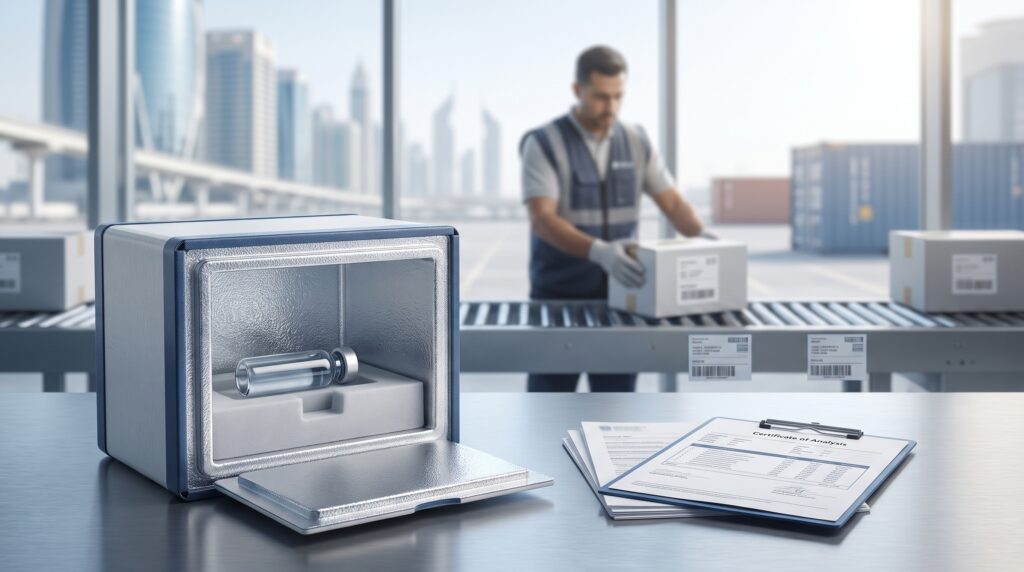
When you evaluate a vendor, you must demand visible, batch-specific Certificates of Analysis (COAs). A legitimate COA should include two primary components:
- High-Performance Liquid Chromatography (HPLC): This test measures the purity of the peptide. The HPLC report should display a clear, distinct peak indicating that the vial contains primarily the target compound without significant degradation fragments.
- Mass Spectrometry (MS): This verifies the molecular weight of the peptide. Sermorelin (GRF 1-29) has a specific sequence of 29 amino acids. The MS report confirms that the sequence in the vial exactly matches the expected molecular weight, proving it is not a counterfeit or mislabeled compound.
If a vendor cannot produce recent, third-party testing documents, they should not be considered a viable source for laboratory materials. At NOVA Labs, transparency is foundational; researchers can confidently secure Sermorelin backed by rigorous analytical testing.
Beating the Gulf Heat: Cold-Chain Logistics
The climate in Bahrain introduces a severe logistical hurdle for biological materials. While lyophilized (freeze-dried) peptides are far more stable than reconstituted solutions, prolonged exposure to extreme heat—such as sitting in a non-climate-controlled sorting facility or delivery van—can accelerate degradation, breaking the delicate peptide bonds before the vial even reaches your laboratory.
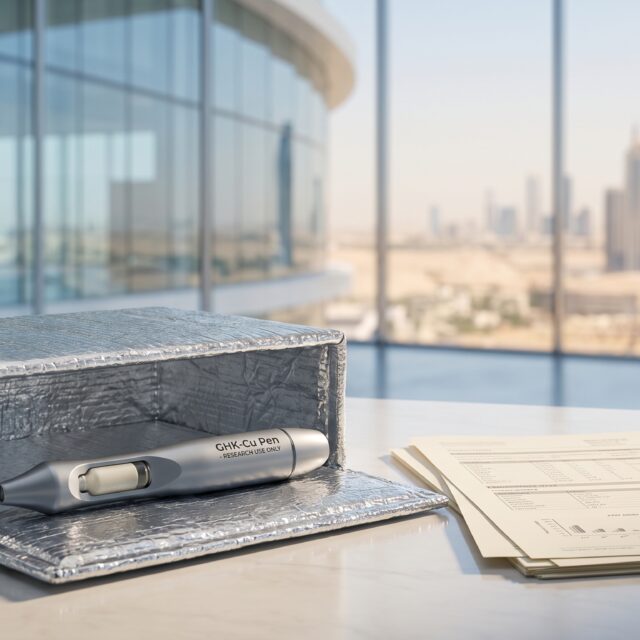
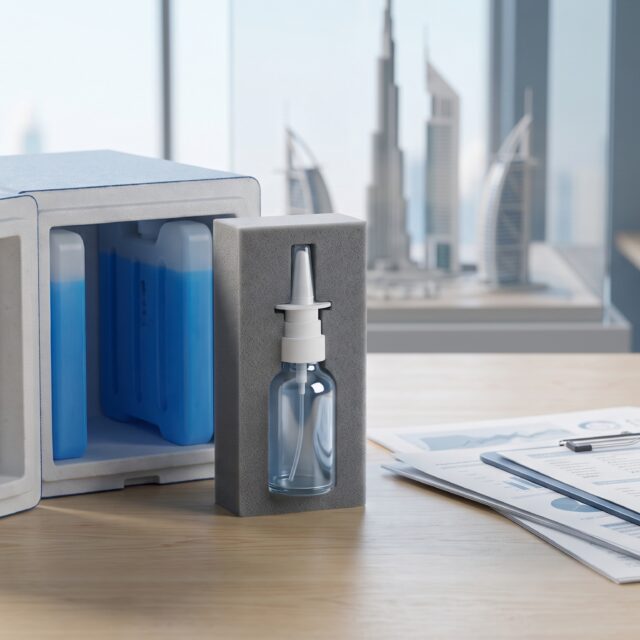
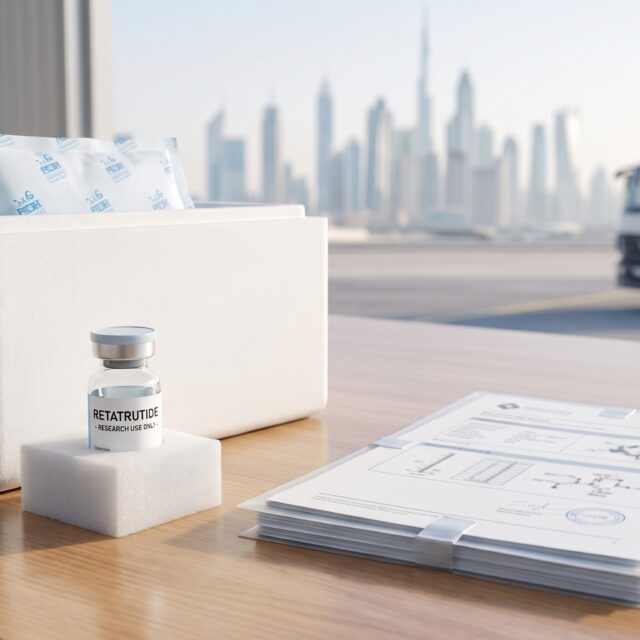
To preserve the integrity of the peptide, cold-chain packaging is non-negotiable. Professional suppliers utilize specialized thermal mailers and gel packs to insulate the vials against ambient temperature spikes during transit.
However, packaging alone is not enough; transit time is equally critical. Ordering from vendors in North America or Europe often involves long transatlantic flights, multiple customs hand-offs, and extended time in local postal facilities. This is where regional sourcing provides a massive advantage. By utilizing regional logistics networks, suppliers can dramatically reduce the time a package spends in transit. For example, robust transit solutions allow for rapid peptides UAE next day delivery and similarly expedited timelines for neighboring GCC nations like Bahrain, ensuring the product arrives in pristine, stable condition.
Evaluating Payment and Supplier Support
International peptide vendors frequently face payment processing challenges. Major credit card networks often restrict transactions for research compounds, leading to declined payments and order cancellations for GCC buyers.
When procuring research materials, look for suppliers that offer flexible, secure payment structures. Bank transfers, cryptocurrency options, and regional Cash on Delivery (COD) provide buyers with assurance that their transaction will be processed without interference.
Furthermore, supplier support is a strong indicator of operational maturity. Can you reach the vendor if a shipment is delayed at customs? Do they offer immediate support via WhatsApp, which is standard for business communication in the Middle East? A supplier that provides localized, real-time support is vastly superior to a distant vendor relying solely on an unmonitored email inbox.
Laboratory Handling and Reconstitution Best Practices
Once your shipment arrives safely in Bahrain, proper handling protocols must be enacted immediately to maintain the compound’s viability for your research.
- Storage of Lyophilized Vials: Upon receipt, unopened vials should be transferred directly to a freezer (ideally at -20°C). In this state, high-quality lyophilized peptides can remain stable for years.
- Reconstitution: When preparing the peptide for an assay, it must be reconstituted using bacteriostatic water or sterile lab-grade water, depending on the specific requirements of the experiment. The solvent should be introduced slowly, allowing it to trickle down the side of the vial to prevent shearing the peptide chains. Never shake the vial aggressively; instead, swirl it gently until the solution is completely clear.
- Post-Reconstitution Storage: Once mixed, the peptide transitions from a stable powder to a fragile liquid state. It must be kept refrigerated at all times (2°C to 8°C) and should typically be utilized within a few weeks to prevent degradation.
Conclusion: Sourcing Locally for Superior Results
For scientific buyers in the GCC, navigating the peptide market requires diligence. The decision to procure research materials should be based on verifiable purity, transparent documentation, and logistical reliability. By understanding NHRA regulations, insisting on HPLC and MS testing, and prioritizing cold-chain transit to combat the regional heat, laboratories can secure high-grade materials without unnecessary friction.
Partnering with a regional supplier like NOVA Labs eliminates the extended transit times and customs ambiguities associated with overseas vendors. With rigorous batch testing and a deep understanding of GCC logistics, buyers can procure their research compounds with complete confidence.
Ready to equip your laboratory with fully verified, high-purity materials? Explore our quality-tested Sermorelin today and experience the reliability of regional, research-grade sourcing.
Disclaimer: The products mentioned in this article are strictly for in-vitro research and laboratory use only. They are not intended for human consumption, therapeutic use, or clinical treatment.
*
References
- Bahrain National Health Regulatory Authority (NHRA): Guidelines on the Importation of Medical and Research Products.
- Bahrain Customs Affairs: GCC Common Customs Law and Duty Thresholds.
- Journal of Peptide Science: Storage and Handling of Lyophilized Research Peptides.
Disclaimer: The products mentioned in this article are for research purposes only and are not intended for human consumption.
- What Bahrain’s Decree No. 23/2026 (GCC Customs Law Amendments) Means for Businesses, Compliance Checklist for Importers & Sellers
- Import unapproved medicine into Bahrain – Everyone.org
- Customs Clearance – Bahrain – Aramex App
- Cold Chain Peptide Shipping Services Explained – RapidFulfillment.com
- Buy Sermorelin UAE from PharmaLabGlobal
- Peptides : r/Bahrain – Reddit
- Regulations for Bahrain – LSPedia
- International Orders | Alternative Shipping Solution – Stratford Peptides
Frequently asked questions
Is it legal to buy Sermorelin in Bahrain for research?
Yes, it is permitted to procure peptides like Sermorelin in Bahrain for laboratory use, provided the product is strictly designated and invoiced as 'For Research Use Only', bypassing clinical medicine restrictions.
How do customs handle peptide shipments to Bahrain?
Under the GCC Common Customs Law, shipments require detailed commercial invoices. Express shipments exceeding limit thresholds may be subject to a standard 5% duty on their Cost, Insurance, and Freight (CIF) value.
How can I verify the purity of Sermorelin from a supplier?
You should request batch-specific Certificates of Analysis (COAs) that include High-Performance Liquid Chromatography (HPLC) and Mass Spectrometry (MS) testing to confirm the peptide's purity is at least 98%.
Does Sermorelin degrade during shipping to Bahrain?
Lyophilized peptides are relatively stable, but extended exposure to high Gulf temperatures can cause degradation. It is vital to use suppliers that employ cold-chain packaging and expedited regional transit.
How should Sermorelin be stored once it arrives?
Unreconstituted (lyophilized) Sermorelin should be stored in a freezer at -20°C. Once reconstituted with a solvent for research, it must be kept refrigerated between 2°C and 8°C.
Nova Labs buyer tools
Ready to verify stock, testing and delivery?
Use the product page and lab report section to check availability, documentation, delivery timing and support before placing an order.
- COA / test-report checks
- Bahrain delivery context
- Cold-chain handling
- COD and card payment options
- WhatsApp support