
Evaluating HPLC Tested Peptides Bahrain: A Quality Guide
Quick answer: For researchers sourcing hplc tested peptides bahrain, verifying purity requires scrutinising independent Certificates of Analysis (COAs). Reliable suppliers provide High-Performance Liquid Chromatography (HPLC) data proving ≥98% purity, paired with Mass Spectrometry (MS) to confirm molecular identity, alongside cold-chain shipping to survive intense GCC climates.
The Kingdom of Bahrain operates with some of the most sophisticated pharmaceutical and healthcare regulations in the Middle East. Overseen by the National Health Regulatory Authority (NHRA) and powered by the NHRA-MVC blockchain track-and-trace system, the local market is heavily conditioned to expect absolute traceability, batch transparency, and rigorous laboratory documentation.
While research compounds sit outside the direct regulatory framework of commercial pharmaceuticals, the cultural expectation for verifiable data remains paramount. Researchers, procurement officers, and informed buyers evaluating compounds for in vitro analysis require definitive proof that the materials they are handling match their precise molecular specifications. Sourcing high-quality compounds is not simply about finding a supplier; it is about finding a laboratory partner capable of providing robust analytical data. This guide explores how to evaluate independent laboratory reports, decode complex purity documentation, and navigate the logistical challenges of securing stable compounds in the Middle East.
The Science of Verification: Why HPLC and MS Data Matter
When evaluating any hplc tested peptides supplier bahrain, the minimum standard of proof relies on two distinct but complementary analytical techniques. Relying on just one form of testing leaves a significant blind spot in the quality assurance process.
High-Performance Liquid Chromatography (HPLC)
HPLC is the gold standard for determining the purity of a research compound. The process involves dissolving the sample in a solvent and pumping it under high pressure through a column packed with a solid adsorbent material. Because different molecular components interact with the adsorbent material differently, they pass through the column at varying speeds.
This separation allows laboratory technicians to identify and quantify every component within the vial. On an HPLC chromatogram, researchers look for a single, distinct, and massive peak that corresponds to the target compound, with minimal background noise or secondary peaks. For rigorous scientific application, a baseline purity of 98% to 99%+ is required. This ensures that synthetic by-products, residual solvents, or truncated sequences do not interfere with the results of the research programme.
Mass Spectrometry (MS) for Identity Verification
While HPLC confirms that a powder is pure, it does not confirm what the powder is. A vial could theoretically contain a compound that is 99.9% pure but represents an entirely incorrect molecular sequence. This is where Mass Spectrometry (MS) becomes critical.
Mass Spectrometry measures the mass-to-charge ratio of ions to identify and quantify molecules in simple and complex mixtures. By bombarding the sample with electrons, the molecules break into charged fragments. The resulting MS graph displays the precise molecular weight of the compound. Researchers must cross-reference this reported molecular weight against the theoretical molecular weight of their target sequence. If the numbers align, the identity of the compound is confirmed.
The Bahrain Buyer’s Checklist for Decoding a COA
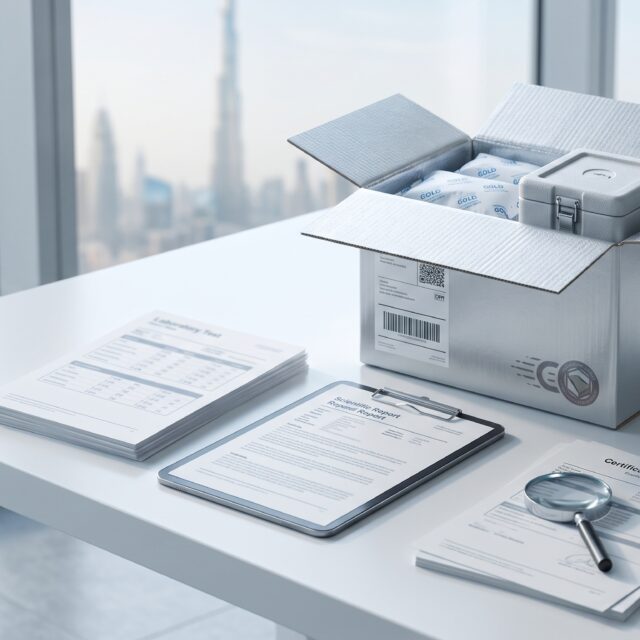
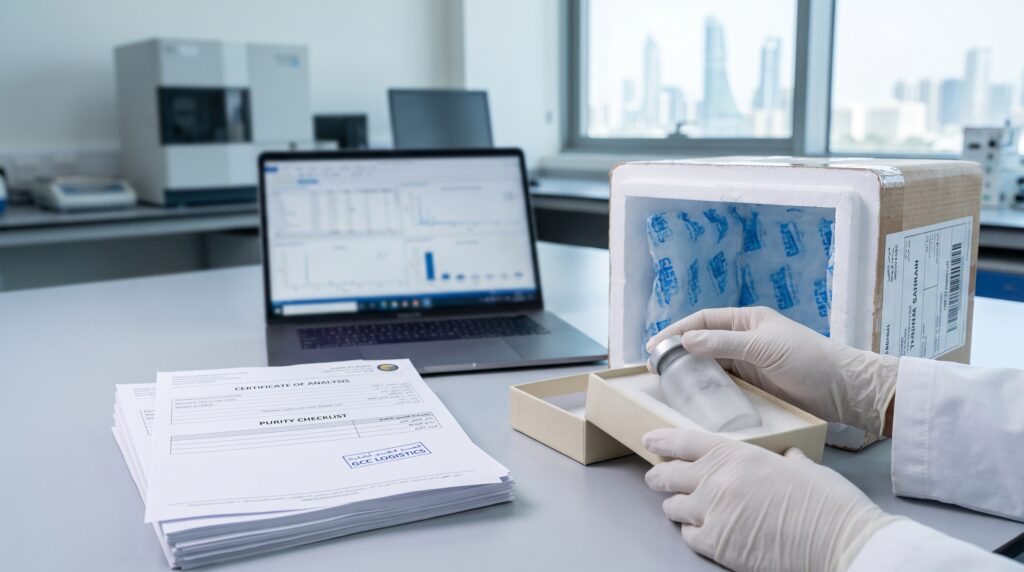
A Certificate of Analysis (COA) is the definitive document proving a compound’s viability. However, not all COAs are created equal. As demand for hplc tested peptides in bahrain grows, buyers must be vigilant in how they read and verify these reports. When reviewing a COA, always evaluate the following criteria:
- Batch Number Traceability: The batch number on the physical vial must precisely match the batch number printed on the laboratory report. A generic COA with no batch number is a significant red flag, as it provides no proof that the specific vial in your possession was ever tested.
- Independent Laboratory Accreditation: Self-generated COAs hold no scientific weight. Testing should be conducted by a third-party, ISO/IEC 17025 accredited laboratory. Reputable testing facilities operate independently of the supplier to ensure unbiased reporting.
- Dual-Publication Capabilities: The most secure method of verification is dual publication. This means the analytical report is hosted not only on the supplier’s website but is also verifiable directly through the testing laboratory’s own portal or via direct email confirmation.
- Date of Analysis: Lyophilised compounds are generally stable when stored correctly, but testing reports should ideally reflect recent synthesis batches rather than documentation that is several years old.
To see examples of what verifiable, third-party documentation should look like, you can review the standards of independent lab results provided by established regional suppliers.
Navigating GCC Climates: Cold-Chain Logistics and Stability
Procurement in the Middle East involves logistical hurdles that buyers in Europe or North America do not face. The ambient temperature in Bahrain frequently exceeds 40°C during the summer months. While research compounds are supplied in a lyophilised (freeze-dried) state to maximise their stability, prolonged exposure to extreme heat can still degrade molecular bonds, rendering the most rigorously tested compound useless before it even reaches the laboratory.
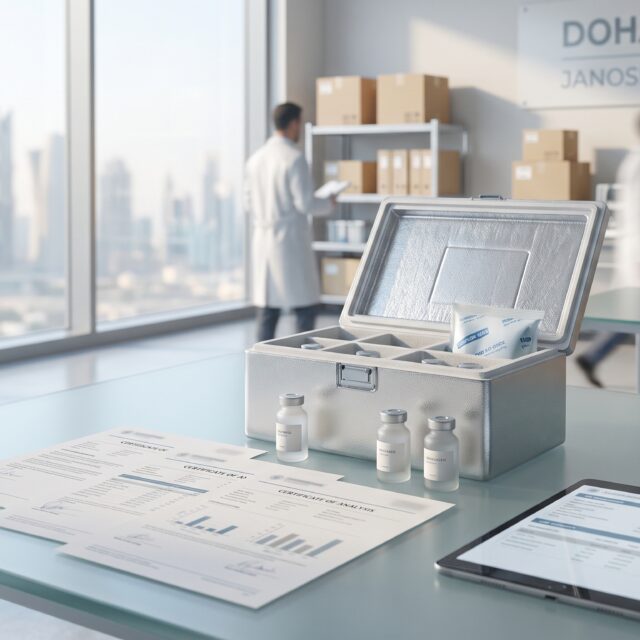
For this reason, cold-chain logistics are non-negotiable. Reputable suppliers servicing the GCC utilise thermal insulated mailers and gel packs to regulate temperature fluctuations during transit. Furthermore, relying on international shipments from overseas can expose packages to extensive delays in customs facilities, increasing the risk of thermal degradation.
Partnering with a supplier strategically located within the UAE ensures rapid regional dispatch. Reduced transit times across the GCC mean the cold-chain integrity remains intact, ensuring that the purity verified on the HPLC report remains true upon delivery in Bahrain.
How to Identify Falsified Laboratory Documentation
As the availability of research compounds increases, so does the prevalence of falsified or obscured documentation. Procurement staff should approach any new hplc tested peptides shop bahrain with a critical eye. Common indicators of manipulated documentation include:
- Obscured Laboratory Details: If the name, logo, or contact information of the testing laboratory is blurred, redacted, or cropped out, the supplier is likely hiding the origin of the test or using another company’s report.
- Digital Alterations: Inconsistencies in font types, sizes, or pixelation around the purity percentage, batch number, or date often indicate that an old or generic PDF has been digitally altered to appear current.
- Missing Chromatograms: A reliable COA must include the actual raw data graphs (the HPLC peak chart and the MS mass-to-charge chart). A simple typed document stating “99% Pure” without the accompanying analytical graphs is invalid.
- Refusal to Verify: If a buyer contacts the third-party laboratory listed on the COA and the laboratory cannot find the batch number or refuses to verify the client, the documentation is likely fraudulent.
Choosing an HPLC Tested Peptides Supplier in Bahrain
Selecting a dependable supplier requires looking beyond the price point and evaluating the entire operational framework. Researchers in Bahrain need a partner who understands both the scientific requirements of high-purity synthesis and the logistical realities of the Middle East.
Key indicators of a trustworthy regional supplier include transparent access to recent batch-specific COAs, proactive customer support channels (such as direct WhatsApp communication for procurement inquiries), and reliable GCC shipping infrastructure. Furthermore, secure payment options, including regional payment gateways, demonstrate commercial maturity.
For researchers looking to source verifiable, carefully handled compounds with full transparent documentation, exploring a dedicated peptide research shop that prioritises GCC logistics and third-party testing is the safest path forward.
Conclusion
Acquiring reliable hplc tested peptides bahrain requires a meticulous approach to documentation and logistics. By understanding how to read High-Performance Liquid Chromatography and Mass Spectrometry data, verifying batch numbers against third-party ISO-accredited labs, and ensuring rigorous cold-chain delivery protocols, researchers can protect the integrity of their work. In a region where traceability is culturally embedded, demanding absolute transparency from your supplier is not just a preference—it is a scientific necessity.
Disclaimer: The products mentioned in this article are for research purposes only and are not intended for human consumption or therapeutic use.
*
References:
- National Health Regulatory Authority (NHRA) Bahrain. Guidelines on Pharmaceutical Traceability.
- International Organization for Standardization (ISO). ISO/IEC 17025: General requirements for the competence of testing and calibration laboratories.
- Optel Group (2022). Bahrain’s NHRA Traceability Requirements and Supply Chain Security.
References
- National Health Regulatory Authority Bahrain
- NHRA-MVC Traceability Hub
- Optel Group: Bahrain’s NHRA Traceability Requirements
- PepcoLab: Research Peptides UAE & UK
- Pure Health Peptides: COA Verification Process
Frequently asked questions
What does HPLC testing confirm for research peptides?
High-Performance Liquid Chromatography (HPLC) separates the components of a sample to quantify its exact purity. It ensures the research compound meets a strict baseline, typically 98% to 99%+, by identifying any residual solvents or synthesis by-products.
Why is Mass Spectrometry (MS) required alongside HPLC?
While HPLC proves a compound is pure, Mass Spectrometry (MS) confirms the compound's identity. It measures the molecular weight of the sample, which researchers cross-reference with the target sequence to ensure they have received the correct molecule.
How can I verify a Certificate of Analysis (COA) in Bahrain?
To verify a COA, cross-check the batch number on the physical vial with the document provided. Ensure the testing was conducted by an independent, ISO-accredited laboratory, and contact the testing facility directly to confirm the report's authenticity.
Do research peptides require cold-chain shipping in the GCC?
Yes. Because temperatures in the GCC frequently exceed 40°C, extreme heat can degrade molecular bonds. Lyophilised compounds should be shipped using insulated mailers and gel packs to maintain stability during transit.
How long do lyophilised peptides remain stable at room temperature?
When kept in a sterile, lyophilised (freeze-dried) state away from direct sunlight, research compounds are generally stable at controlled room temperatures for several weeks. However, long-term storage requires appropriate refrigeration or freezing as indicated by the supplier.
Nova Labs buyer tools
Ready to verify stock, testing and delivery?
Use the product page and lab report section to check availability, documentation, delivery timing and support before placing an order.
- COA / test-report checks
- Bahrain delivery context
- Cold-chain handling
- COD and card payment options
- WhatsApp support