



How to Buy Ipamorelin in Bahrain: What Buyers Need to Know
For procurement staff, scientific researchers, and laboratory managers, finding reliable sources for research compounds in the GCC can be a complex undertaking. If you want to buy Ipamorelin in Bahrain, the process presents a unique set of logistical and administrative challenges. Buyers must navigate strict regulatory frameworks, extreme summer temperatures that threaten peptide stability, and a global marketplace flooded with international dropshippers who lack regional expertise.
Quick answer: For researchers looking to buy Ipamorelin in Bahrain, the most secure approach is choosing a regional GCC supplier offering batch-specific Certificates of Analysis (COAs) and robust cold-chain logistics. Prioritize vendors guaranteeing at least 98% HPLC purity, explicit research-use documentation for customs clearance, and expedited regional transit to prevent heat-induced degradation.
Securing high-purity Ipamorelin requires more than just finding a storefront with an “add to cart” button. It requires evaluating the supplier’s commitment to quality control, their understanding of local import regulations, and their ability to successfully deliver a delicate biochemical compound to your laboratory or facility intact. This guide breaks down the essential criteria every Bahraini research facility should demand before authorizing a purchase.
Evaluating an Ipamorelin Supplier: The COA Standard
The global peptide market is heavily saturated with overseas distributors offering varying degrees of quality. When you set out to order Ipamorelin, Bahrain buyers must look past marketing claims and demand verifiable, scientific proof of product integrity.
The Importance of the Certificate of Analysis (COA)
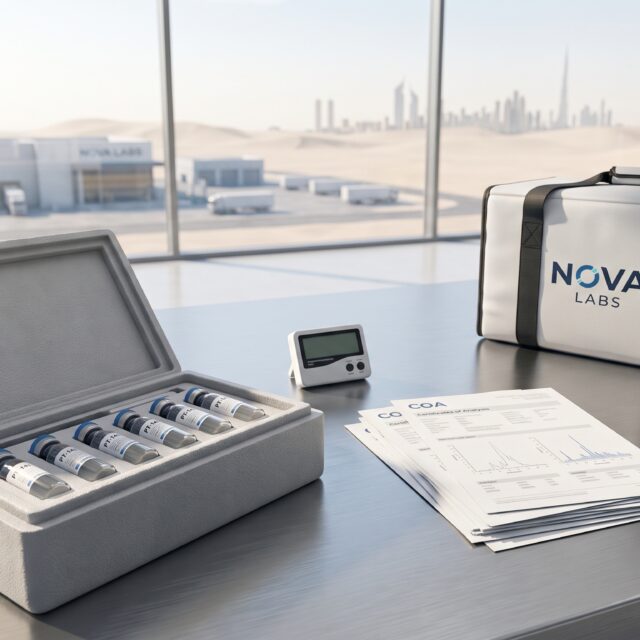
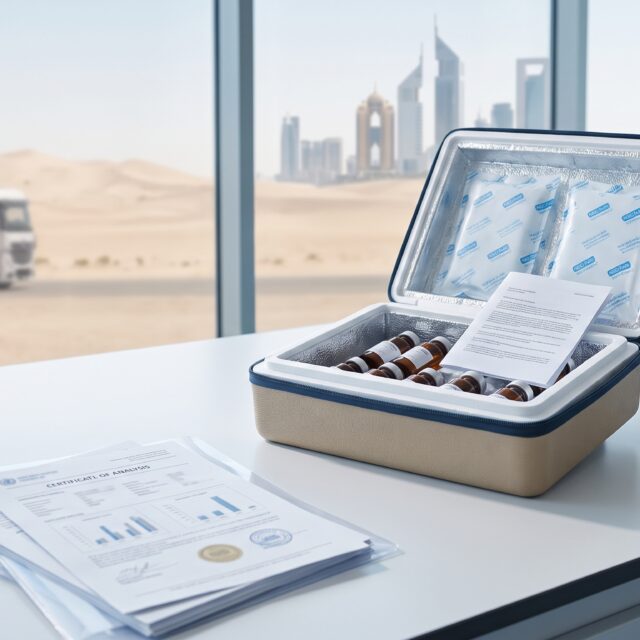
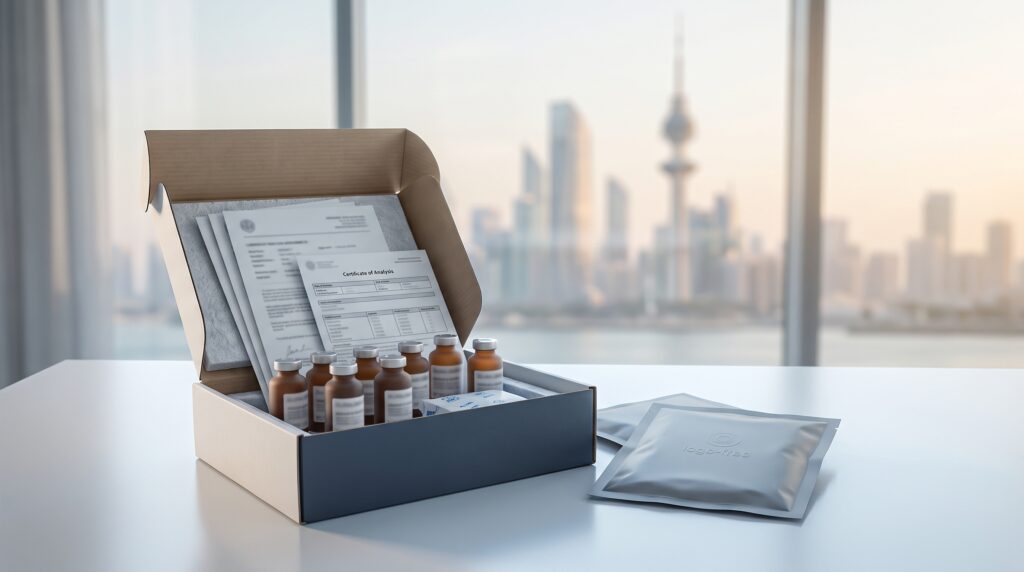
A legitimate supplier will always provide access to a Certificate of Analysis (COA) from an independent, third-party analytical laboratory. This document is the foundational proof of a peptide’s quality. A robust COA should include two critical forms of testing:
- High-Performance Liquid Chromatography (HPLC): This test measures the purity of the compound by separating its components. For Ipamorelin, researchers should look for a purity level of 98% to 99%. Anything lower introduces the risk of unknown byproducts, truncated sequences, or synthetic impurities that can skew research data and invalidate experimental results.
- Mass Spectrometry (MS): This verifies the exact molecular weight and identity of the peptide sequence, confirming that the compound in the vial is indeed Ipamorelin and not a cheaper, mislabeled substitute.
Spotting Red Flags in Supplier Testing
Not all COAs are created equal. When reviewing a vendor’s documentation, ensure that the COA provided matches the specific batch number of the product you are ordering. Suppliers who rely on outdated, generic, or highly redacted testing documents—or those who test one batch a year and apply that COA to all future inventory—should be avoided. A reputable vendor updates their COAs with every new production run, ensuring absolute transparency.
Navigating Cold-Chain Delivery in the GCC Heat
One of the most critical factors when sourcing peptides in the Middle East is environmental temperature. Lyophilized (freeze-dried) peptides like Ipamorelin are remarkably stable when handled correctly, but they are still susceptible to sequence degradation if exposed to severe thermal stress for extended periods.
During the summer months, ambient temperatures in Bahrain frequently exceed 45°C (113°F). If a parcel is left sitting in an uninsulated cargo hold or an un-air-conditioned delivery van in Manama for days on end, the structural integrity of the peptide bonds can be irreversibly compromised. This is where international dropshipping often fails GCC buyers; a package taking three weeks to arrive from North America or Asia is highly vulnerable to thermal shock.
To safeguard your investment, it is highly recommended to source from suppliers who utilize insulated packaging and localized logistics networks. Suppliers that have mastered UAE next-day peptide delivery often leverage those same optimized GCC logistics networks to ensure rapid, thermally protected transit across the King Fahd Causeway or via direct air freight into Bahrain. Proximity means shorter delivery windows, reduced exposure to extreme heat, and a much higher probability that the compound arrives in pristine condition for laboratory evaluation.
Customs, Documentation, and the NHRA Framework
Importing scientific supplies into the Kingdom of Bahrain requires strict adherence to local regulations. The National Health Regulatory Authority (NHRA) of Bahrain acts as the primary regulatory body overseeing medical, pharmaceutical, and scientific compounds entering the country.
When importing Ipamorelin, documentation and labelling are paramount. Peptides imported for scientific study must be explicitly documented and labelled for laboratory, in-vitro research use only. This clear distinction is crucial to comply with international research import standards and ensure smooth customs clearance.
Essential Shipping Documentation
A professional regional supplier will ensure your shipment includes:
- Commercial Invoice: Clearly stating the contents, exact value, and research-only purpose.
- Material Safety Data Sheet (MSDS): Outlining handling procedures, storage requirements, and chemical properties to satisfy customs inspectors.
- Accurate HS Codes: Using the correct Harmonized System codes for laboratory reagents prevents the shipment from being incorrectly classified as a consumable pharmaceutical.
Tariffs and Import Thresholds
For buyers managing procurement budgets, understanding the financial side of local customs is essential. Bahrain applies a duty-free personal import threshold of approximately BHD 300. If your order of research compounds exceeds this value, it may be subject to standard customs duties (typically 5%). Furthermore, a standard 10% Value Added Tax (VAT) is applicable to imported items. Partnering with a supplier who understands these local thresholds and provides accurate, compliant paperwork will save your facility from unexpected delays and administrative friction at the border.
Laboratory Handling and Storage for Ipamorelin Peptides
Once your shipment clears customs and arrives at your facility, proper handling is essential to maintain the compound’s purity and efficacy for upcoming assays.
Lyophilized Ipamorelin is shipped as a stable, dry powder. In this un-reconstituted state, it is relatively durable but must still be protected from environmental degradation. Upon receipt, best practice dictates storing the vials immediately in a laboratory refrigerator (2°C to 8°C) or a deep freezer (-20°C) for long-term archiving, ensuring they are kept away from direct UV light and moisture. For researchers building out their laboratory inventory, securing high-quality Ipamorelin from a trusted regional supplier ensures you are starting with a compound that has not already been degraded by poor transit conditions.
When preparing the compound for study, researchers must follow strict sterile protocols. Reconstitution should be performed using appropriate laboratory solvents, such as bacteriostatic water or sterile water for injection, depending on the specific duration of the intended study. Once reconstituted, the peptide becomes significantly more fragile; researchers should avoid vigorous shaking, which can shear the delicate peptide bonds, opting instead for a gentle swirling motion to dissolve the lyophilized puck.
Support, Verification, and Payment Options for GCC Buyers
Another significant friction point for Bahraini researchers ordering from global suppliers is the lack of localized customer support and secure payment gateways. When dealing with sensitive scientific materials, automated email responses from vendors situated ten time zones away are insufficient for resolving urgent procurement issues.
Leading regional peptide distributors build buyer confidence by maintaining robust, localized support ecosystems. This includes providing real-time communication channels, such as active WhatsApp support or dedicated account managers, allowing buyers to verify stock availability, request batch-specific COAs before purchasing, or troubleshoot delivery issues instantly.
Furthermore, secure and localized payment methods are critical. Many overseas peptide vendors only accept cryptocurrency or utilize obscure offshore payment processors, which can create accounting headaches for institutional buyers. Suppliers that cater specifically to the GCC market understand the need for transparent transaction processing, offering standard credit card gateways and regional banking options that reduce the risk of flagged international transfers and provide peace of mind from checkout to delivery.
Conclusion: Choosing the Right Procurement Partner in Bahrain
Successfully sourcing Ipamorelin in Bahrain requires a strategic approach that prioritizes transparency, regional logistics, and verifiable quality. By demanding third-party HPLC and Mass Spectrometry testing, ensuring cold-chain protection against extreme GCC temperatures, and understanding the local NHRA customs framework, buyers can procure high-quality research compounds with confidence and absolute precision.
For laboratories, research institutions, and independent scientists looking to secure premium, verified compounds without the stress of international shipping delays, partner with a trusted regional leader. Explore NOVA Labs’ complete range of high-purity peptides to ensure your next research project is built on a foundation of uncompromising quality and reliability.
Disclaimer: The products mentioned in this article are strictly for in-vitro research and laboratory purposes only and are not intended for human consumption, therapeutic use, or medical treatment of any kind.
*
References
- National Health Regulatory Authority (NHRA) Bahrain – Guidelines on the Importation of Scientific and Laboratory Reagents.
- Bahrain Customs Affairs – Duty-Free Allowances, HS Code Classifications, and VAT Implementation Overview.
- International Society for Pharmaceutical Engineering (ISPE) – Best Practices for Cold Chain Logistics and Thermal Protection in the Middle East.
- World Health Organization (WHO) – Annex 5: Good Trade and Distribution Practices for Pharmaceutical Starting Materials (adapted for laboratory peptide handling).
Disclaimer: The products mentioned in this article are for research purposes only and are not intended for human consumption.
- Guidelines & Procedures – National Health Regulatory Authority Bahrain
- Are Peptides Legal in Bahrain – FIBAV
- Are SARMs Legal in Bahrain? (2026 Guide) – NutriMax PES Limited
- Rhode Lip Case Shipping to GCC: Kuwait, Bahrain, Oman, Qatar Guide – Big Apple Buddy
- CJC/Ipamorelin UAE | GH Research Peptides
Frequently asked questions
Is it legal to buy Ipamorelin for research in Bahrain?
Yes, importing peptides like Ipamorelin into Bahrain is permitted when the compounds are accurately documented and labelled strictly for laboratory or in-vitro research use, in compliance with NHRA guidelines and standard customs protocols.
How should Ipamorelin peptide be stored upon arrival in Bahrain?
Unreconstituted lyophilized Ipamorelin should be stored immediately in a cool, dark environment away from ambient GCC heat. It is best kept in a laboratory refrigerator (2°C to 8°C) or freezer to maintain long-term structural stability.
What customs fees apply when importing research peptides into Bahrain?
Bahrain typically applies a standard 10% VAT on imported goods. Shipments that exceed the personal or commercial duty-free threshold of approximately BHD 300 may also be subject to an additional 5% customs duty during clearance.
Why is a COA important when choosing an Ipamorelin supplier?
A Certificate of Analysis (COA) provides independent third-party verification of the peptide's purity (via HPLC) and molecular identity (via Mass Spectrometry), ensuring researchers receive uncontaminated, highly stable compounds for accurate assay results.
Why is regional GCC shipping preferred over international dropshipping?
Regional shipping utilizes localized logistics networks and optimized thermal packaging to drastically reduce transit times. This prevents the severe thermal degradation that often occurs when delicate peptides sit in un-air-conditioned transit hubs during extreme Middle Eastern summers.
Nova Labs buyer tools
Ready to verify stock, testing and delivery?
Use the product page and lab report section to check availability, documentation, delivery timing and support before placing an order.
- COA / test-report checks
- Bahrain delivery context
- Cold-chain handling
- COD and card payment options
- WhatsApp support