




Buy Ipamorelin Oman: A Complete Sourcing Guide
Procuring high-quality research compounds in the Sultanate of Oman requires navigating a highly specific set of regional logistics and regulatory frameworks. For laboratories, procurement officers, and independent researchers looking to buy Ipamorelin, Oman presents unique hurdles. Extreme seasonal heat, stringent digital customs checkpoints, and a global market saturated with unverified overseas vendors mean that acquiring stable, pure compounds requires a strategic, heavily vetted approach.
This guide outlines the critical procurement signals every buyer must evaluate—from third-party purity verification to cold-chain logistics—ensuring you select an Ipamorelin supplier that researchers in Oman can rely on for uninterrupted, verifiable in-vitro study.
Quick Answer: How to Buy Ipamorelin in Oman Securely
To securely buy Ipamorelin in Oman, researchers should source from regional GCC hubs to avoid severe customs delays. Demand batch-specific HPLC/MS Certificates of Analysis proving 99%+ purity, ensure the supplier uses climate-insulated cold-chain shipping to prevent thermal degradation, and utilize localized platforms that offer secure payment processing.
Understanding Ipamorelin in a Research Context
Before evaluating supply chains, it is vital to understand the structural nature and classification of the compound. Ipamorelin (Aib-His-D-2-Nal-D-Phe-Lys-NH2) is a synthetic pentapeptide and a highly selective growth hormone secretagogue. In laboratory and in-vitro environments, it is studied for its ability to mimic ghrelin and bind to the ghrelin receptor (GHS-R1a).
Unlike broader, first-generation secretagogues like GHRP-2 or GHRP-6, research indicates that Ipamorelin achieves selective action without inducing significant secondary spikes in cortisol, acetylcholine, or prolactin. This high degree of selectivity makes it an incredibly valuable asset in controlled cellular and metabolic research, where isolating variables is paramount.
Globally, and within the GCC, Ipamorelin peptide supply chains operate strictly under a ‘Research Use Only’ (RUO) classification. It is not listed on major regional narcotic schedules, allowing it to be legally traded for scientific study. However, this classification places the burden of quality control entirely on the buyer, making supplier vetting the most critical step in the procurement process.
The Customs Blueprint: Navigating Oman’s Bayan System
One of the most significant failure points for researchers attempting to order Ipamorelin for Oman delivery is international customs friction. Oman’s customs clearance is governed by the Royal Oman Police (ROP) and the Ministry of Health (MOH) through a fully digital, single-window clearance system known as Bayan.
When biological compounds or lyophilized powders are shipped directly from the United States, the United Kingdom, or mainland Europe, they are routinely flagged by the Bayan system for detailed classification checks. Because international waybills often lack the precise Harmonized System (HS) nomenclature required by GCC customs authorities for synthetic peptides, these packages are frequently subjected to prolonged holds, significant demurrage fees, or outright rejection.
To bypass these logistical bottlenecks, informed buyers rely on intra-GCC trade routes. Sourcing from a regional hub—such as the UAE—significantly streamlines the clearance process. Regional logistics networks are deeply integrated with the Bayan system, ensuring that packages declared accurately for research purposes move across the Omani border with minimal friction. This localized approach is the single most effective way to eliminate the unpredictable delays associated with Western suppliers.
Vetting Purity: The Role of HPLC/MS Certificates of Analysis
When assessing any Ipamorelin supplier, Oman-based buyers must look beyond marketing claims and demand hard analytical data. The peptide industry is highly unregulated at the manufacturing level, meaning physical documentation is your only defense against degraded, under-synthesized, or contaminated compounds.
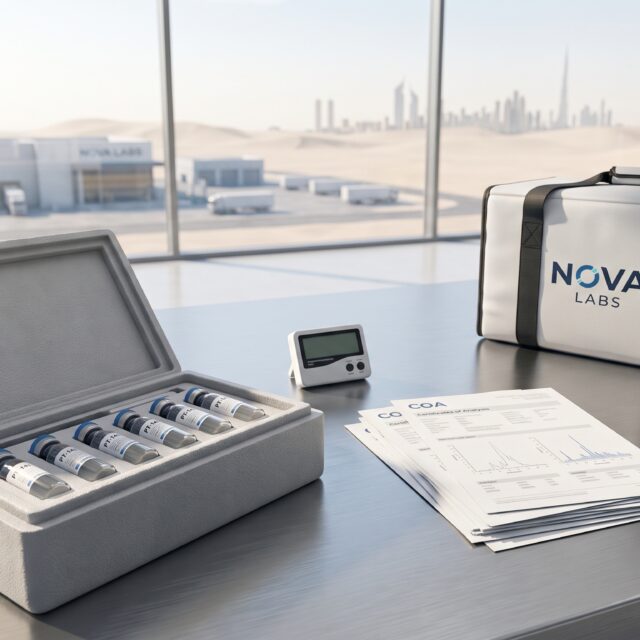
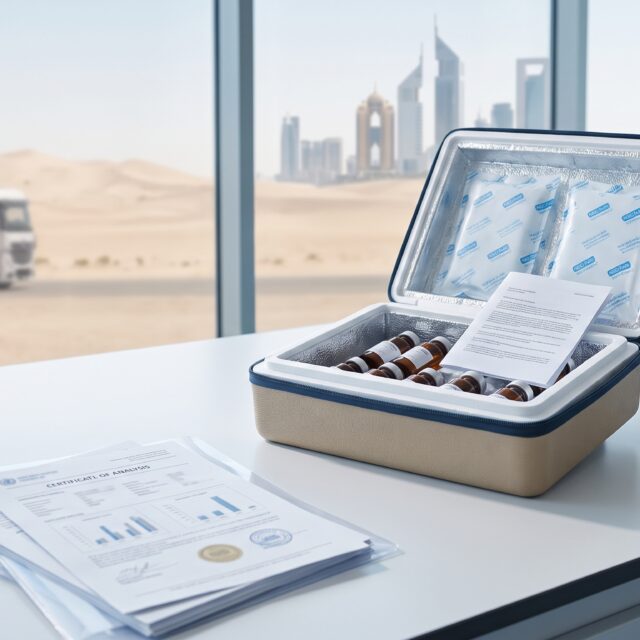
The gold standard for verification is the Certificate of Analysis (COA), backed by High-Performance Liquid Chromatography (HPLC) and Mass Spectrometry (MS).
Here is exactly what an informed buyer must verify on a COA:
- High-Performance Liquid Chromatography (HPLC): This identifies the purity of the compound. For rigorous in-vitro study, Ipamorelin must yield a purity of 99% or higher. Anything less indicates the presence of unwanted solvent residues, heavy metals, or fragmented amino acid chains (cleavage errors) that can skew research data.
- Mass Spectrometry (MS): This verifies the molecular weight of the peptide, confirming that the powder in the vial is actually Ipamorelin and not a cheaper substitute.
- Batch Specificity: The COA must match the exact batch or lot number printed on the vial you receive. Generic, years-old COAs are a major red flag.
- Independent Verification: Leading suppliers utilize independent, recognized analytical laboratories to perform their testing. A verifiable tracking number or QR code should link directly to the testing facility’s database.
When you order research-grade Ipamorelin from credible regional suppliers, you secure a compound that has been subjected to this exact level of rigorous, transparent analytical testing.
Combating the Heat: The Necessity of Thermal Logistics
The climate in the Sultanate of Oman poses a direct threat to the structural integrity of synthetic peptides. Ipamorelin is typically supplied in a lyophilized (freeze-dried) format, which stabilizes the fragile peptide bonds. However, even in a lyophilized state, prolonged exposure to the extreme temperatures of the Middle Eastern summer can cause thermal degradation, breaking down the peptide chains and rendering the compound useless for precise scientific study.
International shipments often sit on unairconditioned airport tarmacs or in hot customs warehouses for days. This environmental exposure quietly compromises the efficacy of the peptide before it ever reaches your facility.
To mitigate this, high-tier suppliers utilize strict cold-chain and thermal logistics. Parcels must be dispatched in climate-insulated packaging designed to maintain a stable internal temperature during the critical transit window. This is another area where GCC-based suppliers hold a massive advantage; shorter transit distances combined with specialized packaging ensure the compound retains its 99%+ purity from the laboratory to your door.
Best Practices for Handling and Storage Post-Delivery
Securing a pure compound is only half the equation; handling it correctly upon arrival in Oman is equally critical. To maintain the integrity of Ipamorelin for ongoing studies, researchers must adhere to strict storage protocols:
- Lyophilized Storage: Unreconstituted vials should be stored in a laboratory freezer at -20°C. In this state, the peptide can remain stable for up to 24 months.
- Reconstitution: When preparing the peptide for in-vitro use, it should be reconstituted using bacteriostatic water or sterile saline. The diluent must be introduced slowly, allowing it to flow down the side of the vial to prevent shearing the fragile peptide bonds. Mechanical agitation or vigorous shaking should be strictly avoided.
- Post-Reconstitution Storage: Once in liquid form, the peptide must be kept refrigerated between 2°C and 8°C and used within 20 to 30 days. It should be kept away from direct UV light to prevent further degradation.
Modern Procurement: Payment and Customer Support
The landscape of B2B and independent research procurement in the GCC has evolved. Buyers no longer tolerate the slow, opaque processes of legacy international vendors. When you order Ipamorelin, procurement standards dictate a frictionless, localized customer experience.
Frictionless Payment
International wire transfers are slow, carry high fees, and offer poor buyer protection. Modern suppliers operating within the GCC offer secure, encrypted credit card processing, and crucially, Cash on Delivery (COD) options where applicable. COD is a massive trust indicator in the Middle East, allowing procurement officers to verify the logistical arrival of their parcel.
Immediate Customer Support
Waiting 48 hours for an email response across different time zones is unacceptable when dealing with time-sensitive research compounds. Top-tier regional vendors have adopted direct, localized communication channels, most notably WhatsApp. This allows Omani buyers to instantly confirm stock availability, request specific batch COAs, and track deliveries in real-time with a dedicated support agent.
The Strategic Advantage of Regional Dispatch
For researchers in Muscat, Salalah, or Sohar, the optimal sourcing strategy is clear: bypass the high-risk international routes and leverage established regional infrastructure.
By choosing a supplier positioned within the GCC, you immediately solve the three largest procurement problems: customs holds via the Bayan system, thermal degradation due to long transit times, and lack of localized customer support.
Suppliers like NOVA Labs operate as regional hubs, understanding the exact requirements of the Middle Eastern market. By utilizing optimized logistics networks, they provide regional GCC distribution that bridges the gap between premium laboratory synthesis and the end researcher in Oman. This ensures that every vial arrives precisely as documented on its COA, ready for immediate reconstitution and study.
Conclusion
When looking to buy Ipamorelin, Oman-based researchers must prioritize verifiable purity, secure thermal logistics, and frictionless regional delivery. By demanding batch-specific HPLC/MS testing, avoiding slow international supply chains, and utilizing suppliers that understand the nuances of Oman’s Bayan customs system, you protect your research integrity and your laboratory budget. Always verify your documentation, ensure insulated transit, and partner with a supplier that values transparency and rigorous analytical standards.
Ready to elevate your research standards? Explore NOVA Labs’ collection of rigorously tested, cold-chain protected compounds and experience seamless GCC procurement today.
Disclaimer: The products mentioned in this article are strictly for in-vitro research and laboratory study purposes only. They are not intended for human consumption, therapeutic use, or diagnostic applications. Always review local regulations prior to procurement.
References
- Oman Ministry of Health (MOH). “Guidelines for the Importation of Biological and Chemical Research Materials.” Gov.om.
- Directorate General of Customs, Royal Oman Police. “Bayan Customs Single Window System: Clearance Procedures for Scientific Supplies.”
- GCC Cold Chain Logistics Report 2025. “Managing Temperature-Sensitive Pharmaceutical and Biological Transit in the Middle East.”
- European Journal of Endocrinology. “Pharmacological profiling of growth hormone secretagogues and their stability in varying thermal conditions.”
Disclaimer: The products mentioned in this article are for research purposes only and are not intended for human consumption.
- Ipamorelin Oman: Buying, Purity, COA and Delivery Guide – NOVA Labs
- Bayan Guide 2026: Registration, Services & Fixes – Wathim
- Get Approval for Final Customs Release of Pharmaceutical Product – Gov.om
- Buy Ipamorelin Peptide UAE PharmaLabGlobal
- Why Research Peptide Parcels Get Seized at EU Customs (and How Intra-EU Shipping Avoids It) – CertaPeptides
- Limitless BioChem: Third Party Tested Research Compounds & Peptides
- Refrigerated Warehousing in Oman for Pharma & Food
- Buy Ipamorelin UK | 99%+ HPLC, Batch COA | Nexyra Lab
Frequently asked questions
Is it legal to buy Ipamorelin in Oman?
Yes, Ipamorelin is not listed on major regional narcotic schedules and can be legally imported and traded in Oman strictly for in-vitro research and laboratory study purposes.
Why do international peptide shipments get delayed in Oman?
Direct shipments from the US or EU are often flagged by Oman's digital Bayan customs system (managed by the ROP and MOH) for biological classification checks, leading to long holds, storage fees, or return to sender.
How can I ensure my Ipamorelin does not degrade in the Omani heat?
You should source from regional GCC suppliers who utilize climate-insulated packaging and rapid dispatch networks, drastically minimizing the time the lyophilized peptide spends in uncontrolled thermal environments.
What is the minimum purity I should look for on an Ipamorelin COA?
For accurate and reliable research results, a Certificate of Analysis (COA) should show a minimum purity of 99%, verified by third-party High-Performance Liquid Chromatography (HPLC) and Mass Spectrometry (MS) testing.
Do regional peptide suppliers offer localized support for buyers in Oman?
Yes, reputable GCC-based suppliers recognize regional buying preferences and provide real-time WhatsApp support, secure payment processing, and streamlined intra-GCC shipping specifically designed for local buyers.
Nova Labs buyer tools
Ready to verify stock, testing and delivery?
Use the product page and lab report section to check availability, documentation, delivery timing and support before placing an order.
- COA / test-report checks
- Oman delivery context
- Cold-chain handling
- COD and card payment options
- WhatsApp support