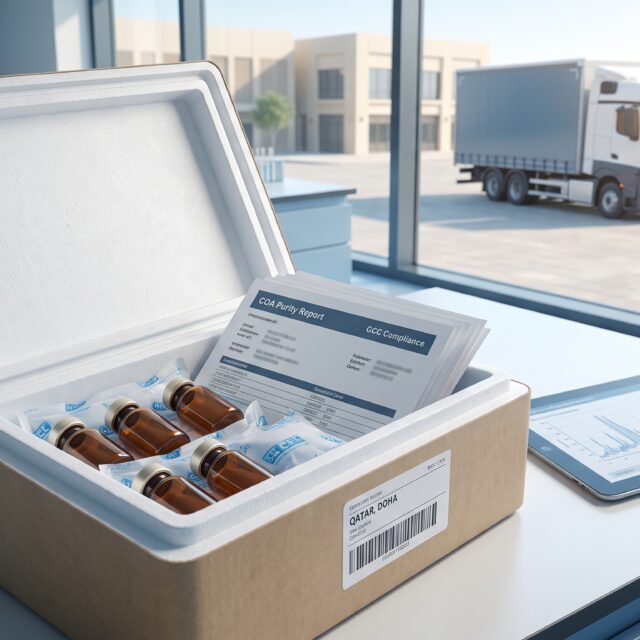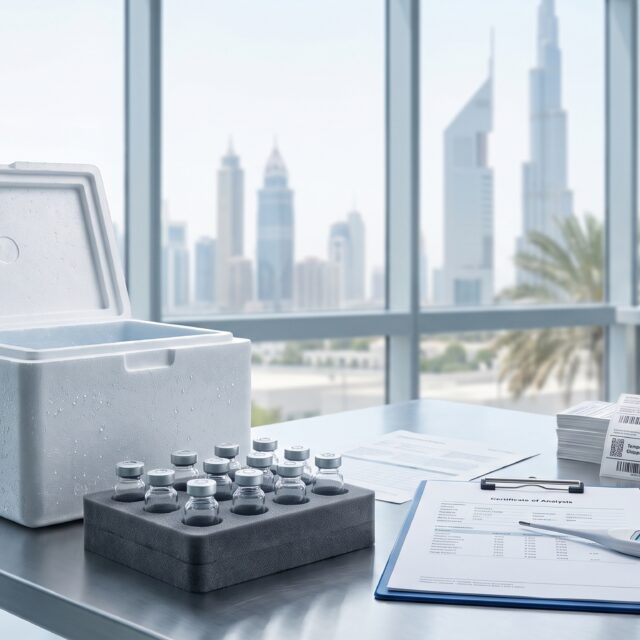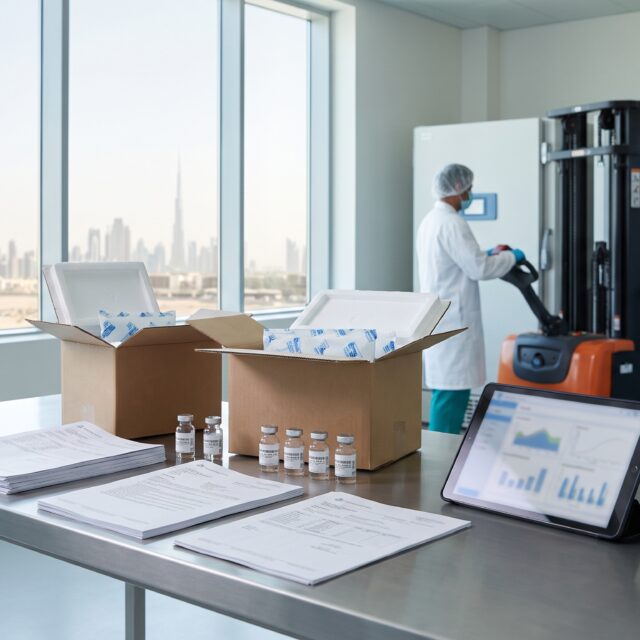


For research professionals operating in the GCC, verifying the chemical integrity of laboratory materials is the most critical step before placing an order. Sourcing reliable compounds across borders requires more than just trusting a supplier’s marketing claims; it requires concrete analytical proof. To understand how to read peptide COA Oman requirements and standards, you must know how to decipher laboratory reports and ensure your compounds survive the regional heat during transit.
Evaluating a Certificate of Analysis (COA) is the only definitive way to confirm that the research material you are purchasing is authentic, highly purified, and structurally accurate. Here, Oman-based researchers will learn exactly what to look for on a testing document, how to spot red flags, and how to navigate local customs efficiently.
What is a Peptide COA and Why Does It Matter in Oman?
Quick Answer: To properly read a peptide COA in Oman, researchers must verify two primary components: the High-Performance Liquid Chromatography (HPLC) report proving a purity of 98% or higher, and the Mass Spectrometry (MS) result confirming molecular sequence identity. Always ensure the COA batch number perfectly matches your received vials.
A Certificate of Analysis is an official testing document issued by an analytical laboratory—ideally an independent, third-party facility like Janoshik Analytical. It details the precise chemical makeup of a specific batch of synthesized peptides. For complex metabolic research compounds such as Retatrutide, Eloralintide, or MOTS-c, a COA is non-negotiable. Without it, researchers have no way of knowing if the vial contains degraded fragments, heavy metal contaminants, or excessive filler salts.
In Oman, verifying a COA is uniquely important due to the logistical challenges of the region. Extended international shipping times and harsh summer temperatures can rapidly degrade unprotected compounds. By reviewing a recent, verifiable COA, you ensure you are starting your studies with optimal baseline purity.
How to Read a Peptide COA: Key Verification Checks
When you open a COA document, you are typically greeted with a series of graphs, numerical values, and scientific terminology. Here is how to break down the most critical sections of the report to evaluate your supplier’s claims.
1. High-Performance Liquid Chromatography (HPLC) for Purity
HPLC is the standard analytical technique used to determine the chemical purity of a peptide batch. The HPLC section of the COA will display a graph known as a chromatogram.
- The Main Peak: You should see one dominant, sharp, vertical peak on the graph. This represents the primary target peptide.
- Purity Percentage: The report will calculate the ‘Area Under the Curve’ (AUC) for this peak. For high-grade research materials, this number should read 98% or higher.
- Satellite Peaks: Smaller bumps along the baseline represent impurities, incomplete synthesis fragments, or degraded chains. While 100% purity is scientifically impossible, these secondary peaks should be minimal (collectively making up less than 2% of the total sample).
2. Mass Spectrometry (MS) for Molecular Identity
While HPLC tells you how pure the substance is, it does not confirm what the substance actually is. That is the role of Mass Spectrometry (MS).
Mass Spectrometry measures the mass-to-charge ratio of the molecules in the sample. The COA will list two crucial numbers:
- Theoretical Mass: The scientifically calculated molecular weight of the peptide based on its exact amino acid sequence.
- Observed (or Experimental) Mass: The actual weight measured by the laboratory equipment.
For a COA to be considered valid, the observed mass must closely match the theoretical mass (usually within a tight margin of ±1.0 Dalton). If these numbers align, you have structural confirmation of the compound’s identity.
3. Matching Batch and Lot Numbers
A major red flag in the peptide industry is the use of ‘borrowed’ or generic COAs. A supplier might test one batch in 2023 and use that same COA for all subsequent batches indefinitely.
To verify authenticity, check the lot or batch number printed at the top of the COA. This alphanumeric code must match the batch number printed on the physical label of the vial you receive. If the numbers do not correspond, the COA does not apply to your specific product.
Advanced COA Metrics: Moisture and Endotoxins
For buyers conducting highly sensitive in-vitro studies, a basic HPLC/MS report might not be enough. Advanced third-party testing can include additional parameters that indicate superior handling and synthesis protocols.
- Karl Fischer Titration: This test measures the residual water content in a lyophilised (freeze-dried) powder. Lower moisture content generally equates to longer shelf life and better stability, which is highly relevant for Oman’s climate.
- Endotoxin Testing: If a research application requires strict in-vitro conditions, endotoxin testing ensures the absence of bacterial byproducts.
- Counter-Ion Concentration: Peptides are often synthesised as Trifluoroacetate (TFA) salts. Premium suppliers may offer acetate conversions for specific cellular research where TFA toxicity is a concern.
Beating the Muscat Heat: Liquid vs. Lyophilised Formats
Understanding the chemistry on a COA is only half the battle; getting that pure compound safely into Oman is the other. The Sultanate of Oman frequently experiences summer temperatures exceeding 40°C.
Peptides are highly susceptible to thermal degradation and hydrolysis when suspended in a liquid state. If you purchase pre-mixed liquid peptides from overseas, the structural integrity detailed on the COA will likely be compromised before the package ever clears customs in Muscat.
Serious researchers only procure lyophilised (freeze-dried) peptide powders. The freeze-drying process removes moisture, rendering the compound remarkably stable. When kept out of direct sunlight, lyophilised powders can survive the brief temperature fluctuations of regional transit without degrading, preserving the 98%+ purity validated on the COA until you are ready to reconstitute the vial in your lab.
Customs Clearance and the Bayan Portal
Importing research chemicals into Oman requires navigating the digital Bayan customs portal, regulated by the Royal Oman Police (ROP). International shipments from the US or Europe often face severe scrutiny, leading to lengthy delays, requests for extensive Material Safety Data Sheets (MSDS), and high seizure rates at the border.
When a package sits in a hot customs warehouse for weeks, the compounds degrade. To bypass international friction, informed buyers utilize regional GCC suppliers. Sourcing from a Dubai-based supplier like NOVA Labs allows for rapid overland or regional air transit. Because the goods are already within the GCC, clearance processes are significantly streamlined.
When ordering, ensure your supplier provides clear commercial invoices stating the items are for ‘Research Use Only’ (RUO) and utilizes the correct Harmonised System (HS) codes. This transparency aligns with Oman’s importation guidelines and prevents unnecessary holds.
Evaluating Your Supplier: NOVA Labs Operations
Knowing how to read a COA empowers you to hold suppliers accountable. At NOVA Labs, trust in the GCC scientific community is built on transparency, strict documentation, and reliable logistics.
We provide independent, verifiable COAs for our compounds, ensuring researchers have access to critical HPLC and MS data before they commit to an order. By operating locally out of Dubai, we eliminate the unpredictable weeks-long wait times associated with Western suppliers.
We offer dedicated UAE-to-Oman logistics, ensuring your lyophilised research compounds are handled with care and delivered swiftly—typically within 5 working days. For buyers who prefer communication and support tailored to the region, direct WhatsApp assistance is available to answer stock queries, supply batch documents, and confirm dispatch times.
If you are ready to evaluate our documentation or browse our tested research peptides, our catalogue is strictly curated for purity and stability.
Summary and Next Steps
Mastering how to read peptide COA Oman reports protects your research investments and guarantees you are working with precise, structurally accurate materials. Always demand recent, third-party HPLC and MS documents, verify that batch numbers align with your physical vials, and insist on lyophilised powders to combat regional heat.
By partnering with a GCC-based supplier, you mitigate the risks of international customs seizures and thermal degradation, ensuring your compounds arrive exactly as pure as the laboratory certified them.
To learn more about our shipping timelines across the Gulf and our commitment to secure cold-chain transit, review our guidelines on reliable GCC logistics and delivery.
Disclaimer: The products mentioned in this article are for research purposes only and are not intended for human consumption or therapeutic use.
*
References
- Helivex Labs / Dissolv Labs (2023). Understanding Peptide Certificates of Analysis: HPLC and Mass Spectrometry Basics.
- Janoshik Analytical (2024). Third-Party Verification Standards for Lyophilised Research Compounds.
- Oman Directorate General of Customs. Bayan Customs System Guidelines for Laboratory and Research Importation.
- Nova Biolabs vs barq peptides: Oman Buyer Comparison
- Buy Retatrutide Oman: Sourcing, Customs & COA Guide – NOVA Labs
- Buy Eloralintide in Oman: Purity, COAs, and Delivery Guide – NOVA Labs
- How to Read a Peptide Certificate of Analysis (COA) – Helivex Labs
- How to Read a Peptide Certificate of Analysis (COA) – Rite Aid
- How to Read a Peptide Certificate of Analysis – Dissolv Labs
Frequently asked questions
How do I read an HPLC purity report on a peptide COA?
To read an HPLC report, look for the main peak on the chromatogram graph and check the calculated Area Under the Curve (AUC). For high-quality research peptides, this purity percentage should be 98% or higher, indicating minimal structural impurities.
What is the difference between HPLC and Mass Spectrometry on a COA?
HPLC measures the chemical purity (the percentage of the correct substance in the vial), while Mass Spectrometry (MS) confirms the molecular identity by ensuring the observed molecular weight matches the theoretical weight of the peptide sequence.
Why is batch number verification important for buyers in Oman?
Matching the batch or lot number on the COA to the label on your physical vial ensures the test results apply to the exact product you received, preventing suppliers from using outdated or generic laboratory reports.
Can I ship liquid peptides to Oman safely?
Shipping pre-mixed liquid peptides to Oman is highly discouraged due to the extreme summer heat, which causes rapid thermal degradation. Lyophilised (freeze-dried) powder is the only stable format recommended for safe transit in the GCC.
How long does peptide delivery take from the UAE to Oman?
By sourcing from a regional UAE supplier like NOVA Labs, delivery to Oman typically takes around 5 working days, bypassing the lengthy customs delays and high seizure risks associated with international shipments.
Nova Labs buyer tools
Ready to verify stock, testing and delivery?
Use the product page and lab report section to check availability, documentation, delivery timing and support before placing an order.
- COA / test-report checks
- Oman delivery context
- Cold-chain handling
- COD and card payment options
- WhatsApp support