



Navigating the GCC Market: How to Spot Fake Peptides Kuwait
Procuring high-quality research compounds in the Middle East presents a unique set of challenges. Between unregulated international vendors, extreme regional temperatures, and strict import regulations, researchers and informed procurement staff must be highly vigilant. The process extends far beyond simply checking a label; it requires a comprehensive understanding of analytical testing, cold-chain logistics, and local customs protocols.
Quick answer: When researching how to spot fake peptides, Kuwait buyers must independently verify third-party HPLC and Mass Spectrometry documentation using lab task IDs. Authentic suppliers avoid crypto-only portals, bypass local customs bottlenecks, and use cold-chain logistics to prevent thermal degradation during transit.
This comprehensive guide breaks down the exact verification steps required to secure authentic, pure materials for your laboratory in the GCC, ensuring you bypass common pitfalls and protect the integrity of your research data.
The Analytical Foundation: Why HPLC Alone Is Not Enough
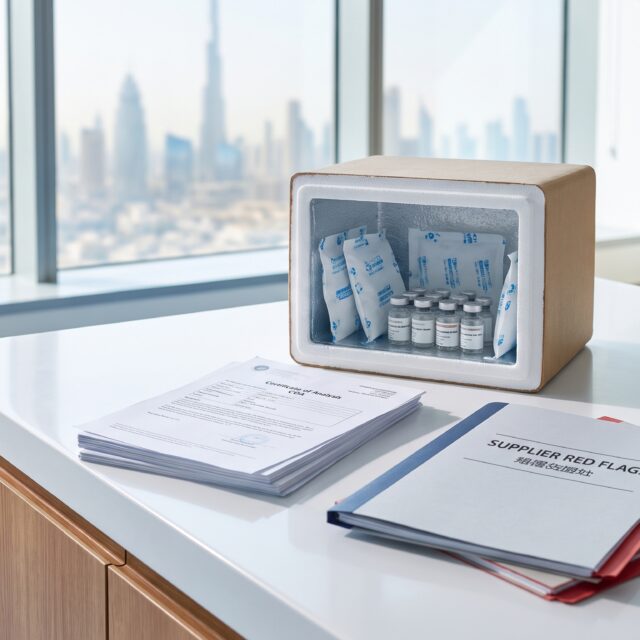
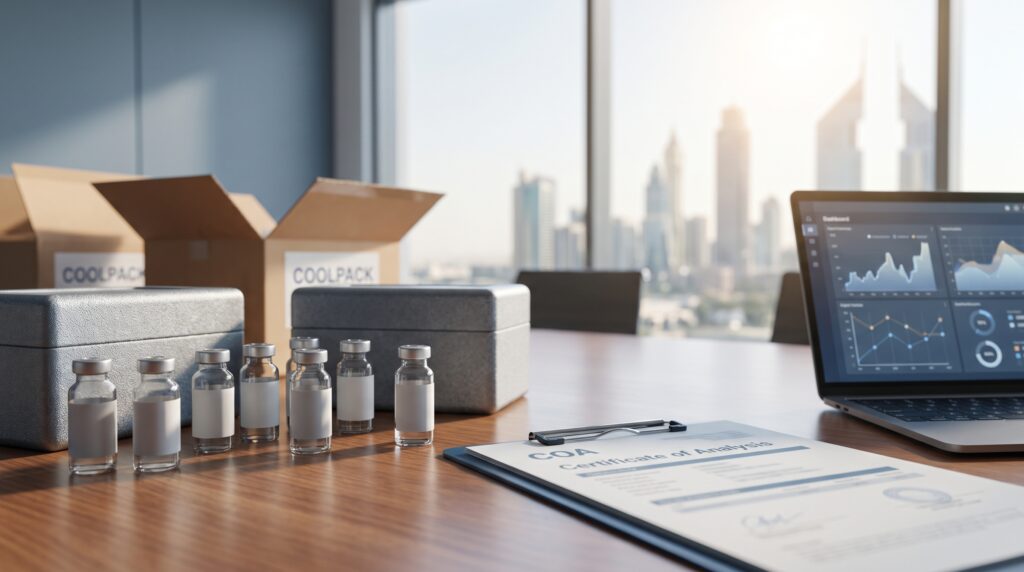
The primary indicator of peptide authenticity is a batch-specific Certificate of Analysis (COA). However, a common trap for researchers learning how to spot fake peptides in Kuwait is relying entirely on a single metric: HPLC purity.
Understanding HPLC vs. Mass Spectrometry
High-Performance Liquid Chromatography (HPLC) is an analytical testing method used to separate, identify, and quantify each component in a mixture. If a vendor displays a COA showing 99% purity via HPLC, it simply means that the powder in the vial is 99% free of chemical by-products or manufacturing impurities. However, HPLC alone does not conclusively identify the primary compound. A vial could theoretically be filled with 99% pure mannitol (a common lyophilisation excipient) or an entirely incorrect, cheaper amino acid sequence, and the HPLC report would still show a high purity level.
To verify true authenticity, a COA must include Mass Spectrometry (MS). Mass Spectrometry confirms the molecular weight and structural identity of the compound by measuring the mass-to-charge ratio of its ions. If a supplier cannot provide both HPLC (for purity) and MS (for identity) for their current batches, the product should be treated as highly suspicious. Authentic suppliers will always pair these two analytical methods to guarantee the chemical identity of the research material.
Validating the COA Task ID
Scam vendors frequently download legitimate COAs from reputable suppliers, use photo-editing software to change the company name, and host these static PDFs on their own websites. A verifiable supplier will always provide documentation from a recognized, independent, third-party laboratory such as Janoshik Analytical or MZ Biolabs.
To ensure the documentation is real, you must actively verify it:
- Look for the unique verification key or task identifier located at the top or bottom of the report.
- Navigate directly to the testing laboratory’s official online portal.
- Enter the key into their verification tool.
- Confirm that the original client name on the laboratory’s server matches your vendor, and that the batch numbers and test results align perfectly with the PDF provided.
If the key is invalid, or if the data has been altered, you are dealing with a counterfeit product.
The Silent Fake: Thermal Degradation in Kuwait’s Heat
A critical factor unique to the GCC region is the harsh physical environment. Kuwait’s summer temperatures routinely exceed 45 degrees Celsius (113 degrees Fahrenheit), with tarmac and delivery van temperatures soaring even higher. Delicate amino acid chains undergo rapid thermal degradation—specifically through mechanisms like hydrolysis, deamidation, and oxidation—when exposed to high heat.
Even if a product leaves a manufacturing facility with verified 99% purity, sitting in an uncooled delivery network or on a hot airport runway can rapidly degrade the compound. By the time it reaches your laboratory, the pure peptide may be reduced to inactive, fragmented chains. In the context of the GCC, a thermally degraded peptide is functionally equivalent to a fake one, as it will yield compromised research data.
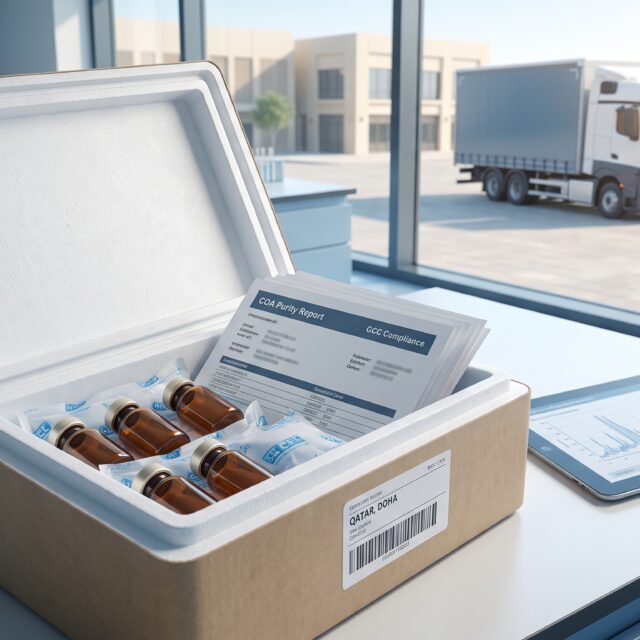
Legitimate suppliers servicing Kuwait and the wider GCC understand this biological vulnerability. They utilise active cold-chain logistics, specialized insulated packaging, and expedited regional shipping networks to ensure the product remains highly stable from dispatch to delivery. When evaluating a vendor, their handling and transit protocols are just as important as their chemical documentation.
The Customs Trap: Navigating the Ardeya Warehouse
Another major hurdle for buyers in Kuwait is local import legislation. Unregulated international imports, particularly those shipped directly from overseas manufacturers with generic customs declarations, are frequently flagged by the General Administration of Customs in Kuwait.
When these packages are intercepted, they are often diverted to local customs holding facilities, most notably the Ardeya customs warehouse. Once a package is held at Ardeya, the buyer is typically required to obtain a formal ‘Health Release’ from the Ministry of Health (MOH)—a process that can be overwhelmingly difficult, bureaucratic, and time-consuming for standard analytical research procurement.
Crucially, packages left sitting in the Ardeya facility are not kept in climate-controlled conditions. The extreme heat will destroy the research compounds long before any clearance paperwork is finalised. To avoid this costly logistical trap, experienced researchers source their materials from suppliers who operate within regional GCC hubs. By utilising suppliers with established, compliant regional operations, buyers can bypass international bottlenecks. For more context on how established suppliers manage regional dispatch effectively, review our UAE and GCC delivery protocols, which detail the importance of localized fulfillment in preventing transit degradation.
Scam Supplier Checklist: 5 Red Flags
When evaluating a new vendor for your laboratory, use this five-point checklist to filter out illegitimate or low-quality operations:
- Crypto-Only Payments: Fake or scam vendors often mandate cryptocurrency as the sole payment method. This eliminates your ability to initiate a chargeback through your financial institution if the product never arrives or is proven counterfeit. Reputable suppliers offer secure, traditional payment gateways or local options like Cash on Delivery (COD).
- Missing or Outdated Testing: If a supplier’s COAs are several years old, missing Mass Spectrometry data entirely, or lack a verifiable third-party task ID, the products cannot be trusted for precise analytical work.
- Physiological Guarantees: Authentic suppliers strictly frame their compounds for ‘Research Use Only’ (RUO). If a vendor’s website makes guarantees about human health outcomes, provides subjective usage protocols, or claims specific physiological results, they are operating outside ethical and legal industry standards.
- Lack of Local GCC Infrastructure: Vendors who cannot offer regional support, such as a responsive WhatsApp contact, transparent local tracking, or GCC-specific logistics advice, are often blindly drop-shipping from overseas factories without any intermediate quality control.
- Opaque Sourcing Practices: Legitimate providers are transparent about their laboratory partners, their handling procedures, and their storage facilities. If a vendor operates completely anonymously or uses exclusively stock imagery for their products, it is a significant red flag.
Proper Laboratory Storage for Research Continuity
Securing authentic materials is only half the battle; maintaining their molecular stability upon arrival is equally crucial. Improper storage can ruin legitimate compounds within days, leading researchers to falsely believe they purchased fake materials.
Lyophilised (freeze-dried) compounds should be stored in a laboratory freezer (typically -20 degrees Celsius) to maintain long-term stability. However, standard commercial ‘frost-free’ freezers can be highly detrimental to delicate molecules. These appliances routinely cycle their internal temperatures up and down to prevent ice buildup. These continuous temperature fluctuations can damage fragile molecular structures over time. A manual defrost freezer is generally preferred for strict laboratory standards.
Furthermore, when removing a vial from cold storage, it must be allowed to acclimatise to room temperature before the seal is punctured or opened. Opening a cold vial in a humid, air-conditioned room instantly draws moisture into the powder, causing condensation that accelerates degradation and ruins the sample for future assays.
Procuring Verifiable Research Materials
Successfully sourcing research compounds in Kuwait requires a rigorous approach to verification. By insisting on third-party HPLC and MS testing, demanding transparent logistics that account for regional heat, and avoiding vendors that fail to provide verifiable documentation, you protect the integrity of your laboratory’s work.
At NOVA Labs, we understand the specific complexities of the GCC market. We prioritize absolute transparency, offering batch-specific, verifiable documentation for every compound we supply. Furthermore, our logistics infrastructure is specifically designed to handle the environmental challenges of the Middle East, ensuring that your research materials arrive stable, pure, and ready for immediate analysis.
To explore our complete range of fully documented, cold-chain protected compounds, you can browse our full catalogue of research materials to find the exact specifications required for your upcoming studies.
Conclusion
Knowing how to spot fake peptides in Kuwait is an essential skill for any modern researcher operating in the GCC. The combination of analytical scrutiny, supply chain awareness, and proper storage protocols forms the foundation of reliable procurement. Never compromise on third-party testing, and always account for the reality of regional customs and climate when selecting your supplier.
References
- Elite Research Labs. (2024). How to Tell If a Peptide Company Is Legit: Analytical Checklist.
- PSPeptides. (2024). Verification Protocols & Avoiding Supply Chain Scams.
- NOVA Labs. (2024). Procurement Protocols for GCC Research.
Disclaimer: The products mentioned in this article are strictly for research purposes only and are not intended for human consumption, veterinary use, or therapeutic application.
- How to Tell If a Peptide Company Is Legit: Checklist – Elite Research Labs
- How to Read a Peptide COA (Real vs Fake)
- Peptide Storage Temperature Kuwait | Stability & Delivery – NOVA Labs
- Best Peptide Shop Kuwait: Supplier Guide & Customs Tips – NOVA Labs
- How to Avoid Peptide Scams: Best Guide 2026 – PSPeptides
- How to Verify a Peptide: COAs, Lab Testing & Spotting Fakes (2026)
- How to Store Research Peptides: Complete UK Guide to Stability and Shelf Life (2026)
- Peptide Laws in Kuwait — Can You Buy, Travel & Import? (2026)
Frequently asked questions
Why is HPLC testing not enough to verify a peptide?
HPLC testing only measures the purity of a substance, confirming it is free from manufacturing by-products. It does not verify the molecular identity of the compound, meaning Mass Spectrometry (MS) is additionally required to ensure the sequence matches the label.
How does extreme heat affect peptide shipments in Kuwait?
Temperatures exceeding 45 degrees Celsius cause fragile amino acid chains to undergo rapid thermal degradation, primarily through hydrolysis and oxidation. Without active cold-chain logistics, pure compounds can be rendered chemically inactive before delivery.
What happens if research compounds are held at Kuwait customs?
International shipments are often held at facilities like the Ardeya customs warehouse awaiting a Ministry of Health (MOH) release. During this hold, packages are typically not climate-controlled, leading to complete degradation of the research materials.
How can I verify a Janoshik or MZ Biolabs COA?
You can verify authenticity by locating the unique task ID or verification key printed on the Certificate of Analysis and entering it directly into the independent testing laboratory's official online portal to see if the original file matches the vendor's copy.
Is it safe to pay for research compounds using only cryptocurrency?
While some legitimate vendors accept crypto, suppliers that exclusively mandate cryptocurrency payments are often a red flag. Using traditional payment gateways or local Cash on Delivery (COD) offers better buyer protection against counterfeit products or non-delivery.
Nova Labs buyer tools
Ready to verify stock, testing and delivery?
Use the product page and lab report section to check availability, documentation, delivery timing and support before placing an order.
- COA / test-report checks
- Kuwait delivery context
- Cold-chain handling
- COD and card payment options
- WhatsApp support