
For principal investigators, lab managers, and procurement staff in the UAE and GCC, evaluating ipamorelin vs sermorelin is a standard requirement when designing neuroendocrine studies. While both Research Use Only (RUO) peptides are referenced frequently in growth hormone axis research, their molecular structures, receptor targets, and pharmacokinetic profiles differ fundamentally.
This guide breaks down exactly what the literature compares between these two compounds. We explore their distinct signaling mechanisms, evaluate their stability profiles, and outline the stringent sourcing and logistical standards required for procuring these peptides in the Middle East.
Ipamorelin vs Sermorelin: Quick Answer
When comparing ipamorelin vs sermorelin, the primary difference lies in their unique receptor targets. Ipamorelin is a five-amino-acid synthetic peptide acting as a selective ghrelin receptor agonist, whereas sermorelin is a 29-amino-acid peptide mimicking natural growth hormone-releasing hormone. Research evaluates both for distinct neuroendocrine signaling pathways.
Structural and Molecular Differences
Evaluating the difference between ipamorelin and sermorelin requires a close look at their distinct physical characteristics and classifications.
The Profile of Ipamorelin
Ipamorelin (CAS 170851-70-4) is a highly selective, synthetic pentapeptide. Composed of only five amino acids, it has a relatively small molecular weight of approximately 711.9 Da. Ipamorelin functions as a growth hormone secretagogue receptor agonist (GHS-R1a). It is designed to mimic the signaling of native ghrelin, the endogenous ligand for this receptor.
At the cellular level, ipamorelin binding triggers the Gq/phospholipase C signaling pathway. This calcium-mediated cascade stimulates somatotroph cells in the anterior pituitary gland, a mechanism completely independent of the body’s natural growth hormone-releasing hormone (GHRH) pathway.
The Profile of Sermorelin
Sermorelin (CAS 86168-78-7) is a larger synthetic peptide composed of 29 amino acids, with a molecular weight of approximately 3,357.9 Da. It is the N-terminal fragment of the naturally occurring 44-amino-acid GHRH, specifically designated as GHRH(1-29)-NH2. Because it represents the active domain of endogenous GHRH, it operates entirely as a GHRH analog.
Sermorelin binds to the GHRH receptor, initiating the Gs/adenylate cyclase pathway. This cAMP-PKA signaling cascade directly reflects the natural pathway utilized by the hypothalamus to regulate somatotroph function.
Ipamorelin vs Sermorelin Research Focus
When laboratories investigate ipamorelin vs sermorelin research data, the focus typically centers on selectivity, pharmacokinetics, and neuroendocrine feedback loops. The literature compares how each compound influences cellular environments in animal models.
Selectivity and Side-Effect Profiles in Models
Older generations of ghrelin-mimicking peptides (such as GHRP-2 or GHRP-6) were known to cause concurrent elevations in cortisol, prolactin, and adrenocorticotropic hormone (ACTH) alongside their primary targets. In comparative animal studies, ipamorelin is celebrated for its exceptional selectivity. Research indicates that ipamorelin induces targeted stimulation without significantly raising baseline cortisol or prolactin levels.
Conversely, because sermorelin acts strictly as a GHRH analog, it operates upstream. Studies show that its action is inherently regulated by the hypothalamic-pituitary axis. It does not possess the capacity to bypass natural negative feedback loops mediated by somatostatin, making it a subject of interest for researchers studying highly physiological, natural pulsatility.
Pharmacokinetics: Half-Life and Clearance
Another major point of evaluation when deciding on ipamorelin or sermorelin for an experimental protocol is their kinetic behavior:
- Sermorelin Kinetics: Due to its structure and susceptibility to rapid enzymatic cleavage in plasma, sermorelin features a very brief half-life of roughly 10 to 20 minutes in preclinical models. This results in a rapid spike and quick clearance, closely mirroring organic pulsatile secretions.
- Ipamorelin Kinetics: As a shorter, synthetic pentapeptide, ipamorelin demonstrates greater resistance to enzymatic degradation. Its half-life extends to approximately 2 hours in standard in vivo studies, offering a more sustained period of receptor engagement.
Evaluating RUO Peptides in the UAE and GCC
For laboratories operating in Dubai, Abu Dhabi, and the wider GCC region, peptide procurement involves strict regulatory and environmental considerations.
Both ipamorelin and sermorelin are classified exclusively as Research Use Only (RUO) laboratory reagents. This framework strictly prohibits their clinical prescription, therapeutic application, or self-administration. Buyers must ensure that all procurement is geared solely toward in vitro or in vivo animal research, chemical analysis, or educational instruction.
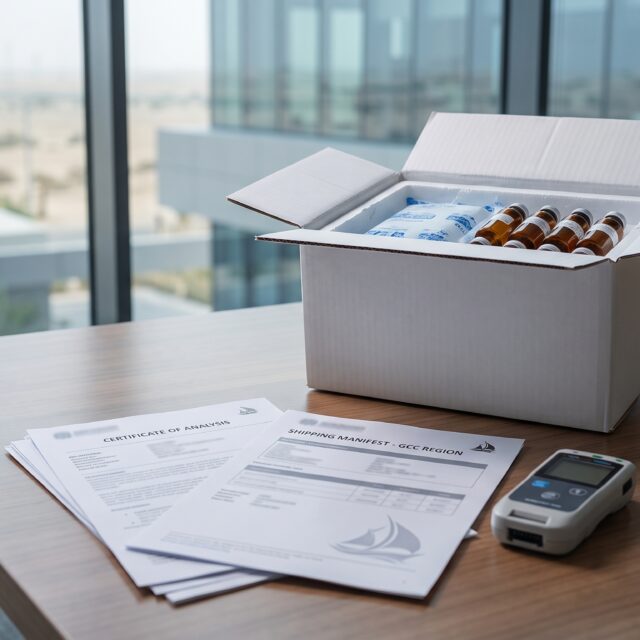
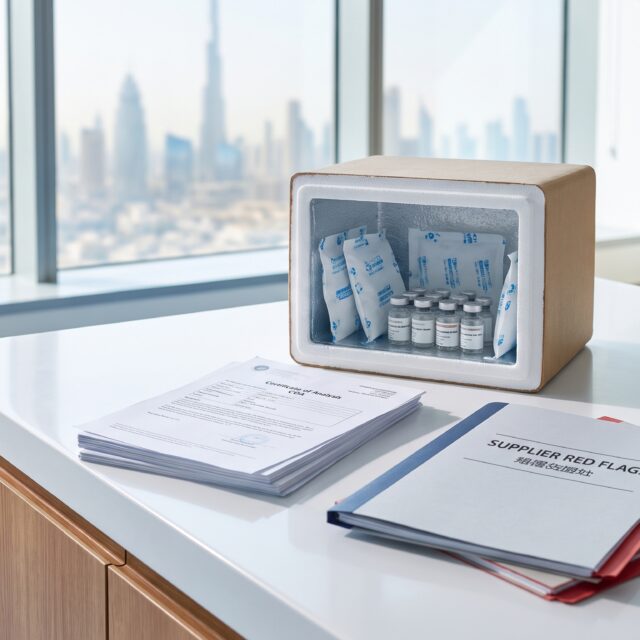
Additionally, local environmental factors require careful logistical planning. The extreme heat of the UAE necessitates that these compounds are shipped and stored in lyophilized (freeze-dried) powder form. Lyophilized peptides remain stable at room temperature during brief transit windows, but once reconstituted with bacteriostatic water in the lab, they must be maintained in strict cold-chain storage (typically 2°C to 8°C) to prevent rapid degradation of their peptide bonds.
Verifying Supplier Quality and COAs
Whether a laboratory requires ipamorelin or sermorelin, verifying the integrity of the compound is the single most critical step in procurement. The global peptide market is prone to mislabeling, under-dosing, and contamination. Informed buyers evaluate independent documentation rather than relying on a supplier’s marketing claims.
Key checks for researchers include:
- High-Performance Liquid Chromatography (HPLC): Separates the chemical components to determine the exact purity of the batch. High-quality research peptides should demonstrate a purity threshold of 98% or higher.
- Liquid Chromatography-Mass Spectrometry (LC-MS): Verifies the precise molecular weight of the peptide (e.g., ~711.9 Da for Ipamorelin), confirming the compound’s identity matches the label.
- Heavy Metal and Endotoxin Screening: Critical for in vivo research to ensure that a subject’s localized or systemic immune responses are not triggered by manufacturing contaminants.
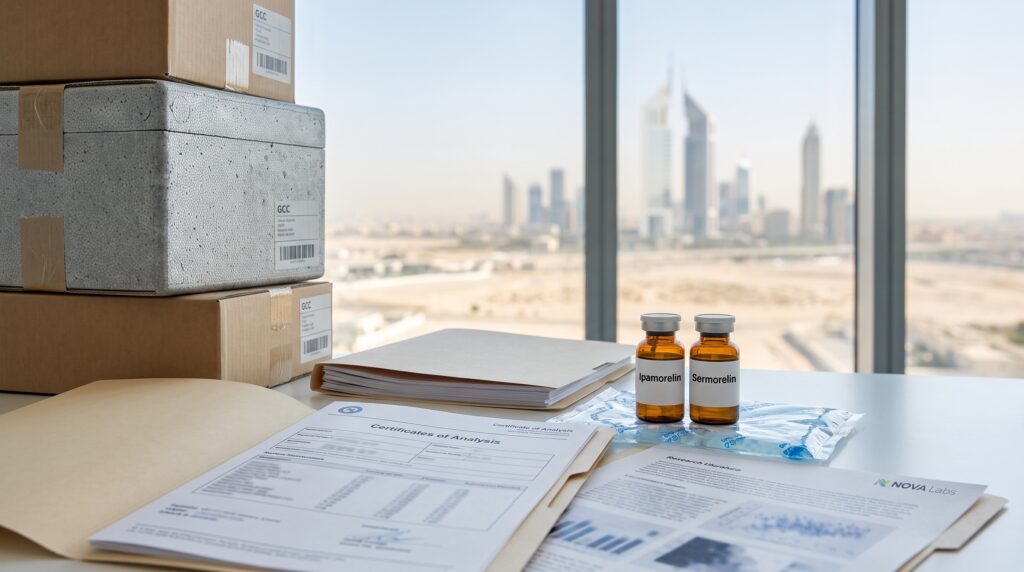
- Batch-Specific Documentation: Generic, outdated certificates are useless. Researchers should demand current, traceable reports from recognized independent facilities (such as Janoshik Analytical).
Prioritize verifying independent laboratory test results before initiating any procurement.
Sourcing Safely from NOVA Labs in Dubai
Securing consistent, high-purity RUO compounds in the Middle East often involves navigating complex international customs and long transit times, which can threaten peptide stability. NOVA Labs addresses these regional friction points by operating directly out of Dubai, UAE.
For researchers evaluating ipamorelin vs sermorelin, NOVA Labs provides:
- Verified Purity: Every batch is supported by updated Janoshik analytical reports featuring comprehensive HPLC and mass spectrometry data.
- Optimized Local Logistics: Domestic orders within Dubai and Abu Dhabi benefit from next-business-day courier delivery. This rapid transit ensures lyophilized vials spend minimal time outside of climate-controlled environments.
- GCC-Wide Capabilities: Regional laboratories across Saudi Arabia, Qatar, Bahrain, Kuwait, and Oman can access specialized courier shipping with a 5 to 10-day delivery window.
- Flexible Payment & Support: NOVA Labs offers localized solutions including Cash on Delivery (COD) for specific zones, secure crypto options, and direct WhatsApp support for immediate inventory checks and COA inquiries.
Procuring Research Peptides in the UAE
When assessing the research literature, ipamorelin and sermorelin emerge as two fundamentally different compounds utilizing distinct biological pathways. Ipamorelin provides targeted GHS-R1a agonism with a longer half-life and exceptional selectivity, while sermorelin serves as a direct GHRH analog with rapid, physiological pulsatile kinetics. Both require diligent sourcing, proper cold-chain handling, and strict adherence to RUO regulatory standards.
For laboratories prioritizing documented purity and efficient UAE-based logistics, browse our complete research peptide collection to review available compounds and batch-specific testing data.
Disclaimer: The products mentioned in this article are for research purposes only and are not intended for human consumption or therapeutic use.
References
- National Center for Biotechnology Information. PubChem Compound Summary for CID 9831659, Ipamorelin.
- National Center for Biotechnology Information. PubChem Compound Summary for CID 16132247, Sermorelin.
- Raun, K., et al. (1998). “Ipamorelin, the first selective growth hormone secretagogue.” European Journal of Endocrinology, 139(5), 552-561.
- UAE Ministry of Health and Prevention (MOHAP). Guidelines on the Importation and Handling of Laboratory and Research Reagents.
- Ipamorelin vs Sermorelin: Two GH Pathways
- Sermorelin UK 2026 Research Reference
- Ipamorelin vs Sermorelin: Which Growth Hormone Peptide Is Better? (2026)
- How to Read a Peptide COA (Real vs Fake)
- Are Peptides Legal in UAE – FIBAV
- Shipping Policy – UAEPeptide.ai
- Reddit – Nova-biolabs r/UAE
- Reddit – Peptides r/dubai
Frequently asked questions
What is the structural difference between ipamorelin and sermorelin?
Ipamorelin is a synthetic pentapeptide consisting of five amino acids, while sermorelin is a much larger 29-amino-acid peptide that mimics the active N-terminal fragment of natural growth hormone-releasing hormone (GHRH).
Do ipamorelin and sermorelin target the same receptors?
No. Ipamorelin acts as an agonist of the ghrelin receptor (GHS-R1a), initiating the Gq/phospholipase C pathway. Sermorelin targets the GHRH receptor, triggering the Gs/adenylate cyclase pathway.
Which peptide has a longer half-life in research models?
In laboratory studies, ipamorelin demonstrates a longer half-life of approximately 2 hours, whereas sermorelin is rapidly cleaved by enzymes, resulting in a short half-life of 10 to 20 minutes.
How should these peptides be stored in the UAE?
Both compounds should be shipped and stored as lyophilized powders away from direct heat. Once reconstituted in the laboratory with bacteriostatic water, they must be kept in cold-chain storage (2°C to 8°C) to maintain stability.
How can I verify the purity of Ipamorelin or Sermorelin?
Researchers should demand batch-specific, independent Certificates of Analysis (COAs) from their supplier. These reports must include HPLC testing to confirm purity levels (ideally >98%) and LC-MS to verify the exact molecular identity.
Nova Labs buyer tools
Ready to verify stock, testing and delivery?
Use the product page and lab report section to check availability, documentation, delivery timing and support before placing an order.
- COA / test-report checks
- UAE delivery context
- Cold-chain handling
- COD and card payment options
- WhatsApp support