

Peptide vials vs pens: which format is easier to verify?
Peptide vials vs pens should be compared by the documentation for the exact item offered, not by container shape. Check whether each listing identifies its contents, whether its report matches the batch and tested format, and whether labelled storage conditions can be maintained during delivery to your UAE address.
Quick answer for UAE buyers
| Check | What to confirm before ordering |
|---|---|
| Contents | Dry or liquid form, stated amount, and any declared formulation details |
| Report | Batch match, tested sample, methods and report date |
| Storage | Conditions and expiry evidence for the sealed item |
| Delivery | Packaging, destination coverage and response to delays |
Neither format is automatically better documented. A report for peptide powder may be relevant to a pen’s input material, for example, without establishing what was tested in the finished cartridge. Conversely, a dry vial still needs a traceable batch and a clear storage statement.
How this comparison works—and what may change
This is a documentation checklist, not a live audit or a ranking of individual products. It compares questions to ask of a dry vial and a listed pen format; it does not assume that two similarly named items share a formulation, report or shelf life. As of checkout, verify the current listing, dispatch batch, stock, payment options and shipping terms. Those details can change after an article is published.
For a Dubai order, the main practical question may be whether the labelled conditions can be supported through dispatch and last-mile delivery. For another emirate or a cross-border GCC address, the route, transit time and clearance requirements may differ. A shorter advertised delivery window is useful information, but it is not a temperature record.
Start with the label and the exact SKU
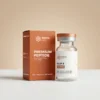
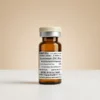
A lyophilised vial contains dry material. A product described as a pre-filled pen or cartridge may contain liquid, but its current listing or label should confirm that. The word pen alone does not establish its contents or storage requirements.
Keep a short record for each SKU:
- Identity and form: product name, dry or liquid state, container type and any declared formulation components.
- Stated content: the labelled total amount per container. For a liquid item, also record any stated concentration and fill volume, including units.
- Traceability: supplier, lot or batch number, label version where available, and relevant dates.
- Storage: labelled range and expiry for the sealed item, plus the source of any additional handling claim.
To see why SKU-level checking matters, compare the BPC-157 research vial with the BPC-157 pen listing, or the GHK-Cu research vial with the GHK-Cu pen listing. These links are starting points for checking current specifications, not proof that either pair has identical contents or shared test results. If a specification is absent, do not calculate it from a photograph or a like-named listing.
Read the COA for its sample, batch and methods
A certificate of analysis (COA) is most useful when you can connect its tested sample to the item being dispatched. The NOVA Labs lab results page is one place to check for reports; also inspect the relevant listing. If the displayed report lacks a clear match to the offered batch, ask which report applies.
Look for the sample description, lot number, testing organisation, test date, methods, results and stated acceptance criteria. Check whether the testing was performed by an independent laboratory or the supplier. A report may include mass spectrometry (MS) evidence supporting identity, an HPLC chromatographic purity result, and a separate assay or content result. These answer different questions.
An HPLC purity percentage is not the amount in the container. An area percentage is a result under the specified chromatographic method. It does not, by itself, verify total fill content, the amount in every container or stability in transit. Likewise, an identity result does not establish an expiry date.
For a listed pen, pay particular attention to the report’s sample description. Does it identify bulk peptide before filling, a finished filled cartridge, or both? Testing of bulk input alone does not establish the finished item’s fill content or storage performance. For a vial, confirm that its batch and described material match the report rather than assuming that a similarly named pen report applies. If a supplier provides several documents, note what each one actually covers.
Storage claims need product-specific evidence
Published analytical-peptide guidance discusses how storage and handling conditions affect peptide materials. Reviews of aqueous peptide formulations describe degradation pathways that depend on composition and conditions. Neither type of source supplies an expiry date for a particular vial or pen on sale.
Check the sealed vial’s labelled storage range and expiry, then ask what evidence supports those statements if they are unclear. For a sealed filled cartridge, confirm that its storage statement applies to the finished item, not just an ingredient. Do not transfer a storage period from a dry vial to a liquid pen, or from one batch to another.
If documentation gives a separate period after a change in container status, check precisely which condition it describes and whether it is product-specific. If no such period is documented, record it as not established. Do not assume freezing is acceptable merely because another peptide product has a frozen-storage instruction. General stability principles, such as those set out in ICH guidance, call for claims to be supported under defined conditions.
Delivery, payment and support checks for UAE and GCC orders
For an item labelled for controlled-temperature storage, ask what happens between warehouse dispatch and receipt. Useful details include packaging type, the range the shipping arrangement is designed to maintain, whether monitoring is used, and how a delay or temperature excursion is assessed. Tracking confirms movement; it does not show the temperature inside a package.
Confirm delivery coverage and the expected transit window for your emirate rather than assuming that a Dubai estimate applies elsewhere. For a GCC destination, check destination-specific import, documentation and clearance requirements before payment. A checkout page accepting an address does not guarantee that a shipment will clear customs.
Payment and support questions are worth resolving alongside the technical ones. Check the payment methods shown for your order at checkout; availability can vary by destination and order. If you need a particular dispatch batch or shipping arrangement, request confirmation through the supplier’s available support channel before paying. If WhatsApp support is offered, ask for written confirmation of the batch, applicable report and shipping terms so the answer is easy to review later. A generic assurance of cold shipping is no substitute for the item’s labelled range and a clear delivery plan.
References
- Hoofnagle AN et al., “Recommendations for the Generation, Quantification, Storage and Handling of Peptides Used for Mass Spectrometry-Based Assays”. Analytical-peptide guidance; not a storage specification for the products discussed here.
- “Designing Formulation Strategies for Enhanced Stability of Therapeutic Peptides in Aqueous Solutions: A Review”. Background on formulation-dependent stability; not evidence for a listed item’s expiry.
- European Medicines Agency, ICH Q1 guideline on stability testing of drug substances and drug products. General stability-testing principles; not validation of a product mentioned here.
Bottom line
Choose the format whose exact SKU, batch report, sealed-item storage evidence and delivery arrangement meet your research procurement requirements. An unresolved gap in finished-format testing or shipping conditions matters more than whether the container is called a vial or a pen.
Research purposes only: Products mentioned here are not intended for human consumption.
For a current comparison, browse the NOVA Labs research catalogue and ask support to confirm the dispatch batch’s report and delivery conditions for the item and address you select.
Frequently asked questions
What is the difference between a peptide vial and a pen?
A lyophilised vial contains dry material. A pen or cartridge is a different container format; check the specific listing to confirm its contents, labelled storage conditions and batch documentation.
Are lyophilised peptide vials more stable than pre-filled pens?
Not necessarily. Stability depends on the material, formulation, container and tested conditions. Compare product-specific storage and expiry evidence rather than assuming one format has a longer shelf life.
Can the same COA cover a peptide vial and a pen?
Do not assume so. Match each report’s batch and sample description to the offered item. Testing bulk peptide input alone does not establish the fill content or stability of a finished cartridge.
Does HPLC purity show how much peptide is in a vial or pen?
No. An HPLC purity percentage and the labelled amount answer different questions. Check whether a separate assay or content result is provided and which sample it describes.
Can a pre-filled peptide pen be frozen for storage?
Only rely on freezing as a storage condition if the exact product’s documentation supports it. Guidance for another product or for dry peptide material does not establish the requirements of a filled pen.
How can I check temperature-controlled delivery for a peptide order in the UAE?
Confirm the item’s labelled storage range, delivery coverage, packaging arrangement and how delays or temperature excursions are handled. A tracking number alone does not demonstrate temperature control.
Nova Labs buyer tools
Ready to verify stock, testing and delivery?
Use the product page and lab report section to check availability, documentation, delivery timing and support before placing an order.
- COA / test-report checks
- UAE delivery context
- Cold-chain handling
- COD and card payment options
- WhatsApp support