
The Search for the Best Peptide Shop in Kuwait: A Buyer’s Reality
When researchers evaluate options to source laboratory-grade compounds, the search for the best peptide shop kuwait often yields confusing results. Due to local pharmaceutical regulations, finding a specialised brick-and-mortar supplier in the immediate vicinity is rarely straightforward. Instead, the market is divided between over-the-counter cosmetic products and highly specialised regional suppliers that cater exclusively to the research sector.
Quick answer: Finding the best peptide shop in Kuwait requires looking beyond local retail pharmacies. The most reliable method is sourcing research-grade lyophilised peptides from trusted UAE-based regional suppliers that provide verifiable third-party COAs, insulated cold-chain shipping, and compliant GCC customs declarations for in-vitro research use.
To make an informed purchasing decision, buyers must understand the local regulatory landscape, know how to scrutinise laboratory testing documents, and demand robust shipping protocols that protect delicate compounds from the intense Gulf heat.
Local Pharmacies vs. Specialised Regional Suppliers
Many first-time buyers search for the best peptide shop near me kuwait expecting to find research-grade vials available at the corner pharmacy. However, the reality of the Kuwaiti market is governed by strict compliance.
The Role of Kuwait’s Ministry of Health (MOH)
Kuwait’s Ministry of Health (MOH) Drug Control division enforces stringent pharmaceutical import and registration controls. Under these regulations, local pharmacies and supplement stores are generally not permitted to sell injectable research peptides over the counter.
If you browse local cosmetic or health retailers, you will primarily find oral dietary supplements (like collagen peptides) or topical skincare serums. While these products are readily available, they are fundamentally different from the isolated, purified, and lyophilised (freeze-dried) compounds required for rigorous laboratory research and testing.
The Shift to UAE-Based Fulfilment Hubs
Because local retail options are restricted to consumer cosmetics and basic supplements, serious buyers have shifted their focus to trusted regional hubs. The UAE has emerged as the premier logistics and scientific supply centre for the GCC. By utilising a UAE-based supplier, buyers in Kuwait gain access to a wider array of verifiable research compounds without the friction of importing directly from overseas markets like the US or China, which often face severe customs delays and temperature-control failures during long-haul transit.
Key Vetting Checks for Kuwait Peptide Suppliers
Not all suppliers hold themselves to the same scientific standards. When evaluating the best peptide shop kuwait has access to, the most critical factor is absolute transparency regarding product purity and identity.
The Anatomy of a Verifiable COA
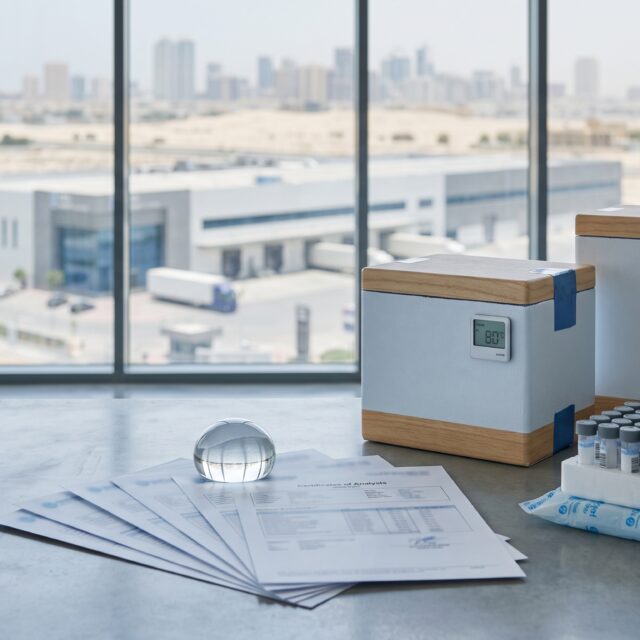
A Certificate of Analysis (COA) is a document issued by a laboratory detailing the precise composition of a batch of peptides. However, a supplier’s internal, self-published COA is not enough. You must look for independent, third-party testing that includes:
- HPLC (High-Performance Liquid Chromatography): This test determines the purity of the peptide. Reputable suppliers will standardise their inventory at 99% purity or higher. The HPLC graph should show one distinct, sharp peak, indicating that contaminants and synthetic by-products have been successfully stripped away.
- MS (Mass Spectrometry): This test verifies the molecular weight and identity of the compound, ensuring that the peptide in the vial is exactly what the label claims it is.
- Batch Specificity: The COA must correspond to the specific batch currently being sold, not a historical document from two years prior.
Before you explore available research compounds, ensure the supplier makes their third-party testing reports publicly accessible or readily available upon request.
Beating the Gulf Heat: Why Cold-Chain Shipping is Non-Negotiable
Perhaps the most overlooked aspect of sourcing peptides in the GCC is logistics. Kuwait experiences some of the highest summer temperatures globally, which poses a severe risk to laboratory reagents.
The Vulnerability of Lyophilised Peptides
Most research peptides are supplied in a lyophilised (freeze-dried) state. While this format is much more stable than reconstituted liquid, prolonged exposure to extreme heat—such as sitting in an unconditioned customs warehouse or a sun-baked delivery van—can cause the peptide bonds to degrade or denature. Degraded peptides yield inconsistent, compromised data in research settings.
Insulated and Temperature-Controlled Logistics
The best peptide shop in Kuwait is ultimately the one that can deliver the product to your door with its molecular integrity intact. This requires strict cold-chain shipping protocols.
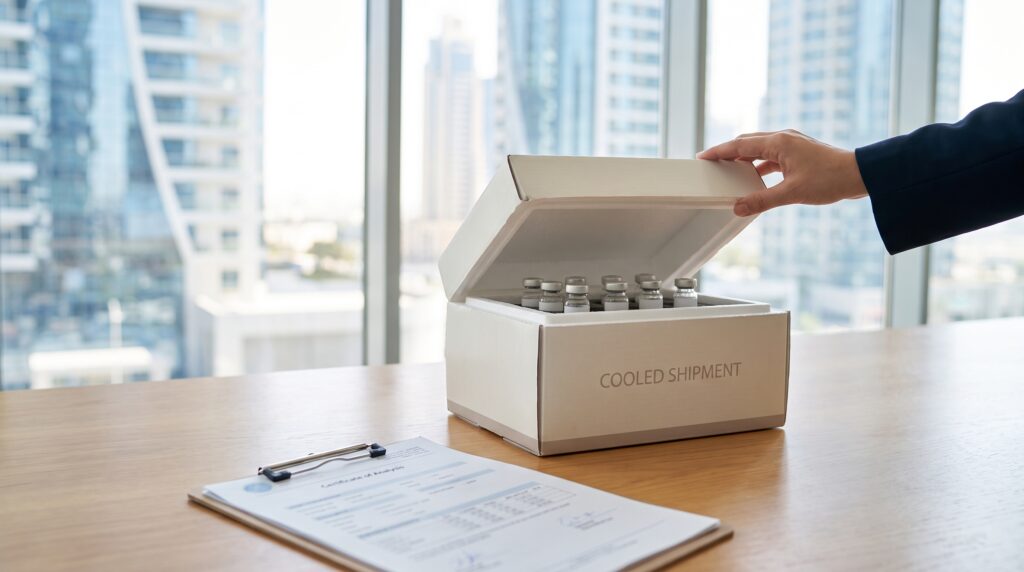
Top-tier regional suppliers pack shipments using insulated thermal mailers and industrial gel packs. This micro-environment keeps the internal temperature stable during the critical 48 to 72 hours it takes for a parcel to move from a UAE dispatch facility through Kuwaiti customs and out for final delivery. If a supplier does not explicitly outline their temperature-control methods for Gulf shipments, they are not a viable option for Kuwait-based researchers.
Navigating Customs and Compliance
Cross-border shipping within the GCC is generally efficient, but only if the supplier understands proper documentation. Research compounds must be accurately declared to pass smoothly through Kuwait’s customs infrastructure.
Professional suppliers declare these shipments accurately as ‘In-Vitro Research Use Only’ (RUO) laboratory reagents. This classification aligns with GCC framework standards for non-pharmaceutical, non-consumable scientific supplies, preventing unnecessary holds or confiscations at the border.
Why Researchers Turn to NOVA Labs for Kuwait Deliveries
When evaluating the criteria for a reliable supplier—purity verification, robust logistics, and regional expertise—NOVA Labs stands out as a premier partner for buyers in Kuwait.
Operating from our advanced UAE fulfilment hub, we bridge the gap between world-class laboratory standards and the logistical realities of the GCC. While we are renowned for our expedited UAE shipping network, this exact same infrastructure allows us to dispatch securely packaged, temperature-controlled shipments to Kuwait, typically arriving within 2 to 5 business days.
Key operational advantages include:
- Publicly Visible Testing: We rely on independent third-party laboratories to conduct HPLC and MS testing on every batch, ensuring transparency before you order.
- GCC-Optimised Cold-Chain: Every international GCC shipment is prepared to withstand regional temperatures, protecting your research investment.
- Responsive Regional Support: We understand that researchers need quick answers. Our dedicated WhatsApp support channel provides fast, direct communication for stock checks, COA requests, and delivery tracking.
- Local Currency Convenience: Pricing and payment gateways are structured to seamlessly accommodate GCC buyers without exorbitant conversion fees.
Final Thoughts on Sourcing Peptides in the GCC
Securing high-quality compounds requires diligence. The reality is that the best peptide shop kuwait researchers can rely on is not a local retail storefront, but a specialised, compliant regional supplier equipped to handle the unique demands of the Gulf.
By prioritising independent HPLC and MS testing, insisting on rigorous cold-chain logistics, and selecting a supplier that understands GCC customs frameworks, you can confidently source the materials needed for your laboratory work. Always verify the documentation, ask questions about shipping protocols, and choose partners that prioritise scientific integrity over marketing hype.
*
Disclaimer: The products mentioned in this article are for research purposes only and are not intended for human consumption.
References
- Kuwait Ministry of Health (MOH) Drug Control Regulations & Import Guidelines.
- GCC Standardisation Organisation (GSO) frameworks for Laboratory Reagents and In-Vitro supplies.
- Principles of Lyophilisation and Temperature Stability in Synthetic Peptides (Journal of Pharmaceutical Sciences).
- Nova Labs Review 2026: UAE Peptide Supplier COA and Cold-Chain Audit
- NOVA Labs UAE Review 2026: COA Audit, Prices and Delivery – PeptideStat
- NOVA Biolabs vs Peptides Lab UAE Bahrain | 2026 Supplier
- Kuwait Pharmaceutical Import & Registration: 2026 UK Exporter Guide – Euro Biom
- Looking for an Endocrinologist that is open to consider Peptides : r/Kuwait – Reddit
- Shipping & Returns – Peptides DXB
- Research Peptide Suppliers UAE | Lab Supply & Verification – VaultLabs
Frequently asked questions
Can I buy research peptides at local pharmacies in Kuwait?
No. Due to Ministry of Health (MOH) regulations, local pharmacies in Kuwait only stock cosmetic peptides and oral supplements like collagen. Injectable research-grade compounds must be sourced from specialised regional suppliers.
How long does shipping take from the UAE to Kuwait?
When ordering from a reputable regional supplier like NOVA Labs, expedited delivery from the UAE to Kuwait typically takes between 2 to 5 business days, including customs clearance.
Why is cold-chain shipping important for Kuwait peptide orders?
Kuwait experiences extreme heat that can degrade and denature lyophilised research compounds. Cold-chain shipping using insulated mailers and gel packs ensures the materials remain stable during transit.
How can I verify the purity of a peptide before buying?
You should request or view the supplier's Certificate of Analysis (COA) from an independent, third-party laboratory. This document should include HPLC testing for purity and Mass Spectrometry (MS) to verify the compound's identity.
Are peptide shipments to Kuwait stopped by customs?
When properly declared as 'In-Vitro Research Use Only' (RUO) laboratory reagents by an experienced GCC supplier, shipments typically clear customs smoothly and compliantly without unnecessary delays.
Nova Labs buyer tools
Ready to verify stock, testing and delivery?
Use the product page and lab report section to check availability, documentation, delivery timing and support before placing an order.
- COA / test-report checks
- Kuwait delivery context
- Cold-chain handling
- COD and card payment options
- WhatsApp support