



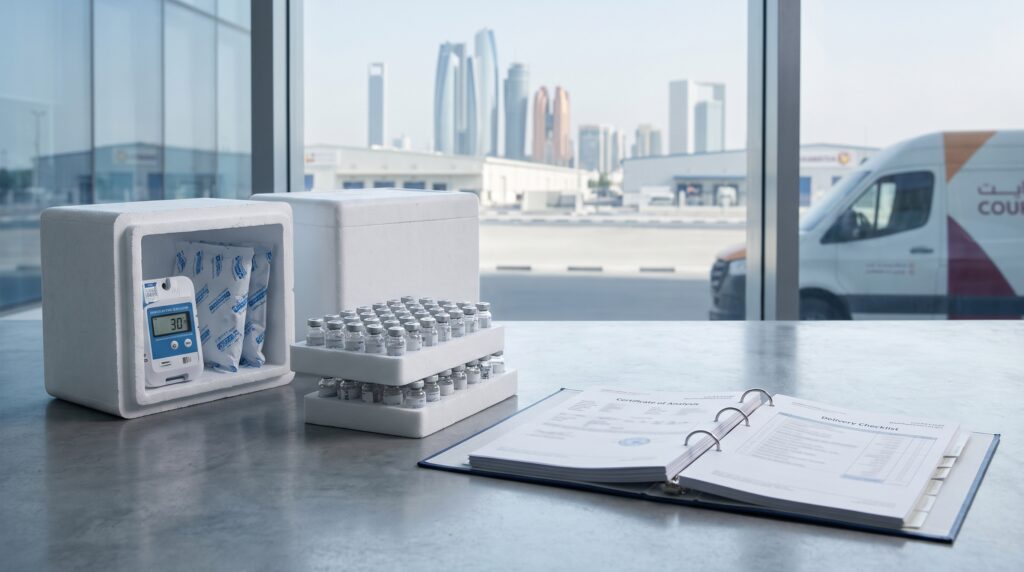
The landscape of laboratory procurement in the GCC is undergoing rapid transformation, placing intense pressure on research facilities and procurement managers to formalise their supply chains. Procuring wholesale peptides bahrain is no longer just about locating a vendor with an extensive catalogue; it is about navigating stringent customs categorisations, validating chemical purity through independent documentation, and mitigating the immense risks posed by the region’s extreme climate.
With regulatory bodies tightening oversight across the Gulf, authentic B2B peptide sourcing is now strictly bifurcated. On one side are clinical-grade therapeutic imports governed by Bahrain’s National Health Regulatory Authority (NHRA); on the other are chemical reagents designated exclusively for laboratory research. For procurement staff, distinguishing between the two—and ensuring flawless logistical execution—is the foundation of successful bulk purchasing.
Quick Answer: Sourcing Wholesale Peptides in Bahrain
When sourcing wholesale peptides bahrain, procurement staff must prioritise suppliers offering verified HPLC/MS Certificates of Analysis and unbroken 2–8°C cold-chain logistics. Successful importation requires classifying products accurately as laboratory research reagents and managing customs pre-approvals through Bahrain’s OFOQ digital clearance system, completely avoiding grey-market vendors.
Navigating NHRA Guidelines and the OFOQ Clearance System
Bahrain operates a highly digitised, heavily regulated import ecosystem. All medical, pharmaceutical, and chemical shipments intersect with the National Health Regulatory Authority (NHRA) and the Ministry of Interior’s customs framework.
For laboratories bringing in bulk research materials, the web-based OFOQ system is the primary hurdle. Developed by Customs Affairs, OFOQ mandates that the importing entity possesses a valid Commercial Registration (CR) and submits detailed documentation prior to the shipment’s arrival at Bahraini ports.
A critical distinction exists in Bahraini law between therapeutic medicines and research chemicals:
- Therapeutic Peptides: If a peptide is imported for clinical or therapeutic use, it is subject to the NHRA-MVC (Medical Value Chain) Traceability Hub. This law mandates GS1 2D DataMatrix barcodes, serialisation, and a requirement that the product be licensed in at least two GCC countries (including Saudi Arabia).
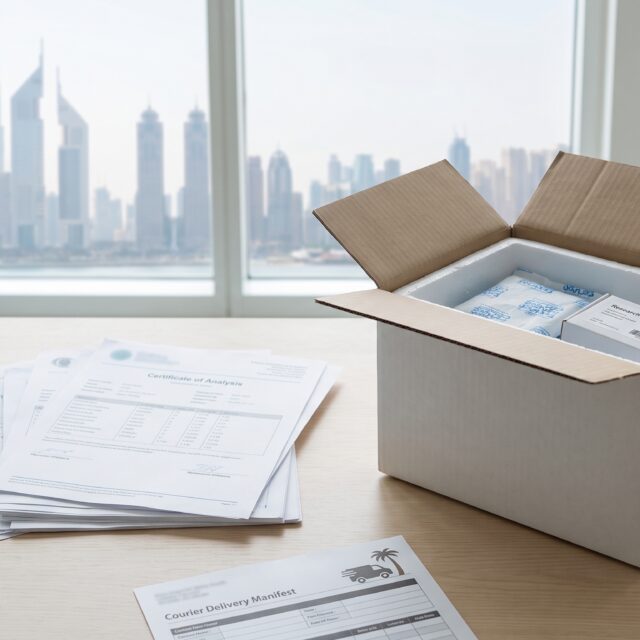
- Research Reagents: Bulk compounds intended for in vitro laboratory use must be explicitly invoiced, categorised, and labelled as chemical reagents. This categorisation bypasses the MVC serialisation intended for human medicines but places a heavier burden on the importer to provide robust Safety Data Sheets (SDS) and clear commercial invoices demonstrating the non-clinical nature of the goods.
Failing to establish this distinction correctly before shipping often results in detained cargo, which, given the climate, can rapidly lead to product degradation.
The Regional Context: GCC Regulatory Crackdowns
The necessity for strict, research-only procurement has been heavily reinforced by recent events in neighbouring Gulf states. In mid-2023, the UAE’s Emirates Drug Establishment (EDE) and Qatar’s Ministry of Public Health (MoPH) executed extensive crackdowns on the unauthorised distribution of unapproved peptide products.
These enforcement actions targeted grey-market consumer sellers, social media influencers, and unlicensed WhatsApp brokers distributing compounds without proper scientific or medical authorisation. For a peptide wholesale supplier bahrain and its B2B clients, this regional shift acts as a clear warning. It makes a transparent, research-only scientific positioning mandatory. Laboratories must distance themselves from consumer-targeted vendors and partner exclusively with suppliers who operate within compliant, documented frameworks, treating peptides strictly as sensitive biochemical reagents.
The Cold-Chain Imperative: Protecting Bulk Peptides Bahrain Shipments
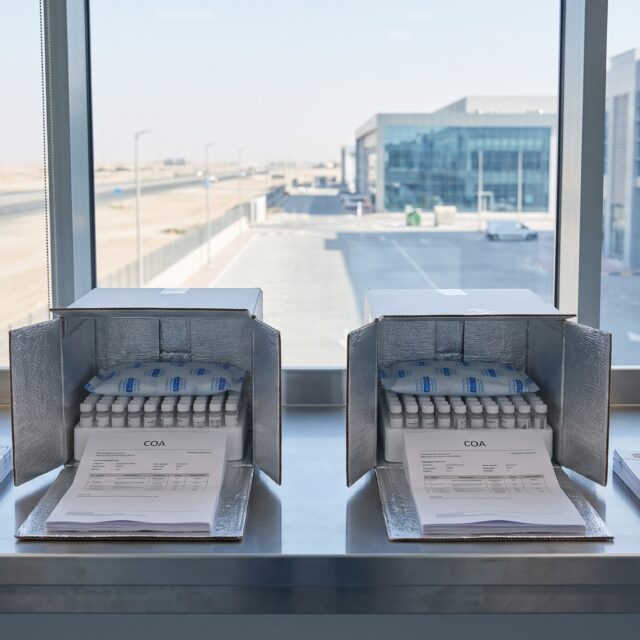
Perhaps the most pressing operational challenge when ordering bulk peptides bahrain is the extreme desert climate. Lyophilised (freeze-dried) peptides are highly susceptible to thermal degradation. Prolonged exposure to the high temperatures characteristic of the GCC summer can compromise the structural integrity of the amino acid chains, rendering the batch useless for precise scientific research.
Unbroken 2–8°C Logistics
Successful wholesale procurement requires a vendor capable of executing unbroken cold-chain logistics, typically maintaining the cargo at 2 to 8 degrees Celsius. This involves:
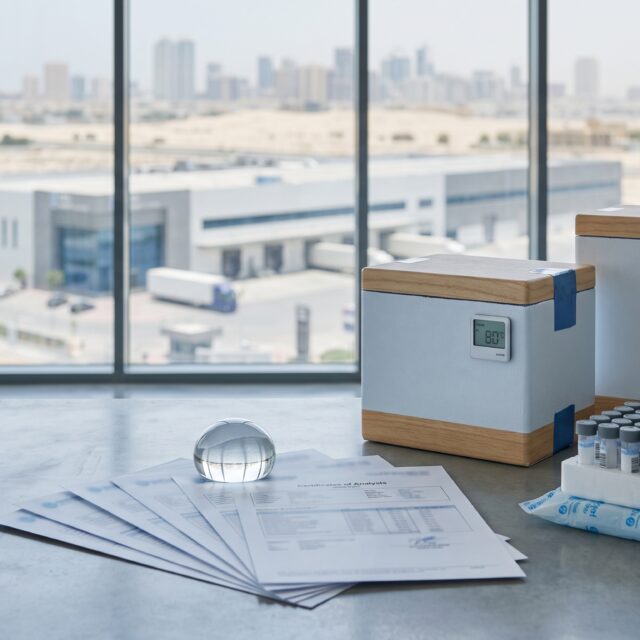
- Validated Packaging: The use of active cooling containers or carefully calibrated passive systems using phase-change materials.
- Transit Hub Coordination: Utilising the Bahrain Logistics Zone in Hidd and the capital city, Manama, which serve as the primary gateways and climate-controlled storage hubs for pharmaceutical and chemical cold storage.
- Clearance Speed: Because even the best passive cooling systems have time limits, pre-clearing goods through the OFOQ system is vital so that the shipment spends minimal time on the tarmac or in unconditioned holding zones.
Evaluating Your Peptide Wholesale Supplier Bahrain
When moving from single-vial purchases to bulk laboratory procurement, the financial and operational stakes increase significantly. Assessing a vendor goes far beyond comparing unit prices. A reliable supplier must demonstrate transparency and provide comprehensive batch data.
Certificate of Analysis (COA) and HPLC/MS Verification
The absolute gold standard for peptide verification is High-Performance Liquid Chromatography (HPLC) combined with Mass Spectrometry (MS). A legitimate supplier will provide a batch-specific COA that details:
- Purity Percentage: Confirming the absence of synthesis by-products, truncated sequences, or cross-contamination.
- Mass Verification: Ensuring the molecular weight of the synthesised peptide matches the theoretical weight of the compound.
- Testing Dates: Proving that the testing is current and corresponds to the specific batch being shipped.
Avoid suppliers who obfuscate their testing data, rely on outdated COAs, or refuse to provide Safety Data Sheets (SDS). In the GCC context, suppliers operating solely via WhatsApp without a formal web presence, transparent documentation, or verifiable corporate banking structures pose a severe supply chain risk.
Streamlining Your B2B Ordering with NOVA Labs
For research institutions, procurement managers, and laboratories evaluating suppliers in the region, establishing a relationship with a vendor that understands GCC logistics is paramount. NOVA Labs provides comprehensive support for B2B buyers seeking high-purity, documented research compounds.
Procurement teams can explore our scalable solutions, detailed COA provisions, and cold-chain operational standards through our dedicated B2B portal. To review documentation standards, apply for wholesale pricing, or discuss regional shipping coordination, visit the NOVA Labs Wholesale page.
For facilities looking to trial smaller batches before committing to high-volume procurement, our standard catalogue provides immediate access to documented reagents. You can review our full inventory and individual batch reports at the NOVA Labs Shop.
Strategic Procurement: A Checklist for Bahrain Labs
To ensure a seamless procurement cycle when ordering wholesale peptides in Bahrain, researchers should implement the following checklist:
- Validate Registration: Ensure your facility’s Commercial Registration (CR) is updated and registered within the OFOQ system for chemical imports.
- Request Documentation Early: Secure the SDS, commercial invoice, and batch-specific HPLC/MS COA from the supplier before the goods leave their origin facility.
- Confirm Categorisation: Verify that the commercial invoice explicitly states the goods are “For Laboratory Research Use Only” to prevent confusion with therapeutic medicines regulated by the NHRA-MVC.
- Audit the Cold Chain: Confirm the supplier’s packaging methodology (active vs. passive cooling) and their experience shipping to the Bahrain Logistics Zone.
- Avoid the Grey Market: Decline offers from unverified social media sellers in light of recent GCC-wide crackdowns on undocumented peptide distribution.
Conclusion
Procuring wholesale research peptides in Bahrain requires a strategic balance of scientific verification, regulatory compliance, and logistical precision. By understanding the distinct boundaries set by the NHRA, leveraging the OFOQ clearance system, and insisting on unbroken 2–8°C cold-chain transport, laboratories can secure the high-purity reagents necessary for their work. Above all, partnering with a vendor capable of supplying transparent HPLC/MS documentation is the strongest defence against the financial and operational risks of the grey market.
*
References:
- National Health Regulatory Authority Bahrain (NHRA). Guidelines on the Importation of Medical and Pharmaceutical Products.
- Customs Affairs, Ministry of Interior, Kingdom of Bahrain. OFOQ System Operational Directives.
- Cosmotrace. “NHRA Bahrain Serialization Guideline for Pharma Companies.”
- Gulf News. “UAE Cracks Down on Unapproved Peptide Drugs: Sources and Influencers Face Action.”
Disclaimer: The products mentioned in this article are strictly for laboratory research purposes only and are not intended for human consumption or therapeutic use.
References
- Importation – National Health Regulatory Authority Bahrain
- UAE Cracks Down on Unapproved Peptide Weight-Loss Drugs: 71 Sources and 14 Influencers Face Action – Gulf News
- NHRA Bahrain Serialization Guideline for Pharma Companies – Cosmotrace
- Bahrain – Prohibited and Restricted Imports – International Trade Administration
- Cold Chain Peptide Delivery Bahrain: Logistics, Heat & Sourcing – NOVA Labs
- The Essentials of a Successful Cold Chain- DHL Global Forwarding – Bahrain
Frequently asked questions
Do wholesale peptides in Bahrain require NHRA pre-approval?
Yes, all medical and chemical imports into Bahrain are monitored by the NHRA. However, peptides classified strictly as chemical reagents for laboratory research follow a different clearance pathway via the OFOQ system than clinical therapeutics, which require NHRA-MVC serialisation.
What is the optimal storage temperature for bulk peptide shipments to the GCC?
Lyophilised research peptides should be shipped and stored via an unbroken cold chain, typically maintained between 2 and 8 degrees Celsius, to prevent degradation in extreme Gulf heat.
What documentation is required to clear research peptides through Bahrain customs?
Importers typically need a valid Commercial Registration (CR) registered in the OFOQ system, a Safety Data Sheet (SDS), a Certificate of Analysis (COA), and a commercial invoice explicitly stating the goods are for laboratory research use only.
How can procurement teams verify the purity of a bulk peptide order?
Procurement teams should require a batch-specific Certificate of Analysis (COA) from the supplier that includes High-Performance Liquid Chromatography (HPLC) and Mass Spectrometry (MS) data to confirm chemical purity and molecular weight.
Nova Labs buyer tools
Ready to verify stock, testing and delivery?
Use the product page and lab report section to check availability, documentation, delivery timing and support before placing an order.
- COA / test-report checks
- Bahrain delivery context
- Cold-chain handling
- COD and card payment options
- WhatsApp support