



Procuring wholesale peptides saudi arabia presents a unique set of logistical, environmental, and regulatory challenges for laboratory managers, procurement directors, and independent researchers. Between strict ZATCA customs regulations, rigorous Saudi Food and Drug Authority (SFDA) classifications, and ambient summer temperatures that routinely exceed 45°C across the GCC, sourcing high-purity research compounds requires a supplier who inherently understands regional supply chain dynamics. Relying on standard international shipping for sensitive biomolecular materials often results in compromised compounds, degraded structural integrity, or indefinite delays at the border.
Quick Answer: Buyer Checklist for Saudi Peptide Procurement
If you are sourcing research peptides for your KSA-based facility, ensure these critical parameters are met before initiating a bulk purchase order:
- Thermal Logistics: Utilize a UAE-based supplier. Regional dispatch guarantees 4-5 business day delivery, bypassing the multi-week transit times of Western or Asian suppliers.
- Format Requirements: Exclusively order lyophilized (freeze-dried) powder. Liquid peptides will degrade rapidly during Middle Eastern transit.
- Customs Compliance: Verify that commercial invoices explicitly label the shipment as “Chemical Reagents for Laboratory Research Only” to align with ZATCA FASAH and SABER requirements.
- Quality Assurance: Demand batch-specific, third-party HPLC (High-Performance Liquid Chromatography) and MS (Mass Spectrometry) reports proving >99% purity before authorizing institutional purchases.
Thermal Mitigation: Why Regional UAE Hubs Outperform Direct Imports
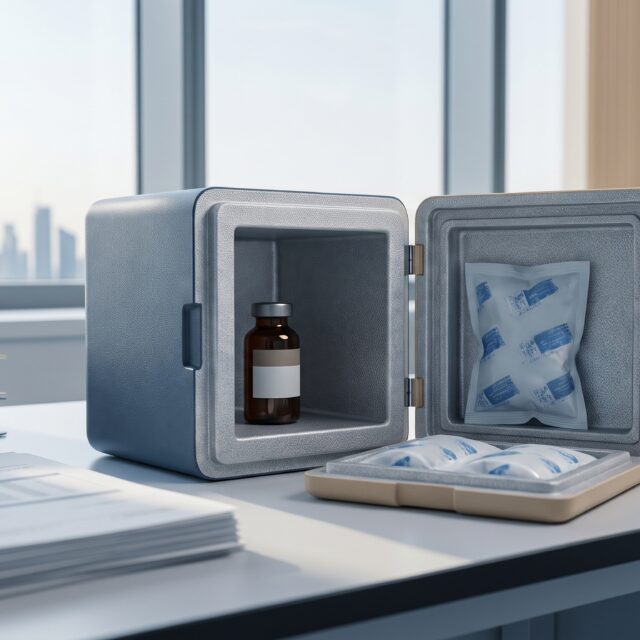
The most immediate threat to peptide integrity during Middle Eastern transport is thermal degradation. Peptides are essentially fragile chains of amino acids. When exposed to sustained heat, their peptide bonds break down—a process known as hydrolysis. For a peptide wholesale supplier in Saudi Arabia to be viable, their shipping methodology must be built entirely around extreme heat mitigation.
To survive the GCC climate, bulk peptides must be shipped in a lyophilized powder format rather than in a liquid solution. Lyophilization removes the moisture that accelerates degradation, significantly stabilizing the compound during transit. However, even freeze-dried compounds possess absolute thermal limits. Ordering direct from international suppliers often entails weeks in transit, unpredictable customs holds, and multi-day layovers in unrefrigerated international cargo hubs.
A localized UAE-based supply chain bypasses this vulnerability completely. By utilizing a neighboring hub, laboratories reduce the structural risk to their compounds by completing final-mile delivery across the Saudi border in just a few business days. This geographic proximity also ensures dedicated regional support via WhatsApp for real-time tracking, allowing lab staff to prepare cold-storage facilities precisely when the shipment arrives at their facility.
Navigating the Regulatory Landscape: ZATCA, FASAH, and SFDA Rules
Importing biochemicals into the Kingdom of Saudi Arabia requires careful adherence to institutional frameworks. The Saudi Food and Drug Authority (SFDA) alongside the Ministry of Health (MOH) have intensified their oversight on the importation of unregistered compounds to prevent consumer misuse.
For B2B procurement managers and bulk researchers, this means the documentation accompanying your shipment must explicitly categorize the compounds as chemical reagents for laboratory research, completely devoid of any therapeutic, medical, or dietary claims. Any deviation can cause the e-GHAD system to flag the shipment for reclassification, leading to prolonged delays or complete seizure.
Furthermore, commercial shipments entering KSA must clear through the FASAH digital single-window platform, operated by the Zakat, Tax and Customs Authority (ZATCA). The SABER platform, managed by SASO, is also utilized for product conformity certificates. A frequent bottleneck for B2B procurement is an HS Code mismatch between the SABER certificate and the ZATCA FASAH declaration. Sourcing from experienced regional distributors ensures that the commercial invoices, packing lists, and HS codes are properly standardized for rapid clearance, preventing your bulk materials from languishing in hot customs hold facilities.
Quality Assurance: Evaluating Third-Party COAs
Whether establishing a long-term institutional trade account or making an independent consumer-intent bulk purchase, evaluating the supplier’s quality control process is the most critical step in procurement. Do not accept internal, self-generated purity claims. High-tier research demands independent verification.
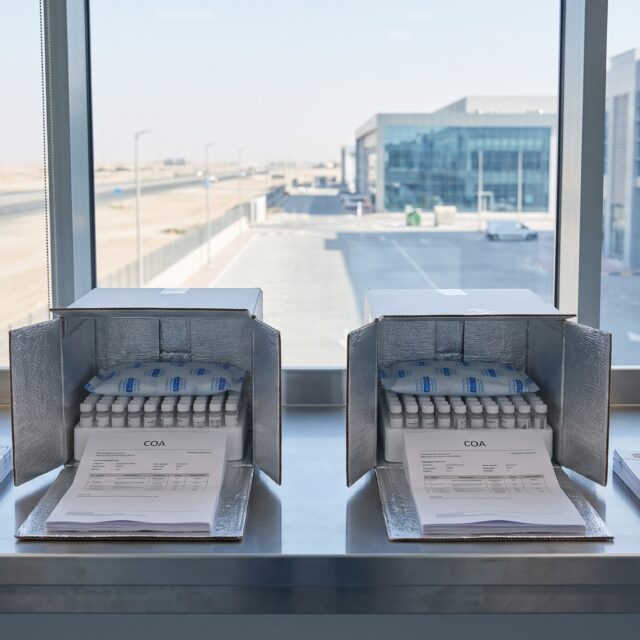
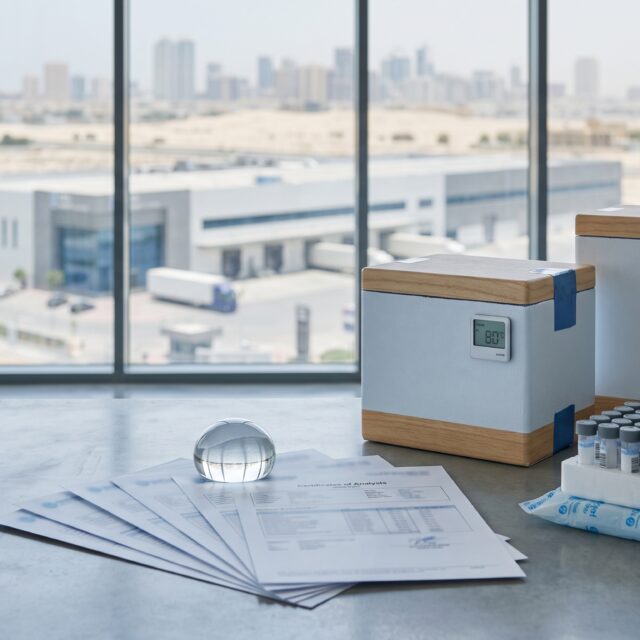
You must request recent Certificates of Analysis (COA) from an independent, accredited third-party laboratory. A valid COA must include two critical analytical reports:
- Mass Spectrometry (MS): This verifies the true identity of the compound. The MS report measures the mass-to-charge ratio of the ions, confirming that the molecular weight of the vial’s contents perfectly matches the theoretical molecular weight of the requested peptide.
- High-Performance Liquid Chromatography (HPLC): This verifies the absolute purity of the compound. The HPLC graph should show a single, sharp peak. The “Area Under the Curve” (AUC) for this main peak must exceed 99%, indicating that the synthesis process successfully removed truncated amino acid sequences and manufacturing impurities.
Without these specific documents, a bulk purchase is a blind financial and scientific risk. In precisely controlled in-vitro studies—such as those evaluating metabolic pathways, cellular respiration, or tissue regeneration using compounds like Retatrutide, MOTS-c, or 5-Amino-1MQ—even a 2% impurity rate can skew analytical readouts and invalidate costly experimental trials.
Financial and Operational Flexibility in GCC Procurement
A major differentiator among regional peptide distributors is how they handle financial transactions and account onboarding. Legacy B2B suppliers often require rigid, traditional wire transfers and months-long institutional vetting processes. This can severely bottleneck research timelines, especially for independent laboratories or fast-moving biotechnology startups.
Modern, agile suppliers accommodate a variety of procurement models designed specifically for the modern GCC laboratory. This includes secure corporate credit card processing, cryptocurrency options for decentralized researchers, and seamless integrations with local payment gateways like Tamara. Flexible payment structures allow laboratories to manage their cash flow efficiently while securing necessary quarterly stock without administrative friction.
Post-Delivery Storage and Handling Protocols
Because advanced metabolic research peptides are highly sensitive biomolecules, their post-delivery storage is just as vital as their transit protocol. Upon receiving your bulk order from a UAE hub, the lyophilized vials must be immediately inspected against the packing list and transferred to a -20°C commercial laboratory freezer.
Proper cold storage arrests any residual chemical degradation, ensuring that the un-reconstituted compounds remain stable and viable for up to 24-36 months. When preparing for an in-vitro experiment, vials should be allowed to reach room temperature naturally before reconstitution.
Reconstituting the peptide requires specific laboratory diluents, such as bacteriostatic water, sterile water, or Phosphate-Buffered Saline (PBS), depending on the requirements of your specific assay. Once reconstituted into a liquid state, the compound’s shelf life dramatically decreases to roughly 14-30 days under standard refrigeration (2°C to 8°C). Researchers must also take strict care to minimize freeze-thaw cycles of liquid peptides, as repeated temperature fluctuations will permanently shatter the peptide bonds.
Conclusion and Next Steps
Securing wholesale peptides saudi arabia is a precise logistical operation that requires balancing compound stability with strict regional customs compliance. By insisting on independent HPLC/MS testing, mandating lyophilized shipping formats, and leveraging the speed of UAE-based distribution networks, Saudi laboratories and informed researchers can safely bypass the pitfalls of international cold-chain failure.
Always ensure your facility is prepared for strict temperature-controlled storage upon receipt, and partner with a supplier that backs their inventory with transparent, batch-specific documentation and responsive regional support.
If your laboratory is ready to streamline its procurement process, explore our dedicated wholesale peptide purchasing options designed specifically for seamless GCC clearance and robust B2B support. For independent researchers looking to evaluate smaller batches before scaling up to institutional bulk orders, you can view our complete research peptide shop to review available COAs, check live inventory, and confirm regional delivery parameters.
Disclaimer: The products mentioned in this article are strictly for laboratory research purposes only and are not intended for human consumption, diagnostic, or therapeutic use.
*
References
- “SABER ZATCA Compliance Integration Guide 2026.” SASO Digital Gateways.
- “Saudi Restricted Imports 2026: SFDA & Approvals.” Kisun Shipping Logistics.
- “Customs Clearance in Saudi Arabia | B2B Guide.” Ahmed Bahkali Logistics.
- “MoH Warns Against Using Unregistered Compounds.” Saudi Ministry of Health Official Announcements.
- Wholesale Peptides Saudi Arabia: B2B Supplier & Procurement – NOVA Labs
- Nova Biolabs vs Peptides Lab UAE: 2026 KSA Sourcing Guide
- Buy MOTS-c in Saudi Arabia | Reliable Suppliers & COA Guide – NOVA Labs
- MoH Warns Against Using Unregistered Drugs and Seizes Violators
- SABER ZATCA Compliance Integration Guide 2026 Report
- Saudi Restricted Imports 2026: SFDA, GACA & CST Approvals – Kisun Shipping
- Customs Clearance in Saudi Arabia | Complete Guide 2026 – Ahmed Bahkali Logistics
Frequently asked questions
How can I buy wholesale peptides in Saudi Arabia for laboratory research?
Procuring wholesale peptides in Saudi Arabia requires sourcing from regional UAE hubs to prevent heat degradation. Buyers must ensure the supplier provides lyophilized compounds and uses accurate ZATCA commercial documentation, declaring the items strictly as chemical research reagents.
How long does peptide delivery take to Saudi Arabia from the UAE?
Delivery from a UAE regional hub to major Saudi cities typically takes 4 to 5 working days. This rapid transit minimizes the time sensitive research compounds spend in transit compared to direct international imports, preserving structural integrity.
What documentation is required for bulk peptide clearance through ZATCA?
Commercial shipments require accurate HS codes matching ZATCA FASAH declarations, SABER product conformity certificates, and commercial invoices that explicitly state the items are chemical reagents for laboratory research purposes only.
Why is lyophilized powder required for peptide shipping in the GCC?
Liquid peptides degrade rapidly when exposed to extreme Middle Eastern ambient temperatures. Lyophilized, or freeze-dried, powder removes moisture and stabilizes the molecular structure, allowing the compound to survive transit before proper laboratory reconstitution.
How do I verify the purity of bulk peptides before authorizing a purchase order?
Always request recent third-party Certificates of Analysis (COA) that include High-Performance Liquid Chromatography (HPLC) and Mass Spectrometry (MS) reports. These documents confirm the molecular identity matches the label and that purity levels exceed 99 percent.
Nova Labs buyer tools
Ready to verify stock, testing and delivery?
Use the product page and lab report section to check availability, documentation, delivery timing and support before placing an order.
- COA / test-report checks
- Saudi Arabia delivery context
- Cold-chain handling
- COD and card payment options
- WhatsApp support