
Preparing lyophilised compounds for laboratory analysis requires precision, and the diluent you select is just as critical as the primary compound itself. For procurement specialists and researchers operating in Dubai, Abu Dhabi, or Riyadh, finding reliable solvents remains a frequent operational hurdle. Local physical pharmacies rarely carry the correct multi-use diluents, leaving researchers searching for compliant and secure alternatives.
When evaluating bacteriostatic water for peptides, GCC researchers must understand the local sourcing dilemma, the chemical differences between standard solvents, and how extreme Gulf temperatures dictate strict cold-chain handling protocols.
Quick Answer: What is Bacteriostatic Water For Peptides GCC?
Bacteriostatic water is a sterile diluent containing 0.9% benzyl alcohol that inhibits bacterial growth. When sourcing bacteriostatic water for peptides, GCC researchers require this specific solvent for multi-use vials, as standard sterile pharmacy water degrades rapidly after the initial puncture.
The Sourcing Dilemma: Why Dubai Pharmacies Fall Short
Researchers new to the region often expect to find appropriate solvents at their local physical pharmacy. However, procuring bacteriostatic water for peptides in GCC retail environments is notoriously difficult. Physical pharmacies in the UAE and wider Gulf region primarily serve standard healthcare consumers, meaning their inventory is built around immediate, single-use medical supplies.
If you walk into a local pharmacy in Dubai or Riyadh requesting water for laboratory reconstitution, you will almost certainly be handed standard sterile water for injection. While this is entirely appropriate for immediate, single-draw use, it is chemically inadequate for multi-draw research protocols.
Because bacteriostatic water is typically classified for specialised or research-focused laboratory use, it is largely sourced through dedicated research chemical suppliers rather than retail medical outlets. Relying on specialised regional providers ensures that laboratories receive solvents correctly categorised under Research Use Only (RUO) parameters, fully compliant with GCC laboratory import standards.
Preservatives Matter: Bacteriostatic vs. Sterile Water
The fundamental difference between diluents lies in their preservative content, which directly dictates the lifespan and safety of your research compounds.
Sterile Water for Injection
Standard sterile water contains no preservatives. The moment the vial seal is punctured, the contents are exposed to potential airborne contaminants. Because there is no chemical agent to suppress bacterial proliferation, any remaining liquid must be discarded immediately after the first draw. If a researcher attempts to use unpreserved sterile water for a multi-use protocol, they risk introducing rapid bacterial degradation into their primary research vial.
Bacteriostatic Water
Bacteriostatic water includes exactly 0.9% benzyl alcohol. This precise formulation does not harm the lyophilised powder upon reconstitution, but it aggressively inhibits the replication of most bacteria. Consequently, a single vial of bacteriostatic water—and the compounds it reconstitutes—can be accessed multiple times over an in-use period of up to 28 days without compromising sterility, provided strict laboratory hygiene is maintained.
This 28-day window is a hard limit. Even with benzyl alcohol present, the integrity of the diluent degrades over time. Laboratories should enforce strict labelling protocols, marking the initial puncture date on every vial to ensure protocols do not extend past the 28-day viability threshold.
Protecting Your Research from Gulf Heat
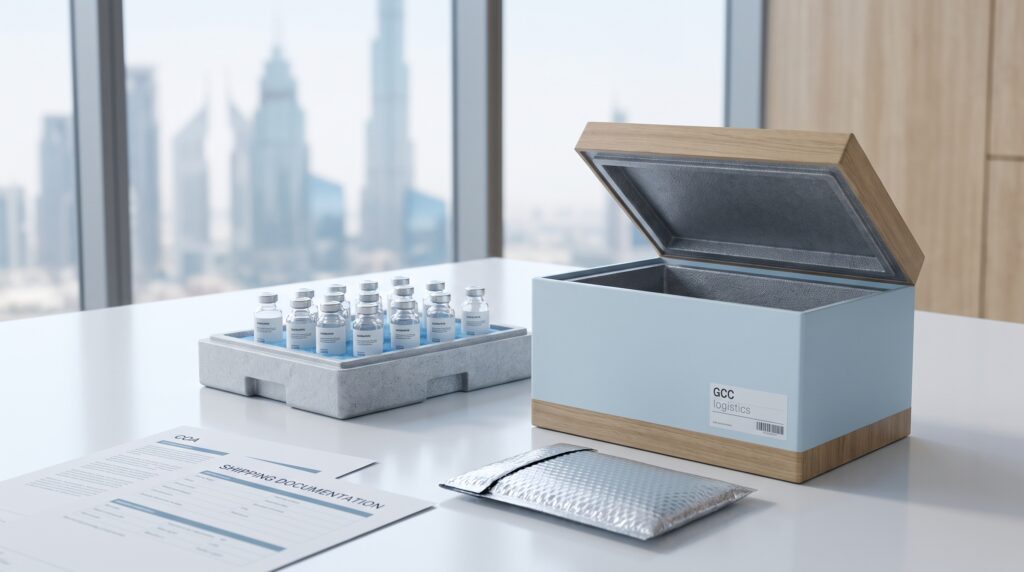
The extreme climate of the GCC presents unique logistical hurdles for handling sensitive research materials. With summer temperatures frequently exceeding 45 degrees Celsius across the UAE and Saudi Arabia, passive shipping methods are a severe risk to product stability.
While lyophilised powders (the dry ‘cake’ form) are generally robust enough to survive short periods of elevated temperatures, bacteriostatic water and fully reconstituted liquids are highly vulnerable to thermal stress. Furthermore, once a lyophilised compound is mixed with bacteriostatic water, its structural stability fundamentally changes.
Reconstituted compounds must be immediately transferred to strict refrigerated conditions, maintained precisely between 2 and 8 degrees Celsius. They should never be subjected to direct sunlight or left in ambient laboratory temperatures. Repeated freeze-thaw cycles must also be strictly avoided, as these can mechanically shear the delicate chains within the solution.
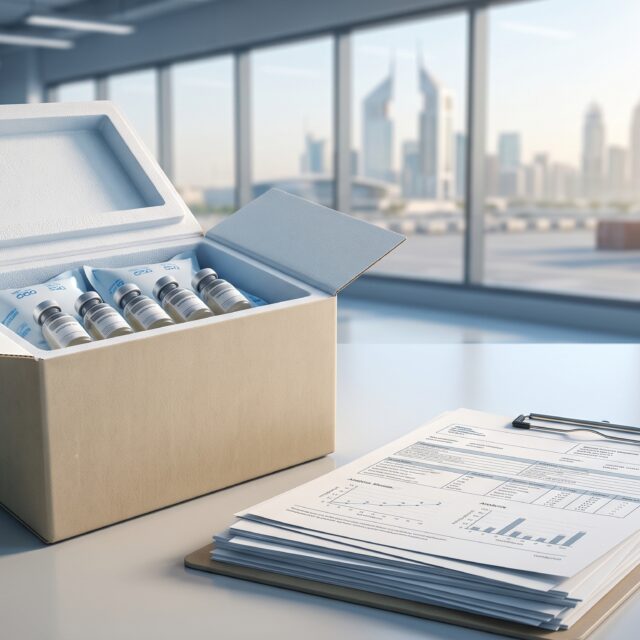
To mitigate thermal degradation during transit, it is essential to work with local suppliers who prioritise cold-chain logistics. Utilising specialised local dispatch services ensures that your materials are rapidly transported in controlled environments, bypassing the lengthy customs friction and prolonged heat exposure that frequently plague international shipments into the Gulf.
Reconstitution Mechanics: Safely Mixing in the Lab
The physical act of introducing bacteriostatic water to a lyophilised powder requires a delicate touch. Improper handling during the reconstitution phase is one of the leading causes of compound degradation in GCC laboratories.
Follow these procedural best practices for optimal stability:
- Temperature Equalisation: Allow both the bacteriostatic water and the lyophilised vial to reach room temperature for a few minutes before mixing. This reduces the pressure differential and thermal shock.
- Pressure Management: When drawing the diluent, inject an equivalent volume of air into the bacteriostatic water vial to prevent a vacuum from forming, which can make drawing the liquid difficult.
- Controlled Introduction: Never plunge the diluent directly into the fragile lyophilised cake. The mechanical force of a direct stream can damage complex molecular structures. Instead, angle the receiving vial and slowly depress the plunger so the bacteriostatic water runs gently down the inner glass wall.
- Gentle Integration: Do not aggressively shake the vial to dissolve the powder. Vigorous agitation creates foam and introduces air bubbles, signalling potential structural shear. Instead, hold the vial between your thumb and index finger and swirl it in a slow, gentle, circular motion until the solution is entirely clear.
Verifying Your GCC Supplier Before Procurement
When formulating a bacteriostatic water for peptides guide GCC procurement strategy, supplier verification is the final critical step. Because these materials are crucial to data accuracy, buying decisions should never be based solely on price.
Informative procurement relies on evaluating several local operational signals:
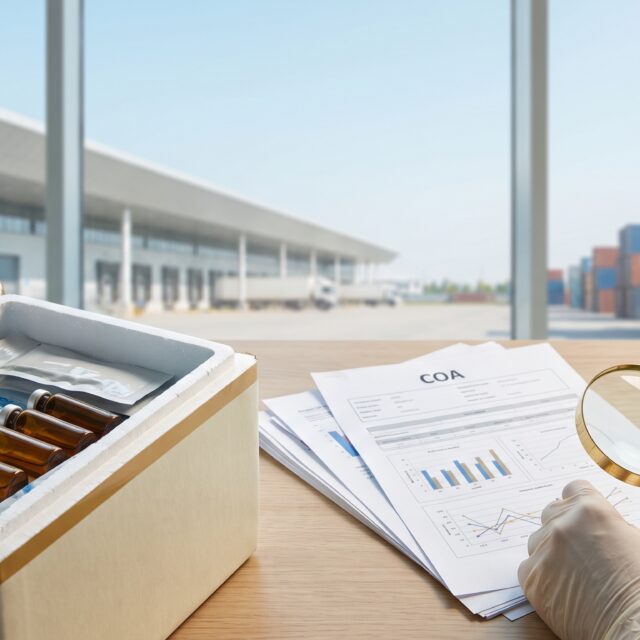
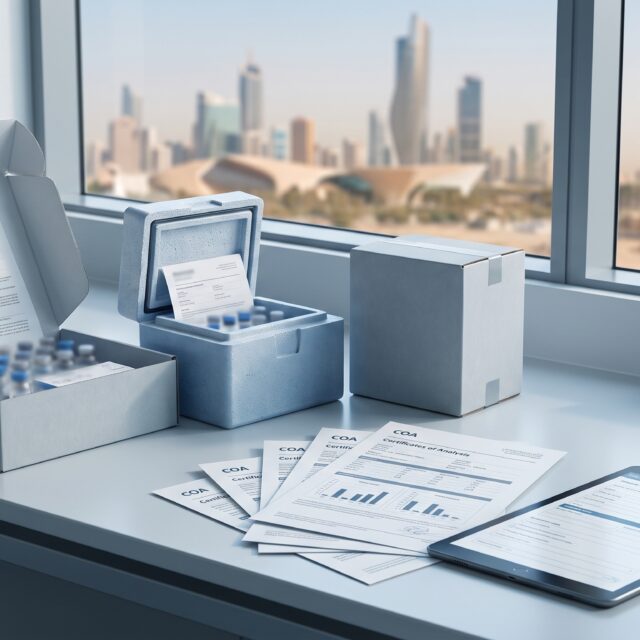
- Transparent Documentation: Does the supplier provide accessible Certificates of Analysis (COAs) and third-party High-Performance Liquid Chromatography (HPLC) test results for their primary compounds?
- Local Logistics Infrastructure: Do they dispatch from within the UAE/GCC to prevent lengthy customs delays? A provider relying on drop-shipping from overseas cannot guarantee the thermal stability of the parcel upon arrival in Dubai.
- Accessible Support & Payments: Reputable regional suppliers offer seamless communication (such as responsive WhatsApp business support) and secure local checkout options, including AED transactions or Cash on Delivery (COD), which minimises buyer risk.
At NOVA Labs, we understand the operational realities of the UAE market. We maintain local stock to ensure rapid, thermally secure dispatch and provide full transparency regarding our Research Use Only catalogue. Researchers seeking to streamline their procurement can explore our complete NOVA Labs catalogue to review available stock and related analytical documentation.
Conclusion: Navigating Diluent Sourcing Safely
Sourcing bacteriostatic water for peptides requires navigating around retail pharmacy limitations and adapting to extreme environmental heat. By understanding the critical role of benzyl alcohol in preserving multi-draw vials, maintaining strict refrigeration protocols post-reconstitution, and relying on verified local supply chains, researchers can eliminate contamination risks and protect their valuable compounds.
Ensure your laboratory operations remain precise and unimpeded. Verify your supplier’s logistics, demand proper documentation, and strictly adhere to the 28-day handling rule for all preserved solvents.
Disclaimer: The products mentioned in this article are for research purposes only and are not intended for human consumption or therapeutic use.
References
- United States Pharmacopeia (USP) <797> Guidelines on Pharmaceutical Compounding – Sterile Preparations and Beyond-Use Dates.
- PubChem Compound Summary for CID 244, Benzyl Alcohol (Antimicrobial Preservative Properties).
- Regional UAE Customs and Import Regulations for Laboratory Chemicals (Research Use Only parameters).
- Bacteriostatic Water UAE | 3ml & 10ml – VaultLabs
- Peptide Storage Temperature Sharjah: Practical Buyer Guide – NOVA Labs
- Buy Bacteriostatic Water – Peptides Lab UAE
- Bacteriostatic Water for Peptides: Use & Dilution Guide
- Research-grade vs pharmaceutical-grade peptides: how to actually tell the difference – DarDoc UAE
- How to Reconstitute Peptides: Step-by-Step Guide (2026)
Frequently asked questions
Can I buy bacteriostatic water at a local pharmacy in Dubai or the UAE?
Generally, no. Physical pharmacies in Dubai and the wider UAE primarily stock sterile water for single-use injections. Bacteriostatic water is classified for specialised laboratory or research use and must usually be procured through dedicated online research suppliers.
What happens if I use sterile water instead of bacteriostatic water?
Sterile water lacks the 0.9% benzyl alcohol preservative. If you use it to reconstitute a multi-use vial, you risk rapid bacterial contamination after the first draw, meaning the remaining solution must be discarded immediately to ensure safety.
How long does bacteriostatic water last after it is opened?
Once punctured, a vial of bacteriostatic water—and any compound it has been used to reconstitute—is viable for a maximum of 28 days when stored correctly in a refrigerated environment (2°C to 8°C).
How should I store my reconstituted compounds in the UAE heat?
Before mixing, store lyophilised powders away from direct sunlight in a cool, dark place or refrigerator. After reconstituting with bacteriostatic water, the solution must be immediately stored in a refrigerator at 2°C to 8°C and strictly protected from freezing.
Why shouldn't I shake the vial after adding the bacteriostatic water?
Aggressively shaking the vial causes foaming and mechanical shear, which can damage the fragile molecular structures of the compound. You should always dissolve the powder by gently swirling the vial in a slow, circular motion.
Nova Labs buyer tools
Ready to verify stock, testing and delivery?
Use the product page and lab report section to check availability, documentation, delivery timing and support before placing an order.
- COA / test-report checks
- GCC delivery context
- Cold-chain handling
- COD and card payment options
- WhatsApp support