



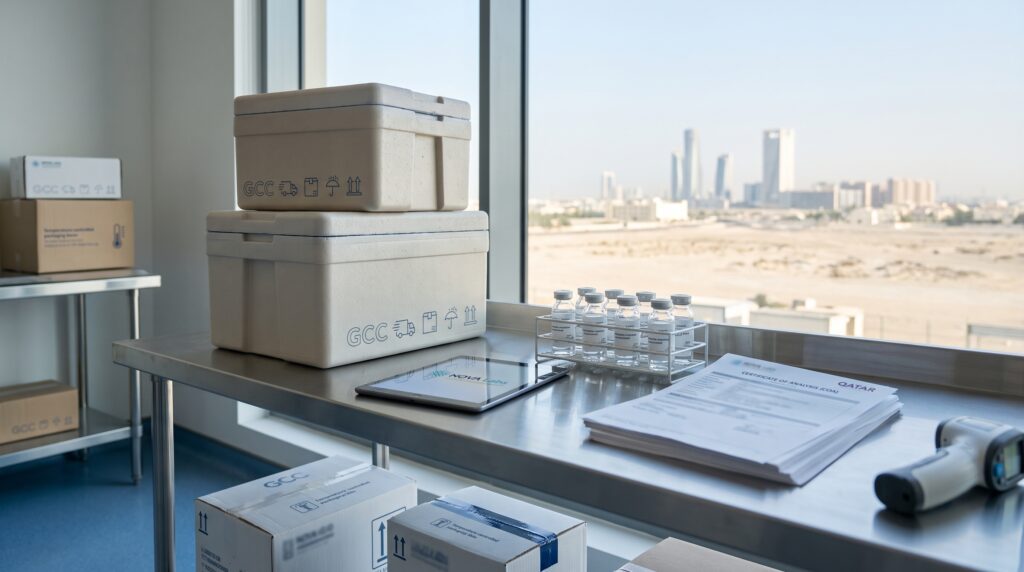
Quick Answer: Securing Wholesale Peptides in Qatar
To successfully source wholesale peptides in Qatar, procurement teams must prioritize suppliers offering strict research-use-only documentation, full Certificates of Analysis (COA), and accurate Harmonised System (HS) codes. Uninterrupted cold-chain logistics and compliance with the Al Nadeeb customs system are mandatory for GCC transit.
Procuring high-quality research compounds in bulk requires far more than finding a competitive price per vial. For research facilities, university laboratories, and B2B buyers operating in Doha and the wider Qatari market, the supply chain must be bulletproof. A disruption in customs or a failure in thermal packaging can instantly compromise a multi-month experimental programme.
This comprehensive guide outlines the critical operational checks—from navigating recent regulatory shifts and reading analytical data, to establishing secure institutional payment lines—that every buyer must execute when evaluating a peptide wholesale supplier in the GCC.
Navigating Qatar Customs and Regulatory Updates
The regulatory landscape for importing biological and chemical compounds into Qatar demands absolute precision. Unlike small individual orders, bulk and B2B wholesale imports are subject to intense scrutiny under the Al Nadeeb electronic customs clearance system.
The MoPH Regulatory Context
Recent directives from Qatar’s Ministry of Public Health (MoPH) strictly prohibit the commercial distribution, promotion, and human use of unlicensed peptides. This includes compounds often mis-marketed internationally for metabolic or regenerative applications.
For institutional researchers and B2B buyers, this reinforces the absolute necessity of rigorous compliance. Peptides imported for laboratory evaluation must be definitively classified, packaged, and invoiced for ‘research purposes only’. A reliable wholesale supplier understands how to strip away consumer-facing medical marketing and provide austere, highly technical commercial documentation that aligns exactly with Qatari import laws.
Surviving the Al Nadeeb System
To pass Qatar Customs without costly delays, wholesale shipments require flawless paperwork. Commercial shipments of chemicals and specialised biological substances mandate:
- Exact HS Codes: Harmonised System codes must accurately match the chemical classifications on all official invoices and Certificates of Origin (COO). Discrepancies trigger automatic holds, physical inspections, or outright rejections.
- Commercial Invoices: Itemised documentation clearly indicating the research-only nature of the lyophilised compounds, matching the packing list down to the milligram.
- Pre-Shipment Documentation: Depending on the specific institutional import license (issued via the Ministry of Commerce and Industry and approved by MoPH), buyers may need comprehensive packing lists detailing vial counts, milligrams per vial, and handling instructions.
Reading a COA for Bulk Procurements
Quality verification cannot rely on a supplier’s marketing claims; it requires hard analytical data. Before placing a bulk order, procurement officers must demand a recent Certificate of Analysis (COA) for the specific batch being purchased.
When evaluating a supplier’s documentation, laboratory managers should look for three critical components:
High-Performance Liquid Chromatography (HPLC)
HPLC measures the compound’s purity profile. For professional research, purity should confidently exceed 99 percent. The chromatogram should display one distinct, sharp peak representing the target peptide, with minimal background noise that would indicate synthesis byproducts or degradation.
Mass Spectrometry (MS)
Mass spectrometry confirms the compound’s molecular weight. This number must precisely match the theoretical target sequence. If the mass is off by even a fraction, it indicates that an amino acid was dropped during synthesis, or that heavy metal contamination occurred, rendering the batch useless for strict scientific controls.
TFA Removal Data
Trifluoroacetic acid (TFA) is frequently used during the cleavage stage of solid-phase peptide synthesis. High levels of residual TFA can induce cytotoxicity in in-vitro cell assays. Premium wholesale suppliers will utilize counter-ion exchange processes to replace TFA with acetate, making the peptides safer for sensitive cellular research. Always ask your supplier about their TFA removal protocols.
Defeating the Desert Heat: Cold-Chain Logistics
The ambient temperature in Qatar frequently exceeds 45 degrees Celsius during the peak summer months. Lyophilised (freeze-dried) peptides are resilient compared to their reconstituted liquid forms, but prolonged exposure to extreme desert heat—especially on airport tarmacs—can degrade their structural integrity and reduce experimental efficacy.
Mandatory Thermal Packaging
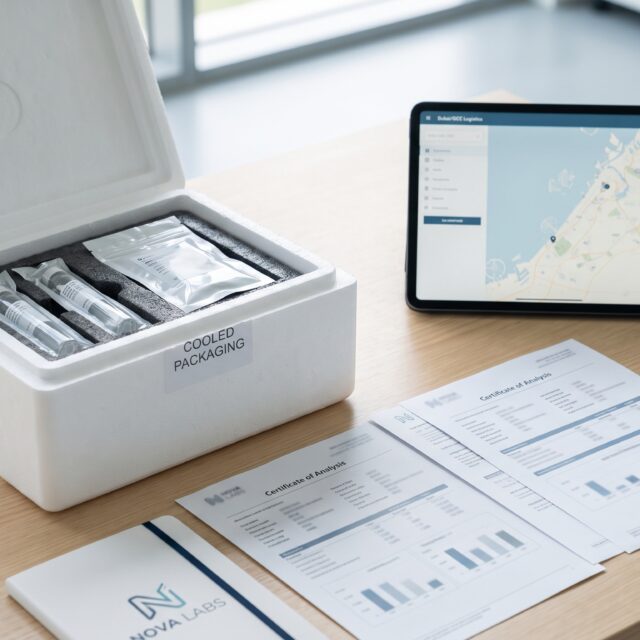
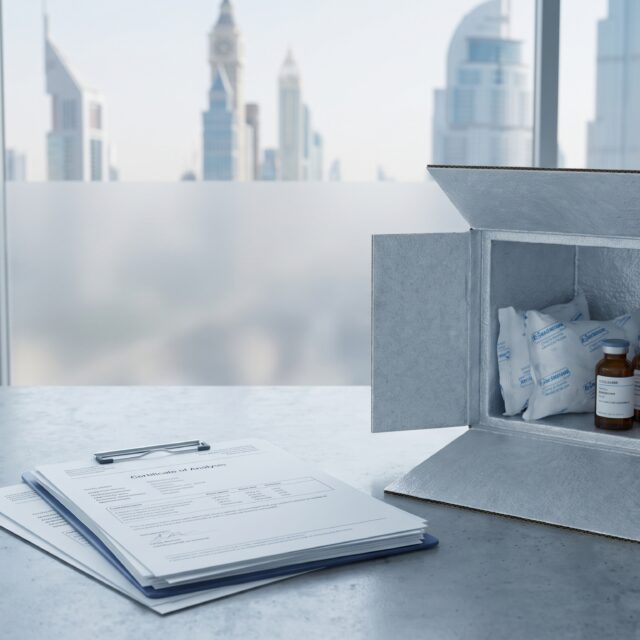
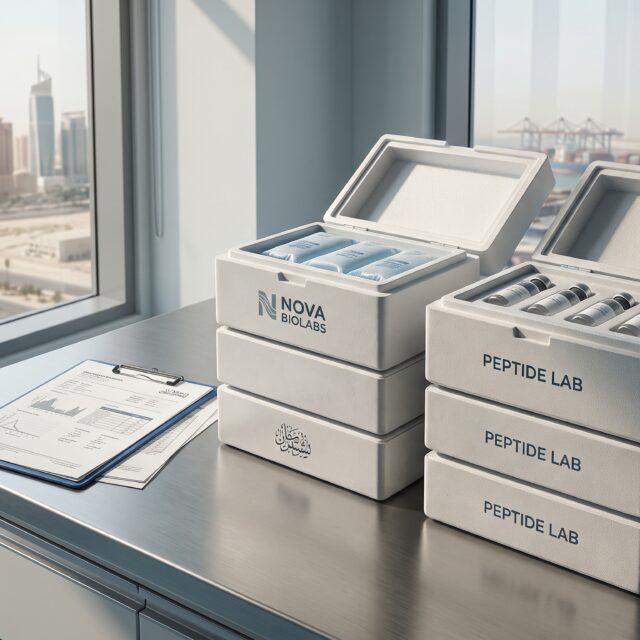
Shipping bulk compounds to Doha requires specialised cold-chain logistics. A professional regional supplier will never dispatch wholesale research materials in standard uninsulated envelopes. Buyers should ensure their supplier utilises:
- Vacuum-Insulated Transit Boxes: Designed to reflect ambient heat and maintain stable internal temperatures for up to 72 hours.
- Phase Change Materials (Dry Ice/Gel Packs): Selected specifically based on the transit duration and the compound’s stability profile.
- Data Loggers: High-volume institutional orders often include temperature data loggers inside the packaging, allowing researchers to verify that the internal temperature never breached the safety threshold during transit.
- Expedited Air Freight: Direct flights from regional hubs (such as Dubai to Doha) minimise the time parcels spend on loading docks or in non-air-conditioned sorting facilities.
Upon arrival, bulk deliveries must immediately be transferred to laboratory freezers. For long-term preservation of lyophilised powders prior to reconstitution, storage at -20 degrees Celsius is the industry standard to prevent premature peptide bond degradation.
Strategic B2B Sourcing: Payment, Stock, and Support
Procuring bulk chemicals is an operational partnership. Identifying a GCC-based supplier capable of serving the Qatari market is crucial for reducing transit friction and timezone miscommunications. Regional direct-to-lab suppliers operating out of the UAE often provide more agile, high-touch support specifically tailored to Gulf logistics.
Volume Pricing and Institutional Terms
Top-tier suppliers offer transparent, tiered volume pricing. Scaling discounts should clearly begin at distinct intervals (e.g., 25, 50, 100, or 500+ vials) to support varying project sizes. Furthermore, reputable vendors understand institutional procurement and can often accommodate traditional B2B payment methods, such as direct bank transfers, rather than relying solely on credit cards.
The Strategic Advantage of Lot Reservations
When conducting longitudinal research, biological variance is the enemy of reliable data. Switching between batches or suppliers mid-study introduces an unacceptable variable into the experimental framework.
A premium GCC wholesale supplier will offer ‘lot reservations.’ This allows a facility to purchase or reserve an entire supply from a single synthesis batch. By securing 100 or more vials from the exact same chemical run, researchers guarantee absolute consistency in purity and molecular behaviour from day one of the study to its conclusion.
Accessible Technical Support
Gulf business moves fast. Procurement teams should look for suppliers that offer rapid communication channels—such as dedicated WhatsApp business lines or direct account managers—to coordinate delivery windows, provide analytical reports instantly, and resolve customs queries in real time.
Choosing a Reliable Partner
Successfully acquiring bulk research compounds requires partnering with a laboratory supplier who manages logistics and compliance as rigorously as they manage chemical synthesis. By verifying third-party COA data, demanding robust cold-chain transit protocols, and ensuring all documentation aligns perfectly with Qatari customs requirements, buyers can secure the raw materials necessary for uncompromised research.
At NOVA Labs, we understand the operational pressures faced by B2B buyers in Qatar and the wider GCC. We supply meticulously synthesised, strictly tested compounds to institutions demanding the highest standard of analytical verification. For procurement managers coordinating large-scale projects, you can explore our tailored wholesale options to secure batch-consistent supply lines, or to browse our current inventory of rigorously documented compounds, visit our research shop.
Disclaimer: The products mentioned in this article are exclusively for laboratory research, in-vitro testing, and educational purposes. They are strictly not intended for human consumption, therapeutic use, diagnostic applications, or medical treatment.
References
- Qatar Ministry of Public Health (MoPH). Directives and circulars regulating unlicensed pharmaceutical and biological products.
- General Authority of Customs, Qatar. ‘Al Nadeeb Customs Clearance System Guidelines and Requirements.’
- International Trade Administration. ‘Qatar – Import Requirements and Documentation.’
- Qatar’s Health Ministry bans trading, use or promotion of unlicensed peptide products
- How To Successfully Import Chemicals to Qatar – Camachem
- Journal of Peptide Science. ‘Evaluating the stability of lyophilized synthetic peptides under thermal stress.’
- Qatar – Import Requirements and Documentation – International Trade Administration
- Wholesale Research Supply | UAE Core Peptides
Frequently asked questions
Do wholesale peptides shipped to Qatar require cold-chain packaging?
Yes. Given Qatar's high ambient temperatures, bulk lyophilised compounds must be shipped using vacuum-insulated packaging alongside phase-change materials like dry ice or gel packs to prevent structural degradation during Gulf transit.
What customs documentation is required for bulk peptides in Qatar?
B2B shipments processed through Qatar's Al Nadeeb customs system require highly accurate commercial invoices, exact matching Harmonised System (HS) codes, and clear classification indicating the compounds are exclusively for laboratory research purposes.
Can I reserve a single batch for my research programme?
Yes, reputable GCC wholesale suppliers offer lot reservations. This allows institutional researchers to book large volumes from the exact same synthesis batch, eliminating chemical variance across long-term longitudinal studies.
How do I verify the purity of bulk research compounds before buying?
Always request a batch-specific Certificate of Analysis (COA) prior to ordering. This document must include current High-Performance Liquid Chromatography (HPLC) and Mass Spectrometry (MS) results proving a chemical purity of 99 percent or higher.
Are bulk research peptides legal to import into Qatar?
Yes, but strictly for laboratory research by authorized entities. The Qatar MoPH bans the import and distribution of unlicensed peptides for therapeutic or human use, meaning all B2B imports must be fully compliant, documented, and explicitly classified as 'research-use-only'.
Nova Labs buyer tools
Ready to verify stock, testing and delivery?
Use the product page and lab report section to check availability, documentation, delivery timing and support before placing an order.
- COA / test-report checks
- Qatar delivery context
- Cold-chain handling
- COD and card payment options
- WhatsApp support