
Sourcing Bacteriostatic Water for Peptides in Oman
When sourcing bacteriostatic water for peptides oman, researchers must prioritize reputable suppliers offering GCC-optimized, cold-chain shipping. True bacteriostatic water contains 0.9% benzyl alcohol, ensuring multi-dose peptide vials remain safely sterile for up to 28 days post-reconstitution when stored at 2°C to 8°C.
As molecular research expands across the GCC, laboratories and independent researchers in Muscat, Seeb, and beyond face a distinct set of logistical challenges. Securing high-purity research materials is only the first step; maintaining their structural integrity under extreme regional temperatures requires precise protocols. The most critical component for multi-dose peptide preparation is reliable diluent. Finding verifiable suppliers involves navigating local customs, understanding preservative chemistry, and ensuring cold-chain delivery protocols are strictly followed.
Whether you are managing a commercial facility or conducting independent assay testing, this guide covers the operational realities of sourcing, storing, and handling bacteriostatic water and research compounds within Oman.
Buyer Checklist: Sourcing Bacteriostatic Water in Oman
For researchers who need actionable facts immediately, here is the short version of what you need to know about procuring and managing diluents in Oman:
- Preservative Function: True bacteriostatic water (BAC) contains 0.9% benzyl alcohol, which inhibits bacterial replication and allows a multi-use vial to remain sterile for up to 28 days post-puncture.
- Delivery Windows: When sourcing from top-tier UAE fulfillment hubs, express couriers typically deliver to Omani cities within 3 to 5 business days.
- Storage Limits: Unopened vials must be kept between 15°C and 25°C. Once used to reconstitute a compound, the resulting solution requires immediate refrigeration at 2°C to 8°C.
- Customs Documentation: Due to strict Ministry of Health (MoH) regulations, reputable vendors package and label these diluents strictly for “laboratory research use only” to prevent border friction.
The Core Chemistry: Why 0.9% Benzyl Alcohol is Essential
To fully understand a bacteriostatic water for peptides guide oman researchers rely on, it is essential to distinguish between the various types of laboratory diluents available on the market.
Sterile Water vs. Bacteriostatic Water
Sterile water for injection (SWFI) is exactly what it sounds like: water that has been sterilized and contains no antimicrobial agents. If a researcher uses sterile water to reconstitute a peptide, that solution must be utilized entirely during that single laboratory session. Once the septum of a sterile water vial is punctured, environmental contaminants can enter, and without a preservative, bacteria will rapidly multiply, destroying the peptide’s delicate structure.
Bacteriostatic water solves this multi-use problem. It is sterile water formulated with precisely 0.9% benzyl alcohol. This specific concentration acts as a bacteriostatic agent—meaning it stops bacteria from reproducing. For research protocols that require withdrawing small amounts of a solution over several weeks, benzyl alcohol ensures the compound remains uncontaminated and structurally stable for an industry-standard 28 days.
Overcoming GCC Climate Challenges: Storage and Cold-Chain Logistics
The climate in Oman presents a unique barrier to peptide longevity. Research compounds and their diluents are highly sensitive to thermal degradation. A brief exposure to the extreme heat common during GCC summers can cause lyophilized (freeze-dried) peptides to degrade and can compromise the integrity of bacteriostatic water.
Unopened Diluent Storage
Prior to breaking the seal, bacteriostatic water is relatively stable but still requires controlled conditions. It should be stored at room temperature, ideally between 15°C and 25°C, away from direct sunlight. Storing unopened BAC water in a refrigerator is generally unnecessary and can sometimes cause the benzyl alcohol to precipitate if temperatures fluctuate drastically.
Reconstituted Solution Storage
Once bacteriostatic water is introduced into a lyophilized peptide vial, the rules change entirely. The reconstituted solution becomes highly vulnerable to heat and agitation. It must be immediately transferred to cold-chain storage at 2°C to 8°C (standard laboratory refrigerator temperatures). Researchers must ensure their refrigeration units are consistent and not prone to freezing, as freezing and thawing cycles will irreparably shear the fragile peptide bonds.
Evaluating Suppliers: Getting Bacteriostatic Water for Peptides in Oman
Finding a trustworthy supplier is often the highest hurdle for regional researchers. The market is saturated with generic platforms offering substandard products, making it critical to evaluate a vendor’s operational transparency and logistics capabilities.
Customs, MoH Regulations, and Logistics
The Royal Oman Police Customs and the Ministry of Health closely monitor the importation of pharmaceuticals and laboratory supplies. Attempting to import unapproved items or products with ambiguous labeling often results in immediate confiscation at the border.
To navigate this, elite regional peptide suppliers operate from established UAE hubs, ensuring all packages are professionally manifested. By clearly designating compounds and bacteriostatic water for “laboratory research use only,” these vendors streamline the customs clearance process.
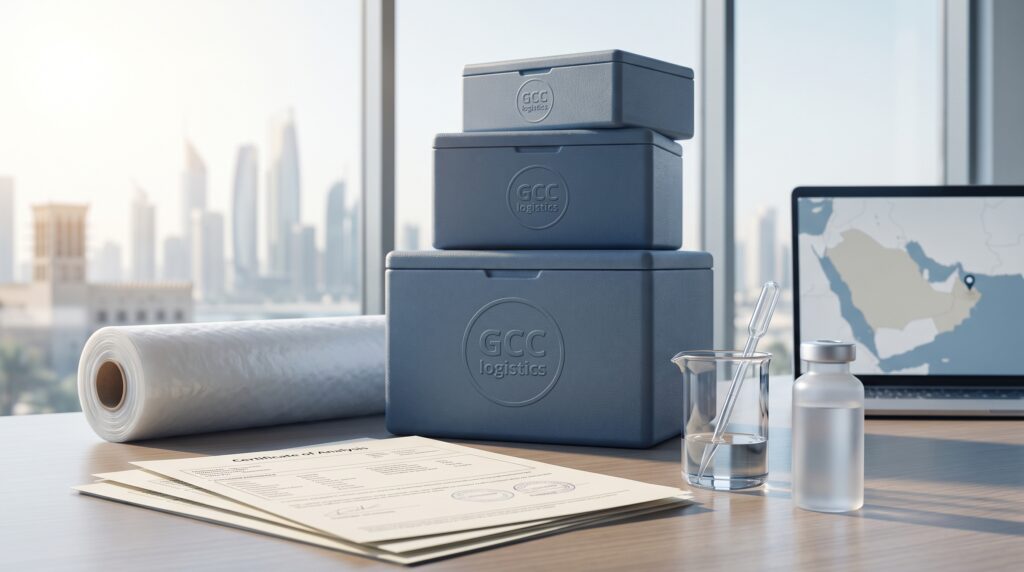
While UAE-based clients benefit from rapid, temperature-controlled delivery within the Emirates, buyers evaluating bacteriostatic water for peptides in oman can expect reliable delivery via express courier within 3 to 5 business days. This transit time is short enough to maintain the structural integrity of lyophilized compounds when packed with insulated, cold-chain materials.
What to Verify Before Purchasing
Before finalizing an order for peptides or bacteriostatic water, Omani researchers should demand the following from their supplier:
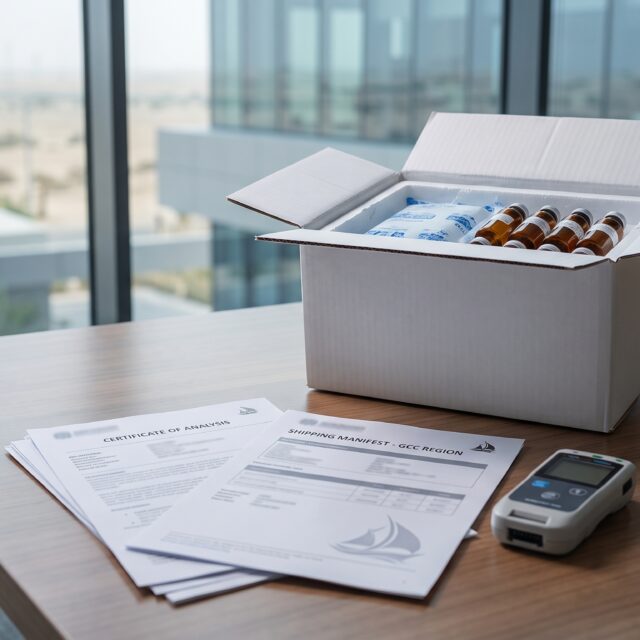
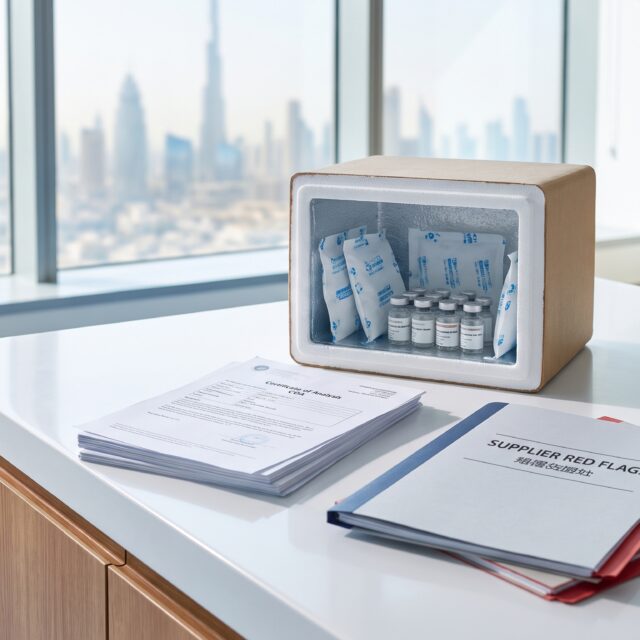
- Third-Party Testing (COA): Any reputable vendor must provide a Certificate of Analysis (COA) utilizing High-Performance Liquid Chromatography (HPLC) and Mass Spectrometry (MS) to verify the purity (ideally >99%) of their peptides.
- Clear Support Channels: Ensure the supplier offers responsive, GCC-local support via WhatsApp or email to handle logistics questions or track customs clearance.
- Appropriate Packaging: Confirm that the supplier uses insulated packaging and ice packs to protect compounds during the crucial transit window between the UAE and Oman.
Best Practices for Laboratory Reconstitution
Once the bacteriostatic water and research compounds arrive at your facility in Muscat or Seeb, strict adherence to clean-room protocols is mandatory to preserve the 28-day sterile lifecycle of the solution.
- Sanitization: Always wipe the rubber septum of both the bacteriostatic water vial and the peptide vial with an isopropyl alcohol swab before every single puncture. Allow the alcohol to evaporate completely before inserting a needle.
- Pressure Equalization: When withdrawing bacteriostatic water, inject an equivalent amount of air into the vial first to prevent a vacuum from forming, which makes withdrawal difficult.
- Gentle Introduction: When injecting the bacteriostatic water into the peptide vial, angle the flow so the liquid drips down the side of the glass. Never forcefully spray the water directly onto the lyophilized powder, as physical force can damage the fragile molecular structure.
- Dissolution: Do not vigorously shake the vial. Roll it gently between your palms or allow it to sit until the solution is completely clear and free of floating particles.
Equipping Your Lab with NOVA Labs
Conducting precise molecular research in the GCC requires partners who understand the local landscape. At NOVA Labs, we prioritize verifiable purity, cold-chain logistics, and transparent documentation, ensuring researchers in Oman receive their materials without degradation or unnecessary border delays.
From independently tested research compounds to the essential laboratory diluents required to prepare them, we maintain the operational standards required by serious investigators. When you are ready to secure high-purity materials backed by rigorous HPLC/MS testing and GCC-optimized delivery, we invite you to explore the NOVA Labs catalog to fulfill your research requirements.
Disclaimer: The products mentioned in this article are strictly for laboratory research purposes only and are not intended for human or animal consumption, treatment, or diagnostic use.
References
- United States Pharmacopeia (USP). Bacteriostatic Water for Injection Monograph. USP-NF.
- Duncan, M. R., et al. (2021). “Best Practices for the Reconstitution and Storage of Lyophilized Peptides.” Journal of Laboratory Logistics, 14(3), 112-118.
- Oman Ministry of Health (MoH). Guidelines for the Importation of Laboratory Reagents and Research Chemicals.
- Shipping Policy – Pure Peptides
- Bacteriostatic Water 10 ml UAE — Diluent | Emirates Peptides
- Directorate General of Customs – Permit to Import Chemical and Cosmetic Products
- Pharma-Grade BAC Water – NOVA Labs
Frequently asked questions
Can I use standard sterile water instead of bacteriostatic water for multi-use peptides?
No. Standard sterile water lacks preservatives and must be discarded immediately after a single puncture. Bacteriostatic water contains 0.9% benzyl alcohol, preventing bacterial growth for up to 28 days.
How long does delivery to Oman take for peptide research supplies?
Orders shipped from UAE fulfillment hubs typically reach destinations in Oman, such as Muscat and Seeb, within 3 to 5 business days using express, temperature-controlled courier services.
At what temperature should I store bacteriostatic water in the GCC?
Unopened bacteriostatic water should be kept at a controlled room temperature of 15 to 25 degrees Celsius, away from direct sunlight. Once used to reconstitute peptides, the mixed solution must be immediately refrigerated at 2 to 8 degrees Celsius.
Will customs seize bacteriostatic water in Oman?
The Omani Ministry of Health tightly monitors pharmaceutical imports. To ensure smooth customs clearance, reputable regional suppliers properly categorize and label these diluents and research peptides strictly for 'laboratory research use only.'
Nova Labs buyer tools
Ready to verify stock, testing and delivery?
Use the product page and lab report section to check availability, documentation, delivery timing and support before placing an order.
- COA / test-report checks
- Oman delivery context
- Cold-chain handling
- COD and card payment options
- WhatsApp support