




BPC-157 vs TB-500: Understanding the Research Divide
The primary difference between BPC-157 and TB-500 involves their mechanism of action in tissue repair models. BPC-157 promotes localized angiogenesis through the VEGFR2 pathway, whereas TB-500 operates systemically by binding to G-actin to facilitate cellular migration. Both peptides require strict cold-chain logistics and third-party HPLC testing when sourced in the UAE.
Key Takeaways for UAE Researchers
- Mechanisms: BPC-157 is best suited for localized vascular repair studies, while TB-500 is optimal for systemic cellular migration and actin modulation protocols.
- Testing: Only procure peptides backed by batch-specific, independent High-Performance Liquid Chromatography (HPLC) and Mass Spectrometry (MS) documentation.
- Logistics: Due to extreme GCC ambient temperatures, strict cold-chain delivery of lyophilized (freeze-dried) vials is mandatory to prevent rapid peptide degradation.
- Compliance: Both compounds are strictly Research Use Only (RUO) and must not be used for human consumption.
When evaluating tissue repair models and cellular regeneration pathways, investigators frequently compare the molecular actions of these two prominent synthetic peptides. Determining the exact differences between these compounds is critical for establishing accurate preclinical study designs and maintaining strict laboratory controls.
For procurement teams and independent researchers in the UAE and GCC, understanding these distinct biological pathways is only the first step. Navigating regional logistics, interpreting Certificate of Analysis (COA) data, and ensuring compounds survive extreme local temperatures are equally vital to achieving reproducible results in vitro.
Structural Profiles: Defining the Compounds
Before analyzing their comparative applications, it is essential to define the structural nature of each compound. Neither peptide occurs naturally in the exact form utilized in laboratory settings; both are synthetic derivatives designed to mirror or isolate specific biological functions.
The Molecular Structure of BPC-157
BPC-157 (Body Protection Compound-157) is a synthetic pentadecapeptide consisting of a 15-amino-acid sequence (molecular weight of approximately 1419 Da). It is derived from a naturally occurring protective protein found in human gastric juice. In preclinical environments, it is synthesized as a lyophilized powder and is noted for its high stability in various pH environments. Due to its unique sequence and structural stability, researchers frequently utilize BPC-157 in localized in vitro and animal models to observe cellular survival, gastric mucosal integrity, and repair mechanisms under stress.
The Molecular Structure of TB-500
In contrast, TB-500 is a significantly larger synthetic peptide. It contains a 43-amino-acid sequence (molecular weight of approximately 4963 Da) that is identical to the active site of natural Thymosin Beta-4, an actin-binding protein found in virtually all animal and human cells. Because it is a highly conserved sequence across species, the synthetic iteration allows researchers to study the mechanisms of cellular mobility without the complexities of extracting the full naturally occurring protein. TB-500 is characterized by its specific binding domains, a feature that preclinical literature links to its ability to travel systemically through tissues rather than remaining localized at the point of introduction.
Distinct Biological Pathways in Preclinical Literature
The core of the BPC-157 vs TB-500 research conversation centers on how these compounds interact with cellular pathways. While both are evaluated for their potential to accelerate cellular repair and modulate inflammation, their mechanisms of action are entirely distinct.
BPC-157: Localized Angiogenesis and the Akt-eNOS Axis
In established scientific literature, BPC-157 is primarily studied for its impact on angiogenesis—the physiological process through which new blood vessels form from pre-existing vessels. Preclinical in vitro studies indicate that BPC-157 promotes this vascular growth by targeting VEGFR2 (Vascular Endothelial Growth Factor Receptor 2) activation. Furthermore, it upregulates nitric oxide synthesis via the Akt-eNOS signaling pathway.
Because of this highly specific pathway, animal models evaluating BPC-157 often focus on localized repair. Researchers introduce the peptide directly into specific tissue areas (such as simulated tendon damage, muscle lacerations, or gastrointestinal stress models) to observe localized tissue regeneration, enhanced collagen synthesis, and the rapid formation of granular tissue at the specific site of administration.
TB-500: G-Actin Sequestration and Systemic Cellular Migration
The action mechanism of TB-500 diverges significantly from BPC-157. Rather than strictly focusing on localized blood vessel formation, TB-500 operates by modulating actin dynamics. Actin is a highly abundant cellular protein that forms the microfilaments crucial to cellular structure, division, and movement.
TB-500 works by binding to and sequestering G-actin monomers. By preventing these monomers from polymerizing prematurely into F-actin, TB-500 regulates cellular motility, allowing endothelial and keratinocyte cells to travel more efficiently to sites of stress or damage. Due to this actin-binding property, TB-500 is consistently observed to have a systemic effect in animal models. When researchers evaluate the difference between BPC-157 and TB-500, this localized vascular focus versus systemic migratory focus is often the determining factor in protocol design.
Evaluating the BPC-157 or TB-500 Question in Study Design
When designing in vitro assays or animal studies, principal investigators must often decide whether to deploy BPC-157 or TB-500. The choice depends entirely on the targeted outcome of the research model and the specific tissues being evaluated.
- Targeted Repair Models: If a study aims to observe the rapid healing of a specific, localized mechanical injury—such as a focused ligament tear model or a specific mucosal lesion—BPC-157 is frequently selected to evaluate targeted vascular formation and localized collagen deposition.
- Systemic Mobility Models: Conversely, if the research protocol involves widespread muscular stress, systemic cellular migration, or the modulation of overall cellular mobility across multiple tissue layers, TB-500 is typically chosen due to its ability to upregulate actin dynamics globally within the subject.
In some advanced experimental laboratory settings, researchers evaluate the combined effects of these peptides. However, it must be stressed that within rigorous scientific frameworks, such combinations are studied strictly to observe synergistic biological pathways in isolated tissues or approved animal models, and never for human application.
Sourcing and Documentation in the UAE Market
For procurement staff, lab managers, and informed buyers in the UAE and GCC, the theoretical mechanics of these peptides must translate into practical, reliable procurement standards. The extreme summer temperatures and unique logistical landscape of the Middle East require specific supplier checks before securing either compound.
The Necessity of Lyophilization and Cold-Chain Logistics
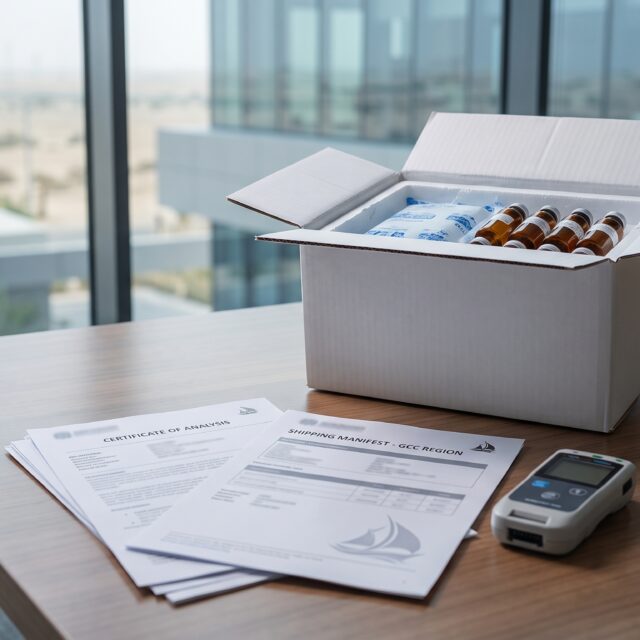
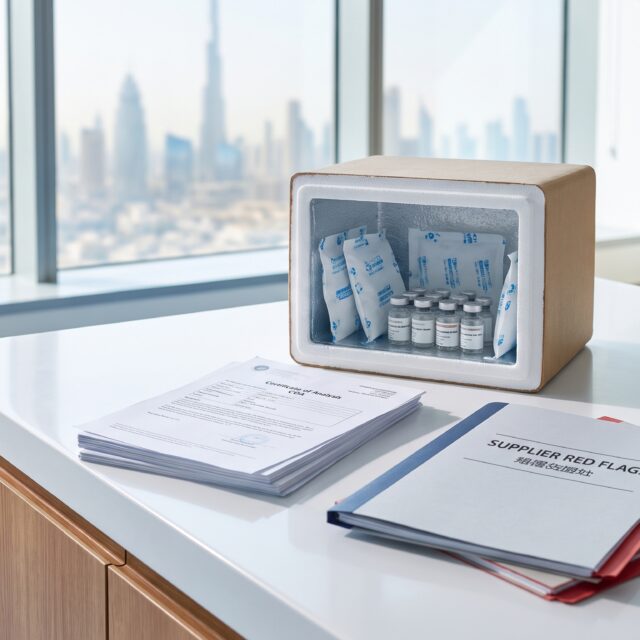
Peptides are inherently fragile molecules. When suspended in a liquid state, the amino acid bonds begin to degrade rapidly if not continuously refrigerated. In the UAE, where ambient temperatures can easily compromise biological materials during transit, it is critical that researchers source compounds strictly as lyophilized (freeze-dried) powders.
Lyophilization removes moisture under a strict vacuum, stabilizing the peptide structure and making it highly resilient to temperature fluctuations during shipping. A reputable supplier will ship these lyophilized vials in secure, inert-atmosphere packaging. Upon arrival in Dubai, Abu Dhabi, or other GCC locations, the end-user must immediately store the unmixed vials in a temperature-controlled environment—typically a laboratory freezer set to -20°C—until reconstitution with bacteriostatic water for in vitro use.
Verifying Purity Through Third-Party COAs
The most important aspect of peptide procurement is verifying independent laboratory testing. The scientific validity of any BPC-157 vs TB-500 research hinges entirely on the purity of the subject material. Impurities, heavy metal contamination, or degraded peptide chains can drastically alter cellular responses, trigger unwanted inflammatory cascades in animal models, and ultimately invalidate costly study data.
Procurement managers must insist on reviewing batch-specific Certificates of Analysis (COAs) verified by High-Performance Liquid Chromatography (HPLC) and Mass Spectrometry (MS).
- HPLC Analysis: Confirms the purity of the peptide by separating the compound from any synthesis byproducts. Researchers should look for a singular, sharp peak indicating a purity threshold of at least 99%.
- Mass Spectrometry: Confirms the exact molecular weight of the compound, ensuring that the vial contains the correct sequence (e.g., verifying the ~1419 Da mass for BPC-157).
Nova Labs distinguishes itself in the UAE market by prioritizing this transparency. By holding domestic stock in the UAE, Nova Labs bypasses the lengthy international customs delays that often result in temperature-degraded peptides sitting in hot transit hubs. Furthermore, they provide accessible, batch-tracked lab results for every compound in their catalog.
Payment, Support, and Laboratory Confidence
Navigating international peptide suppliers can often lead to friction regarding payment processing, delayed communication, and inadequate customer support. Nova Labs caters specifically to the local GCC research community by offering secure regional payment methods. This includes convenient Cash on Delivery (COD) options for qualified UAE locations, allowing labs to inspect shipments upon arrival. Additionally, direct WhatsApp support is available to assist procurement managers with real-time stock checks, immediate COA documentation requests, and bulk ordering inquiries.
Conclusion: Securing High-Fidelity Compounds for Research
Understanding the differences between BPC-157 and TB-500 requires a deep dive into molecular biology and cellular mechanics. BPC-157 provides a localized, angiogenesis-focused model of repair via the VEGFR2 and eNOS pathways, making it highly effective for targeted tissue studies. In contrast, TB-500 offers a systemic approach, leveraging G-actin sequestration to promote widespread cellular migration and mobility.
Regardless of which compound your specific study requires, the reproducible success of your research depends heavily on the integrity of your supply chain. For investigators in the UAE, prioritizing lyophilized stability, domestic cold-chain shipping, and verifiable HPLC/MS laboratory testing is absolutely non-negotiable.
Ready to equip your laboratory with verified, high-purity peptides? Explore the Nova Labs catalog today to secure locally stocked, strictly tested compounds for your next preclinical study.
Disclaimer: All products mentioned in this article are strictly for research and laboratory use only. They are not intended for human consumption, diagnostic purposes, veterinary use, or self-administration.
References
- Seitz, H., et al. (2003). “BPC 157 and Standard Angiogenic Growth Factors.” Journal of Physiology and Pharmacology.
- Sikiric, P., et al. (2010). “Focus on BPC 157 in GI tract and other systems.” Current Pharmaceutical Design.
- Goldstein, A. L., et al. (2012). “Thymosin β4: actin-sequestering protein moonlights to repair injured tissues.” Trends in Molecular Medicine.
- Regeneration or Risk? A Narrative Review of BPC-157 for Musculoskeletal Healing – PMC
- BPC-157 Vs. TB-500: A Comparative Analysis Of Molecular Repair Mechanisms
- nova labs peptides uae NovaLab
Disclaimer: The products mentioned in this article are for research purposes only and are not intended for human consumption.
- Wolverine Stack: BPC-157 & TB-500 Guide for Recovery, Tissue Healing, and Muscle Preservation – Musculoskeletal Key
- BPC-157 vs TB-500: evidence, approval and risks | Peptide Guide UAE
Frequently asked questions
What is the main difference between BPC-157 and TB-500 in research?
The primary difference lies in their mechanisms of action. BPC-157 is studied for localized angiogenesis and vascular repair via the VEGFR2 pathway, while TB-500 is evaluated for its systemic ability to promote cellular migration through actin binding.
How do UAE laboratories verify the purity of these compounds?
Reputable suppliers and laboratories verify purity using High-Performance Liquid Chromatography (HPLC) and Mass Spectrometry (MS). Procurement teams should always check batch-specific Certificates of Analysis (COAs) to confirm ≥99% purity before use.
Can BPC-157 or TB-500 be stored at room temperature in the UAE?
In their lyophilized (freeze-dried) form, they remain stable during transport and brief exposure to heat. However, for long-term storage and to prevent rapid degradation in the UAE's warm climate, unmixed vials must be stored in a laboratory freezer at -20°C.
Are BPC-157 and TB-500 approved for human consumption?
No. Both compounds are strictly classified as Research Use Only (RUO). They are intended exclusively for in vitro laboratory studies and approved preclinical animal research, not for human consumption, treatment, or self-administration.
Nova Labs buyer tools
Ready to verify stock, testing and delivery?
Use the product page and lab report section to check availability, documentation, delivery timing and support before placing an order.
- COA / test-report checks
- UAE delivery context
- Cold-chain handling
- COD and card payment options
- WhatsApp support