
Procuring Retatrutide in the GCC: A Complex Landscape
Sourcing high-purity research compounds in the GCC is a complex logistical challenge. For institutional researchers, biotech procurement specialists, and informed laboratory managers evaluating chemical suppliers, the process to successfully buy Retatrutide in Qatar requires far more than simply finding a vendor with available stock. Retatrutide is a highly complex triple-receptor agonist—simultaneously targeting the GLP-1, GIP, and Glucagon (GCG) receptors. This multi-receptor action makes it a focal point for advanced in vitro metabolic and cellular energy research.
However, procuring this 39-amino-acid compound locally demands a rigorous understanding of analytical chemistry verification, the realities of cold-chain logistics in extreme Middle Eastern climates, and rapidly evolving local regulatory frameworks. As the regional demand for cutting-edge metabolic research compounds grows, the Qatari landscape has seen a corresponding tightening of import and handling rules, making supplier transparency a non-negotiable factor for laboratories.
Whether you are assessing an international supplier or exploring regional GCC hubs, this comprehensive guide outlines the critical compliance, analytical testing, and logistical checks every procurement officer must perform before placing an order.
Quick Answer: What to Check Before You Buy Retatrutide in Qatar
To successfully buy Retatrutide in Qatar, buyers must navigate strict MoPH compliance, mandate cold-chain logistics to prevent thermal degradation, and verify third-party HPLC and Mass Spectrometry testing for 98%+ purity. Unlicensed imports risk seizure, so researchers must ensure institutional customs clearance and source only from transparent suppliers providing verifiable analytical documentation.
The Regulatory Reality: Navigating MoPH Directives
The absolute most critical factor for any Qatar-based laboratory is strict adherence to local laws and customs procedures. In late 2023, Qatar’s Ministry of Public Health (MoPH) issued reinforced directives explicitly prohibiting the unauthorized import, sale, trade, distribution, promotion, and human use of unlicensed peptide preparations and GLP-1 analogues.
For international suppliers, it is an unfortunately common practice to slap a “for research purposes only” label on a vial and assume this bypasses customs friction. Under Qatari Law No. 3 of 1983 (the Pharmacy Law) and subsequent customs regulations, this label alone does not exempt a product from strict enforcement or customs seizure if the importer lacks specific institutional research clearance.
If you plan to order Retatrutide Qatar regulations dictate that proper import documentation must be in place before the shipment arrives. Non-compliance with MoPH directives triggers severe administrative delays, financial penalties, and potential legal sanctions.
When evaluating a Retatrutide supplier Qatar-based researchers must ask:
- Does the vendor demonstrate an understanding of GCC customs requirements?
- Are they fully transparent about the risks of importation without proper institutional clearance?
- Do they attempt to bypass customs by shipping unlabeled “stealth” vials?
Note: Unlabeled vials are a major compliance risk. They immediately compromise the chain of custody required for rigorous scientific research and violate fundamental laboratory safety protocols.
The Chemistry of Integrity: Verifying Retatrutide Peptide Qatar
Because Retatrutide acts as an agonist at three distinct receptors, its molecular structure is highly sophisticated. Solid-phase peptide synthesis (SPPS) for a 39-amino-acid chain is difficult. Minor impurities, truncated sequences, or synthesis errors can drastically alter receptor binding affinities during in vitro cellular assays, rendering experimental data completely useless. Therefore, verifying the chemical integrity of the Retatrutide peptide Qatar buyers procure is paramount.
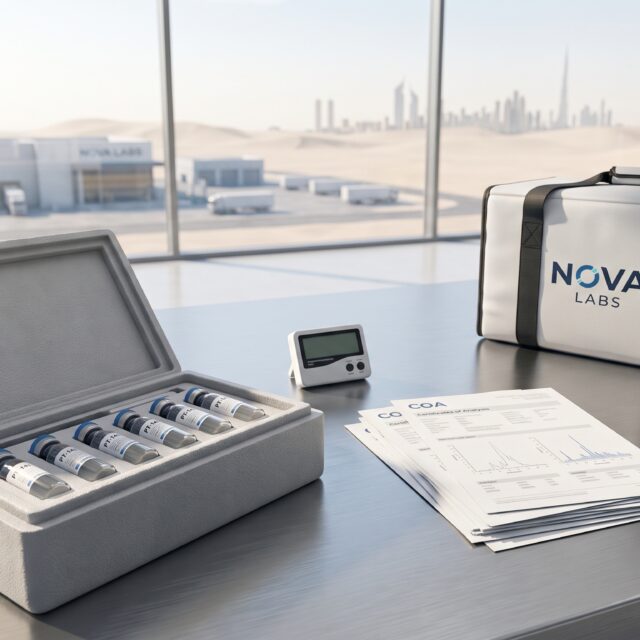
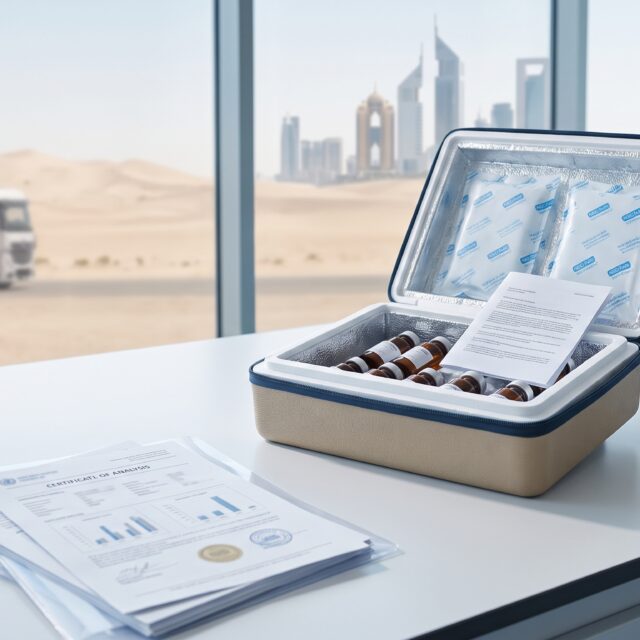
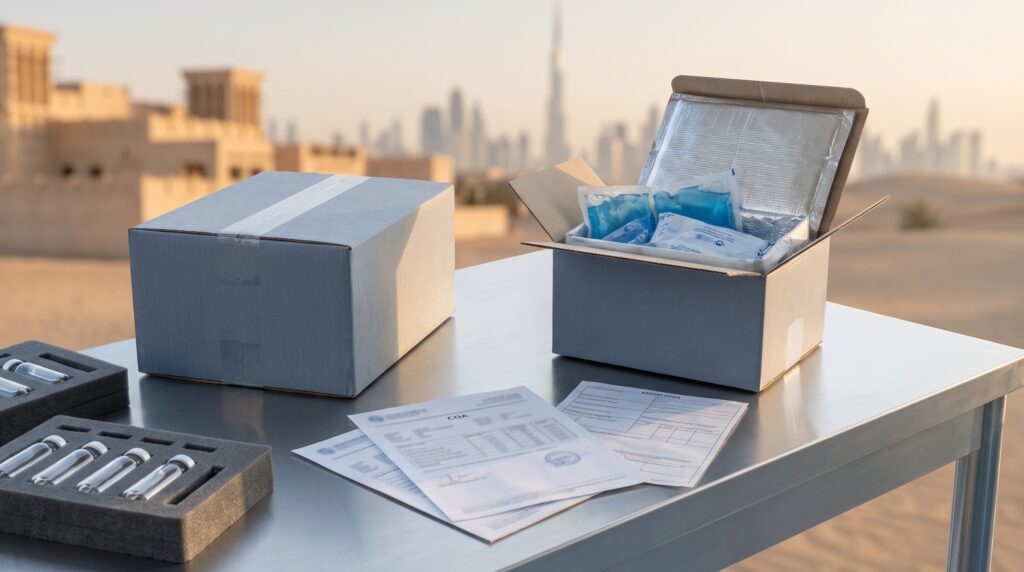
Reputable research suppliers focus heavily on analytical verification. Before you authorize any purchase, you must demand a batch-specific Certificate of Analysis (COA). A valid COA for Retatrutide should contain the following critical pieces of data:
High-Performance Liquid Chromatography (HPLC)
HPLC measures the purity of the compound by separating the components in the vial based on their chemical interactions. For high-level metabolic research, the strict industry standard is a minimum purity of 98%. The HPLC chromatogram report should show a single, sharp, distinct peak with minimal baseline noise. If a vendor cannot provide a recent HPLC chromatogram, or if the report looks heavily redacted, lacks a date, or appears recycled from an older batch, it is a significant red flag.
Mass Spectrometry (MS)
While HPLC tells you how pure the sample is, Mass Spectrometry confirms that the primary substance inside the vial is actually Retatrutide. MS measures the mass-to-charge ratio of the compound’s ions. Retatrutide has a specific theoretical molecular weight (approximately 4731.3 g/mol, though this can vary slightly based on the salt form). The observed weight on the MS report must match the theoretical weight precisely. Without matching MS data, you cannot be certain of the peptide’s true identity.
Moisture Content and TFA Salts
Advanced COAs will also include data on moisture content and the presence of Trifluoroacetic Acid (TFA) salts. Excessive moisture can destabilize a lyophilized peptide during storage, while high levels of TFA (a common byproduct of peptide cleavage during synthesis) can be cytotoxic to certain sensitive cell lines during in vitro studies. Understanding the net peptide content helps researchers adjust their molar calculations accurately.
Navigating Cold-Chain Shipping and GCC Logistics
The climate in Qatar presents a severe logistical challenge for biotech procurement. Lyophilized (freeze-dried) peptides are relatively stable compared to reconstituted solutions, but prolonged exposure to the extreme heat of the GCC summer can cause accelerated degradation. High temperatures break down the fragile peptide bonds before the product even reaches the laboratory bench.
For optimal stability, lyophilized Retatrutide should be stored below 25°C during transit, and ideally at -20°C for long-term preservation post-manufacture. When evaluating how to order Retatrutide Qatar buyers must heavily scrutinize the supplier’s shipping practices:
- Temperature Control: Does the vendor use temperature-controlled packaging, thermal bubble wrap, insulated mailers, or cold packs during transit?
- Transit Times: International shipping from overseas can take weeks, often leaving packages stranded in unairconditioned customs warehouses. Fast transit is absolutely critical.
For researchers operating across the broader GCC who require rapid, climate-controlled logistics, regional suppliers often provide a distinct advantage over overseas vendors. Utilizing regional hubs that offer robust local logistics networks—such as those detailed in our comprehensive guide to peptides UAE next day delivery—ensures that sensitive chemical compounds spend the absolute minimum time in transit, preserving their molecular integrity from the warehouse to your facility.
Evaluating a Retatrutide Supplier Qatar: A Buyer’s Checklist
Beyond regulatory compliance and chemical purity, procurement specialists must evaluate the operational reliability of the vendor. The market for research compounds is volatile, with stock availability frequently disrupted by supply chain constraints and heightened customs enforcement.
Here is a practical checklist for evaluating a reliable laboratory supplier:
1. Pricing and Market Benchmarks
Commercial prices for research-grade Retatrutide typically range from 520 AED (approximately $140 USD) for a 15mg vial, up to $205 USD for a 20mg vial. Prices significantly lower than this benchmark often indicate compromised purity, domestic “basement” synthesis, or a bait-and-switch operation. Conversely, excessively high prices do not necessarily guarantee better quality. Always cross-reference the price with the provided analytical data.
2. Transparent Documentation Practices
Never accept a generic, unnumbered COA. The document must correspond directly to the specific batch or lot number printed on the physical vial you receive. The testing facility should ideally be an independent, third-party analytical laboratory, not an in-house operation prone to bias or data manipulation.
3. Professional Support and Payment Methods
Institutional purchasing often requires traceable, secure, and formalized payment methods like wire transfers or corporate credit cards. Additionally, responsive customer support is vital when dealing with time-sensitive shipping or complex customs documentation. Vendors that offer direct communication channels, such as verified WhatsApp business numbers or dedicated B2B account managers, demonstrate a commitment to operational transparency.
4. Honest Marketing and Scientific Integrity
Avoid suppliers that use consumer-hype language, make unscientific therapeutic promises, or frame their inventory as lifestyle supplements. Retatrutide is strictly a research compound. Reputable vendors frame their products strictly within a scientific, laboratory, and in vitro context.
Conclusion: Sourcing with Confidence
Choosing where to buy Retatrutide in Qatar is a decision that requires careful risk mitigation. The intersection of stringent MoPH regulations, the necessity for flawless analytical testing, and the brutal realities of GCC logistics means institutional buyers cannot afford to cut corners.
Always prioritize suppliers who offer batch-specific HPLC and MS documentation, understand the absolute necessity of cold-chain transit, and respect local import regulations without relying on misleading “stealth” shipping tactics. By holding vendors to the highest standards of transparency, you ensure the integrity of your research data and the compliance of your institution.
For researchers operating across the GCC seeking verified, high-purity compounds, explore our comprehensive catalog of analytically tested peptides at the NOVA Labs shop to ensure your laboratory is equipped with the best possible reagents.
Disclaimer: The products mentioned in this article are strictly for in vitro laboratory research purposes only and are not intended for human or animal consumption, diagnostic, or therapeutic use.
References
- State of Qatar Ministry of Public Health (MoPH). Directives on the Prohibition of Handling Unlicensed Preparations (2023).
- State of Qatar. Law No. 3 of 1983 Regulating the Pharmacy Profession. Official Gazette.
- Qatar: MOPH Prohibits Handling of Unlicensed Peptides (PDC/2026/31)
- MoPH bans sale and use of unlicensed peptide products – Qatar Living
- Qatar Health Ministry Prohibits Trade and Promotion of Unlicensed Peptide Products – QBS RADIO
- Qatar bans unlicensed peptide products – Gulf Times
- Peptide Purity Guide Qatar: HPLC Testing & Compliance (2026) – NOVA Labs
Frequently asked questions
Is it legal to buy Retatrutide in Qatar for research?
Importing Retatrutide requires strict adherence to Qatar's Ministry of Public Health (MoPH) regulations. Products without official marketing authorization or specific institutional research clearance risk customs seizure, even if labeled exclusively for research purposes.
How can I verify the purity of Retatrutide?
Buyers should demand a batch-specific Certificate of Analysis (COA) from an independent laboratory. This documentation must include High-Performance Liquid Chromatography (HPLC) showing at least 98% purity and Mass Spectrometry (MS) confirming the molecular weight matches Retatrutide.
Does shipping to Qatar damage Retatrutide?
Extreme GCC heat can rapidly degrade lyophilized peptides if left in unairconditioned customs warehouses. It is essential to choose suppliers who utilize cold-chain logistics, temperature-controlled packaging, and rapid regional transit times to maintain the compound below 25°C.
What is the average price for Retatrutide in the GCC?
Research-grade Retatrutide typically costs around 520 AED ($140 USD) for a 15mg vial and up to $205 USD for a 20mg vial, depending on the supplier's testing protocols, logistics capabilities, and regional stock availability.
Nova Labs buyer tools
Ready to verify stock, testing and delivery?
Use the product page and lab report section to check availability, documentation, delivery timing and support before placing an order.
- COA / test-report checks
- Qatar delivery context
- Cold-chain handling
- COD and card payment options
- WhatsApp support