
How to Buy TB-500 in Oman: Sourcing, Quality, and Customs
Quick answer: To safely buy TB-500 in Oman, researchers must choose a supplier providing batch-specific HPLC and Mass Spectrometry testing demonstrating >99% purity. Buyers must ensure shipments use cold-chain packaging to withstand regional heat and include accurate “Research Purposes Only” commercial invoicing to clear Bayan customs seamlessly.
For procurement teams, independent investigators, and bio-laboratories in the Sultanate, the purchasing process extends far beyond simply finding a supplier with stock. The real challenge lies in ensuring the peptide arrives intact, legally cleared, and analytically verified. Oman presents a unique set of logistical hurdles, from extreme summer climates that threaten peptide stability to stringent, digitized customs protocols that demand precise documentation.
Sourcing high-grade laboratory compounds in the GCC requires a supplier who fundamentally understands regional infrastructure. In this comprehensive guide, we will break down exactly what informed researchers need to evaluate before placing an order, how to verify analytical testing, and the critical logistics required to protect peptide integrity during transit into Muscat and beyond.
The Scientific Profile of TB-500 in Laboratory Settings
Before evaluating a TB-500 supplier for delivery to Oman, it is essential to understand the compound’s strict research context and structural vulnerability. TB-500 is a synthetic homologue of the active region of Thymosin Beta-4, specifically targeting the 17-23 amino acid fragment. In preclinical laboratory environments, this synthetic peptide is frequently utilized in in-vitro studies focusing on actin upregulation, cell migration, and tissue repair modeling.
Because of its low molecular weight and specific binding properties, TB-500 requires precise, temperature-controlled handling. It is strictly designated for laboratory evaluation and in-vitro research. It is not approved by regulatory bodies (such as the FDA, EMA, or the Oman Ministry of Health) for human medical use, therapeutic application, or consumption.
Consequently, when searching for a TB-500 supplier that Oman laboratories can trust, the primary focus must be on compound stability, structural integrity, and the absolute absence of manufacturing impurities. Introducing a degraded or contaminated peptide into a testing environment will immediately invalidate experimental data, costing research facilities both time and funding.
Analytical Verification: Decoding the COA for TB-500
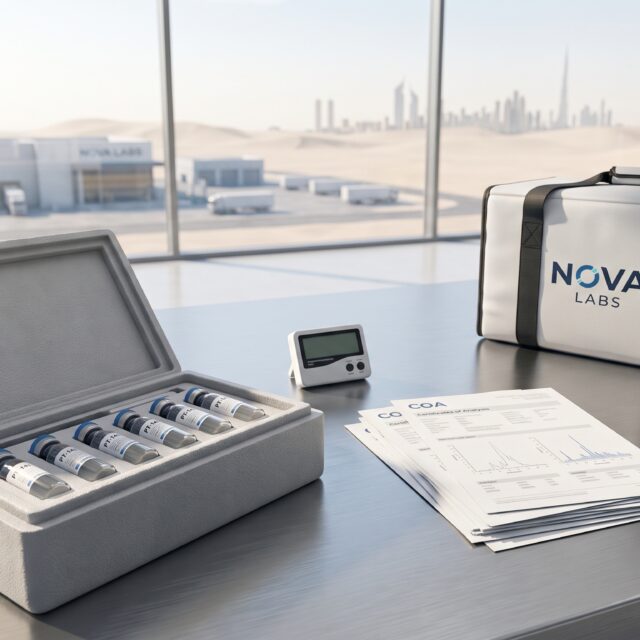
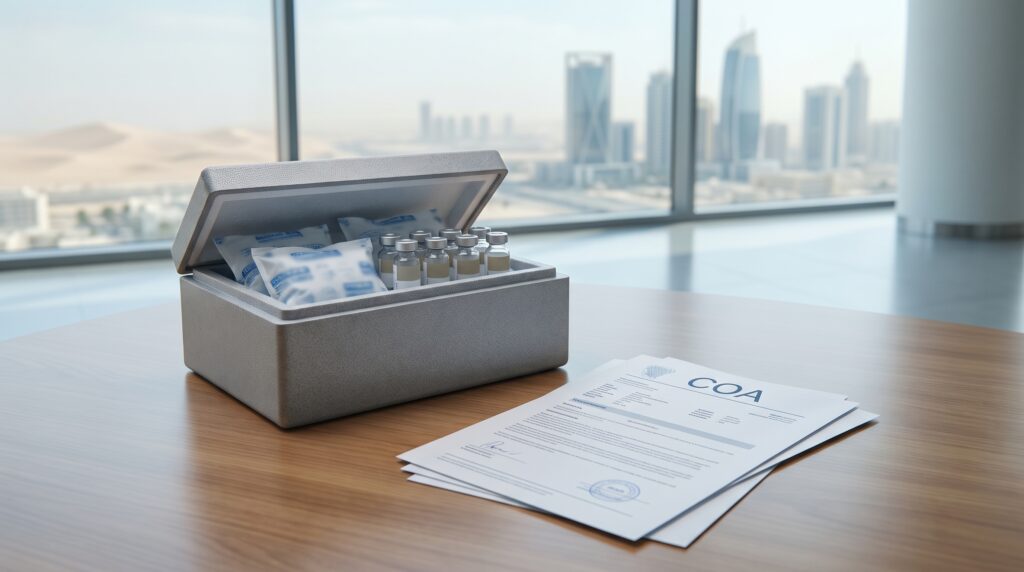
The cornerstone of any peptide procurement process is the Certificate of Analysis (COA). Unfortunately, the global peptide market is rife with suppliers who obscure their testing data, rely on outdated reports, or forge documents entirely. When preparing to order TB-500 in Oman, buyers must demand transparent access to third-party laboratory reports that match the exact batch they are purchasing.
A robust, reliable COA must feature two primary analytical methods:
HPLC (High-Performance Liquid Chromatography)
This test separates the components within the vial to determine purity. The resulting graph (chromatogram) should display a singular, highly dominant peak representing the TB-500 peptide. For research-grade material, this peak must indicate a purity level of 99% or higher. If the graph shows multiple secondary peaks, this indicates degradation, truncation, or contamination from leftover synthesis reagents like TFA (Trifluoroacetic acid). High TFA levels can be toxic to cell cultures during in-vitro testing.
MS (Mass Spectrometry)
While HPLC tells you how pure the vial is, Mass Spectrometry confirms what is actually in the vial. This analysis measures the exact molecular weight of the peptide. It acts as a definitive identity check, ensuring that the compound inside the vial is structurally TB-500 (which has a specific molecular weight) and not a cheaper, mislabeled alternative.
If a vendor obscures their COA, relies on tests that are several years old, or fails to link the test batch number directly to the physical vial you receive, they present an unacceptable risk to your research data. Always insist on verifiable, batch-matched documentation before initiating procurement.
Navigating Extreme Heat: Cold-Chain Logistics in Oman and the GCC
The climate in the GCC dictates uncompromising handling requirements for biological compounds. During the extended summer months, temperatures in Muscat, Salalah, and surrounding areas routinely exceed 45°C (113°F). For delicate research compounds like TB-500, this level of ambient heat is highly destructive.
TB-500 is typically shipped in a lyophilized (freeze-dried) state. While lyophilization stabilizes the peptide, allowing it to withstand brief periods at ambient room temperature, the intense heat of an un-airconditioned delivery van or a sun-exposed customs tarmac can rapidly degrade the compound. Prolonged heat exposure breaks the fragile peptide bonds, rendering the research material completely useless.
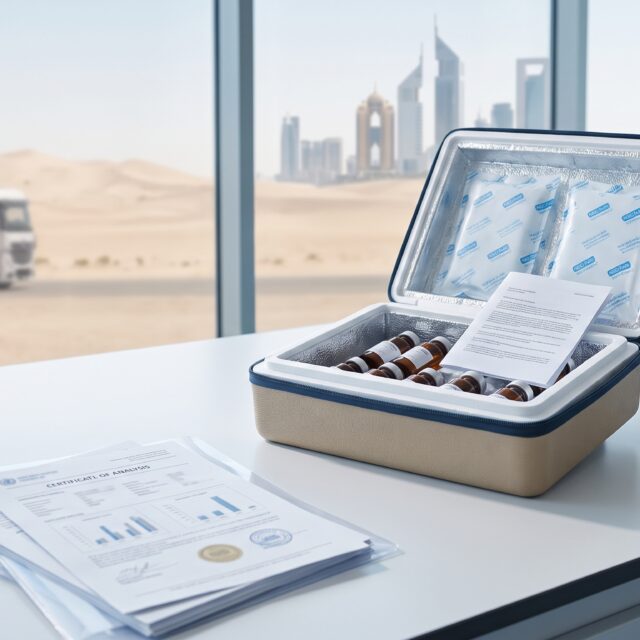
To combat this, leading suppliers utilize robust cold-chain logistics. This involves thermally insulated packaging, specialized gel packs, and, most importantly, expedited routing to minimize transit time. International suppliers shipping from overseas (such as the US or China) often rely on standard postal networks, meaning a package might spend 14 to 21 days in transit with zero temperature control. This virtually guarantees a degraded product upon arrival in Oman.
By contrast, a regionally situated supplier can dramatically compress this timeline. By utilizing dedicated GCC hubs and specialized delivery infrastructure, regional suppliers can ensure rapid cross-border transit. For instance, leveraging our comprehensive UAE next-day dispatch network allows us to rapidly route thermally protected shipments across the border into Oman, entirely bypassing the prolonged international layovers that ruin sensitive biologicals.
Mastering Oman’s Bayan Customs System for Peptides
Importing laboratory compounds into Oman requires strict adherence to local regulations. The Sultanate operates a highly efficient, paperless digital customs clearance platform known as the Bayan system, managed by the Royal Oman Police in conjunction with the Directorate General of Customs.
The Bayan system requires exact documentation to process imports smoothly. A common failure point for overseas buyers is ordering from suppliers who label their packages vaguely (e.g., “glass vials”) or attempt to disguise the contents as cosmetics or nutritional supplements. When Omani customs officials encounter mislabeled vials during routine x-ray or physical inspections, the shipment is inevitably delayed, subjected to extensive testing, or seized entirely under regulations governing unapproved medical imports.
To ensure frictionless clearance through the Bayan system, the supplier must provide commercial invoices that clearly, accurately, and legally state the contents. The standard, compliant phrasing is: “Synthetic Peptides for Research Purposes Only – Not for Human Consumption.”
This explicit terminology aligns the shipment with the correct Harmonized System (HS) import codes. It immediately signals to customs authorities and Ministry of Health inspectors that the materials are destined for institutional laboratory evaluation rather than unregulated retail or medical use. Regionally experienced suppliers understand these critical bureaucratic nuances and pre-format their documentation to interface seamlessly with Bayan clearance requirements.
Post-Delivery: Lab Handling and Storage Protocols
Once a TB-500 shipment successfully clears Oman customs and arrives at your facility, proper handling must be maintained to preserve the >99% purity you procured.
- Initial Storage: Upon receipt, un-reconstituted (lyophilized) vials should be immediately transferred to a freezer and stored at -20°C. In this state, the peptide will remain stable for up to 24 months.
- Reconstitution: When preparing for an experiment, TB-500 must be reconstituted using a sterile solvent, typically bacteriostatic water or sterile saline, depending on the specific cellular assay requirements. This must be done using aseptic techniques under a laminar flow hood.
- Post-Reconstitution Storage: Once liquid is introduced to the vial, the peptide bonds become highly susceptible to degradation. Reconstituted TB-500 must be kept refrigerated at 2°C to 8°C and should be utilized within 14 to 20 days to ensure data integrity.
Evaluating a TB-500 Supplier for Oman: A Comprehensive Buyer Checklist
When evaluating the market, procurement staff and researchers should look for commercial confidence backed by operational transparency. Use the following checklist to vet potential partners before authorizing a purchase:
- Batch-Specific Testing: Does the supplier offer publicly accessible HPLC and Mass Spectrometry reports that match their current active inventory?
- Proximity and Transit Speed: Does the vendor ship from a nearby regional hub (like Dubai) with expedited GCC courier networks, or are they shipping from overseas with multi-week lead times?
- Temperature Preservation: Do they explicitly outline their packaging procedures to counteract extreme Middle Eastern temperatures?
- Compliance Expertise: Are their shipping documents optimized for the Bayan system, utilizing clear “Research Purposes Only” classifications and correct HS codes?
- Accessible Support & Secure Payments: Can you reach their support team directly via WhatsApp or email to discuss batch numbers or customs documentation? Do they offer secure, recognized corporate payment gateways, or do they rely on untraceable offshore crypto transfers?
Suppliers that fail on one or more of these points introduce unacceptable variables into your procurement chain and jeopardize your research.
Advancing Your Research with NOVA Labs
At NOVA Labs, we have built our logistics, documentation, and quality assurance protocols specifically for the demands of the GCC market. We recognize that researchers in Oman require an uninterrupted supply chain, uncompromising purity, and frictionless customs clearance.
Every vial we dispatch is backed by rigorous, transparent analytical testing to guarantee >99% purity, ensuring your laboratory data remains reliable, reproducible, and consistent. By managing our stock regionally, we drastically reduce transit times and eliminate the degradation risks associated with slow global postal routes. From thermally insulated packaging to Bayan-compliant commercial invoicing, we manage the complex operational details so you can focus entirely on your scientific objectives.
To view our current batch documentation, review institutional pricing, and secure high-purity compounds for your laboratory, explore our TB-500 product page today.
*
Disclaimer: The products mentioned in this article are exclusively intended for laboratory in-vitro research purposes only. They are not approved for human or animal consumption, therapeutic use, or clinical treatment. Always adhere to your institution’s safety guidelines and local regulatory frameworks when handling synthetic peptides.
References
- International Trade Administration. “Oman – Customs Regulations and Import Procedures.” Trade.gov.
- Royal Oman Police. “Bayan Customs System Overview and Import Guidelines.”
- PubChem. “Thymosin Beta-4.” National Center for Biotechnology Information.
- Goldstein, A. L., et al. (2012). “Thymosin beta4: actin-sequestering protein moonlights to repair injured tissues.” Trends in Molecular Medicine, 18(5), 271-278.
- Crockford, D. (2007). “Development of thymosin beta4 for treatment of cardiovascular diseases.” Annals of the New York Academy of Sciences, 1112, 385-395.
- Buy TB-500 Oman: Purity, COA, and Delivery Guide – NOVA Labs
- Oman -Customs Regulations – International Trade Administration
- STAT Lab Peptides Blend BPC 157/ TB500-5MG in Oman | Whizz
- whats the process to clear customs these days? : r/Oman – Reddit
- TB-500 Peptide: Benefits, Dosage & the BPC-157 Stack | Rite Aid
- Buy BPC-157 + TB-500 Blend USA | Research Grade | BioInfinity
Frequently asked questions
Is it legal to import TB-500 into Oman for laboratory use?
Yes, it is permitted to import synthetic peptides like TB-500 into Oman provided they are strictly declared for research and laboratory purposes. Proper documentation through the Bayan customs system is required to avoid classification as an unapproved medication.
How long does TB-500 shipping take to Muscat?
Shipping times vary significantly by supplier location. International orders can take 14 to 21 days, whereas regionally based GCC suppliers operating out of hubs like the UAE can typically deliver thermally protected shipments to Oman within just a few business days.
How do extreme temperatures affect TB-500 shipments in the GCC?
Lyophilized peptides can degrade rapidly if exposed to Oman's extreme summer heat for prolonged periods. Heat breaks the fragile peptide bonds, ruining the compound. It is vital to use suppliers that utilize cold-chain logistics and insulated packaging to protect structural integrity during transit.
What is the most accurate way to verify TB-500 purity before buying?
Researchers should demand a batch-specific Certificate of Analysis (COA) from their supplier that includes recent High-Performance Liquid Chromatography (HPLC) and Mass Spectrometry (MS) testing. These documents confirm the peptide is structurally accurate and exceeds 99% purity.
What paperwork is required for Omani customs clearance via the Bayan system?
To pass smoothly through the Royal Oman Police Bayan system, shipments must include an accurate commercial invoice explicitly stating the contents are 'Synthetic Peptides for Research Purposes Only – Not for Human Consumption', alongside correct Harmonized System (HS) codes.
Nova Labs buyer tools
Ready to verify stock, testing and delivery?
Use the product page and lab report section to check availability, documentation, delivery timing and support before placing an order.
- COA / test-report checks
- Oman delivery context
- Cold-chain handling
- COD and card payment options
- WhatsApp support