
The demand for high-quality research compounds across the GCC is surging, bringing a wave of both legitimate suppliers and grey-market opportunists to the market. For researchers, procurement staff, and informed buyers, knowing exactly how to spot fake peptides saudi arabia and the UAE is the most critical skill before authorizing any purchase. A compromised compound does more than simply waste laboratory procurement budgets; it entirely invalidates research data and presents severe safety risks due to synthesis impurities, heavy metals, or bacterial contamination.
Whether you are evaluating a new supplier for your laboratory or comparing vendors across the Middle East, chemical purity and structural identity cannot be taken on faith alone. Independent industry analyses indicate that up to one-third of commercial grey-market peptide products fail basic quality assessments globally due to underdosing, mislabeling, or the presence of harmful manufacturing byproducts.
This guide breaks down exactly how to verify a supplier’s claims, read a Certificate of Analysis (COA), identify physical red flags in the vial, and ensure that local GCC climate logistics are not destroying your research materials in transit.
Quick Answer: How to Spot Fake Peptides in Saudi Arabia
To spot fake peptides in Saudi Arabia, buyers must verify four critical elements: independent Certificates of Analysis (COA) showing both HPLC and Mass Spectrometry results, batch numbers matching the vial, transparent cold-chain shipping logistics to prevent heat degradation, and legitimate payment options rather than non-refundable crypto-only demands.
The GCC Climate Challenge: When Real Peptides Become “Fake”
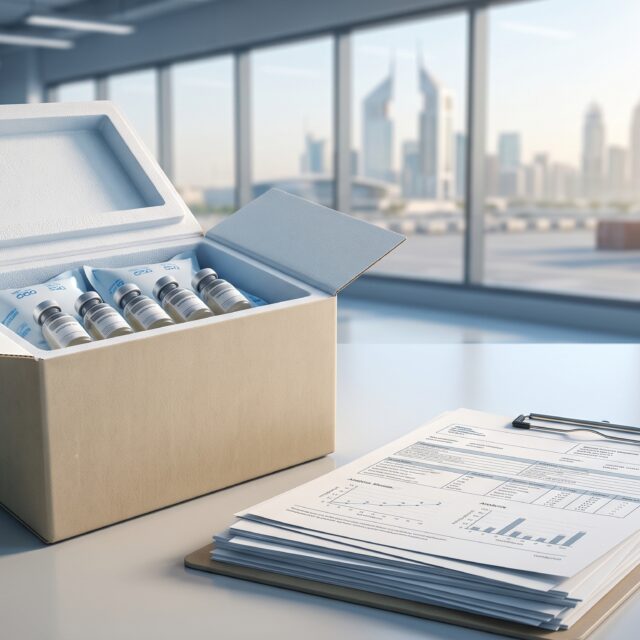
In the GCC, a peptide does not necessarily have to be counterfeited at the source to be rendered entirely useless by the time it reaches your laboratory bench. The extreme environmental heat in Saudi Arabia, the UAE, and the broader Middle East degrades lyophilized (freeze-dried) peptides rapidly. A perfectly synthesized compound shipped without verified temperature-controlled logistics effectively becomes a compromised product in transit.
Local regulatory bodies are increasingly cracking down on the mishandling and illegal distribution of these delicate compounds. In recent high-profile enforcement operations across Riyadh, Jeddah, and Dubai, the Saudi Food and Drug Authority (SFDA) and the UAE Ministry of Health and Prevention (MoHAP) have detained unauthorized distributors and seized various unregistered peptide substances. These seizures were largely due to illegal sales networks targeting fitness centers and dangerous, uncooled storage conditions.
These enforcement actions highlight a crucial reality for legitimate researchers: sourcing materials from social media sellers, local gym contacts, or unregulated overseas channels almost guarantees exposure to degraded or illicitly handled stock.
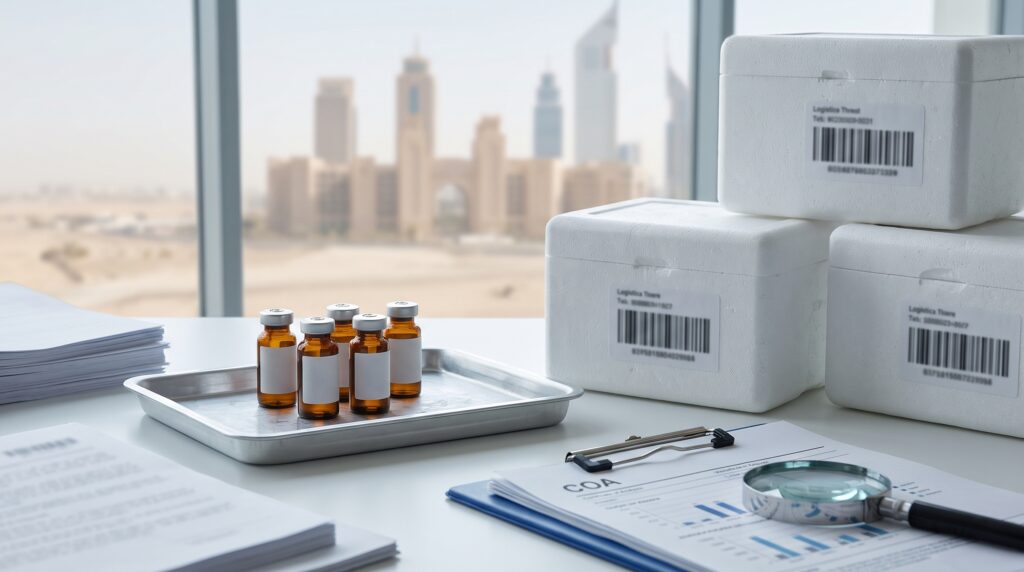
For biological integrity, temperature control is non-negotiable. If you are importing research materials from the US or China, your package may sit in a 45°C customs warehouse in Dubai or Riyadh for over a week awaiting clearance. By the time it arrives, the molecular structure is likely compromised. This is why local researchers increasingly rely on domestic GCC fulfillment. Utilizing services like NOVA Labs’ UAE Next Day Delivery ensures that compounds bypass lengthy, un-air-conditioned customs holds and arrive via protected, cold-chain logistics directly to your facility.
The 4-Step COA Authentication Masterclass
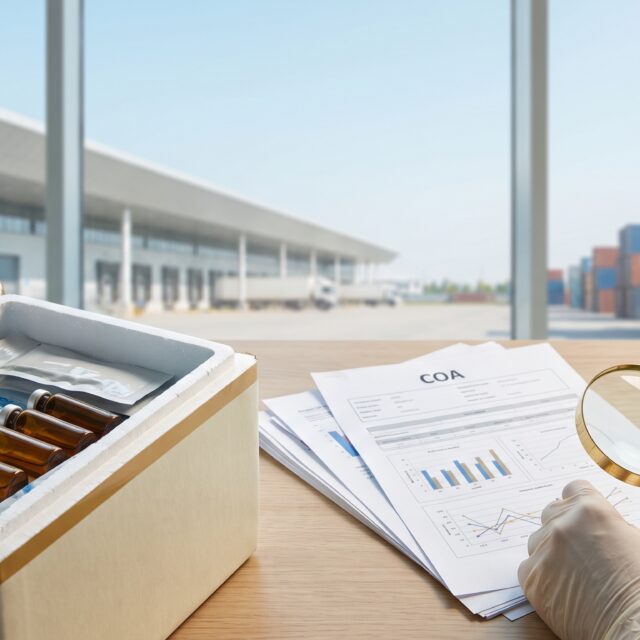
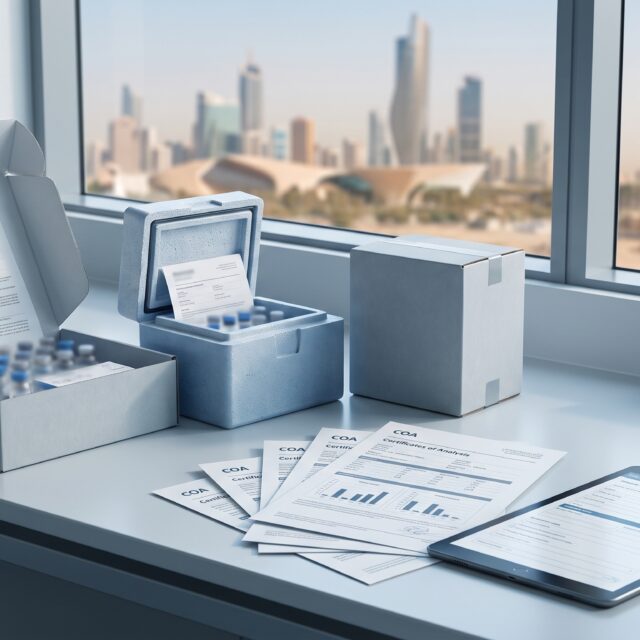
The absolute gold standard for verifying any research compound is the Certificate of Analysis (COA). However, as the industry grows, so does the sophistication of scammers. Counterfeiters frequently use PDF editing software to alter generic reports, swap out dates, or steal testing data from reputable vendors to pass off as their own.
To ensure your research materials are genuine, follow this rigorous four-step COA authentication process:
1. Require Both HPLC and Mass Spectrometry
A legitimate COA must contain two distinct, highly specific analytical tests.
- High-Performance Liquid Chromatography (HPLC): This is used to determine the exact purity percentage of the compound. Look at the chromatogram graph on the report. You should see one massive, sharp peak indicating the primary compound (ideally >99% purity), with minimal tiny bumps along the baseline (which indicate impurities). If the main peak is wide and jagged, the synthesis was poor.
- Mass Spectrometry (MS): This confirms the molecular weight and identity of the peptide itself. If a vendor only provides a purity percentage without the accompanying Mass Spec data to prove what the substance actually is, they could theoretically be selling you 99% pure baking soda. The MS graph must be present.
2. Match the Batch and Lot Numbers
A stellar COA is completely useless if it does not apply directly to the vial sitting on your desk. Fraudulent suppliers often test one single high-quality batch, post that perfect COA on their website, and then ship cheaper, untested, or inferior batches to buyers for months or even years. Always ensure that the lot number printed on the physical vial label matches the exact batch number listed on the testing document.
3. Verify Third-Party Independence
The testing laboratory must be an independent, verifiable third-party entity—not an “in-house” testing department. In-house testing creates an immediate conflict of interest. Look for accredited analytical laboratories (such as Janoshik, MZ Biolabs, or reputable university labs) that specialize in amino acid sequencing and molecular testing.
4. Use the Lab’s Verification Portal
The most effective way to spot a forged COA is to bypass the supplier entirely. Legitimate testing facilities maintain online verification portals. By entering the certificate number or scanning the provided QR code, you should be able to view the original test results directly hosted on the independent laboratory’s website. If the vendor’s PDF does not match the lab’s database, or if the QR code simply redirects to the vendor’s own site, the document is highly likely to be forged.
Physical Red Flags: Inspecting the Vial
Beyond documentation, the physical characteristics of the product can offer clues to its legitimacy and handling history.
- The Lyophilized Puck: High-quality peptides are freeze-dried into a solid “puck” or cake at the bottom of the vial. While rough shipping can sometimes break this puck into a powder, a vial that consistently looks like a loose, messy, crystalline powder from the start may indicate poor lyophilization processes or degradation.
- Vacuum Seal Integrity: Most premium research peptides are sealed under a vacuum. When you inject bacteriostatic water into the vial for reconstitution, the negative pressure should naturally pull the liquid out of the syringe and into the vial. If there is no vacuum, the seal may be compromised, exposing the delicate compound to oxygen and moisture degradation.
- Label Quality: Professional laboratories utilize automated, batch-specific printing for their labels. If your vials arrive with cheap, generic stickers that easily peel off, or hand-written lot numbers in Sharpie, the operational standards of the supplier are suspect.
Operational Red Flags: Payment and Support
Beyond chemical analysis and logistics, the operational footprint of a supplier provides massive clues about their legitimacy. The grey-market peptide industry is rife with vendors designed to take your money and disappear when issues arise.
One of the most prominent red flags is a reliance on crypto-only payment methods. While cryptocurrency has valid uses in global e-commerce, a vendor that strictly limits payments to Bitcoin, Monero, or USDT is deliberately stripping buyers of chargeback rights. If fraudulent, mislabeled, or underdosed products are shipped, you have absolutely zero financial recourse. Legitimate suppliers operating within commercial frameworks offer standard, secure payment gateways.
Furthermore, assess the supplier’s customer support accessibility. Can you reach a real person? Do they offer a localized WhatsApp support line for immediate order inquiries, or is your only option an anonymous, unmonitored contact form? Transparent suppliers operating legitimate businesses are easy to contact and are fully prepared to answer technical questions regarding batch data and shipping protocols.
Sourcing Verifiable Materials in the GCC
Navigating regulatory landscapes, import friction, and extreme climates requires working with suppliers who understand GCC logistics intimately. Purchasing blindly from overseas vendors often results in wasted budgets and ruined compounds.
At NOVA Labs, we prioritize verifiable quality and optimized local logistics for the Middle Eastern market. We understand that researchers cannot afford downtime, compromised data, or the uncertainty of forged documentation. This is why our operational model is built entirely around transparency and cold-chain integrity.
When evaluating NOVA Labs’ research compounds, researchers have direct access to up-to-date, independent, verifiable COAs ensuring that both purity (HPLC) and molecular identity (Mass Spec) meet the strictest global laboratory standards.
Equally important is our approach to regional logistics. We eliminate the severe risks associated with international customs delays and heat exposure through our optimized local delivery protocols. By maintaining localized stock within the region and utilizing specialized thermal packaging, we ensure that every vial maintains its structural integrity from our climate-controlled facility straight to your laboratory bench.
Conclusion and Final Checklist
Understanding how to spot fake peptides in Saudi Arabia and the UAE is a matter of knowing exactly what documentation to demand, recognizing physical product cues, and understanding the logistical realities of the Middle Eastern climate. To safeguard your laboratory’s research, never bypass the verification step.
Always ensure your supplier provides independent, batch-specific COAs with both HPLC and Mass Spec data. Verify these documents on the third-party tester’s portal. Reject vendors who demand crypto-only payments or offer zero customer support, and never underestimate the destructive power of local heat on uncooled, slow-moving international shipments. By holding your suppliers to strict testing and logistical standards, you guarantee the integrity of your research materials.
Disclaimer: All products mentioned in this article are strictly for laboratory research, in-vitro testing, and analytical purposes only. They are not intended for human consumption, therapeutic use, or medical treatment.
References
- Saudi Food & Drug Authority (SFDA). “Guidelines on Good Distribution Practice (GDP) for Pharmaceutical Products.”
- UAE Ministry of Health and Prevention (MoHAP). “Regulations on the Importation and Storage of Medical and Research Compounds.”
- Journal of Chromatography A. “High-performance liquid chromatography and mass spectrometry for the characterization of synthetic peptides.”
- Kuhlmann, J., et al. (2021). “Quality control of synthetic peptides: The role of HPLC and mass spectrometry.” Analytical Biochemistry.
Disclaimer: The products mentioned in this article are for research purposes only and are not intended for human consumption.
- MoH Warns Against Using Unregistered Drugs and Seizes Violators
- Buying Peptides Online? Here’s How to Spot Fake and Dangerous Products – LA Times
- Peptide Vendor Scams: 8 Red Flags + COA Checklist (2026) – NorthPeptide
- SFDA Registration & Approval Process (Roadmap for All Products) – PharmaKnowl
Frequently asked questions
What is the best way to verify a peptide's purity before buying?
The most reliable method is to demand an independent Certificate of Analysis (COA) that includes High-Performance Liquid Chromatography (HPLC) to confirm purity percentage and Mass Spectrometry (MS) to verify the compound's precise molecular weight and identity.
Why is shipping temperature so critical for peptides in Saudi Arabia and the UAE?
Lyophilized research compounds degrade rapidly when exposed to extreme GCC heat. Proper cold-chain logistics, including thermal packaging and bypassing lengthy customs delays, are absolutely essential to maintain the compound's structural integrity during transit.
Are crypto-only peptide websites safe to buy from?
Generally, no. Vendors that strictly require cryptocurrency payments often do so to remove your ability to file a credit card chargeback, leaving you without financial recourse if they ship fraudulent, degraded, or underdosed products.
How can I tell if a supplier's COA is forged or fake?
Always check that the lot number printed on the vial matches the exact batch number on the COA. Additionally, look up the independent testing laboratory online and use their verification portal (or scan the QR code) to ensure the document hosted on their server matches what the vendor provided.
Nova Labs buyer tools
Ready to verify stock, testing and delivery?
Use the product page and lab report section to check availability, documentation, delivery timing and support before placing an order.
- COA / test-report checks
- Saudi Arabia delivery context
- Cold-chain handling
- COD and card payment options
- WhatsApp support