



Nova Biolabs vs Barq Peptides Bahrain: Procurement Overview
When evaluating nova biolabs vs barq peptides bahrain, the primary differences lie in compound format, shipping stability, and analytical transparency. Nova Biolabs provides heat-stable lyophilized vials via cold-chain transit with public Janoshik testing, whereas Barq Peptides focuses on pre-mixed liquid formats shipped via ambient regional freight.
Key Takeaways: Bahrain Buyer Checklist
- Compound Stability: Nova Biolabs supplies lyophilized (freeze-dried) powders that resist thermal degradation; Barq Peptides supplies pre-mixed liquids that are more susceptible to hydrolysis.
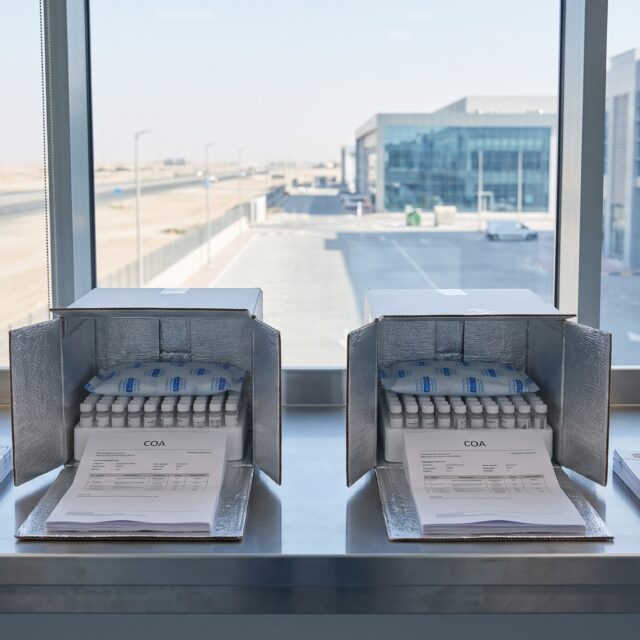
- Shipping Infrastructure: Nova Biolabs utilizes active EPS-insulated cold-chain packaging. Barq Peptides typically relies on ambient causeway road networks.
- Testing Transparency: Nova Biolabs publishes batch-specific, cryptographically verifiable Janoshik COAs directly on product pages. Barq Peptides generally gates their analytical data, requiring a manual support request.
- Customs & Delivery: Both suppliers operate out of UAE fulfillment hubs, delivering to Bahrain within 3 to 5 days and successfully navigating OFOQ customs under the Research Use Only (RUO) framework.
- Payment Options: Both suppliers provide Cash on Delivery (COD) in Bahrain, along with region-specific digital payment solutions.
Evaluation Methodology and Sourcing Criteria
Independent researchers, procurement specialists, and university laboratories in Bahrain face a unique set of challenges when sourcing high-purity biochemicals. Between navigating regional customs regulations, managing high ambient temperatures, and verifying supplier documentation, selecting the right vendor requires careful evaluation.
To provide an objective assessment as of late 2026, we evaluated both Nova Biolabs and Barq Peptides against four critical supply chain pillars: Compound Stability (molecular integrity in transit), Logistics & Cold-Chain Infrastructure (handling GCC heat profiles), Analytical Transparency (availability of verifiable HPLC/MS data), and Localized Support (customs clearance and payment flexibility in Bahrain).
Compound Formats and Thermal Stability
One of the most consequential differences between these two suppliers is how they formulate and package their research compounds. The format directly impacts how the compound handles transit and determines its viable shelf life for long-term laboratory storage.
Lyophilized Vials (Nova Biolabs)
Nova Biolabs strictly supplies compounds in a lyophilized (freeze-dried) powder format. In the pharmaceutical lyophilization process, moisture is entirely removed from the compound within a vacuum chamber, suspending the biochemicals in a highly stable, dormant state.
This format is heavily favored in clinical and laboratory settings because it inherently resists thermal degradation. Until the researcher manually reconstitutes the powder with bacteriostatic water, the molecular structure remains highly robust. This ensures that even if a shipment is subjected to temporary temperature fluctuations during cross-border transit, the integrity of the compound remains uncompromised. For long-term storage, lyophilized vials can be kept in a laboratory freezer for years without significant degradation.
Pre-Reconstituted Liquid Pens and Blends (Barq Peptides)
Conversely, Barq Peptides emphasizes pre-reconstituted liquid pens and synergistic multi-compound blends. While pre-mixed liquids offer a streamlined format that removes the need for manual reconstitution in the lab, they introduce significant molecular stability challenges.
Once a compound is introduced to an aqueous solution, it becomes immediately susceptible to hydrolysis—a process where the compound slowly begins to degrade, cleaving molecular bonds and losing efficacy. Liquid formats require strict, continuous temperature control (typically between 2°C and 8°C) to slow this degradation. Making them inherently more fragile, pre-mixed liquids carry a higher risk of denaturing during extended transit, especially if exposed to heat.
Handling Bahrain’s Climate: Cold-Chain vs. Ambient Transit
For buyers in the Middle East, the local climate is a critical logistical factor that cannot be ignored. Ambient temperatures in Bahrain and eastern Saudi Arabia frequently exceed 40 to 45 degrees Celsius during the peak summer months. If a fragile research compound is exposed to this heat while sitting in a delivery vehicle or a border customs facility, its molecular bonds can rapidly denature.
Active EPS-Insulated Cold-Chain
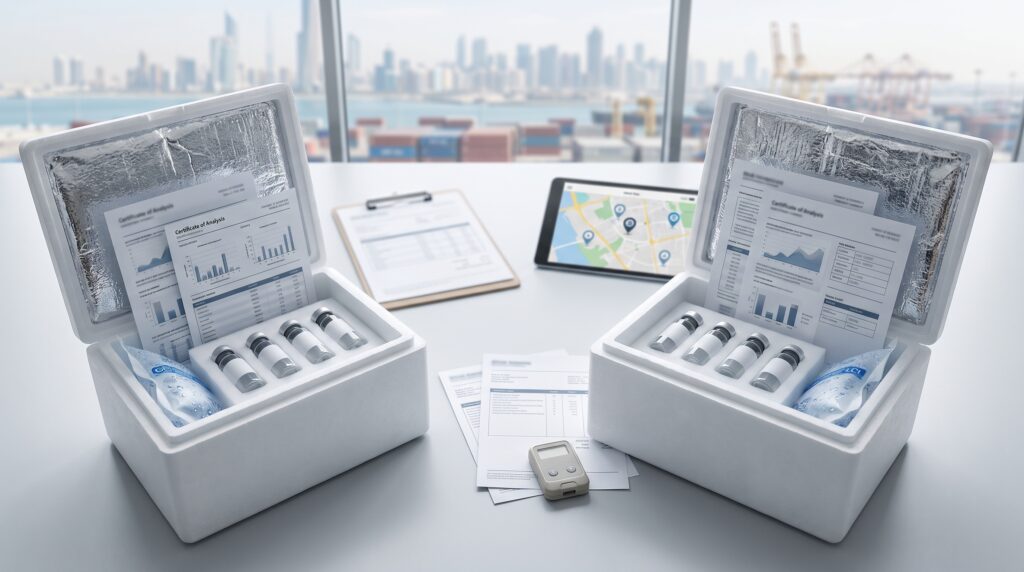
To combat GCC heat, Nova Biolabs utilizes active EPS-insulated cold-chain packaging for all its regional shipments. Even though their lyophilized vials are already highly thermally stable, shipping them in insulated packaging with phase-change cooling materials ensures that the compounds arrive in pristine condition, completely insulated from the extreme exterior environment. This dual-layered approach—lyophilization plus cold-chain transit—virtually eliminates the risk of heat degradation.
Ambient Causeway Logistics
Barq Peptides generally relies on standard ambient transit networks to move products from the UAE into Bahrain. Shipments often travel via regional road routes, crossing the King Fahd Causeway using local courier networks. While this is an efficient and cost-effective way to move non-sensitive goods, shipping pre-reconstituted liquid compounds via ambient road freight during the summer introduces a significantly higher risk of thermal degradation, particularly if the package experiences inspection delays at the border.
Analytical Transparency and COA Verification
The foundation of any credible research supplier is their analytical documentation. A Certificate of Analysis (COA) detailing High-Performance Liquid Chromatography (HPLC) and Mass Spectrometry (MS) results is the only objective way a buyer can verify compound purity and identity.
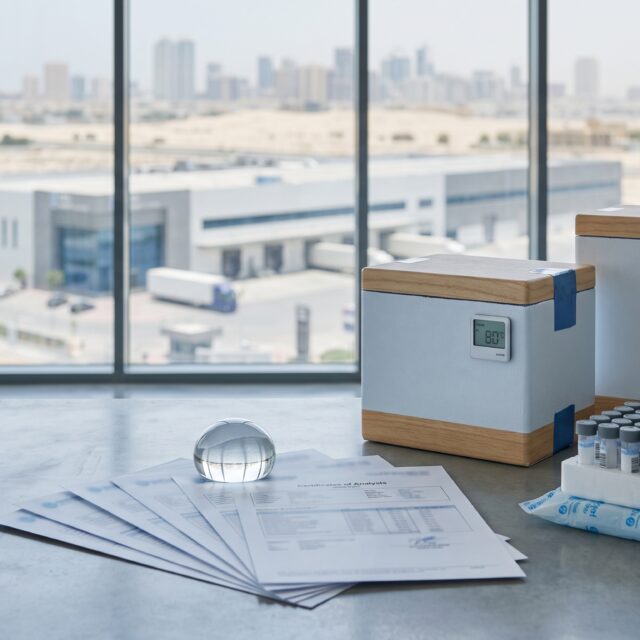
For researchers seeking a highly verifiable barq peptides alternative bahrain, analytical transparency is often the primary deciding factor. Nova Biolabs partners exclusively with Janoshik Analytical, a globally respected third-party biochemical testing facility. Nova Biolabs proactively publishes batch-specific, cryptographically verifiable COAs directly on every product page. Buyers can take the unique verification key found on the COA and enter it directly into the Janoshik portal to confirm the document has not been altered, forged, or recycled from an older batch. This proactive transparency ensures that procurement teams can audit purity levels prior to placing an order.
Barq Peptides approaches testing differently. Their analytical testing data is largely gated behind customer service walls. Buyers typically need to reach out to customer support to manually request a COA for a specific batch. While this still allows buyers to access documentation eventually, the extra friction and lack of public, cryptographically verifiable third-party auditing on the storefront can slow down the procurement evaluation process and limit pre-purchase confidence.
Logistics, Customs, and Payment in Bahrain
Navigating cross-border logistics is much faster today than it was a few years ago. Both suppliers have successfully bypassed the lengthy 14-to-21 day wait times associated with international overseas shipping by operating out of regional fulfillment hubs situated in the UAE.
Delivery Times and Customs Compliance
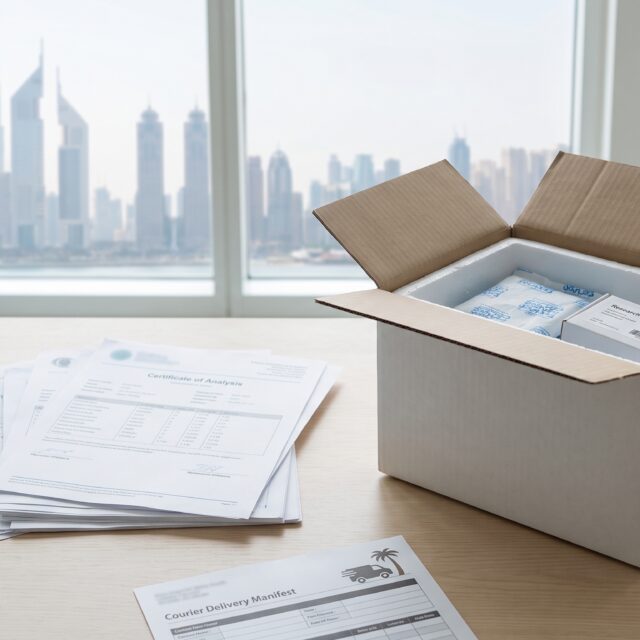
Whether you choose Nova Biolabs or Barq Peptides, delivery to Bahrain generally takes between 3 to 5 working days. Both brands target the strictly regulated Research Use Only (RUO) framework to ensure compliant documentation.
For Bahrain imports, ensuring RUO compliance helps avoid regulatory delays through Bahrain’s OFOQ customs clearance system and aligns with the National Health Regulatory Authority (NHRA) guidelines for laboratory materials. Proper documentation prevents shipments from being flagged, seized, or held indefinitely during border inspections at the causeway or airport.
To understand more about how localized warehousing accelerates delivery times across the GCC, buyers can review how a regional fulfillment network operates to streamline cross-border logistics.
Payment Infrastructure and Support
Flexible payment options are a strong requirement for GCC buyers, who often prefer cash transactions over digital gateways. Both suppliers have adapted to local preferences by offering Cash on Delivery (COD) across Bahrain, allowing buyers to physically inspect their packages before handing over payment. Both also utilize localized WhatsApp-based customer support for seamless, real-time communication regarding delivery updates.
Where the two differ is in their digital payment integrations. Nova Biolabs provides secure, encrypted credit card processing alongside cryptocurrency payment options (such as USDT and Bitcoin) for buyers prioritizing privacy and decentralized finance. Barq Peptides, meanwhile, focuses heavily on integrating localized GCC digital wallets and payment links to facilitate regional transactions.
Making Your Choice: Which Supplier Fits Your Research Needs?
Choosing between these two prominent suppliers ultimately depends on your specific research requirements, your laboratory setup, and your stance on verifiable analytical documentation.
If you prioritize convenience, do not want to manage the reconstitution process yourself, and are comfortable requesting COAs directly from customer support, Barq Peptides provides a localized service tailored to those specific preferences.
However, if your laboratory demands maximum compound stability, cryptographically verifiable third-party testing visible before purchase, and temperature-controlled shipping to protect against GCC heat, Nova Biolabs offers a significantly more robust infrastructure. When comparing barq peptides vs nova labs bahrain, the decision strongly leans toward Nova Biolabs for buyers who require rigorous auditing, batch-specific purity guarantees, and long-term storage stability.
Researchers looking to secure high-purity, lyophilized materials backed by transparent Janoshik analytics can explore the full range of research compounds to view current batch documentation, HPLC/MS results, and local stock availability.
*
Disclaimer: The products mentioned in this article are strictly for in-vitro research and laboratory use only. They are not intended for human or animal consumption, therapeutic application, or diagnostic purposes. Always adhere to your local NHRA and institutional safety guidelines when handling biochemicals.
References
- National Health Regulatory Authority (NHRA) Bahrain. (2026). Guidelines for the Importation of Laboratory and Research Materials.
- OFOQ Customs Clearance System. (2026). Bahrain Customs Procedures, Tariff Codes, and RUO Declarations.
- Janoshik Analytical. (2026). Cryptographic Verification Protocols and Methodology for HPLC/MS Testing.
Disclaimer: The products mentioned in this article are for research purposes only and are not intended for human consumption.
- Nova Biolabs vs Barq Peptides: Bahrain Buyer Comparison
- Best Peptide Shop Bahrain: Supplier Sourcing & COA Guide – NOVA Labs
- Nova Biolabs vs Barq Peptides: UAE Buyer Comparison (2026)
- Nova Biolabs vs Barq Peptides: Sharjah Buyer Comparison
Frequently asked questions
How long does research material delivery take from the UAE to Bahrain?
Delivery from UAE-based fulfillment centers to Bahrain typically takes 3 to 5 working days. Utilizing regional hubs bypasses the standard 14 to 21 day wait times and complex customs delays associated with international overseas shipping.
Are lyophilized peptides more stable than pre-mixed liquid pens?
Yes. Lyophilized (freeze-dried) powders are highly stable and naturally resist thermal degradation. Pre-reconstituted liquids are susceptible to hydrolysis and degrade much faster, especially if exposed to high ambient GCC temperatures during transit.
Can I verify the purity of Nova Biolabs products before purchasing?
Yes. Nova Biolabs provides batch-specific, cryptographically verifiable Certificates of Analysis (COAs) from Janoshik Analytical directly on every product page, allowing researchers to audit HPLC and MS testing results prior to placing an order.
Do peptide suppliers offer Cash on Delivery (COD) in Bahrain?
Both Nova Biolabs and Barq Peptides offer Cash on Delivery (COD) services for researchers in Bahrain. This allows buyers to inspect their logistics packaging before finalizing payment, alongside standard digital payment options.
Nova Labs buyer tools
Ready to verify stock, testing and delivery?
Use the product page and lab report section to check availability, documentation, delivery timing and support before placing an order.
- COA / test-report checks
- Bahrain delivery context
- Cold-chain handling
- COD and card payment options
- WhatsApp support