
Sourcing Research Materials in the GCC
As of late 2025 and heading into 2026, researchers and procurement staff in Bahrain evaluating their supply chains face distinct choices. Navigating the logistics of temperature-sensitive biological compounds in the Gulf Cooperation Council (GCC) requires rigorous assessment. Buyers must consider extreme summer temperatures routinely exceeding 45 degrees Celsius, regional customs friction, and the specific documentation required to verify batch purity before committing to an order. For laboratories evaluating nova biolabs vs bodypharm bahrain, these options represent two entirely different operational frameworks. This comparison details the verifiable public claims, logistics, and testing standards of both entities to help informed consumers and laboratories in Manama, Muharraq, and beyond make the correct procurement decision.
Quick Answer: Nova Biolabs vs BodyPharm Bahrain
Comparing Nova Biolabs vs BodyPharm Bahrain highlights distinct operational differences. Nova Labs utilizes centralized GCC distribution for 2 to 5-day delivery of heat-stable lyophilized powders, backed by pre-purchase HPLC COAs. BodyPharm resellers primarily ship international pre-mixed liquids featuring 7 to 14-day transit times and post-purchase scratch-off verification.
Comparison Methodology and 2026 Evaluation Criteria
To provide an objective assessment of Nova Biolabs and BodyPharm for the Bahraini market, we evaluated both entities across four critical procurement pillars based on current 2026 market data. First, we analyzed Testing Transparency, focusing on the availability of independent, third-party HPLC/MS Certificates of Analysis (COAs) prior to purchase versus post-arrival authenticity checks. Second, we assessed Thermal Stability, comparing the physical state of the shipped compounds (lyophilized powders vs. aqueous solutions) against the realities of GCC summer temperatures. Third, we reviewed Logistics and Customs, measuring average transit times to Manama and the wider GCC, tracking reliability, and cold-chain integrity. Finally, we examined Payment and Support Infrastructure, looking at buyer protection, checkout gateways, and regional customer service accessibility. This methodology ensures researchers have a factual baseline for their procurement decisions.
Documentation: Pre-Purchase COAs vs. Post-Purchase UPIC Verification
The most critical aspect of sourcing research compounds is verifying molecular purity. The approach to documentation highlights a significant divergence between finding a bodypharm alternative bahrain and utilizing traditional reseller models.
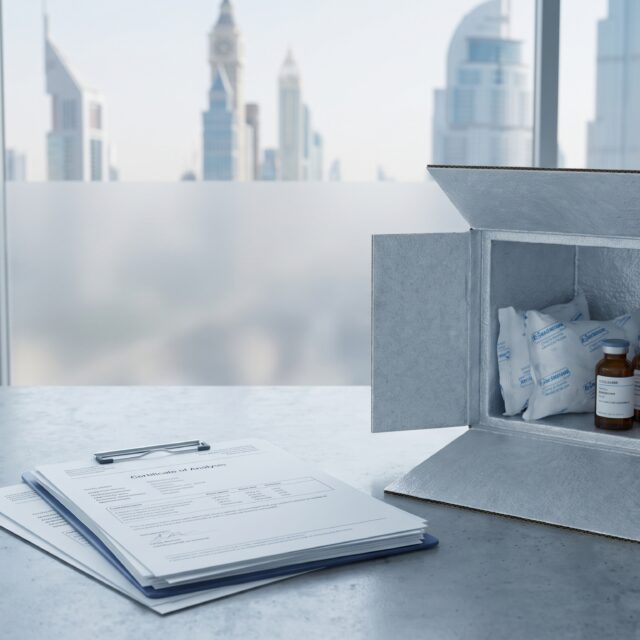
Nova Biolabs operates on a model of pre-purchase transparency. Every product page features a publicly visible, up-to-date Certificate of Analysis (COA) audited by independent, third-party laboratories such as Janoshik. These HPLC (High-Performance Liquid Chromatography) and MS (Mass Spectrometry) reports confirm the exact purity percentage and molecular mass of the current batch before the buyer adds the item to their cart. This allows researchers to verify the exact specifications of the compound necessary for their controlled in-vitro studies, eliminating the guesswork associated with unverified chemical inputs.
In contrast, BodyPharm relies heavily on a post-purchase UPIC (Unique Product Identification Code) scratch-off verification system located on the physical product packaging. While this system is designed to combat counterfeit branding and unauthorized replication of their labels, it only confirms the origin authenticity of the vial—that it came from a specific manufacturing facility. A UPIC code does not provide the buyer with a batch-specific HPLC purity report prior to ordering. For strict research protocols, confirming authenticity after the package arrives is often insufficient if the baseline purity remains unverified by a public, third-party lab. Researchers need to know the purity of the chemical inside the vial, not just the authenticity of the sticker on the outside.
Product Stability: Lyophilized Powders vs. Pre-Mixed Liquids
When evaluating bodypharm vs nova labs bahrain, environmental stability is a paramount concern. Bahrain’s climate introduces severe thermal challenges for transporting biological materials, particularly from May to October, where ambient temperatures can easily degrade sensitive molecules.
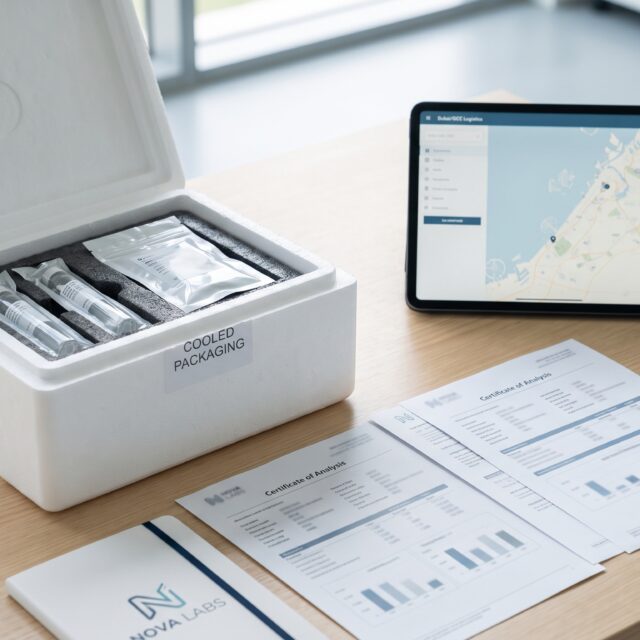
Nova Biolabs exclusively supplies compounds in temperature-stable lyophilized (freeze-dried) powder formats. Lyophilization is a complex manufacturing process that removes the water content from the compound under a vacuum, suspending it in a highly stable state that resists thermal degradation. This means that even if a delivery vehicle reaches high temperatures during local transit in Manama or sits briefly in a sorting facility, the molecular integrity of the powder remains intact. The compound remains dormant until the researcher is ready to introduce bacteriostatic water and reconstitute it in the laboratory setting immediately prior to their assay.
BodyPharm products, depending on the specific third-party reseller utilized, are frequently distributed as pre-mixed liquid solutions. While pre-mixed liquids may appear convenient, they are highly vulnerable to thermal degradation. Once a compound is introduced to a solvent, its molecular bonds begin to break down much faster when exposed to heat and mechanical agitation. During international airmail transit and customs processing, these liquid formulations risk arriving in a degraded state, potentially compromising research integrity and leading to skewed experimental data.
Delivery Windows and Customs Friction in Bahrain
Logistics and clearance play a massive role in supplier reliability. The operational structure of a supplier directly impacts transit times and the risk of customs confiscation at border checkpoints.
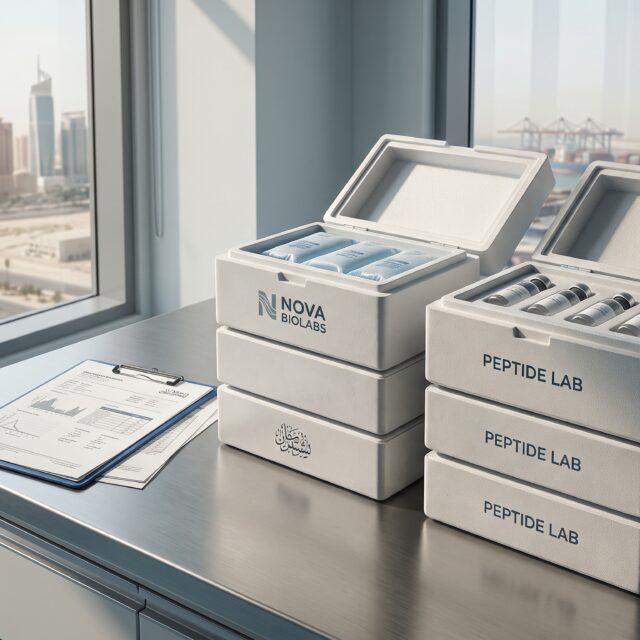
Nova Biolabs operates a centralized direct-to-buyer fulfillment network focused on the GCC region. Because the logistics are managed regionally rather than relying on fragmented international drop-shipping, deliveries to Bahrain typically arrive within a tight 2 to 5-day window. This regional infrastructure is built on the same centralized model that allows researchers to access fast, reliable peptides UAE next day delivery, ensuring that time-sensitive compounds spend minimal time in transit. This centralized approach reduces trans-border customs friction, providing a seamless experience built on established regional distribution frameworks.
BodyPharm, as a brand, is largely distributed through decentralized, third-party reseller networks based internationally. Because buyers must source through these independent operators, order transit times generally average 7 to 14 days. International airmail packages shipped by fragmented resellers often face heightened scrutiny at Bahraini customs checkpoints, increasing the risk of seizure, administrative delays, or thermal exposure while packages sit in non-climate-controlled holding areas awaiting clearance.
Payment Flexibility, Support, and Ordering Thresholds
Procurement friction also extends to the checkout process. Securing research materials should not require navigating complex international finance hurdles or dealing with unresponsive overseas suppliers.
Nova Biolabs provides localized payment support tailored to the GCC market. This includes conventional secure credit card checkout processes and the availability of regional Cash on Delivery (COD) options, giving independent buyers and laboratories peace of mind. Additionally, Nova Labs maintains an accessible free-shipping threshold (equivalent to AED 400), ensuring that independent researchers do not have to meet massive wholesale minimums to obtain fast, climate-controlled shipping. Furthermore, regional WhatsApp support ensures researchers can get immediate updates on their GCC shipments.
Conversely, researchers utilizing BodyPharm reseller networks often face restricted payment gateways. Many international resellers operating in this space require upfront international wire transfers or cryptocurrency payments (such as Bitcoin or USDT). This can create significant accounting hurdles for procurement staff and fundamentally removes the buyer protection inherently provided by standard credit card processors or regional COD models. Customer service is also highly variable, dependent entirely on which third-party reseller the laboratory chooses to engage with.
Which Supplier Fits Your Research Framework?
Choosing the right supplier requires balancing logistics, climate realities, and testing transparency. For buyers in Bahrain, the decentralized reseller model associated with BodyPharm presents challenges regarding long transit times, liquid thermal degradation in the GCC heat, and a lack of pre-purchase HPLC visibility.
Nova Biolabs mitigates these regional challenges through centralized GCC fulfillment, supplying temperature-stable lyophilized powders backed by independent Janoshik COAs, and supporting buyers with accessible payment methods and responsive support. To evaluate the full range of third-party tested compounds and secure regional logistics, explore the complete research catalog at the Nova Labs shop.
Disclaimer: The products mentioned in this article are strictly for in-vitro research purposes only and are not intended for human consumption, diagnostic, therapeutic, or medical use.
References
- High-Performance Liquid Chromatography (HPLC) Standards for Peptide Purity (Journal of Chromatography methodologies).
- Thermal Degradation of Peptides in Aqueous Solutions (Standard Pharmacopeia Guidelines).
- GCC Customs and Cold Chain Transport Overview (Regional Logistics Data).
- Product Authenticity and Anti-Counterfeit Verification Methods in Global Manufacturing (UPIC Industry Standards).
- Nova Biolabs vs BodyPharm: Bahrain Buyer Comparison
- Check Product | BodyPharm
- Nova Biolabs vs Bodypharm GCC: Buyer Comparison (2026 Guide)
- Peptides : r/Bahrain – Reddit
Frequently asked questions
What is the difference between an HPLC COA and a UPIC scratch-off code?
An HPLC Certificate of Analysis (COA) is a laboratory report that proves the exact molecular purity of a specific batch prior to purchase. A UPIC scratch-off code only confirms that the product's packaging originated from a specific brand's factory, but it does not detail the compound's actual purity percentage.
Are pre-mixed liquid research materials safe to ship to Bahrain?
Pre-mixed liquid formulations are highly susceptible to rapid thermal degradation when exposed to extreme GCC summer temperatures. For this reason, lyophilized (freeze-dried) powders are significantly more stable and are the recommended format for transit to Bahrain.
How long does research material delivery take to Manama?
Centralized regional suppliers operating within the GCC typically deliver to Manama within 2 to 5 days. Conversely, international third-party reseller networks generally take 7 to 14 days, subject to unpredictable customs clearance delays.
Which payment methods offer the most protection for buyers in Bahrain?
Regional buyers benefit most from suppliers that offer secure credit card processing or Cash on Delivery (COD) options. International wire transfers or cryptocurrency requirements offer significantly less buyer protection and complicate institutional procurement.
Why is lyophilization preferred for GCC laboratory research?
Lyophilization removes the water content from a compound, placing it in a stable, dormant powder state. This protects the molecular structure from heat degradation during transit, ensuring the material remains pure until it is reconstituted in the lab.
Nova Labs buyer tools
Ready to verify stock, testing and delivery?
Use the product page and lab report section to check availability, documentation, delivery timing and support before placing an order.
- COA / test-report checks
- Bahrain delivery context
- Cold-chain handling
- COD and card payment options
- WhatsApp support