
Securing verifiable research materials in the Middle East requires navigating unique local challenges. For buyers and procurement staff in Doha, extreme summer temperatures, strict border protocols, and fragmented supplier networks often complicate the acquisition of sensitive laboratory materials. When evaluating the market, the decision typically comes down to logistical reliability, temperature control, and analytical documentation.
As of mid-2026, the Qatari market is experiencing a significant shift. Legacy models that relied on fragmented networks of independent resellers are gradually being replaced by centralized, direct-to-buyer fulfillment systems. For informed buyers, understanding the structural differences between these models is critical for avoiding delayed shipments, thermal degradation, or seized packages at the border. This guide breaks down how both suppliers handle the realities of the GCC market, from pre-purchase chemical analysis to surviving the region’s intense thermal load.
Quick Answer: Nova Biolabs vs BodyPharm Qatar
When comparing nova biolabs vs bodypharm qatar, Nova Biolabs operates a centralized shipping model offering 4-5 day transit to Doha, Cash on Delivery, and pre-purchase Janoshik HPLC testing. Conversely, BodyPharm relies on decentralized resellers using post-purchase holograms, often requiring wire transfers and shifting customs risks entirely to the buyer.
Understanding these operational differences allows research teams and informed buyers to make procurement decisions based on verifiable data rather than marketing claims or generic branding.
Methodology: 2026 Supplier Comparison Criteria
To provide an objective assessment for Qatari buyers, this 2026 market comparison evaluates both suppliers across four critical procurement pillars specifically tailored to the Gulf Cooperation Council (GCC) environment:
- Analytical Documentation: Evaluating the presence of pre-purchase chemical analysis (HPLC-MS) versus post-purchase brand authenticity labels.
- Thermal Stability: Assessing the formulation (lyophilized powder vs. liquid solutions) and its viability in Doha’s extreme ambient temperatures.
- Logistics and Customs: Reviewing how suppliers navigate Qatar’s Al Nadeeb electronic customs clearance system and whether they provide valid Material Safety Data Sheets (MSDS).
- Payment Risk: Analyzing the financial exposure placed on the buyer, including the availability of localized Cash on Delivery (COD) versus offshore wire transfers.
Pre-Purchase Purity vs. Post-Purchase Authenticity
The fundamental difference in how these two entities approach product verification lies in the type of documentation they provide to the end user. In modern research settings, assuming purity based on brand reputation is a fast-fading practice, as trace impurities can severely compromise experimental data.
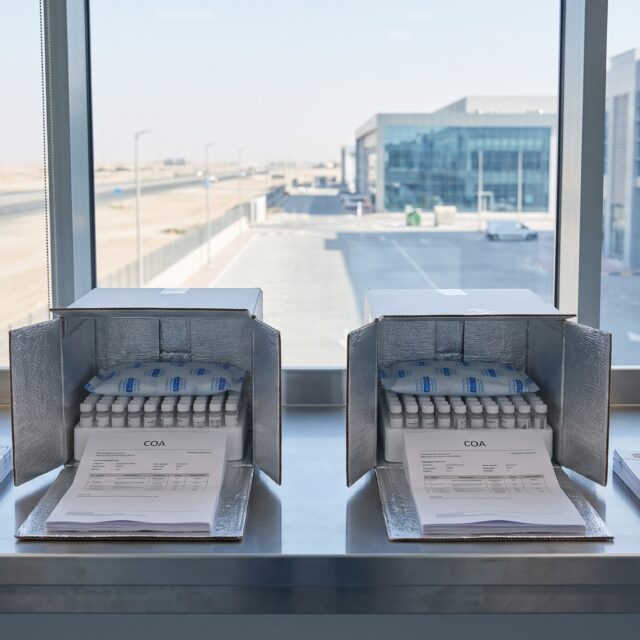
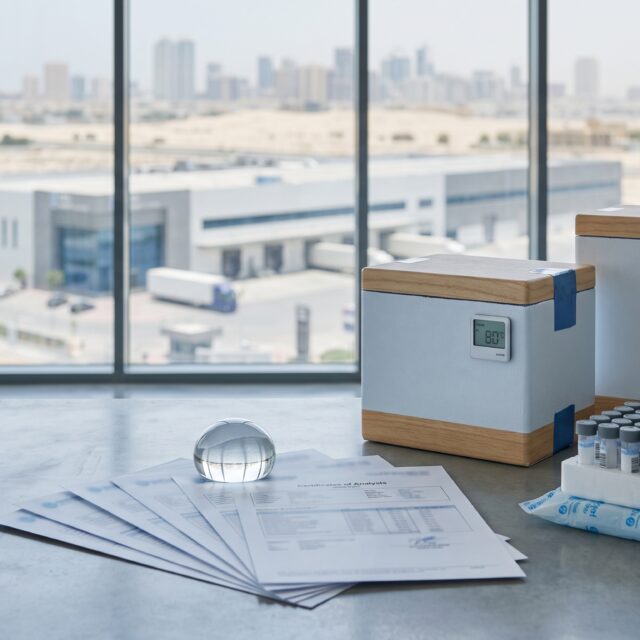
Nova Biolabs publishes pre-purchase, batch-specific HPLC-MS (High-Performance Liquid Chromatography and Mass Spectrometry) purity reports. Conducted by respected independent testing facilities like Janoshik Analytical, these reports confirm the exact chemical composition, molecular mass, and purity percentage of the lyophilized powder inside the vial. Buyers can view the specific Certificate of Analysis (COA) for their batch before initiating a purchase, ensuring the compound meets strict laboratory standards and contains no heavy metals or unknown filler molecules.
BodyPharm, representing a legacy brand model, primarily relies on a Unique Product Identification Code (UPIC) system. This involves a scratch-off hologram on the packaging that buyers can verify on a central website after the product is delivered. While a UPIC confirms that the physical vial originated from a specific manufacturing facility (verifying brand authenticity), it does not provide batch-specific chemical analysis. More importantly, it fails to confirm the current purity of the compound inside. For researchers conducting sensitive studies, substituting a post-purchase authenticity check for a pre-purchase chemical analysis introduces an unnecessary and potentially costly variable into their work.
Overcoming Thermal Degradation in the GCC
Qatar’s climate poses one of the most severe challenges to the stability of research compounds. With summer transit temperatures routinely exceeding 45 degrees Celsius, how a product is formulated and packaged directly dictates its viability upon arrival in Doha.
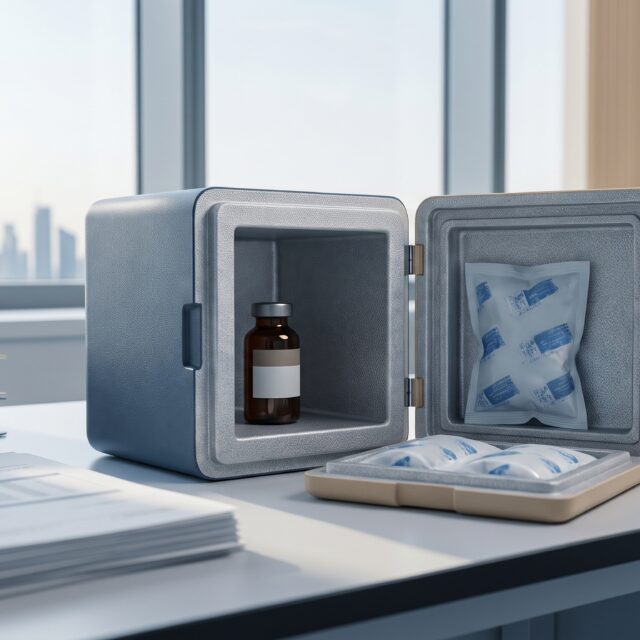
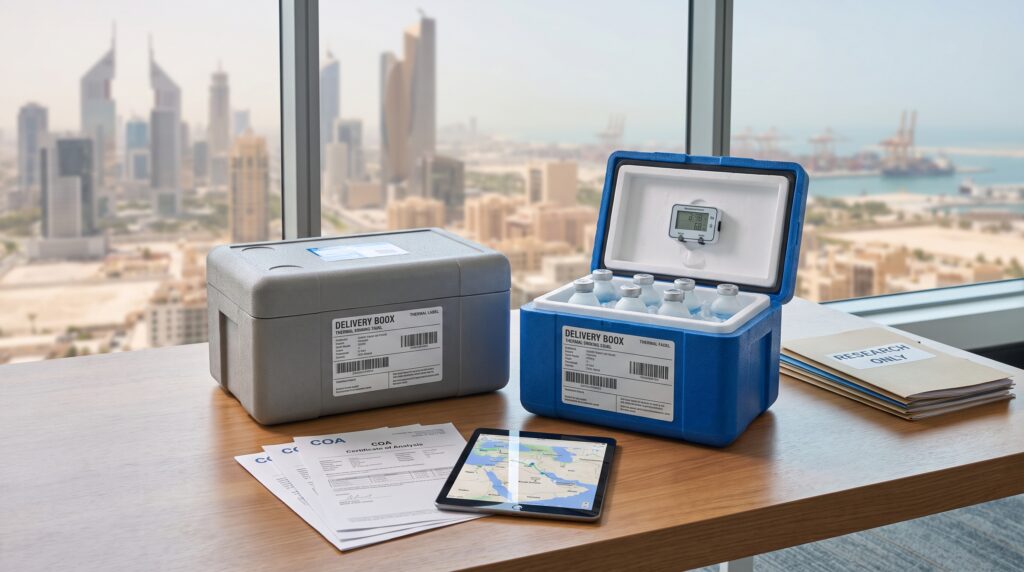
Nova Biolabs exclusively distributes freeze-dried (lyophilized) powder formulations. The lyophilization process removes moisture from the compound while under a deep vacuum, rendering the peptide structurally stable and highly resistant to thermal degradation. Until the researcher reconstitutes the powder with bacteriostatic water in the lab, the compound remains resilient against ambient heat. Furthermore, orders are dispatched using insulated thermal packaging designed to mitigate the rapid temperature fluctuations that occur on airport tarmacs and during local courier sorting.
In contrast, the BodyPharm supply chain is heavily decentralized, meaning buyers in Qatar generally purchase from independent, third-party regional resellers. These resellers frequently stock liquid suspensions, pre-mixed pens, or reconstituted solutions. Without strict, uninterrupted cold-chain storage, these liquid formats degrade rapidly when exposed to thermal stress. Because independent resellers do not uniformly adhere to rigorous cold-chain protocols, Qatari buyers risk receiving compounds that have been fundamentally compromised by prolonged heat exposure during transit or while sitting in unregulated warehouse storage facilities.
Navigating Al Nadeeb Customs via UAE-Based Logistics
Importing research materials into Qatar requires strict adherence to local regulations managed through the Al Nadeeb customs clearance system. The primary friction point for most buyers is securing the proper documentation required to clear these checks without facing delays, additional tariffs, or outright confiscation.
Nova Biolabs manages Qatar customs requirements natively by leveraging a central regional logistics hub located in the United Arab Emirates. Because the operation utilizes a highly structured central network—the same infrastructure that powers their reliable UAE next-day delivery capabilities—shipments destined for Doha are dispatched with standardized Material Safety Data Sheets (MSDS) and explicit ‘Research Use Only’ (RUO) declarations. Proper Harmonized System (HS) codes are applied to every package. This professional documentation facilitates smooth, legitimate clearance through Al Nadeeb. The direct shipping model results in consistent 4 to 5 business day transit times to Doha, anchored by regional operational standards.
Because BodyPharm operates through a fragmented network of independent distributors, shipping and customs experiences are highly volatile. Many third-party resellers employ generic or ‘stealth’ packaging without proper RUO or MSDS documentation, hoping to bypass customs entirely. This explicitly passes the risk of customs seizure to the buyer. If an undocumented package is flagged and inspected in Doha, the buyer is often left with no recourse, no product, and no refund, as the local authorities will confiscate improperly declared laboratory materials.
Payment Structures and Financial Risk Reduction
The payment mechanisms offered by a supplier serve as a strong indicator of their operational confidence in the GCC region. When a supplier trusts their logistics network, they are willing to share the risk with the buyer.
Nova Biolabs provides localized Cash on Delivery (COD) for buyers in Qatar. This payment structure completely de-risks the transaction for the researcher or procurement manager; you do not part with your project capital until the insulated package is physically delivered to your facility or residence in Doha. Furthermore, customer support is managed directly via WhatsApp, providing real-time tracking updates, stock checks, and direct communication regarding GCC logistics.
When dealing with BodyPharm resellers, Qatari buyers are routinely asked to utilize high-risk, non-refundable payment methods such as offshore wire transfers, Western Union, or cryptocurrency. Because these transactions are non-reversible, all shipping and customs risks are instantly transferred to the buyer the moment payment is sent. If a package is lost by the courier, degraded by extreme heat, or held indefinitely by customs due to poor paperwork, the procurement staff faces significant, irrecoverable financial exposure.
Finding a Reliable BodyPharm Alternative in Qatar
For researchers evaluating a bodypharm alternative qatar, the priority should always be supply chain transparency and verifiable data. A reliable supplier must be able to prove chemical purity before the transaction occurs, protect the compound from the region’s intense thermal load, and manage border logistics without placing the financial burden of confiscated shipments on the buyer.
Transitioning to a direct-fulfillment supplier eliminates the guesswork and risk associated with third-party resellers. By controlling the formulation (lyophilized powders), the transit conditions (insulated packaging), and the payment structure (Cash on Delivery), Nova Biolabs provides a highly predictable procurement environment for Middle Eastern researchers.
If you are ready to evaluate transparently tested, thermally stable compounds supported by structured regional logistics, you can browse verifiable batches at the Nova Labs research shop to view available inventory and download batch-specific Janoshik testing reports prior to placing an order.
Conclusion: Your 2026 Procurement Checklist
When comparing bodypharm vs nova labs qatar, the structural differences in how these products reach Doha are stark. As of 2026, relying on post-purchase hologram verification and decentralized reseller networks introduces unnecessary risk regarding compound purity, thermal degradation, and customs confiscation.
Before placing an order for research materials in Qatar, informed buyers should always run through this procurement checklist:
- Analytical Testing: Are there pre-purchase, independent HPLC-MS reports available to verify mass and purity, or just brand authenticity labels?
- Formulation Stability: Is the compound a thermally stable lyophilized powder designed to survive GCC transit, or a highly heat-sensitive liquid?
- Customs Documentation: Does the supplier provide RUO declarations, correct HS codes, and MSDS documentation for the Al Nadeeb system?
- Payment Protection: Is localized Cash on Delivery (COD) available to protect your capital during the transit and customs process?
By prioritizing these strict operational standards, Qatari researchers can ensure their materials arrive on time, structurally intact, and ready for accurate laboratory application.
Disclaimer: The products and compounds mentioned in this article are provided strictly for in-vitro research and laboratory purposes only. They are not intended for human consumption, therapeutic use, diagnostic applications, or any form of clinical treatment.
References
- General Authority of Customs, State of Qatar. “Al Nadeeb Customs Clearance Guidelines and Restricted Laboratory Goods.”
- Janoshik Analytical. “Understanding HPLC-MS Testing and Purity Verification for Research Compounds.”
- Qatar Meteorological Department. “Annual Climate Reports: Doha Summer Temperature Averages and Logistics Impact.”
- World Customs Organization (WCO). “Harmonized System (HS) Codes for Chemical and Research Imports in the GCC.”
Disclaimer: The products mentioned in this article are for research purposes only and are not intended for human consumption.
- Nova Biolabs vs BodyPharm: Qatar Peptide Buyer Comparison (2026)
- Nova Biolabs vs Bodypharm GCC: Buyer Comparison (2026 Guide)
- Nova Biolabs vs BodyPharm: Oman Buyer Comparison – NOVA Labs
- Nova Biolabs vs Peptide Lab: Qatar Buyer Comparison (2026)
- Body-Pharm ltd. Companies manufacturing formulated pharmaceutical products
Frequently asked questions
How long does research compound delivery to Qatar take?
Through a centralized UAE-based shipping hub, delivery to Doha, Qatar typically takes 4 to 5 business days. This timeframe fully accounts for transit and standard Al Nadeeb customs clearance.
Can I pay with Cash on Delivery for research compounds in Doha?
Yes, Nova Biolabs offers localized Cash on Delivery (COD) for orders delivered to Qatar. This eliminates the need for upfront offshore wire transfers or cryptocurrency, completely de-risking the purchasing process.
Do I need to manage Qatar customs clearance myself?
No. Direct fulfillment models provide standardized Material Safety Data Sheets (MSDS) and 'Research Use Only' (RUO) declarations to facilitate smooth clearance through Qatar's Al Nadeeb customs system on your behalf.
What is the difference between UPIC codes and HPLC testing for peptides?
A UPIC code is a post-purchase scratch-off hologram that verifies brand authenticity (where the vial was physically manufactured). HPLC testing is an independent, pre-purchase chemical analysis that verifies the exact purity percentage and identity of the compound inside the vial.
Are lyophilized peptides safe to ship to Qatar during the summer?
Yes, lyophilized (freeze-dried) peptide powders are structurally stable and highly resistant to heat degradation. When shipped in insulated thermal packaging, they safely withstand the extreme ambient temperatures of the GCC summer.
Nova Labs buyer tools
Ready to verify stock, testing and delivery?
Use the product page and lab report section to check availability, documentation, delivery timing and support before placing an order.
- COA / test-report checks
- Qatar delivery context
- Cold-chain handling
- COD and card payment options
- WhatsApp support