
Securing high-purity, verified research compounds is only the first step in successful laboratory procurement. For researchers and informed buyers in the GCC, preserving the structural integrity of these fragile molecules is an ongoing challenge. With summer ambient temperatures regularly exceeding 45°C and coastal humidity fluctuating drastically, understanding the precise peptide storage temperature in Bahrain is critical. A compound with a 99% purity certificate can rapidly degrade into fragmented, useless byproducts if subjected to thermal stress or improper laboratory handling.
Whether you are upgrading your facility’s cold-chain standard operating procedures (SOPs) or evaluating the logistics of your regional supplier, temperature control dictates the shelf life of your investment. In this comprehensive guide, we examine the exact thermal parameters required for lyophilized powders versus liquid solutions, the chemical degradation risks associated with the Gulf climate, and how smart procurement can help you bypass the dangers of customs tarmac heat.
What Is the Correct Peptide Storage Temperature Bahrain Researchers Use?
The ideal peptide storage temperature in Bahrain depends on the compound’s state. Unopened, lyophilized (freeze-dried) peptides must be stored in a manual-defrost freezer between -20°C and -80°C. Once reconstituted, liquid peptides should be refrigerated strictly between 2°C and 8°C and utilized within 14 to 30 days.
Understanding these distinct thermal boundaries is essential for any laboratory or research buyer. Peptides are essentially chains of amino acids held together by delicate peptide bonds. When these bonds are exposed to excess heat, moisture, or light, they begin to break down—a process that compromises the molecular structure and invalidates your research data.
The Lyophilized Standard: Deep Freezing
When you purchase premium research compounds, they arrive in a lyophilized state—a stable, freeze-dried powder. In this dormant form, the primary objective is to arrest any potential chemical degradation mechanisms such as oxidation and aggregation.
For long-term storage (up to 24-36 months), these vials must be kept in a deep freezer at temperatures ranging from -20°C to -80°C. However, the type of freezer you use matters just as much as the temperature setting. Laboratories must utilize manual-defrost freezers rather than standard consumer automatic frost-free freezers.
Frost-free freezers function by periodically raising their internal temperature to melt accumulated ice. These rapid, cyclic temperature spikes cause the delicate peptide bonds to expand and contract, initiating structural degradation over time. Maintaining a static, uninterrupted deep-freeze environment is a non-negotiable protocol for long-term viability.
Handling Reconstituted Compounds: Fridge Storage Limits
The chemical stability profile of a peptide changes drastically the moment you introduce a solvent, such as bacteriostatic water. Once reconstituted, the liquid compound becomes highly vulnerable to temperature fluctuations, microbial contamination, and physical agitation.
Upon reconstitution, liquid peptides must never be frozen. Dropping a liquid solution into a -20°C environment leads to the formation of ice crystals. These rigid crystals act like microscopic blades, physically fracturing the fragile amino acid chains and causing irreversible structural damage.
Instead, reconstituted compounds must be transferred to a dedicated laboratory refrigerator operating strictly between 2°C and 8°C. At this temperature range, the rate of hydrolysis (the breakdown of chemical bonds by water) is slowed significantly. However, even under optimal refrigerated conditions, the shelf life of a liquid peptide is finite. Most standard reconstituted research protocols dictate that the compound should be utilized within 14 to 30 days. Beyond this window, the risk of degradation and reduced efficacy increases exponentially.
The Bahrain Climate Factor: Condensation and Humidity Traps
Establishing the correct peptide storage temperature in Bahrain requires addressing the unique environmental factors of the region—specifically, the intense coastal humidity of Manama and surrounding areas. Condensation is arguably the most insidious threat to lyophilized stability.
When a deeply frozen vial (-20°C) is brought out into a warm, humid laboratory environment (22°C+), moisture from the air immediately condenses on the cold glass. If the vial is opened while still cold, that external moisture is violently drawn into the highly hygroscopic (water-absorbing) lyophilized powder. This instant introduction of unsterile moisture triggers rapid hydrolysis and can destroy the batch before reconstitution even begins.
To prevent the condensation trap, researchers must practice strict temperature equilibration:
- Remove the required vials from the deep freezer.
- Place them in a dry, room-temperature environment—ideally inside an airtight desiccator cabinet.
- Wait 30 to 60 minutes for the glass and the powder inside to fully acclimate to ambient room temperature.
- Only after the vial has equilibrated should you break the hermetic rubber seal.
Furthermore, certain compounds containing amino acids like methionine, cysteine, or tryptophan are extraordinarily susceptible to air oxidation. For these specific peptides, rapid and dry handling is required to prevent the ambient air from oxidizing the structural chains.
Bypassing the Customs Tarmac: Logistics to Manama
The most rigorous laboratory storage protocols are useless if the compound is degraded during transit. For buyers in Bahrain, international shipping presents a severe thermal risk. Research chemical shipments originating from overseas often face unpredictable delays at international customs hubs. A package sitting on an unshaded airport tarmac in the GCC summer heat for 48 hours will effectively ruin the contents, rendering any Certificate of Analysis (COA) completely void.
This is why regional fulfillment is rapidly becoming the standard for informed GCC buyers. By bypassing lengthy international customs delays, researchers can drastically reduce the compound’s exposure to thermal stress.
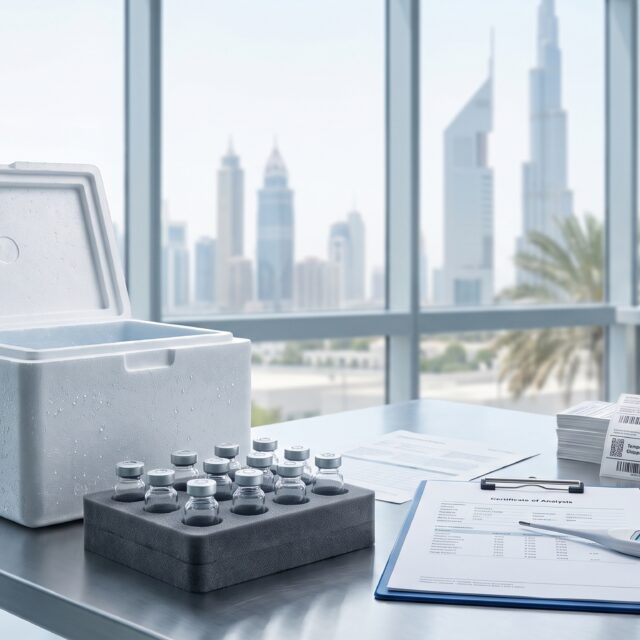
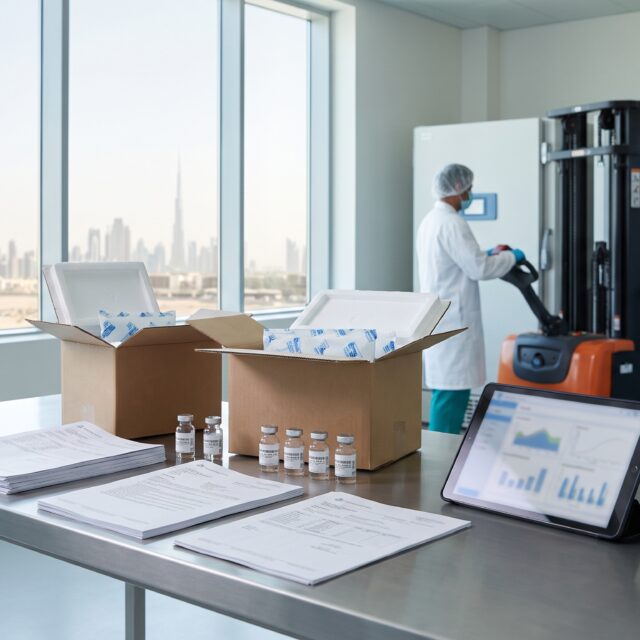
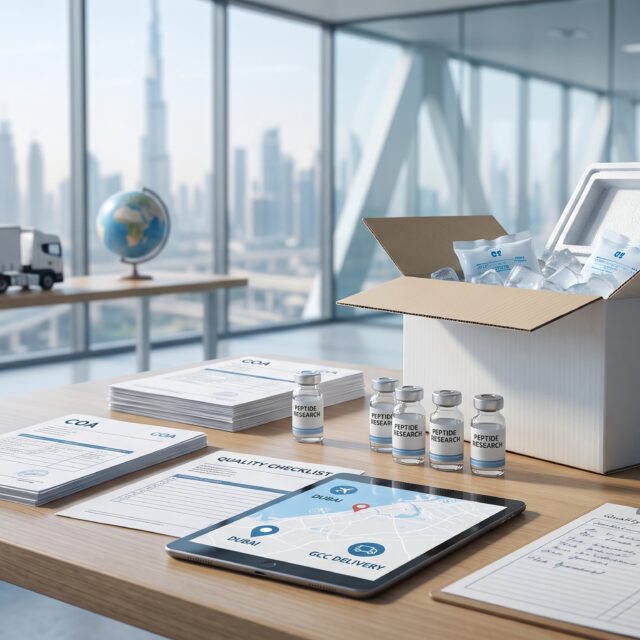
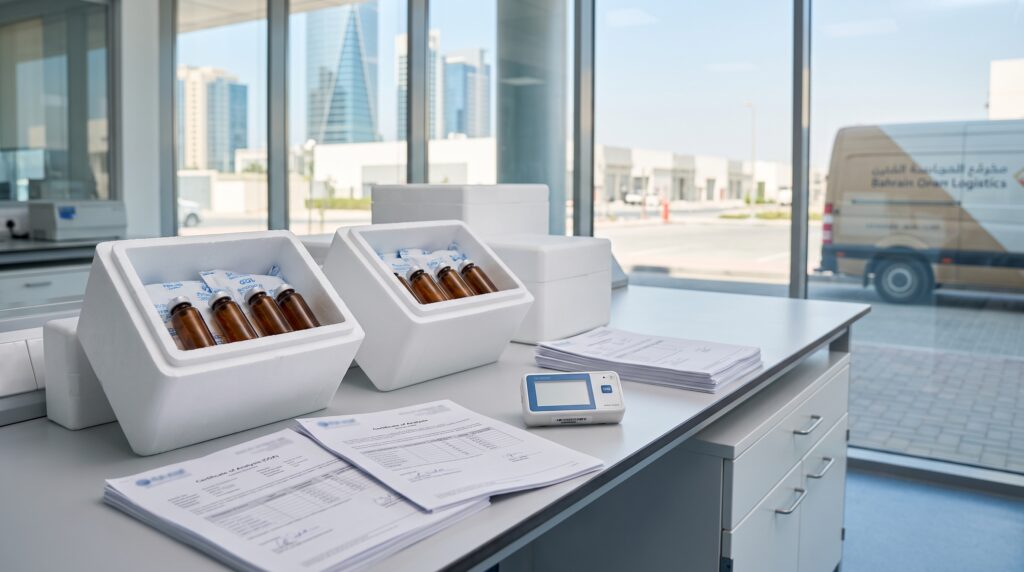
Established GCC suppliers operate regional dispatch hubs in Dubai, utilizing insulated thermal packaging containing phase-change materials or specialized gel packs. This ensures a continuous cold chain from the warehouse to your laboratory bench. Shipments into Bahrain clear efficiently under GCC Common Customs Law and National Health Regulatory Authority (NHRA) guidelines via the OFOQ electronic portal, utilizing the standard HS Code 38229000 for research chemicals. This streamlined regional pathway preserves the molecular integrity of the compounds far better than direct global imports.
For facilities prioritizing transit speed and structural safety, leveraging reliable regional dispatch from UAE hubs is a strategic necessity for maintaining continuous cold-chain stability into Bahrain.
Evaluating Your Supplier’s Storage Protocols
When evaluating a regional supplier, you should assess not only their testing transparency but their operational logistics. A supplier prioritizing research integrity should be able to demonstrate how they protect the peptide storage temperature in Bahrain environments from the moment of manufacture to the point of final delivery.
Key checks for researchers and procurement staff include:
- Third-Party Testing: Does the supplier provide independent, lot-matched COAs (such as those from Janoshik) verifying 99%+ purity before the compound even enters the cold chain?
- Thermal Packaging: Does the supplier explicitly state that they use insulated shippers with gel packs for GCC deliveries?
- Customer Support and Payments: Reliable suppliers understand the friction of regional procurement and offer flexible options, including dedicated WhatsApp support for tracking sensitive, temperature-bound shipments.
If you are upgrading your laboratory inventory and require verifiable, properly handled compounds, you can explore our available research compounds to review independent purity documentation and secure cold-chain fulfillment.
Conclusion
Protecting the stability of your research chemicals requires more than just placing vials in a freezer. It demands a rigorous understanding of the correct peptide storage temperature in Bahrain, distinguishing the -20°C requirements of lyophilized powders from the 2°C to 8°C limits of reconstituted liquids. By implementing strict equilibration protocols to fight condensation, utilizing manual-defrost freezers, and sourcing from regional suppliers who respect the GCC cold chain, laboratories can confidently protect their investments and ensure consistent, reliable research data.
Disclaimer: The products mentioned in this article are for research purposes only and are not intended for human consumption or therapeutic use.
References
- National Health Regulatory Authority (NHRA) Bahrain Guidelines for Research Imports.
- Sigma-Aldrich Handling and Storage Guidelines for Peptides and Proteins.
- GCC Customs Common Law and OFOQ Electronic Portal Documentation (HS Code 38229000).
- Peptide Storage Temperature Bahrain: Lab & Handling Guide – NOVA Labs
- Cold Chain Peptide Delivery Bahrain: Logistics & Heat – NOVA Labs
- Peptide Storage Guide | UAE Core Peptides
- Peptide Reconstitution & Storage Guide 2026 – Nexyra Lab
- Peptide Purity Guide Bahrain: HPLC, Customs & Storage Checks – NOVA Labs
- Handling and Storage Guidelines for Peptides and Proteins – Sigma-Aldrich
Frequently asked questions
What is the best peptide storage temperature in Bahrain for unopened vials?
Unopened, lyophilized (freeze-dried) vials should be stored in a manual-defrost deep freezer between -20°C and -80°C. This arrests chemical degradation and can preserve the compound's stability for 24 to 36 months.
Can I store reconstituted liquid peptides in the freezer?
No. Once reconstituted with a solvent, liquid peptides must never be frozen. Freezing creates ice crystals that fracture the delicate amino acid chains, causing irreversible structural damage.
How long do reconstituted peptides last in the refrigerator?
Liquid peptides should be stored in a laboratory refrigerator strictly between 2°C and 8°C. Under these ideal thermal conditions, most compounds remain stable and viable for 14 to 30 days.
Why do I need to let cold vials sit before opening them?
Bahrain's high coastal humidity poses a severe condensation risk. Cold vials must sit at room temperature for 30-60 minutes to equilibrate; opening them while cold draws ambient moisture into the hygroscopic powder, triggering rapid degradation.
Nova Labs buyer tools
Ready to verify stock, testing and delivery?
Use the product page and lab report section to check availability, documentation, delivery timing and support before placing an order.
- COA / test-report checks
- Bahrain delivery context
- Cold-chain handling
- COD and card payment options
- WhatsApp support