
Procuring high-quality research materials in the Gulf region introduces a unique set of logistical hurdles. For laboratories and independent researchers, understanding the correct standards is not just a matter of best practice—it is the deciding factor in whether a compound remains viable for study or degrades into useless byproducts.
Kuwait’s extreme desert climate, which regularly exceeds 50°C during the peak summer months, represents a severe environmental threat to delicate amino acid sequences. Without stringent temperature controls during cross-border shipping and rigorous laboratory storage protocols upon arrival, even the highest-purity peptides will rapidly lose their structural integrity. This guide explores the essential temperature protocols, the critical difference between lyophilised and reconstituted states, and what informed buyers must verify before placing an order in the GCC.
Guide to Peptide Storage Temperature in Kuwait
Quick Answer: The optimal peptide storage temperature in Kuwait depends on the compound’s state. Keep lyophilised (powdered) peptides refrigerated between 2°C and 8°C for up to 24 months, or freeze at -20°C for longer archiving. Once reconstituted, store strictly at 2–8°C and utilize within 28 days.
Understanding why these temperature thresholds exist requires a deeper look at the physical chemistry of peptides. Peptides are short chains of amino acids linked by delicate peptide bonds. These bonds are highly susceptible to two primary forms of degradation: hydrolysis (cleavage induced by water) and oxidation (damage resulting from oxygen and light exposure).
Both of these destructive processes are heavily temperature-dependent. According to standard biochemical principles, every 10°C increase in ambient temperature can roughly double the rate of chemical degradation. When a parcel sits in a courier van in Kuwait City without adequate cold-chain protection, temperatures can easily reach 60°C inside the box. At this level of intense heat exposure, the structural integrity of the peptide bonds begins to break down in a matter of hours, compromising the research validity of the entire batch before it even reaches the laboratory bench.
Lyophilised vs. Reconstituted: Adapting Your Protocols
The most important distinction a researcher must make is between the dry, powdered state of a peptide and its liquid, reconstituted form. The storage rules and degradation timelines change drastically the moment a solvent is introduced.
Storing Lyophilised (Powdered) Peptides
In their freeze-dried (lyophilised) state, research peptides are incredibly resilient, provided they are kept away from direct heat and moisture. The lyophilisation process removes the water necessary for hydrolysis, effectively pausing the compound’s degradation timeline.
- Short-term transit (under 30 days): While a high-quality lyophilised vial can survive brief transit at controlled room temperature, it should immediately be placed in a laboratory refrigerator (2–8°C) upon arrival in Kuwait.
- Medium-term storage (12–24 months): A standard laboratory refrigerator running at a consistent 2–8°C provides excellent stability for up to two years. Ensure the fridge is monitored to prevent accidental freezing.
- Long-term storage (2–5 years): For extended archiving, unmixed vials should be kept in a deep freezer at -20°C or colder.
Storing Reconstituted (Liquid) Solutions
The moment a peptide is mixed with a diluent—typically bacteriostatic water for in vitro research applications—the “pause button” is lifted, and the chemical clock begins ticking. The introduction of water allows for hydrolysis, making the compound exponentially more sensitive to its environment.
- Mandatory Refrigeration: Once mixed, all reconstituted peptides must remain in the refrigerator (2–8°C) at all times.
- The 28-Day Rule: If reconstituted with bacteriostatic water (which contains 0.9% benzyl alcohol to inhibit bacterial growth), the solution will generally remain viable for up to 28 days.
- Sterile Water Limitations: If mixed with sterile water (which lacks a bacteriostatic agent), the solution must be utilized for research within 5 to 7 days due to the high risk of rapid bacterial proliferation.
Crucially, never freeze a reconstituted peptide. The expansion of water molecules during the freezing process will physically shear and destroy the delicate peptide bonds, rendering the compound completely useless for scientific study.
Beating the Gulf Heat: The Cold-Chain Imperative
For researchers managing temperature-sensitive inventory in Kuwait, focusing solely on laboratory handling is a critical oversight. The journey from the supplier’s facility to your laboratory bench is the highest-risk period in the compound’s lifecycle.
Many overseas suppliers ship using standard ambient airmail. A package travelling from North America or East Asia to the GCC may spend weeks in transit, often sitting on uninsulated airport tarmacs or in non-air-conditioned customs sorting facilities. This lack of cold-chain infrastructure is a primary point of failure for international procurement.
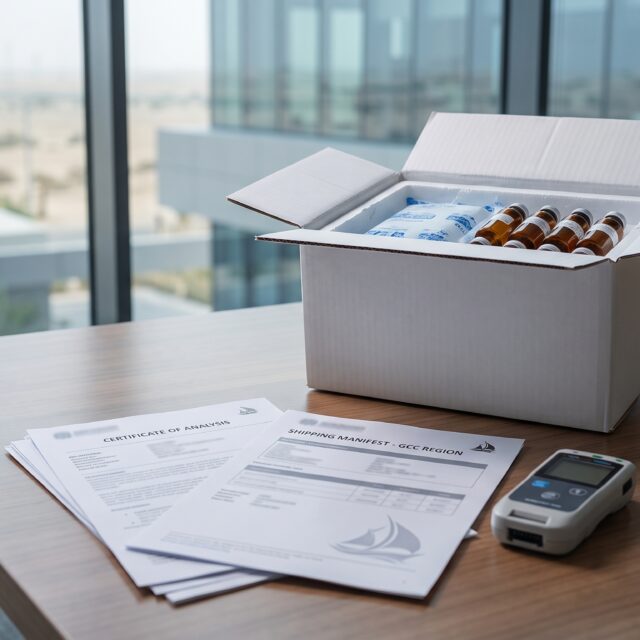
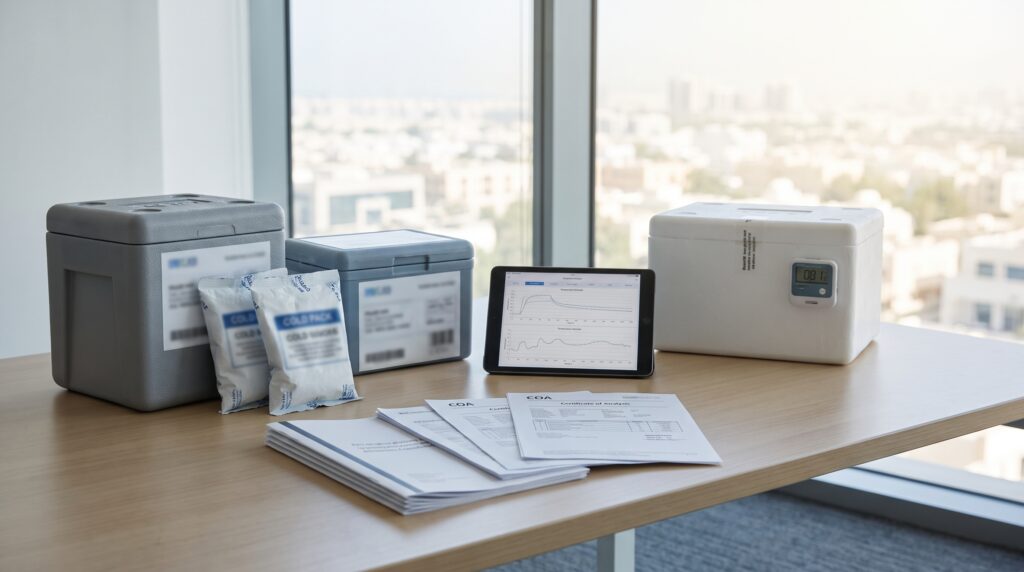
Reputable regional suppliers mitigate this risk by maintaining inventory closer to the final destination and utilizing specialised logistics. By dispatching from climate-controlled hubs within the GCC, suppliers can drastically reduce transit times. For example, researchers can rely on fast regional dispatch via hubs in the Emirates; leveraging peptides UAE next-day delivery networks allows for rapid subsequent connection to Kuwait, ensuring compounds spend minimal time in transit and arrive in pristine condition, shielded by vacuum-insulated packaging.
Critical Handling Mistakes That Destroy Peptides
Even with a perfect storage environment, improper physical handling techniques can instantly ruin a high-purity vial. Researchers must train their teams to avoid these common laboratory pitfalls:
1. Condensation and Premature Opening
One of the most frequent errors occurs immediately after removing a lyophilised vial from the refrigerator or freezer. If a cold vial is opened immediately in a warm, humid environment (a common scenario in Kuwait), ambient moisture will instantly condense inside the glass. This introduces water to the dry powder, triggering premature hydrolysis.
Solution: Always allow a cold vial to sit at room temperature in a desiccator or sealed bag for 15 to 30 minutes to equilibrate before breaking the seal or puncturing the stopper.
2. Light Exposure (UV Degradation)
Peptides containing specific amino acids—such as cysteine, methionine, or tryptophan—are highly vulnerable to photo-oxidation. Exposure to direct sunlight or harsh fluorescent laboratory lighting will rapidly accelerate their degradation.
Solution: Ensure your supplier provides compounds in amber glass vials, which filter out harmful UV wavelengths, and store all vials in a dark box or drawer within the refrigerator.
3. Aggressive Reconstitution (Shaking)
When introducing bacteriostatic water to the lyophilised powder, aggressive shaking will cause the peptide chains to break or foam, denaturing the compound.
Solution: Slowly drip the diluent down the inner wall of the vial and gently swirl the solution. Never shake the vial vigorously.
4. Repeated Freeze-Thaw Cycles
If a researcher intends to freeze lyophilised powder for long-term storage, they must commit to keeping it frozen. Taking a vial out of the freezer, letting it warm up, and then freezing it again causes immense structural stress to the compound. Repeated freeze-thaw cycles will completely denature the peptide.
Solution: If long-term frozen storage is required, divide the powder into single-use aliquots before freezing, ensuring that only the necessary amount is thawed at any given time.
Buyer Checklist: Procuring Peptides in Kuwait
Understanding storage protocols is only useful if the product you receive is pure and intact to begin with. When comparing suppliers for the Kuwait market, researchers must look beyond the price tag and demand operational transparency and verifiable proof of quality.
1. Demand Third-Party COA and HPLC Testing
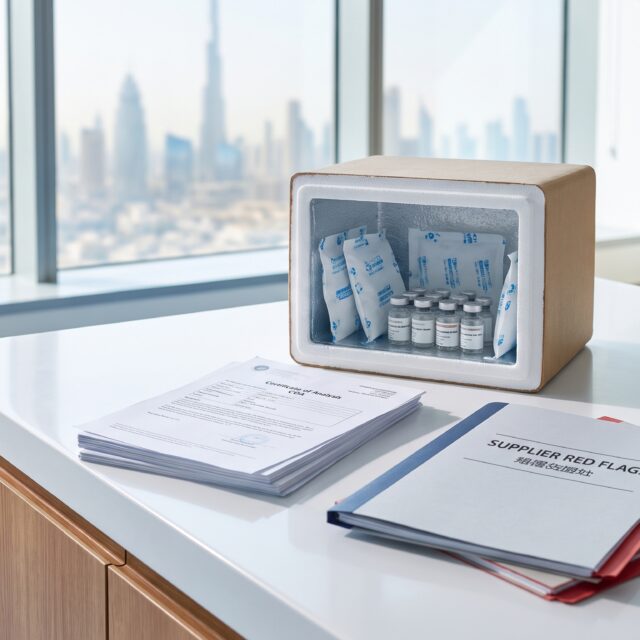
Never purchase research materials without reviewing an independent Certificate of Analysis (COA). This document must include High-Performance Liquid Chromatography (HPLC) and Mass Spectrometry (MS) results. The MS verifies the molecular weight (confirming identity), while the HPLC verifies the purity percentage. A purity level of 99% or higher is the strict standard for serious research.
2. Evaluate the Logistics and Delivery Framework
Query the supplier on how they handle Middle Eastern logistics. Do they use insulated mailers? Do they utilize tracked, expedited courier services rather than slow postal systems? How long does transit take to Kuwait? A supplier that cannot clearly explain their GCC cold-chain strategy is not equipped to serve researchers in Kuwait.
3. Assess Payment Security and Regional Support
Cross-border transactions require secure payment gateways. Look for suppliers that offer flexible, secure options (such as credit cards or cryptocurrency) and provide accessible customer support, ideally via WhatsApp or a dedicated regional support desk, to handle any customs clearance or delivery inquiries promptly.
Conclusion: Prioritising Storage for Research Integrity
Navigating storage guidelines requires absolute diligence, especially given the extreme climate challenges of Kuwait and the wider GCC. By understanding the distinct needs of lyophilised versus reconstituted compounds, protecting against moisture and light, and insisting on robust cold-chain delivery logistics, researchers can safeguard their financial investments and ensure the validity of their experimental results.
Always remember that the supply chain is just as important as your laboratory’s storage fridge. Source from regional suppliers who respect the chemistry, provide transparent HPLC testing, and understand exactly how to deliver intact compounds to your laboratory door. To bypass the risks of long-haul international shipping and ensure pristine arrival, explore the research peptide shop at NOVA Labs, which prioritises stringent quality control, verified purity, and rapid, climate-aware dispatch tailored to the realities of the Middle East.
Disclaimer: The products mentioned in this article are for laboratory research purposes only and are not intended for human consumption, diagnostic, or therapeutic use. Handle all compounds strictly in accordance with standard laboratory safety protocols.
References
- Journal of Peptide Science. (2019). Environmental Factors Affecting Stability of Lyophilised Amino Acid Sequences.
- Sigma-Aldrich. (2022). Handling and Storage Guidelines for Peptides and Proteins.
- Pharmaceutical Research. (2021). The Impact of Temperature on Peptide Bond Hydrolysis in Aqueous Solutions.
- Regional Logistics Analysis. (2023). The Impact of Cold Chain Infrastructure on Biological Compounds in the GCC.
- How to Store Peptides: Fridge, Freezer & Shelf Life Guide
- Handling and Storage Guidelines for Peptides and Proteins – Sigma-Aldrich
- Peptide Storage Guide | UAE Core Peptides
- Peptide Storage & Handling: Complete Guide
- Shipping Policy – Pure Peptides
- Where to Buy Research Peptides in the UAE: A Researcher’s Buying Guide – Peak Labs
Frequently asked questions
What is the best peptide storage temperature in Kuwait?
The ideal peptide storage temperature in Kuwait is 2–8°C in a standard laboratory refrigerator for both lyophilised powders (up to two years) and reconstituted solutions (up to 28 days). For long-term archiving over two years, store unmixed lyophilised vials in a deep freezer at -20°C.
How long do reconstituted peptides last in the fridge?
Once reconstituted with bacteriostatic water, liquid peptides remain structurally stable for up to 28 days when consistently stored at 2–8°C. If mixed with sterile water instead, they must be used within 5 to 7 days to prevent bacterial growth.
Can I freeze a reconstituted peptide?
No, you should never freeze a reconstituted peptide. Freezing liquid peptides causes the water molecules to expand, which creates intense physical shear stress that permanently destroys the delicate peptide bonds, rendering your research compound completely useless.
Why do I need to let cold peptide vials reach room temperature before opening?
Opening a cold vial in a warm, humid environment causes ambient moisture to instantly condense inside the glass. This introduces water to the dry powder, triggering premature chemical degradation (hydrolysis) before you even begin your research protocols.
Does shipping peptides to Kuwait require cold-chain logistics?
Yes. Because summer temperatures in Kuwait and the GCC frequently exceed 50°C, shipping delicate compounds via standard uninsulated airmail risks total degradation. Reliable suppliers use temperature-controlled regional hubs and vacuum-insulated packaging to protect the compounds during transit.
Nova Labs buyer tools
Ready to verify stock, testing and delivery?
Use the product page and lab report section to check availability, documentation, delivery timing and support before placing an order.
- COA / test-report checks
- Kuwait delivery context
- Cold-chain handling
- COD and card payment options
- WhatsApp support