
Procuring high-quality research compounds in the GCC is a complex process. Driven by the Kingdom’s Vision 2030 National Biotechnology Strategy, the local peptide synthesis market is projected to reach over USD 380 million by 2032. Yet, for independent researchers, procurement staff, and informed buyers, locating the best peptide shop Saudi Arabia involves navigating significant hurdles. Between extreme thermal conditions that threaten compound integrity, strict import regulations, and a marketplace crowded with unverified dropshippers, buyers must know exactly what to look for before placing an order.
Quick Answer: What Makes the Best Peptide Shop Saudi Arabia?
When searching for the best peptide shop Saudi Arabia, researchers must prioritize suppliers offering verifiable, lot-matched Certificates of Analysis (COAs) featuring independent HPLC and Mass Spectrometry testing. The best peptide shop Saudi Arabia offers will also utilize passive cold-chain logistics to prevent heat degradation and provide regionally aligned payment options.
The GCC Sourcing Challenge: Why International Vendors Fall Short
Many buyers begin their search online, only to land on KSA-dedicated subdomains operated by massive international sellers. While these platforms often tempt buyers with initial checkout discounts, they frequently introduce severe operational friction. Recent market analysis shows that many of these overseas suppliers suffer from weak customer trust ratings—often averaging below 3 out of 5 stars on independent review portals.
The root causes of this friction are highly relevant to Saudi buyers:
- Payment Processing Failures: Overseas gateways frequently flag GCC-issued cards, leading to declined transactions and locked accounts.
- Uncommunicative Support: When an order is stalled at customs, time-zone differences and automated ticketing systems leave buyers without actionable updates.
- Logistical Blind Spots: Standard international parcel post does not account for the extreme heat of the Middle East, meaning sensitive compounds can spend days deteriorating on a hot tarmac.
Finding the best peptide shop near me saudi arabia—or at least a vendor regionally aligned with the GCC—is less about geographic proximity and more about logistical competence and local market understanding.
Navigating Customs: SFDA, ZATCA, and Import Friction
Importing research materials into Saudi Arabia requires strict adherence to national frameworks. The Saudi Food and Drug Authority (SFDA) and the Zakat, Tax, and Customs Authority (ZATCA) maintain rigorous oversight of chemical and biological imports.
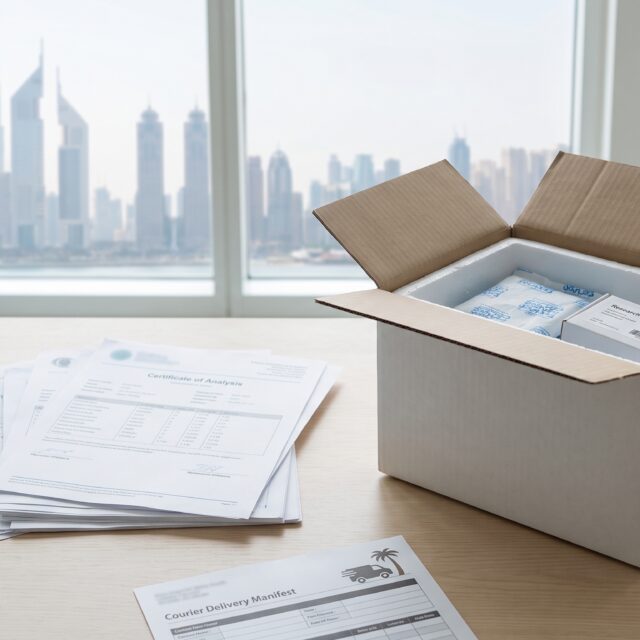
For commercial and institutional laboratories, this often involves clearing shipments through the SABER and FASAH portals. The key to seamless clearance is accurate documentation. Legitimate suppliers ensure that their products are clearly labeled for “Research Use Only” (RUO) and are accompanied by the correct Harmonized System (HS) codes.
When a supplier fails to provide comprehensive commercial invoices or obfuscates the nature of the compounds, shipments are almost guaranteed to face delays, inspections, or outright seizure. Regional suppliers who understand these specific GCC regulatory environments drastically reduce the administrative burden on the buyer.
Defeating Extreme Heat: The Role of Cold-Chain Logistics
The climate in Saudi Arabia poses a direct threat to the structural integrity of complex molecular compounds. Research peptides are highly susceptible to thermal degradation if exposed to prolonged high temperatures.
To mitigate this risk, top-tier suppliers employ two non-negotiable protocols:
- Lyophilized Formulations: Buyers should insist on purchasing compounds in a lyophilized (freeze-dried) powder state rather than as pre-mixed liquids. Lyophilization removes the aqueous environment that accelerates degradation, rendering the compound significantly more stable during transit.
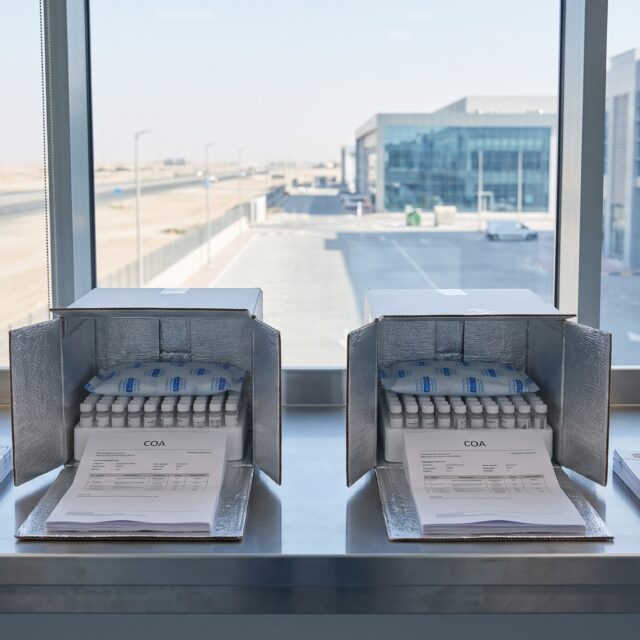
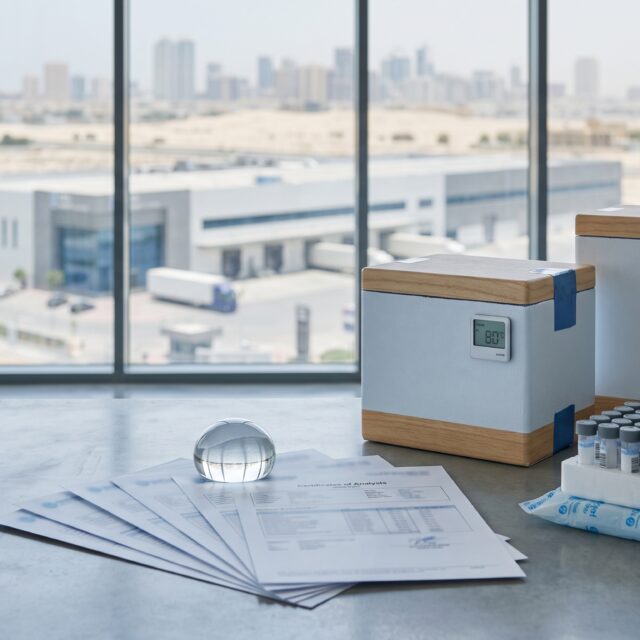
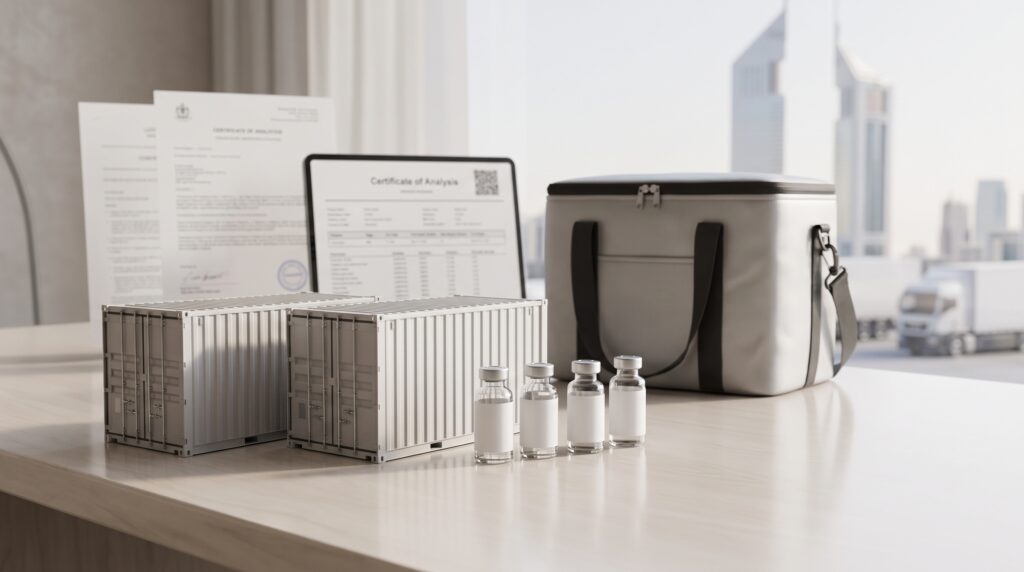
- Passive Cold-Chain Packaging: Even in a freeze-dried state, materials require protection. Professional shipments must include thermal insulation and gel packs to buffer the vials against ambient heat spikes during courier handoffs.
Suppliers operating within the region have a distinct advantage here. By minimizing the time a package spends in transit, they reduce the window for thermal exposure. Regional vendors who operate robust logistics networks across the GCC—such as those executing expedited UAE to KSA transit schedules—are far better equipped to maintain compound stability than overseas vendors shipping via standard multi-week airmail.
The Non-Negotiable Trust Signal: COA Verification
No matter how efficient the shipping or how attractive the pricing, the defining characteristic of a trusted supplier is verifiable analytical data. The only way to confirm the identity and purity of a research compound is through a Certificate of Analysis (COA).
A valid COA must include two critical tests:
- High-Performance Liquid Chromatography (HPLC): This determines the purity of the sample by separating the compound’s components and identifying any residual byproducts from the synthesis process. High-quality research materials should consistently demonstrate purity levels above 98%.
- Mass Spectrometry (MS): This verifies the molecular weight of the compound, ensuring that the substance in the vial is exactly what is listed on the label.
When evaluating a supplier, buyers must verify that the COA is lot-matched. A generic, undated testing document is a massive red flag. Reputable suppliers provide a publicly accessible database where buyers can cross-reference the batch number on their vial with the corresponding third-party laboratory report.
Payment and Checkout: The Value of Localized Options
A major point of friction for GCC buyers involves the checkout process. Traditional credit card processors often struggle with cross-border transactions involving research chemicals.
Regionally aligned suppliers resolve this by offering localized, buyer-friendly payment infrastructure. The integration of Sharia-compliant split-payment platforms like Tamara and Tabby has revolutionized procurement for smaller laboratories and informed buyers, allowing for better budget management. Furthermore, offering Cash on Delivery (COD) or direct local bank transfers builds immediate trust, as the buyer is not forced to wire money to an untraceable overseas account.
Coupled with localized support—such as direct WhatsApp communication in the appropriate time zone—these operational details separate legitimate, service-oriented suppliers from high-volume, low-effort dropshippers.
Sourcing Your Next Project with NOVA Labs
For researchers and procurement specialists operating in Saudi Arabia, mitigating risk is the primary objective. NOVA Labs is structured to address the exact logistical and verification challenges present in the GCC market.
Rather than relying on unsupported clinical claims, NOVA Labs focuses entirely on compound integrity and operational transparency. Every batch is subjected to rigorous HPLC and MS testing, with lot-matched COAs readily available for review. By utilizing passive cold-chain logistics and offering localized payment and support channels, NOVA Labs removes the friction traditionally associated with regional procurement.
For a streamlined sourcing experience, you can explore the complete NOVA Labs research catalogue to review lot-specific data and secure high-purity compounds for your next analytical project.
Final Thoughts on Supplier Verification
Identifying the right supplier in a crowded marketplace requires diligence. Whether you are managing procurement for a large institution or conducting independent analysis, your research is only as reliable as your baseline materials. By demanding lot-matched COAs, insisting on cold-chain logistics, and partnering with vendors who understand local import and payment infrastructures, you can secure the high-purity compounds necessary for accurate, reproducible results.
Disclaimer: The products mentioned in this article are for research purposes only and are not intended for human consumption or clinical use.
References
- 6Wresearch (2024): Saudi Arabia Peptide Synthesis Market Size & Growth Projections (2026-2032).
- Saudi Food and Drug Authority (SFDA): Import regulations and SABER/FASAH compliance mandates for laboratory and RUO materials.
- NOVA Labs Quality Assurance: Internal protocols for HPLC/MS verification and passive cold-chain regional distribution.
- Peptide Purity Guide Saudi Arabia: HPLC, COAs & Compliance – NOVA Labs
- Wholesale Peptides Saudi Arabia: B2B Supplier & Procurement – NOVA Labs
- Buy Retatrutide Saudi Arabia: Delivery, COA & Customs Guide – NOVA Labs
- Nova Labs Review 2026: UAE Peptide Supplier COA and Cold-Chain Audit
- Payments Information For Direct Sarms Saudi Arabia Customers
- Saudi Arabia Peptide Synthesis Market | Size 2026 – 6Wresearch
Frequently asked questions
How can I verify the purity of research peptides in Saudi Arabia?
Purity must be verified through a lot-matched Certificate of Analysis (COA) provided by the supplier. This document should include both High-Performance Liquid Chromatography (HPLC) for purity percentage and Mass Spectrometry (MS) to confirm the exact molecular weight.
Why is cold-chain shipping important for GCC deliveries?
Research compounds are highly sensitive to thermal degradation. In the extreme heat of the GCC, passive cold-chain packaging (using thermal insulation and gel packs) is necessary to protect the structural integrity of the lyophilized powder during transit.
What documentation is required to clear research compounds through Saudi customs?
Importing research materials often requires clearance via the SABER and FASAH portals. Shipments must include an accurate commercial invoice, the correct Harmonized System (HS) codes, and clear labeling stating the materials are for Research Use Only (RUO).
Can I use Tamara or Tabby to buy research peptides in Saudi Arabia?
Yes, regionally aligned suppliers operating within the GCC often integrate localized payment gateways. This can include Sharia-compliant split-payment services like Tamara and Tabby, as well as localized bank transfers and Cash on Delivery (COD) options.
Nova Labs buyer tools
Ready to verify stock, testing and delivery?
Use the product page and lab report section to check availability, documentation, delivery timing and support before placing an order.
- COA / test-report checks
- Saudi Arabia delivery context
- Cold-chain handling
- COD and card payment options
- WhatsApp support