



The Essential Peptide Supplier Checklist GCC Buyers Need
Quick answer: A reliable peptide supplier checklist GCC buyers should use includes verifying lot-specific HPLC/MS COAs (98%+ purity), confirming strict Research Use Only (RUO) regulatory compliance, demanding isothermal cold-chain logistics to prevent regional heat degradation, and prioritizing domestic UAE stock to avoid lengthy customs holds.
Procuring high-quality research peptides in the Gulf Cooperation Council (GCC) presents a unique set of logistical and regulatory challenges. As of 2026, the local market is heavily shaped by two major forces: strict scrutiny from regulatory bodies like the Emirates Drug Establishment (EDE) and the severe thermal realities of regional shipping.
For laboratory procurement staff, independent researchers, and informed B2B buyers, finding a reliable supplier goes far beyond comparing prices. A minor oversight in shipping temperature or a missing batch number on a Certificate of Analysis (COA) can instantly compromise a costly research project. To navigate these complexities safely, buyers must rely on a rigorous peptide supplier checklist in GCC markets. This guide breaks down exactly what you need to verify before placing an order, ensuring that your compounds arrive stable, compliant, and ready for study.
1. Strict EDE Compliance and RUO Labelling
The most critical starting point for any peptide supplier checklist guide GCC is regulatory compliance. The regulatory landscape in the UAE and surrounding nations has tightened significantly to protect consumers and maintain high standards for scientific materials.
Recent enforcement actions by the Emirates Drug Establishment (EDE) established a clear mandate: all peptides must be strictly labelled and sold exclusively for ‘Research Use Only’ (RUO). Vendors selling compounds for human use or therapeutic benefit face sudden closure and inventory seizures.
When evaluating a supplier, audit their website, packaging, and marketing materials for the following:
- No Medical Claims: The vendor must never promise cures, treatments, or specific physiological outcomes.
- No Dosing Protocols: A reputable supplier will not provide dosage instructions, injection guides, or human-use protocols.
- Clear RUO Disclaimers: Every product page and physical vial must be conspicuously labelled indicating it is strictly for laboratory or in-vitro research purposes.
Suppliers that bypass these rules risk immediate customs seizures, meaning your paid orders may never arrive. Aligning with a compliant vendor protects your capital and your research continuity.
2. Transparent Analytical Testing (COA & HPLC)
Scientific validity relies entirely on the purity and identity of the compounds you study. Unfortunately, the global research chemical market occasionally sees ‘test-and-switch’ tactics, where a legitimate COA from an old batch is used to sell newer, untested inventory.
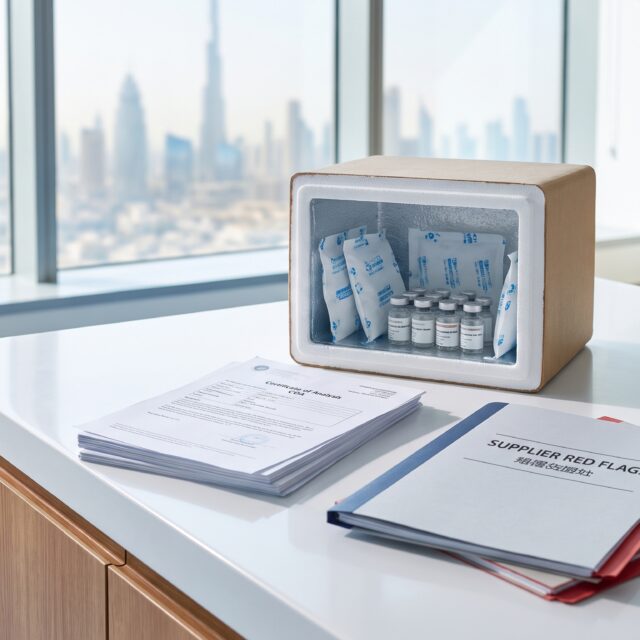
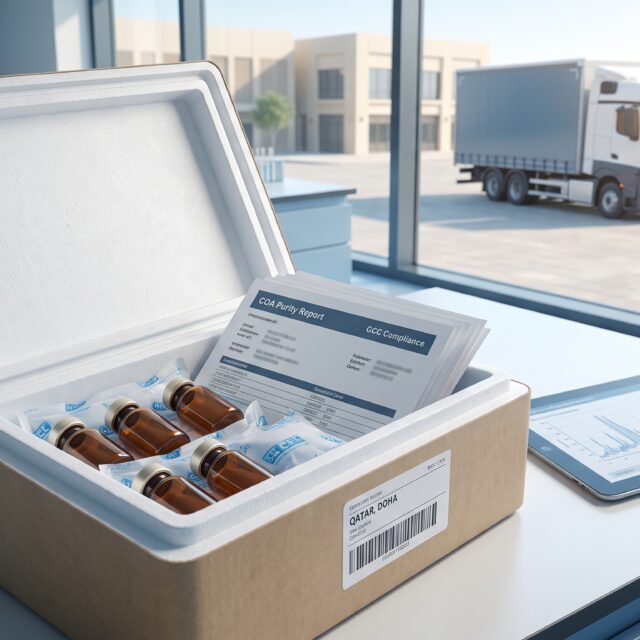
Your evaluation protocol must mandate the review of lot-specific testing data. Here is what to look for on a legitimate Certificate of Analysis:
HPLC Purity Metrics
High-Performance Liquid Chromatography (HPLC) measures the purity of the sample. A reputable supplier should demonstrate a minimum purity of 98%, though 99% or higher is the gold standard for sensitive studies. Check the date on the HPLC graph to ensure it matches the current inventory batch.
Mass Spectrometry (MS) Identity
While HPLC tells you how pure a substance is, Mass Spectrometry confirms what it is. The MS report verifies the molecular weight of the peptide, confirming that the amino acid sequence is correct and has not been mislabelled during synthesis.
Independent Laboratory Verification
Avoid suppliers who only provide internally generated testing documents on their own letterhead. A trustworthy vendor partners with independent, named, third-party analytical laboratories to verify their stock.
3. The Science of Thermal Logistics and Cold-Chain Delivery
Perhaps the most geographically specific item on the peptide supplier checklist GCC buyers must consider is heat management. Standard ambient international shipping is disastrous for fragile peptide chains when routing through the Middle East.
During the GCC summer, tarmac and warehouse temperatures routinely exceed 45 degrees Celsius. Scientific data shows that the secondary structures of many delicate peptides begin to collapse and rapidly degrade when exposed to temperatures above 60 degrees Celsius—heat levels easily reached inside an uninsulated delivery van parked in the Dubai sun.
To ensure compound viability, evaluate the vendor’s shipping protocols:
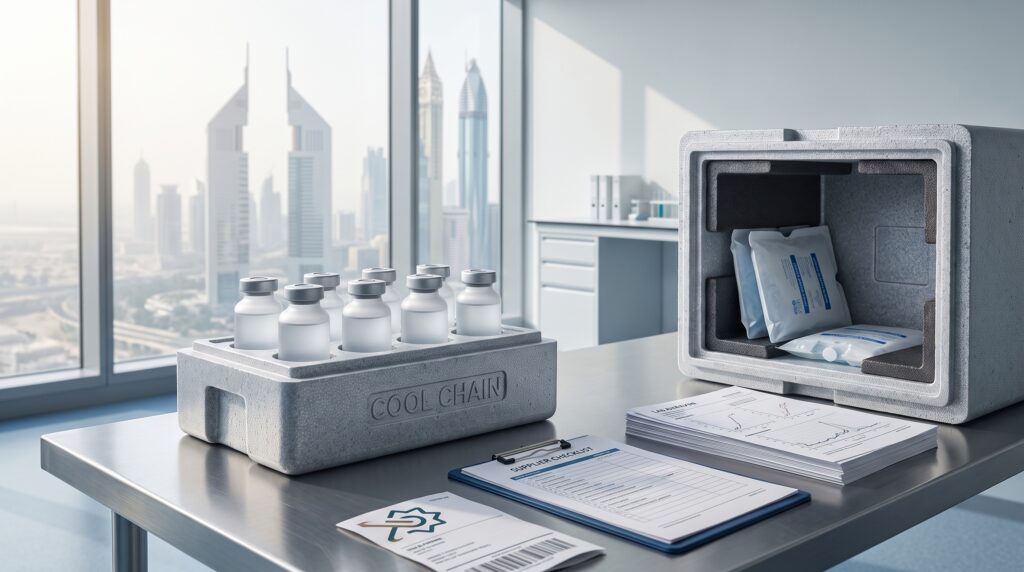
- Isothermal Packaging: Do they use insulated EPS (expanded polystyrene) coolers or specialized thermal mailers?
- Temperature Control: Are cold packs included to maintain a stable internal climate during transit?
- Speed of Dispatch: Even the best cold-chain packaging is time-limited. Immediate, tracked dispatch is non-negotiable.
If a supplier drop-ships from overseas using standard bubble mailers, the compounds you receive will likely be degraded before they even reach your laboratory bench.
4. Domestic Stock and Avoiding Customs Delays
Overseas sourcing often seems appealing due to lower upfront wholesale costs, but it introduces massive supply chain friction. Importing research chemicals into the GCC frequently results in 14-to-21-day customs delays. If your shipment is held at a sorting facility without temperature control, the integrity of the batch is lost.
Furthermore, heightened EDE scrutiny means that international packages lacking perfect commercial invoices and RUO documentation are routinely rejected.
The most secure route is partnering with a vendor that holds local, domestic stock. Sourcing from a local warehouse bypasses import risks entirely. For buyers in the Emirates, utilizing services like Peptides UAE next-day delivery ensures that temperature-sensitive compounds move from a climate-controlled facility directly to your laboratory in under 24 hours, maintaining peak viability.
5. Localized Support, Payment, and Documentation
A professional B2B supplier should operate like a true partner rather than a faceless international storefront. When evaluating a vendor’s infrastructure, look for localized operational support that fits GCC business practices.
Payment Flexibility
International credit card processors frequently block transactions for research chemicals. Top-tier regional suppliers solve this by offering local AED pricing and practical payment methods, including secure local bank transfers for larger procurement orders or Cash on Delivery (COD) where applicable.
Responsive Communication
If you need to verify a specific batch number or request a COA before placing a bulk order, you need fast answers. Suppliers offering direct WhatsApp support or dedicated regional account managers demonstrate a commitment to transparency.
Before making a final procurement decision, always browse the vendor’s complete shop to review their product range, check for visible COA integration on product pages, and assess overall inventory transparency.
Conclusion: Making the Right Procurement Decision
Sourcing research materials in the Middle East does not have to be a gamble. By utilizing a structured peptide supplier checklist GCC researchers can systematically eliminate vendors who fail to meet local regulatory, analytical, and logistical standards.
Always demand lot-specific HPLC and MS testing, insist on strict RUO compliance, and never compromise on thermal logistics. By prioritizing local suppliers who maintain cold-chain integrity and offer domestic dispatch, you protect your budget and ensure the accuracy of your research outcomes.
For a reliable, compliant source of research compounds backed by independent testing and specialized local logistics, explore the verified catalogue at NOVA Labs.
Disclaimer: The products mentioned in this article are for research purposes only and are not intended for human consumption.
*
References
- NOVA Labs (2026). Are Research Peptides Legal in the UAE? Complete Compliance.
- Independent B2B Audit Guidelines (2025). How to Evaluate a Research Peptide Supplier: A 12-Point B2B Checklist.
- Local UAE Regulatory Updates (2025-2026). Guidelines on the Import and Handling of Research Chemicals.
- Are Research Peptides Legal in the UAE? Complete Compliance – NOVA Labs
- UAE Cracks Down on Unapproved Peptide Weight-Loss Drugs: 71 Sources and 14 Influencers Face Action – Gulf News
- Eloralintide Price UAE: Cost, Purity & Buyer Checklist – NOVA Labs
- GHK-Cu Peptide in the UAE: Buyer Guide (Quality, COA, Sourcing) – Nootropix
- Research Peptides UAE — HPLC-Verified – Wellness Labs
- How to Evaluate a Research Peptide Supplier: A 12-Point B2B Checklist
Frequently asked questions
Why is local delivery important for peptide suppliers in the GCC?
Local delivery prevents thermal degradation caused by extreme regional heat and avoids lengthy customs delays that can compromise temperature-sensitive research compounds.
What is the minimum purity I should look for on a peptide COA?
Reputable suppliers provide lot-specific High-Performance Liquid Chromatography (HPLC) reports demonstrating at least 98% purity, though 99% or higher is preferred for precise research.
Are research peptides legal to purchase in the UAE?
Yes, provided they are strictly labelled and sold for 'Research Use Only' (RUO) and do not make any medical, therapeutic, or human-consumption claims, in strict compliance with local regulations.
How does heat affect research peptides during transit?
Temperatures above 45 degrees Celsius can rapidly degrade fragile peptide structures, causing secondary chains to collapse. This makes isothermal cold-chain packaging essential for GCC shipments.
Nova Labs buyer tools
Ready to verify stock, testing and delivery?
Use the product page and lab report section to check availability, documentation, delivery timing and support before placing an order.
- COA / test-report checks
- GCC delivery context
- Cold-chain handling
- COD and card payment options
- WhatsApp support