



Sourcing Wholesale Peptides in Oman
Procuring wholesale peptides in Oman requires navigating strict Ministry of Health regulations and extreme GCC climate challenges. Buyers must secure batch-specific Certificates of Analysis (COAs), ensure compliant customs documentation for E-Health portal clearance, and utilize reliable cold-chain logistics from UAE supply hubs.
For research laboratories, procurement managers, and commercial biotechnology institutions operating in the GCC, securing a reliable supply chain for raw biochemicals is a complex undertaking. When researching wholesale peptides Oman, procurement managers quickly discover that success relies on far more than just negotiating a competitive price. Oman’s stringent regulatory framework requires meticulous attention to cross-border logistics, especially when routing specialized biochemicals through neighboring UAE trade hubs.
Key Buyer Checklist for Oman Procurement:
- Batch-Specific Testing: Demand third-party High-Performance Liquid Chromatography (HPLC) and Mass Spectrometry (MS) results for every specific lot.
- Customs Paperwork: Ensure your commercial invoice matches the Certificate of Analysis exactly to avoid border delays.
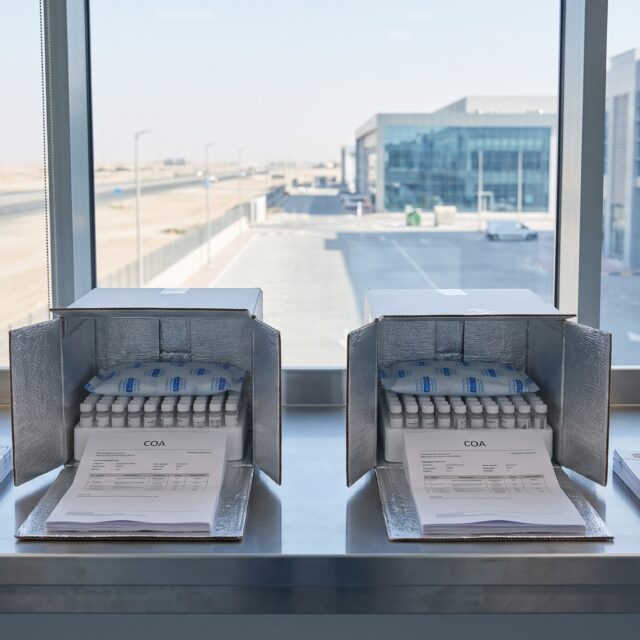
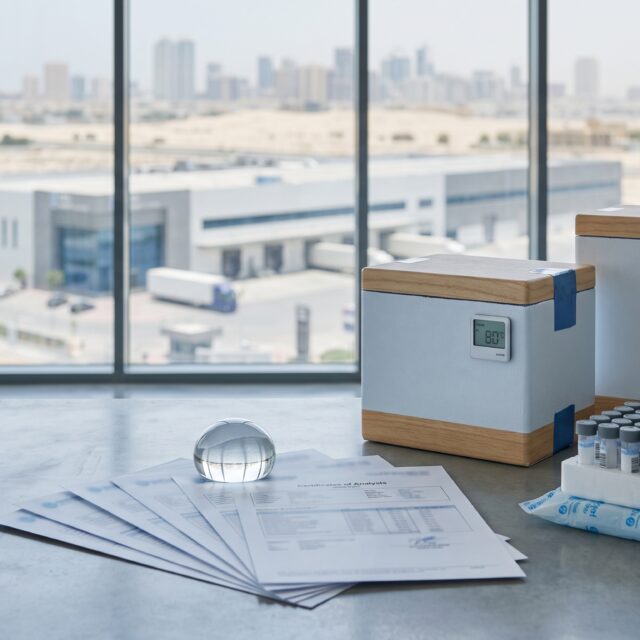
- Cold-Chain Verification: Verify the use of phase-change materials and data loggers for transit, particularly across the UAE-Oman border.
- End-User Declaration: Prepare your institutional EUD to streamline Drug Safety Centre authorization.
Understanding Oman’s Import Compliance and Regulations
Oman’s pharmaceutical and bio-chemical imports are strictly overseen by the Ministry of Health (MOH) through the Directorate General of Pharmaceutical Affairs and Drug Control (DGPA&DC). For institutions importing bulk peptides into Oman, understanding where research reagents fall within this framework is the critical first step to frictionless procurement.
Circular No. 76/2025 and Institutional Supply
Under recent regulatory updates, including MOH Circular No. 76/2025, there is a strong mandate for chemical stores and laboratories to maintain absolute transparency regarding the origin of imported products. Shipping documents, specifically the bill of lading or airway bill, must clearly demonstrate an approved route to Oman. This policy is designed to maintain supply chain integrity and combat counterfeit or degraded chemical reagents from entering institutional research environments.
The Dual-Track Clearance Process
Clearing a wholesale shipment typically requires a dual-track approval system:
- Royal Oman Police Customs Clearance: The initial physical entry and security verification of the shipment at the port, airport, or land border (such as Al Wajajah).
- Drug Safety Centre Authorisation: Final release authorization is processed via the national E-Health portal. For research-grade peptides classified strictly as laboratory reagents (not for human clinical use), clinical pharmaceutical registration is bypassed. However, the importer must submit an accurate customs declaration and an End-User Declaration (EUD) confirming the exact institutional purpose of the compounds.
The Role of UAE Hubs in Omani Peptide Supply Chains
Because Dubai serves as the primary biotechnology and logistics hub for the Middle East, the vast majority of wholesale peptides entering Oman are routed through the UAE. Procuring from a UAE-based supplier offers Omani labs a distinct advantage in both speed and reliability.
Cross-Border Logistics and Cold-Chain Integrity
Transporting delicate biochemicals overland from Dubai or Abu Dhabi to Muscat requires specialized knowledge of GCC border operations. Delays at checkpoints like Hatta or Al Wajajah are the primary risk factor for biochemical degradation. Standard courier services often leave parcels in non-climate-controlled environments during these clearance periods.
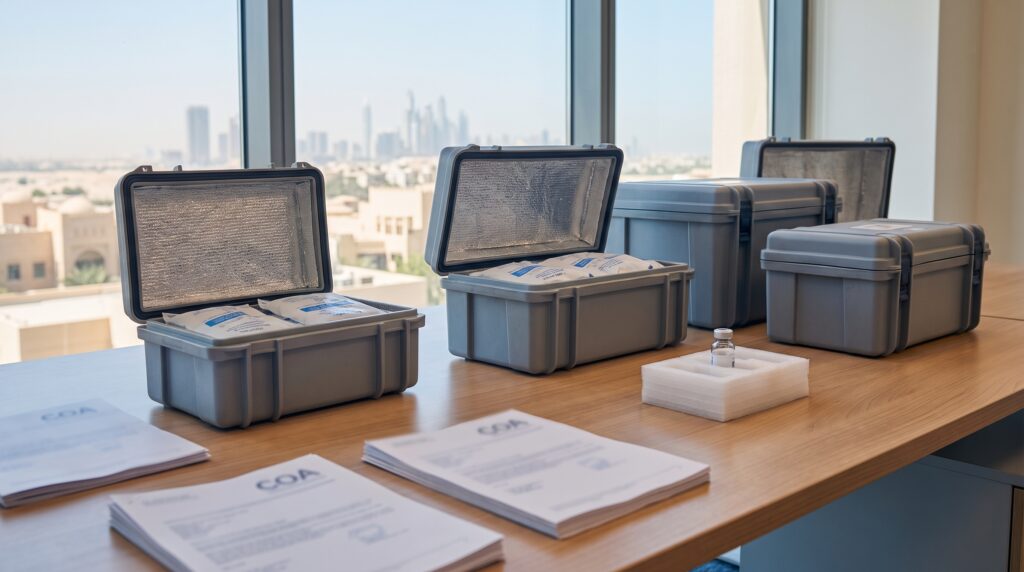
To combat this, elite B2B suppliers utilize dedicated cold-chain road freight or expedited regional air freight. Shipments are packed in heavily insulated thermal containers equipped with phase-change materials designed to maintain internal temperatures between 2°C and 8°C. Active temperature data loggers are often included in large wholesale orders, allowing Omani procurement managers to verify that the cold chain remained unbroken throughout the Dubai-to-Muscat journey.
Essential Quality Control: Analyzing the COA
A competitive price on bulk peptides is meaningless if the purity profile compromises your laboratory’s assay results. Transitioning to a new wholesale supplier requires rigorous vetting of their Quality Assurance (QA) documentation.
High-Performance Liquid Chromatography (HPLC):
This metric confirms the purity of the compound. For in-vitro laboratory research, standard commercial purity should exceed 99%. The HPLC graph must be clear, showing a single sharp peak indicating that impurities and truncated sequences have been successfully filtered out during synthesis.
Mass Spectrometry (MS):
While HPLC confirms purity, MS confirms identity. The mass spectrometer measures the molecular weight of the synthesized compound, which must match the theoretical molecular weight of the target peptide sequence exactly.
TFA Removal:
During standard peptide synthesis, Trifluoroacetic acid (TFA) is frequently used. In wholesale batches intended for sensitive cellular assays, residual TFA can be cytotoxic. Buyers should inquire whether the supplier offers TFA removal processes (converting the peptide to an acetate or HCl salt) for specific wholesale orders.
Payment Terms, Support, and B2B Vendor Evaluation
Transitioning from ad-hoc retail purchases to a scalable wholesale arrangement requires evaluating a supplier’s operational maturity. A reliable B2B partner acts as an extension of your laboratory’s logistical arm.
Key evaluation criteria include:
- Tailored Volume Pricing: Progressive pricing structures that scale with your laboratory’s demands, allowing for cost-effective research funding via purchase orders (POs) and institutional wire transfers.
- Regional Expertise: A supplier familiar with UAE-Oman transit nuances, the timing of the local GCC weekend (Friday/Saturday), and optimal dispatch days. Shipping on a Monday, for example, is critical to avoid weekend customs layovers at the border.
- Responsive Support: Direct B2B communication channels, such as WhatsApp support or dedicated institutional account managers, are essential to resolve border clearance queries immediately.
How NOVA Labs Supports GCC Bulk Buyers
At NOVA Labs, we understand that procuring bulk peptides for institutional research requires absolute confidence in both analytical purity and delivery execution. Operating at the heart of the GCC, we bridge the gap between rigorous biochemical synthesis and the practical realities of importing into Oman.
Our operations are optimized to support the strict documentation requirements of Oman’s regulatory bodies. We provide fully matched Commercial Invoices, MSDS, and batch-specific HPLC/MS COAs with every bulk order, ensuring your Omani clearing agents have exactly what they need for swift E-Health portal clearance. By managing dispatch from our regional hubs, we minimize transit times and ensure cold-chain integrity across the border.
For laboratories, clinics, and research institutions ready to scale their procurement, you can apply for a dedicated B2B account for wholesale orders to access tailored progressive pricing and priority regional support.
Alternatively, if your team is looking to conduct initial validation testing on specific compounds before committing to a larger volume contract, you can browse our complete catalogue of research compounds available for direct procurement.
Bottom Line
Successfully sourcing bulk peptides in Oman requires treating cross-border logistics and compliance with the same level of scrutiny as chemical purity. By understanding the MOH’s importation guidelines, preparing an exhaustive documentation packet, and leveraging the logistical advantages of UAE-based supply hubs, procurement managers can secure reliable, high-quality supplies for their research programs. Partnering with a supplier who understands the unique demands of GCC transit is the most effective way to protect your budget, maintain compound integrity, and keep your research timelines on track.
Disclaimer: The products mentioned in this article are strictly for in-vitro laboratory research and development purposes only. They are not intended for human consumption, diagnostic, or therapeutic use.
References
- Oman MOH Pharmaceutical Registration & Import Rules. Directorate General of Pharmaceutical Affairs and Drug Control (DGPA&DC).
- E-Health Portal Guidelines: Final Customs Release of Pharmaceutical Products, Sultanate of Oman Ministry of Health.
- Oman Ministry of Health Circular No. 76/2025 regarding importation and supply chain transparency.
- GCC Good Distribution Practice (GDP) for Pharmaceutical Products and Cold Chain Integrity.
Disclaimer: The products mentioned in this article are for research purposes only and are not intended for human consumption.
- Oman MOH Pharmaceutical Registration & Import Rules | 2026 Guide – Hamadco
- Oman Ministry of Health Circular No. 76/2025 – Lexis® Middle East
- Pharma Export Consultancy Oman | Pharmaceutical Export Services
- Where Research Peptides Are Legal: 2026 EU & Asia Compliance Guide – LifeSpanSupply
- Get Approval for Final Customs Release of Pharmaceutical Product – Gov.om
- Muscat Chemical: Pioneers of Triglycine in the Heart of Oman
Frequently asked questions
What documents are required to import wholesale peptides into Oman?
Importing bulk research peptides into Oman requires a detailed Commercial Invoice, a batch-specific Certificate of Analysis (COA), a Material Safety Data Sheet (MSDS), and an End-User Declaration (EUD) for customs clearance via the MOH E-Health portal.
Do research peptides require clinical registration with the Omani MOH?
Standard research-grade peptides intended strictly for in-vitro laboratory use generally bypass human clinical pharmaceutical registration, but they still require precise customs declarations and import clearance from the Drug Safety Centre.
How are wholesale peptides shipped from the UAE to Oman?
Due to high GCC temperatures, peptides routed from UAE hubs to Oman require active cold-chain logistics. Shipments are transported using insulated thermal packaging and phase-change materials to maintain a stable 2°C to 8°C environment across border checkpoints.
Why is a batch-specific COA crucial for wholesale GCC orders?
A batch-specific COA provides verifiable HPLC and Mass Spectrometry data proving the compound's purity and identity. Omani customs cross-references the specific batch numbers on the COA with your commercial invoice before granting border release.
How should laboratories store wholesale peptides once delivered in Oman?
Upon successful delivery and customs clearance, bulk lyophilized peptides should be immediately transferred to a dedicated laboratory freezer set to -20°C. This ensures long-term biochemical stability and prevents degradation prior to reconstitution.
Nova Labs buyer tools
Ready to verify stock, testing and delivery?
Use the product page and lab report section to check availability, documentation, delivery timing and support before placing an order.
- COA / test-report checks
- Oman delivery context
- Cold-chain handling
- COD and card payment options
- WhatsApp support