
Locating reliable laboratory diluents in the GCC often presents an unexpected challenge for procurement teams and dedicated researchers. Securing bacteriostatic water for peptides saudi arabia requires navigating a complex landscape of strict import regulations, extreme summer temperatures, and local pharmacy limitations. For those looking to properly reconstitute and store multi-dose peptide vials, understanding exactly what to look for, what to avoid, and how regional logistics operate is critical to preserving the integrity of your research materials.
What is Bacteriostatic Water for Peptides in Saudi Arabia?
Quick Answer: Bacteriostatic water (BAC water) is highly purified sterile water containing 0.9% benzyl alcohol, an essential preservative that inhibits bacterial growth for up to 28 days. Unlike the single-use sterile water commonly found in Saudi pharmacies, true BAC water safely allows researchers to draw multiple doses from a single reconstituted peptide vial. To bypass ZATCA customs delays and prevent thermal degradation, researchers should source BAC water from GCC-based suppliers that offer rapid, temperature-controlled regional logistics.
Bacteriostatic water for peptides is the gold standard for reconstituting lyophilized (freeze-dried) biological compounds in laboratory settings. The defining characteristic of this diluent is its precise 0.9% benzyl alcohol content. Benzyl alcohol acts as a bacteriostatic agent—meaning it prevents bacteria from reproducing and growing, though it is not inherently bactericidal (it does not instantly kill massive existing colonies). This highlights why sterile laboratory techniques, such as swabbing vial stoppers with isopropyl alcohol, remain mandatory during reconstitution.
For researchers in Riyadh, Jeddah, and across the Kingdom, securing this specific formulation is non-negotiable. Complex biological compounds require a diluent that maintains their structural integrity over time. Without the 0.9% benzyl alcohol preservative, any multi-dose vial becomes highly vulnerable to microbial proliferation the exact moment a sterile needle punctures the rubber stopper for a second draw.
The Local Pharmacy Trap: BAC Water vs. Sterile Water
Many researchers make their first critical procurement mistake by visiting major Saudi brick-and-mortar retail pharmacies, such as Nahdi or Dawi, expecting to easily find true bacteriostatic water over the counter. However, these retail chains almost exclusively stock plain “Water for Injection” (WFI) or highly purified sterile water.
While WFI is exceptionally purified and perfectly safe for single-use clinical applications, it contains absolutely zero preservatives. It is specifically engineered for immediate use and immediate disposal.
Why Sterile Water Fails for Multi-Dose Research
If you utilize single-use sterile water to reconstitute a 10mg research peptide vial that you intend to study over a three-week period, you are actively introducing a severe contamination risk to your experiment. Every subsequent draw from that unpreserved vial pushes trace amounts of air—and potential airborne environmental microbes—into the solution.
Without benzyl alcohol to inhibit their growth, these microbes (such as common laboratory strains of Staphylococcus or Pseudomonas) will rapidly multiply in the nutrient-rich, aqueous peptide environment. This not only destroys the delicate peptide bonds, rendering your compound useless, but also completely invalidates any data gathered from the experiment. To ensure research materials remain stable, buyers must verify through the supplier’s product descriptions that the diluent is explicitly labeled as containing 0.9% benzyl alcohol.
Overcoming Logistics: ZATCA Customs and Extreme Summer Heat
Importing research chemicals and biological diluents directly into Saudi Arabia from overseas (such as the US or China) poses massive logistical hurdles. The Saudi Food and Drug Authority (SFDA) and the Zakat, Tax and Customs Authority (ZATCA) strictly monitor incoming international biologicals. This intense scrutiny frequently leads to prolonged border holds, requests for additional commercial documentation, or outright seizures for independent buyers.
The Threat of Thermal Degradation
Compounding these bureaucratic regulatory delays is the extreme GCC climate. Summer temperatures in Riyadh, Dammam, and Jeddah frequently exceed 45 degrees Celsius (113 degrees Fahrenheit). Peptides and their accompanying diluents are highly sensitive to thermal degradation. If an international package is held in an un-airconditioned customs sorting warehouse or sits in a sun-baked delivery van for several days, the structural integrity of the compounds can be entirely destroyed before they ever reach your laboratory bench.
Regional Logistics Solutions and Rapid Transit
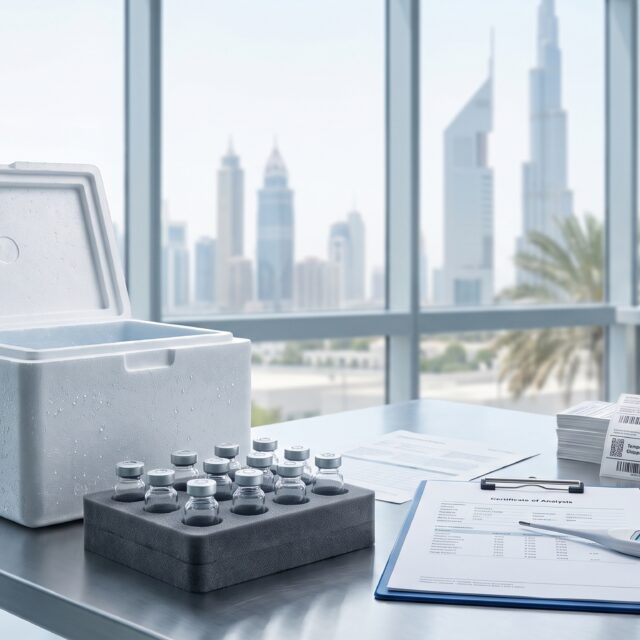
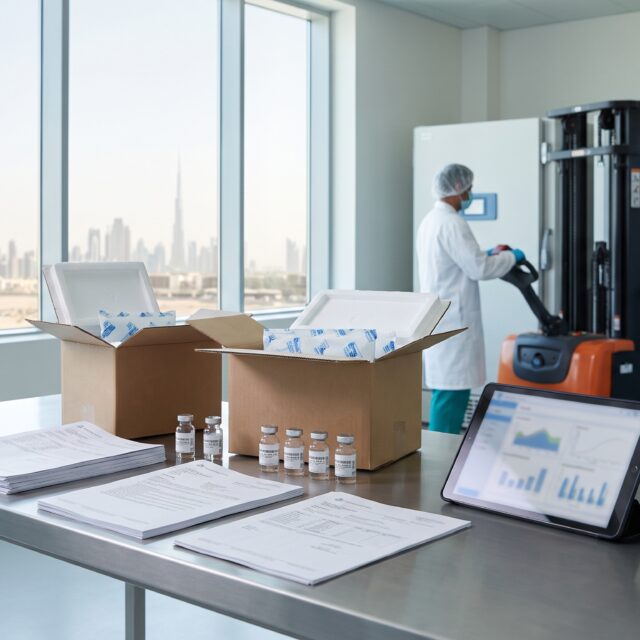
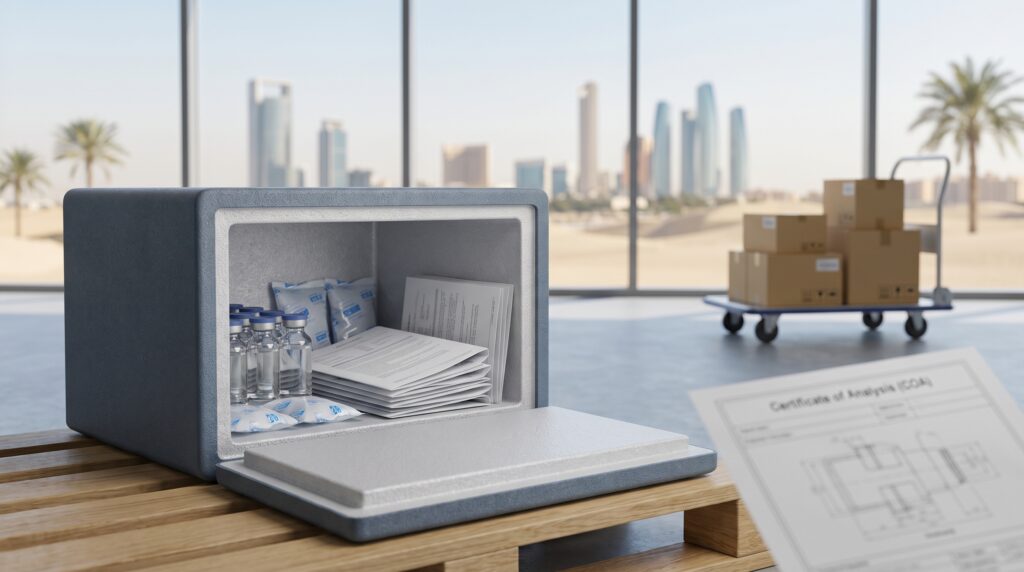
To bypass these border delays and the risks of extreme heat exposure, modern, high-tier peptide suppliers utilize regional GCC logistics hubs. By stocking and dispatching from sophisticated, temperature-controlled facilities within the region, suppliers avoid the unpredictability of overseas international shipping.
For example, establishing a fulfillment center in the UAE allows a supplier to provide rapid peptides UAE next day delivery. This centralized hub acts as a highly efficient launchpad, cutting transit times into Saudi Arabia down to mere days via established GCC ground and air freight networks. This localized approach prevents lengthy customs holds and ensures your research materials spend minimal time in transit, preserving their longevity and efficacy.
Procurement Checklist: Verifying Your Supplier
When evaluating a supplier for diluents and research compounds, transparency and operational expertise are what matter most. Generic eCommerce stores often fail to provide the documentation and local support necessary for high-level procurement.
Before placing an order for BAC water or lyophilized peptides in Saudi Arabia, consult this buyer checklist:
- Precise Formulation Verification: Ensure the product label specifically lists 0.9% benzyl alcohol. If it only reads “sterile water” or “water for injection,” do not purchase it for multi-dose vial reconstitution.
- Regional Stock Availability: Verify that the supplier actually holds physical stock in the GCC (like the UAE). Drop-shipping from overseas guarantees customs delays.
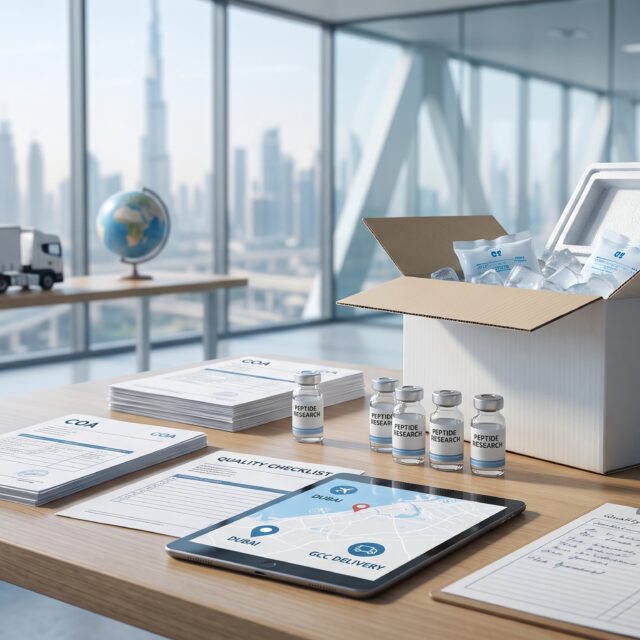
- Transparent Third-Party Testing: Reputable suppliers provide accessible Certificates of Analysis (COAs) and High-Performance Liquid Chromatography (HPLC) test reports for their main peptide offerings, proving purity and precise mass.
- Accessible Local Support: Look for suppliers who offer localized communication channels, such as dedicated WhatsApp support, allowing you to quickly verify stock levels, request batch testing, or confirm delivery windows in Saudi Arabia.
- Payment Flexibility: Cross-border payments can trigger bank flags. Many GCC researchers prefer secure, localized payment gateways or regional payment solutions to reduce purchasing friction.
Proper Reconstitution Techniques and Laboratory Safety
Having the correct bacteriostatic water is only half the equation; handling the reconstitution process correctly is equally vital. Lyophilized peptides are packaged in a vacuum. When you puncture the stopper with a syringe filled with BAC water, the negative pressure will rapidly pull the water into the vial.
If you allow the water to shoot directly onto the delicate lyophilized powder, the sheer physical force can damage the peptide structures (a process known as shearing).
Best Practice Reconstitution:
- Swab both the BAC water vial and the peptide vial stoppers with an alcohol wipe.
- Draw the desired volume of BAC water into the syringe.
- Puncture the peptide vial at a slight angle.
- Allow the vacuum to pull the water in slowly, directing the flow of the liquid down the inner glass wall of the vial, rather than directly onto the powder.
- Gently swirl the vial (do not shake) until the powder is fully dissolved and the solution is clear.
Storage Guidelines: Before and After Reconstitution
Even with the perfect diluent and flawless delivery, improper storage in the lab will ruin your research materials. Handling bacteriostatic water and peptides requires strict adherence to temperature guidelines.
Storing Unopened Bacteriostatic Water
Unopened vials of BAC water are relatively stable but must still be protected from the harsh Saudi climate. Store unopened vials in a dark, controlled room temperature environment (ideally between 20 to 25 degrees Celsius). Do not leave them on a sunny windowsill, near laboratory heat sources, or in a vehicle. Freezing bacteriostatic water is strictly prohibited, as expanding ice can micro-fracture the glass vial and alter the homogenous suspension of the benzyl alcohol.
Storing Reconstituted Peptides
Once you have used bacteriostatic water to reconstitute a lyophilized peptide, the rules change entirely. The resulting liquid solution is highly fragile and thermally sensitive. It must be immediately refrigerated at a controlled temperature between 2 to 8 degrees Celsius (36 to 46 degrees Fahrenheit).
When stored properly in the refrigerator, the 0.9% benzyl alcohol will keep the solution sterile and free of bacterial growth for exactly 28 days. After the 28-day mark, the efficacy of the preservative naturally begins to decline. To maintain stringent laboratory standards, any remaining solution after 28 days should be responsibly discarded according to your facility’s biological waste protocols.
Conclusion & Next Steps
Finding reliable bacteriostatic water for peptides saudi arabia shouldn’t be an insurmountable roadblock to your laboratory work. By understanding the critical scientific difference between local pharmacy sterile water and genuine BAC water, you can safeguard your valuable peptide vials from catastrophic microbial contamination. Always prioritize suppliers that offer clear formulation details, verifiable COA documentation, and regional GCC shipping hubs to bypass customs delays and thermal degradation.
At NOVA Labs, we prioritize rapid, temperature-controlled logistics, verifiable testing, and transparent documentation so your research materials arrive intact and ready for rigorous study. Explore our complete catalog of research compounds and diluents today.
Disclaimer: The products mentioned in this article are for in-vitro research purposes only and are not intended for human or animal consumption, treatment, or therapeutic use.
References
- Saudi Food and Drug Authority (SFDA) Guidelines on Importation of Research Materials.
- Zakat, Tax and Customs Authority (ZATCA) clearance procedures for GCC logistics.
- Standard operating procedures for the storage and handling of bacteriostatic water (0.9% benzyl alcohol).
- Pharma-Grade BAC Water – NOVA Labs
- Buy Water For Injections Bp 100X5ml Online in Riyadh | Dawi Pharmacy
- Water For Injection 10 CC | Nahdi
- Bacteriostatic Water peptide – Buy Online in UAE & Dubai – CureCell
Frequently asked questions
Can I buy bacteriostatic water at Nahdi or Dawi pharmacy in Saudi Arabia?
No, major retail Saudi pharmacies typically only stock single-use sterile water (Water for Injection). These products lack the 0.9% benzyl alcohol required for safe multi-dose peptide storage over an extended 28-day period.
How long does bacteriostatic water last after opening?
Once opened and used to reconstitute a research peptide, bacteriostatic water maintains its preservative efficacy against bacterial growth for exactly 28 days, provided it is stored appropriately in a refrigerator at 2 to 8 degrees Celsius.
How should I store unopened bacteriostatic water in Saudi Arabia?
Unopened vials of bacteriostatic water should be kept at a controlled room temperature of 20 to 25 degrees Celsius. They must be safely stored in a dark place away from extreme summer heat, direct sunlight, and freezing temperatures.
What is the primary difference between sterile water and bacteriostatic water?
Sterile water is highly purified but contains zero preservatives, making it suitable only for immediate, single-use applications. Bacteriostatic water contains a precise 0.9% benzyl alcohol formulation that actively inhibits bacterial growth, allowing researchers to safely perform repeated multi-dose draws from a single vial.
Why do international peptide shipments get delayed in Saudi Arabia?
International shipments of biological diluents and research chemicals are subject to strict scrutiny by the SFDA and ZATCA, often resulting in customs holds. Sourcing from regional GCC suppliers with local inventory helps bypass these overseas shipping delays.
Nova Labs buyer tools
Ready to verify stock, testing and delivery?
Use the product page and lab report section to check availability, documentation, delivery timing and support before placing an order.
- COA / test-report checks
- Saudi Arabia delivery context
- Cold-chain handling
- COD and card payment options
- WhatsApp support