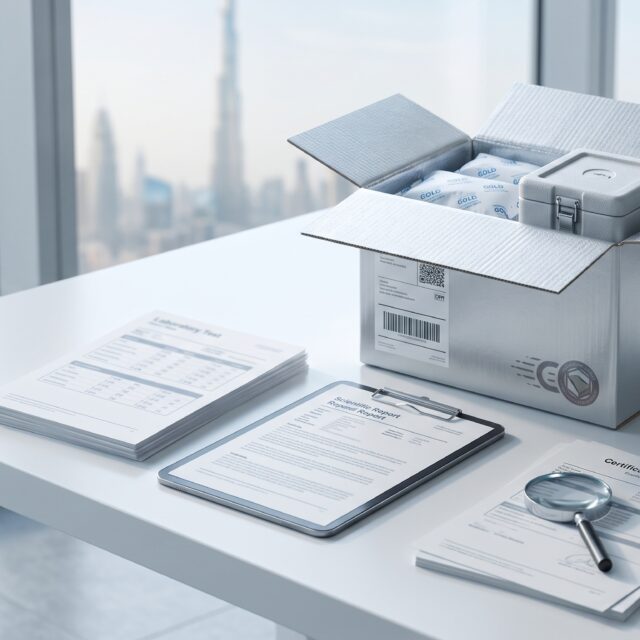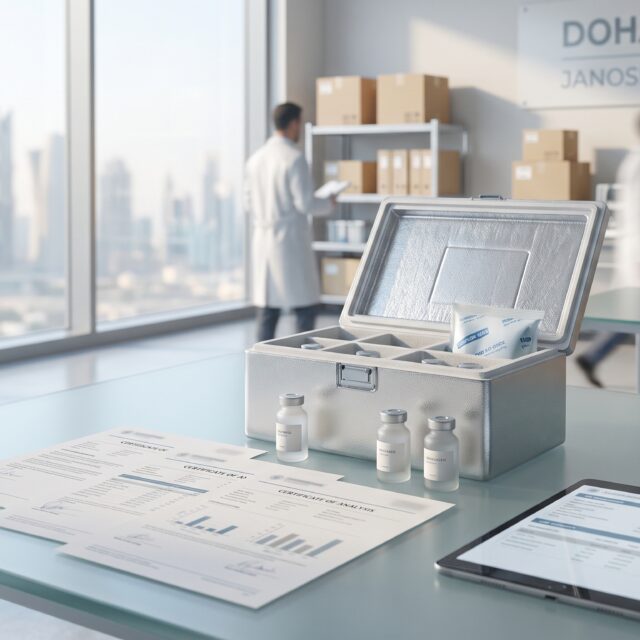




Procuring high-quality biological compounds for laboratory research is an increasingly rigorous process across the GCC. For procurement teams in Doha, institutional researchers operating out of Dubai Science Park, and informed buyers evaluating regional supply chains, authenticating the integrity of analytical data is critical. Recent regulatory shifts across both Qatar and the UAE, combined with the region’s extreme climate, mean that importing compounds requires meticulous documentation and robust logistics.
Whether you are an independent researcher or managing a commercial laboratory, understanding how to source and verify materials ensures your research remains uncompromised, legally compliant, and scientifically valid. This guide explains how to thoroughly audit Certificates of Analysis (COAs), correctly interpret High-Performance Liquid Chromatography (HPLC) and Mass Spectrometry (MS) data, and successfully navigate local customs frameworks like Qatar’s Al-Nadeeb portal and UAE transit hubs.
Sourcing Authentic HPLC Tested Peptides Qatar: What You Must Know
Quick Answer: To verify hplc tested peptides qatar, buyers must validate third-party Certificates of Analysis (COAs) for both purity (HPLC) and identity (Mass Spectrometry). Ensure the supplier provides cryptographic verification keys, uses EPS cold-chain logistics for GCC climates, and strictly complies with MoPH and Al-Nadeeb customs regulations.
When evaluating a supplier, failing to demand these specific verification elements can lead to compromised research data, heavily degraded compounds due to the intense Middle Eastern heat, or costly shipments permanently seized at the border for inadequate documentation.
Navigating Regulatory Frameworks: Qatar MoPH and UAE MoHAP
The regulatory landscape for biological compounds in the Middle East is exceptionally strict to prevent unauthorized consumer use.
In Qatar, the Pharmacy and Drug Control Department of the Ministry of Public Health (MoPH) closely monitors the import, sale, and handling of unlicensed peptides. Similarly, in the UAE, the Ministry of Health and Prevention (MoHAP) regulates the importation of biological reagents. If a compound is intended for, or promoted for, human consumption, it is strictly prohibited without extensive medical licensing and clinical approvals.
This mandate applies globally, but GCC authorities enforce it rigorously. Even if a product is labelled “for research purposes only,” if the supplier’s website features dosing guides, treatment claims, or therapeutic recommendations, the shipment will likely be flagged. This environment shifts the buyer’s focus heavily toward authenticating vendors who operate strictly within B2B, academic, and clinical laboratory research paradigms.
Clearing Customs via the Al-Nadeeb Portal and GCC Hubs
Because many international shipments to Qatar transit through major global logistics hubs in Dubai or Abu Dhabi, ensuring flawless documentation that satisfies multiple regional checkpoints is a logistical necessity. Qatar’s customs authority utilises the Al-Nadeeb electronic clearance portal, which demands absolute transparency from both the importer and the supplier.
A trusted supplier serving the GCC must provide:
- Accurate Commercial Invoices: Stating the exact Harmonised System (HS) codes for laboratory chemical reagents.
- Certificates of Analysis (COA): Proving the exact molecular makeup of the shipment to rule out prohibited substances.
- Certificates of Origin: Documenting exactly where the chemical synthesis took place.
- Clear Regulatory Labelling: Emphasising the compounds are exclusively for in vitro laboratory use and explicitly not for human or animal use.
Shipments lacking any of these components are routinely delayed, returned to sender, or destroyed at customs facilities.
Beyond the Purity Peak: Why HPLC Requires Mass Spectrometry
Many entry-level buyers mistakenly believe that an HPLC report is the final word on peptide quality. However, relying on an HPLC report in isolation is a high-risk factor for laboratory buyers.
High-Performance Liquid Chromatography (HPLC) separates the components of a sample to measure its relative purity. On a chromatogram, the X-axis represents retention time, while the Y-axis shows UV absorbance. A prominent purity peak of 99% simply means that 99% of the powder in the vial is one uniform substance. However, HPLC does not tell you what that substance actually is. A completely different, cheaper sequence of amino acids could yield a perfect 99% purity peak on an HPLC readout.
To confirm that the uniform substance is indeed the specific peptide sequence you ordered, you need Liquid Chromatography-Mass Spectrometry (LC-MS). Mass spectrometry measures the exact mass-to-charge ratio (m/z) of the compound. Since every specific peptide sequence has a precise, mathematically calculated molecular mass, LC-MS is the only scientifically valid way to positively identify the compound.
When evaluating any hplc tested peptides supplier qatar or UAE-based distributor, researchers must ensure the supplier provides both HPLC (for purity) and MS (for identity). Without both, the testing profile is scientifically incomplete and unreliable.
How to Spot a Fabricated COA: A GCC Buyer’s Checklist
Unfortunately, the global research chemical market suffers from manipulated documentation. Diluted batches, photoshopped COAs, and outdated test results are common tactics used by low-trust, unregulated suppliers. Here is how discerning buyers in Doha and Dubai authenticate their lab data:
1. Cryptographic Verification Keys
Legitimate third-party testing facilities, such as Janoshik Analytical, assign a unique cryptographic key or verification number to every single test they perform. You should never take a PDF document sent via email at face value. A reputable supplier will allow you to take that verification key, visit the independent laboratory’s portal, and download the raw, unedited data directly from the source. If a supplier obscures this key or claims their testing is “proprietary,” “in-house,” or “confidential,” consider it a major red flag.
2. Batch Number Alignment
The batch number printed on the physical vial you receive must perfectly match the batch number listed on the COA. If a supplier is using a COA from 2023 for a vial manufactured last month, the analytical data is entirely irrelevant to the product in your hands. Synthesis yields vary between batches, requiring per-batch testing.
3. Transparent Publication
High-trust suppliers do not hide their data behind paywalls, lengthy email requests, or NDA requirements. To see what a properly documented, verifiable testing profile looks like, researchers can review our transparent lab results and verifiable COAs, which feature batch-specific, verifiable HPLC and LC-MS data.
Mitigating Thermal Degradation: GCC Cold-Chain Logistics
Even if a supplier provides a perfectly authenticated, 99% pure peptide, the product is useless if it degrades in transit. Peptide bonds are highly susceptible to thermal degradation, and the extreme summer temperatures in Qatar and the UAE—often exceeding 45°C—can destroy delicate biological structures in a matter of hours.
The Failure of Standard Postal Mail
Standard international postal services (such as USPS or standard Royal Mail) do not offer direct, climate-controlled shipping services to the Middle East. Relying on standard mail for biological compounds almost guarantees exposure to extreme heat during prolonged tarmac transfers in Dubai or Doha, and un-air-conditioned warehouse sorting.
Clinical-Grade Packaging Protocols
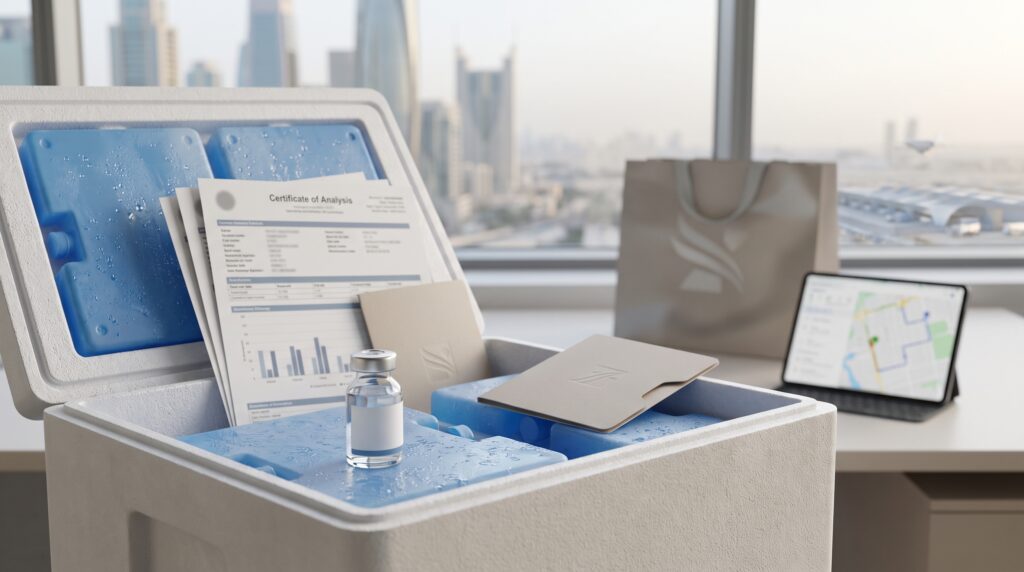
When sourcing an hplc tested peptides shop qatar, buyers must verify the supplier’s logistical protocols. Premium suppliers serving the GCC utilise strict cold-chain logistics, which include:
- EPS Insulated Packaging: High-density Expanded Polystyrene provides an impenetrable thermal barrier against ambient desert heat.
- Clinical-Grade Gel Ice Packs: Regulating the internal temperature of the parcel during the critical 48-72 hour international transit window.
- Premium Courier Integration: Utilising specialized express networks to bypass standard postal delays, leveraging direct flights, and integrating seamlessly with the Al-Nadeeb or UAE customs systems for rapid clearance.
Payment, Support, and Local GCC Vendor Verification
Beyond logistics and testing, institutional buyers in the GCC require seamless procurement processes. Relying on suppliers that only offer obscure payment methods or lack responsive support can lead to significant administrative hurdles.
When evaluating procurement partners, look for secure B2B payment gateways or wire transfer options that comply with institutional purchasing requirements. Furthermore, responsive support is vital. If a customs clearance issue arises in Doha, you need a supplier whose support team operates with awareness of GCC time zones and can rapidly supply updated commercial invoices or origin declarations to prevent the shipment from being destroyed.
Conclusion: Secure Your Research Sourcing
Navigating the complexities of procuring research materials in the Middle East demands rigorous attention to analytical and logistical detail. Sourcing authentic biological compounds requires more than simply identifying a supplier with a professional website; it requires auditing their testing methodology, verifying their mass spectrometry data directly with the testing lab, and ensuring their shipping protocols can withstand the local climate and customs regulations.
By prioritising third-party verifiable COAs, insisting on LC-MS identity validation, and partnering with suppliers that understand the Al-Nadeeb clearance process and GCC transit routes, researchers can completely safeguard the integrity of their work.
If you are ready to secure highly pure, thoroughly tested compounds backed by transparent data for your laboratory, explore our full catalogue of research-grade compounds today.
*
Disclaimer: The products mentioned in this article are exclusively for in vitro laboratory research purposes only. They are not approved for, nor intended for, human or animal consumption, diagnostics, or therapeutic use. Buyers are strictly responsible for ensuring compliance with all local Ministry of Public Health (MoPH) and regional regulations.
References
- Ministry of Public Health (MoPH) Qatar – Pharmacy and Drug Control Department Guidelines for Chemical Imports.
- Ministry of Health and Prevention (MoHAP) UAE – Importation and Handling of Biological Reagents.
- Journal of Chromatography A – Best Practices in Liquid Chromatography-Mass Spectrometry (LC-MS) for Peptide Characterization.
- General Authority of Customs, State of Qatar – Al-Nadeeb Electronic Clearance System Documentation Standards.
- Janoshik Analytical – Standardized Verification Methods for Third-Party Peptide Testing.
- Qatar’s Health Ministry bans trading, use or promotion of unlicensed peptide products
- Qatar: MOPH Prohibits Handling of Unlicensed Peptides (PDC/2026/31)
- HPLC vs LC-MS for Peptide Purity Testing: Why Identity Confirmation Matters
- Peptide Certificates of Analysis: How to Read and Verify a COA (2026 Guide) | Peptidepedia
- International Shipping — Countries, Customs, and What to Expect – Everychem
- Cold Chain Peptide Delivery Qatar | Supplier Logistics Guide – NOVA Labs
- How Successfully Import Chemicals to Qatar – Camachem
- How Are Peptides Tested? HPLC, COA & Purity Explained (2026)
Frequently asked questions
What is the difference between HPLC and LC-MS in peptide testing?
HPLC (High-Performance Liquid Chromatography) measures the purity of a sample by showing the percentage of the primary substance present. LC-MS (Liquid Chromatography-Mass Spectrometry) identifies the exact molecular weight, confirming the substance is genuinely the correct sequence.
Are research peptides allowed through Qatar customs?
Yes, but they must strictly comply with MoPH regulations. They require accurate commercial invoices, precise Harmonised System (HS) codes, and clear labelling indicating they are for in vitro laboratory research only, processed via the Al-Nadeeb portal.
How do I verify a third-party peptide COA in the GCC?
A legitimate Certificate of Analysis includes a cryptographic key or verification number. You can enter this unique key on the independent testing laboratory’s official website to download the unedited, raw testing data directly, proving the document has not been altered.
Why is cold-chain shipping essential for UAE and Qatar deliveries?
Peptide bonds are fragile and rapidly degrade when exposed to the GCC's extreme ambient heat. Cold-chain shipping using EPS insulated packaging and clinical-grade gel ice packs protects the structural integrity of the compounds during transit.
What documentation is required for the Al-Nadeeb customs portal?
To successfully clear research chemicals through Qatar's Al-Nadeeb portal, importers must provide a detailed commercial invoice, a valid Certificate of Origin, specific HS codes for laboratory reagents, and a verifiable Certificate of Analysis.
Nova Labs buyer tools
Ready to verify stock, testing and delivery?
Use the product page and lab report section to check availability, documentation, delivery timing and support before placing an order.
- COA / test-report checks
- Qatar delivery context
- Cold-chain handling
- COD and card payment options
- WhatsApp support