





Navigating the procurement of mitochondrial peptides for laboratory studies requires a precise understanding of structural variances and supplier verification protocols. For research facilities and independent investigators operating in Dubai and the wider GCC, the comparison between two prominent compounds—MOTS-c and SS-31 (Elamipretide)—is a central topic. While both are evaluated for their interaction with mitochondrial function, their structural classes, mechanisms of action in published literature, and handling requirements present distinct considerations for any experimental programme.
Furthermore, sourcing high-purity research materials in the UAE presents unique logistical challenges. From the risk of thermal degradation during summer transit to the regulatory oversight managed by the Emirates Drug Establishment (EDE), buyers must meticulously evaluate how a supplier documents, stores, and ships these sensitive compounds. This guide breaks down the defining characteristics of each peptide and outlines what to check before authorising a purchase.
Quick Answer: Evaluating MOTS-c vs SS-31
When evaluating mots-c vs ss-31, the primary distinction lies in their mechanisms. MOTS-c is a 16-amino-acid peptide studied as a metabolic signaling regulator that activates the AMPK pathway, whereas SS-31 (Elamipretide) is a synthetic tetrapeptide that binds selectively to cardiolipin to protect inner mitochondrial membrane structure from oxidative stress.
Structural Classification and Origins
To understand the difference between mots-c and ss-31, researchers first examine their origin and molecular architecture. Despite both being classified loosely as mitochondrial peptides, they belong to entirely different structural categories.
MOTS-c: The Mitochondrial-Derived Peptide (MDP)
MOTS-c (Mitochondrial Open Reading Frame of the 12S rRNA-c) is a 16-amino-acid peptide (CAS 1627580-64-6). What makes it unique in academic literature is that it is naturally encoded deep within the mitochondrial DNA itself, rather than the nuclear genome. In a laboratory context, synthetic MOTS-c is synthesised to mirror this exact naturally occurring sequence. Because of its larger molecular weight and complex folding potential, ensuring high-purity synthesis is critical; incomplete sequences or impurities can significantly skew cellular assays.
SS-31: The Synthetic Tetrapeptide
Conversely, SS-31, widely known in clinical literature as Elamipretide (CAS 736992-21-5), is a synthetic tetrapeptide. It is composed of just four amino acids, engineered specifically to selectively concentrate within the inner mitochondrial membrane. Its small size and synthetic design grant it a unique property: it is cell-permeable and localises independently of the mitochondrial membrane potential. For procurement teams, evaluating SS-31 (Elamipretide) often involves checking for precise molecular weight confirmation on analytical reports to ensure accurate synthesis of this compact structure.
Distinct Focus in Published Research
When determining whether an experimental design requires mots-c or ss-31, investigators look to the vast body of published literature surrounding their distinct mechanisms of action.
Systemic Signaling vs Structural Stabilisation
MOTS-c is frequently evaluated in research as a systemic metabolic regulator. It acts as a cellular ‘mitokine’, meaning it can translocate from the mitochondria to the nucleus under states of metabolic stress. Preclinical models often study its role in glucose homeostasis, fatty-acid oxidation, and AMPK pathway activation. Research involving MOTS-c generally focuses on how the peptide communicates energy requirements across the broader cellular environment.
On the other hand, SS-31 research is highly localised to structural preservation. It exhibits a high affinity for cardiolipin, a vital phospholipid located in the inner mitochondrial membrane. By binding to cardiolipin, SS-31 is observed in studies to stabilise the membrane structure, thereby supporting the efficiency of the electron transport chain and mitigating the production of reactive oxygen species (ROS). While MOTS-c research is heavily rooted in preclinical metabolic studies, SS-31 has progressed through multiple Phase II/III human clinical trials, culminating in regulatory milestones such as its approval trajectory for Barth syndrome.
Cold-Chain Logistics and Handling in the GCC
Understanding mots-c vs ss-31 research applications is only half the equation; preserving the analytical integrity of these peptides during transit to a UAE facility is equally critical.
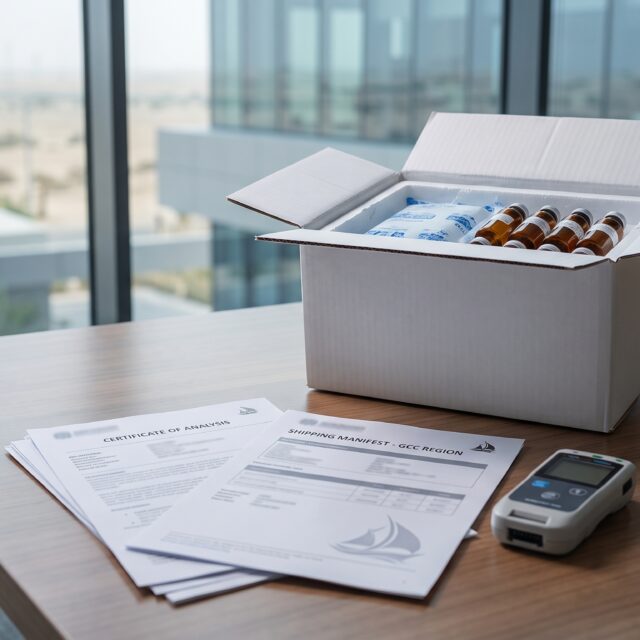
Lyophilised (freeze-dried) peptides are exceptionally vulnerable to thermal degradation. The extreme summer temperatures of the GCC region can rapidly denature sensitive molecular structures if improperly handled. Cross-border shipping presents a secondary friction point; international packages frequently sit in uncontrolled customs depots awaiting clearance by the Emirates Drug Establishment (EDE).
To bypass these risks, sophisticated regional researchers prioritise domestic procurement. NOVA Labs operates out of local UAE warehouses, ensuring that research compounds remain in climate-controlled environments right up until final delivery. This localised approach not only protects the stability of both MOTS-c and SS-31 but also drastically reduces the lead time, ensuring laboratories receive their materials intact and ready for reconstitution.
Sourcing and Verifying Purity in the UAE Market
Whether a facility opts for MOTS-c or SS-31, the analytical data provided by the supplier must be rigorous and verifiable. Informed buyers in the UAE market look for specific procurement signals before placing an order.
Evaluating Certificates of Analysis (COA)
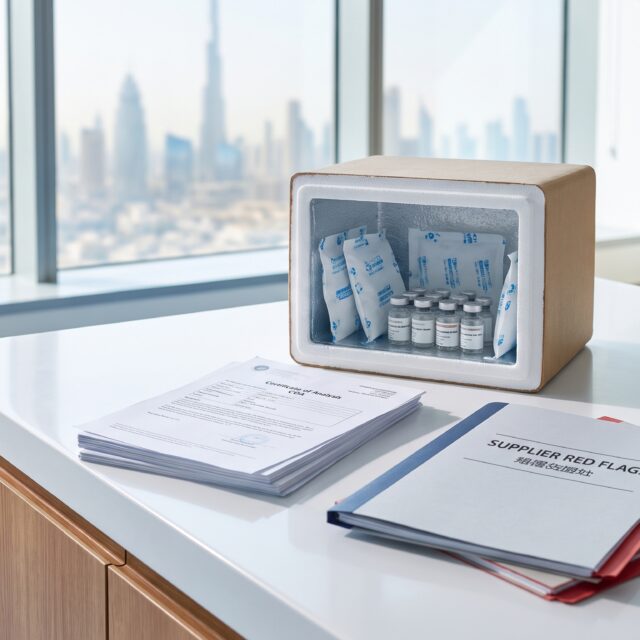
Generic guarantees of “purity” are insufficient for modern laboratory standards. Reliable suppliers provide batch-specific documentation. Investigators should request access to third-party High-Performance Liquid Chromatography (HPLC) and Mass Spectrometry (MS) reports.
HPLC charts verify that the vial contains the specified concentration (typically ≥99% purity) without significant degraded fragments, while MS confirms the exact molecular weight of the peptide. At NOVA Labs, transparency is paramount. Procurement teams can easily review our third-party lab results to verify the identity and purity of every compound prior to ordering.
Operational Support and Payment Flexibility
Given the friction that can occur with institutional procurement cards or international bank declines for research-grade materials, local operational support is a major asset. NOVA Labs accommodates the regional market by offering flexible payment methods, including Cash on Delivery (COD), allowing buyers to verify the physical arrival of their goods. Furthermore, direct WhatsApp support ensures that researchers can quickly confirm stock availability, request specific batch documents, or coordinate delivery windows that align with laboratory receiving hours.
Conclusion: Making an Informed Procurement Decision
Choosing between MOTS-c and SS-31 depends entirely on the mechanistic focus of the intended research. MOTS-c offers an avenue for studying systemic metabolic signaling and AMPK activation, while SS-31 provides a targeted tool for evaluating mitochondrial membrane stabilisation and cardiolipin interaction.
Regardless of the compound selected, the integrity of the research relies on the purity of the material and the security of its transit. By sourcing from a supplier that provides transparent HPLC/MS documentation, executes secure cold-chain logistics, and operates domestically within the UAE, researchers can eliminate environmental variables and focus solely on their scientific inquiries.
If your laboratory is preparing to evaluate these mitochondrial compounds, ensure you review the batch-specific analytical reports to guarantee material purity. Explore the NOVA Labs peptide catalog today to secure verified, cold-chain shipped research materials for your next study.
Disclaimer: The products mentioned in this article are for in-vitro research and laboratory purposes only and are strictly not intended for human consumption or clinical use.
References
- Lee, C., et al. (2015). “The mitochondrial-derived peptide MOTS-c promotes metabolic homeostasis and reduces obesity and insulin resistance.” Cell Metabolism, 21(3), 443-454.
- Szeto, H. H. (2014). “First-in-class cardiolipin-protective compound as a therapeutic agent to restore mitochondrial bioenergetics.” British Journal of Pharmacology, 171(8), 2029-2050.
- Birk, A. V., et al. (2013). “The mitochondrial-targeted compound SS-31 re-energizes ischemic mitochondria by interacting with cardiolipin.” Journal of the American Society of Nephrology, 24(8), 1250-1261.
Disclaimer: The products mentioned in this article are for research purposes only and are not intended for human consumption.
- Mitochondrial Health Through Peptides: MOTS-c vs SS-31
- MOTS-c vs. SS-31: Researching Differences and Synergy – PeakForce Labs
- Elamipretide – Wikipedia
- Nova Biolabs vs Peptides Lab UAE Dubai | 2026 Supplier
Frequently asked questions
What is the core difference between MOTS-c and SS-31?
The primary difference lies in their structural classification and research mechanisms. MOTS-c is a 16-amino-acid peptide studied for systemic metabolic signaling and AMPK activation, while SS-31 is a synthetic tetrapeptide focused on binding to cardiolipin to stabilise the inner mitochondrial membrane structure.
How should MOTS-c and SS-31 be stored in UAE laboratory facilities?
Both peptides are typically supplied as lyophilised (freeze-dried) powders and must be protected from extreme heat. For optimal long-term storage in the UAE, unconstituted vials should be kept in a laboratory freezer at -20°C to preserve their structural integrity.
How can researchers verify the purity of MOTS-c or SS-31 before purchasing?
Buyers must request batch-specific Certificates of Analysis (COA) from the supplier. Review third-party High-Performance Liquid Chromatography (HPLC) and Mass Spectrometry (MS) testing to confirm the exact molecular weight and ensure a purity level of 99% or higher.
Are sensitive research peptides like MOTS-c delivered safely within the GCC?
Yes, when sourced from a localised supplier such as NOVA Labs. By holding inventory in domestic UAE warehouses and executing cold-chain logistics, suppliers bypass the significant thermal degradation risks associated with international customs clearance and summer shipping.
Nova Labs buyer tools
Ready to verify stock, testing and delivery?
Use the product page and lab report section to check availability, documentation, delivery timing and support before placing an order.
- COA / test-report checks
- UAE delivery context
- Cold-chain handling
- COD and card payment options
- WhatsApp support